
AFRIFF at 15: African Cinema Puts Women and Technology at the Centre in Lagos
LAGOS, October 20, 2026 — The Africa International Film Festival (AFRIFF) has unveiled the programme for its 15th edition, running in Lagos from November 1 to 7 under the theme "Frames of the Future," with women and technology set as the two subjects dominating the agenda. Founder Chioma Ude told a media briefing that about 85 percent of the 135 selected films — 23 of them features — are directed by women, produced by women, or tell stories by or about women. "I believe that the film of the future is women and technology," Ude said, according to African Arts Journal.
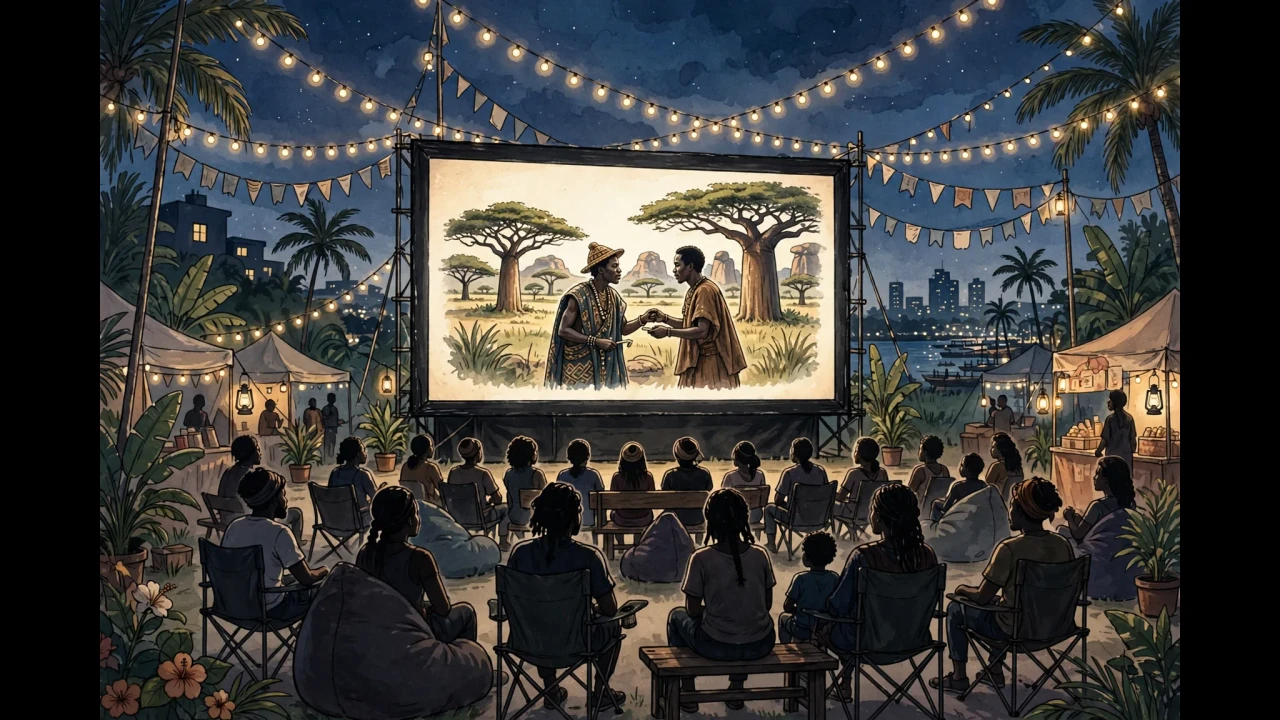
Illustration: An outdoor cinema screening in Lagos at night, with a large glowing screen, festival banners and an audience — the kind of gathering AFRIFF has built over 15 years.
What Happened
Ude laid out the festival's agenda at a programme launch held at the Mikano showroom on Victoria Island, Lagos. The 15th edition will screen 135 films, including 23 feature films, and close on November 7 with the Globe Awards, according to African Arts Journal, which published its report on the launch on October 20, 2026.
The headline figure — that roughly 85 percent of the selected films are women-led — is one Ude described as something she found rather than something she planned. Speaking at the launch, she said she had been thinking about artificial intelligence and what it would mean for film when, after the programmers finished selecting titles, she noticed how many of the chosen films were directed by women, produced by women, or centred on women's stories. That, African Arts Journal noted, is a more interesting claim than a quota would be: it suggests the submissions themselves are shifting.
Readers should treat the exact number with some care. Outlets have reported the figure differently: most quote Ude as applying it to the films selected overall, while The Elites Nigeria reports her as referring specifically to the feature films, and one preview guide, ShockNG, puts the share of women's involvement in the feature selection at 55 percent. The final published programme should settle the detail, and anyone quoting the number should check which films it covers.
Technology gets formal space of its own this year. The festival's focus on AI and new tools follows a conversation African film has been having all year — from dedicated AI film festivals to hard questions about what automation means for a labour-intensive industry like Nollywood, the Nigerian film industry that African Arts Journal has covered in earlier reporting. AFRIFF has announced two workshops: one on globalising intellectual property policies and one on actually using the new tools.
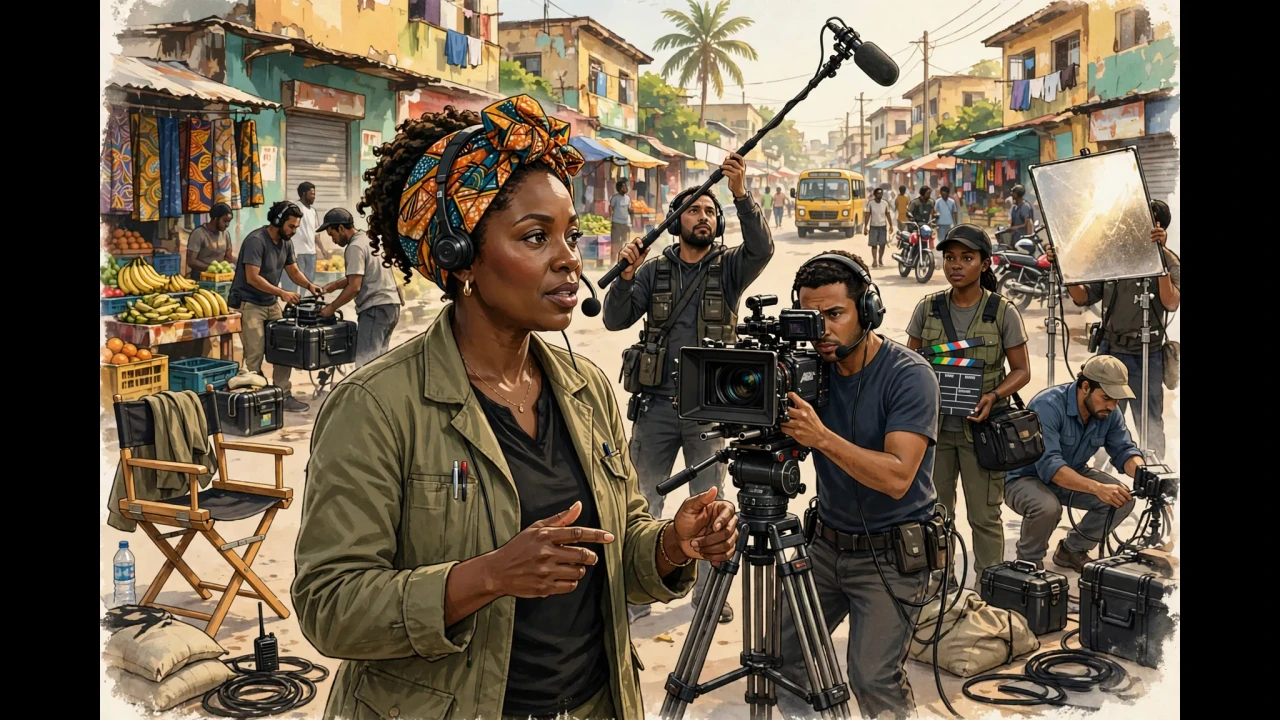
Illustration: A woman filmmaker directing a cinema camera on a Lagos street film set — reflecting the women-led slate at the heart of this year's festival.
Background
Ude founded AFRIFF in 2010, and over fifteen editions it has grown from a screening event into a full industry platform — the kind of place where films are not only shown but financed, sold and co-produced. The industry side of the festival now runs through the Africa Film & Content Market, which connects African filmmakers and producers with international buyers and distributors. According to the festival's site, the second edition of the market runs from November 2 to 5 at Twinwaters in Lekki. Ude is the market's founder as well.
That evolution mirrors the trajectory of the industry it serves. Nigeria's film industry — Nollywood — is routinely described as one of the most prolific in the world by output, producing vast numbers of films each year for domestic and diaspora audiences. But volume has long outpaced infrastructure: distribution, financing and international sales have been persistent weak points. AFRIFF's bet, across its fifteen years, has been that a festival can help fix the plumbing, not just celebrate the films.
The co-production push at this year's edition is the clearest expression of that bet. Ude said Oman will send a delegation of ten people carrying scripts to meet Nigerian producers, that the festival has signed a three-year agreement with South Africa that includes a residency programme, and that Brazil is arriving with two films to co-produce. "Filmmakers need to go into the world more," she said. International backing was visible at the launch: The Guardian reported that the consuls general of the United States, France and Brazil all pledged support for the festival, according to African Arts Journal's account of the coverage.
There was even a friendly disagreement about the agenda itself. The Brazilian consul general put the emphasis in a slightly different place from Ude, arguing that women are the future rather than technology or AI. Between the founder and her international partners, the two themes are being argued over rather than simply agreed — which is, in its way, a sign of a festival confident enough to host the debate.
Government backing was on display too. The Minister of Arts, Culture and the Creative Economy, Hannatu Musawa, was represented at the event by Dr. Shaibu Husseini, the head of the National Film and Video Censors Board. In remarks read on her behalf, the minister said the government was reshaping policy to support technology, distribution and infrastructure in the creative sector, and paid tribute to Ude's fifteen years of work and the AFRIFF Academy's training of young creatives. She told the media to help carry the festival's themes to a wider audience.
Why It Matters
A festival programme in which the overwhelming majority of films are led by or about women would be a landmark anywhere; in the context of African cinema, it signals how fast the talent pipeline is changing. The important nuance is Ude's own: the figure emerged from the submissions, not from a quota. If the programmers' selections reflect what African filmmakers are actually making right now, then the industry's centre of gravity is moving — and festivals, distributors and financiers will have to move with it.
The technology agenda matters for a different reason. Nollywood's economics were built on speed and volume: fast shoots, fast releases, thin margins. Generative AI and automation could either squeeze those margins further — by commoditising exactly the kind of production Nollywood does best — or give small African producers tools that were previously available only to big studios. A workshop on globalising IP policy suggests the festival understands the first risk; a workshop on using the tools suggests it sees the second opportunity. Getting both conversations into the same building is exactly what an industry festival is for.
The deal-making layer is the part that could outlast the week. Co-production agreements — a three-year South African residency programme, an Omani delegation with scripts in hand, Brazilian films to co-produce — are the unglamorous machinery by which African cinema gets financed and seen beyond the continent. Festivals are judged on their films, but they are remembered for their deals: the measure of the 15th edition, as African Arts Journal put it, will be whether the deals Ude described, and the women-led slate she announced, translate into films made and films seen.
Finally, there is the policy signal. A culture minister reshaping policy around technology, distribution and infrastructure — and saying so on a festival stage — is the kind of government posture African filmmakers have long asked for. Whether it survives contact with budgets and bureaucracy is an open question, but the public commitment is itself news.

Illustration: A film festival awards ceremony stage with golden lights and an applauding audience — AFRIFF closes on November 7 with the Globe Awards.
What Happens Next
The festival runs November 1 to 7 in Lagos. Key dates and things to watch:
- November 1 — opening: The 15th edition opens with 135 films on the programme, 23 of them features, under the "Frames of the Future" theme.
- November 2–5 — Africa Film & Content Market: The second edition of the market runs at Twinwaters in Lekki, connecting African filmmakers and producers with international buyers and distributors. Watch for announced sales and co-production deals.
- Workshops on AI and IP: The two announced workshops — on globalising intellectual property policy and on using new filmmaking tools — will test how seriously the industry takes the technology agenda.
- Oman, South Africa, Brazil delegations: Whether the promised delegations and agreements produce concrete projects will be the real test of the co-production push.
- November 7 — Globe Awards: The festival closes with its awards ceremony. The winners' list, and which films pick up distribution from the market, will show whether the women-led slate converts into careers.
Sponsored: explore today's featured sponsored offers
FAQ
When and where is AFRIFF 15 taking place?
The 15th Africa International Film Festival runs in Lagos, Nigeria, from November 1 to 7, 2026, under the theme "Frames of the Future." It closes with the Globe Awards on November 7, according to African Arts Journal.
What does the "85 percent" figure about women actually mean?
Founder Chioma Ude said about 85 percent of the selected films are directed by women, produced by women, or are stories by or about women. She described the figure as something discovered after programming, not a quota — though outlets have reported it differently, with one guide putting the feature-film share at 55 percent, so the final programme should be checked for the exact scope.
What is the Africa Film & Content Market?
It is the industry arm of AFRIFF, connecting African filmmakers and producers with international buyers and distributors. Its second edition runs November 2 to 5 at Twinwaters in Lekki, Lagos. Ude founded it as well.
Which international partnerships were announced?
Ude announced a ten-person Omani delegation bringing scripts to meet Nigerian producers, a three-year agreement with South Africa including a residency programme, and two Brazilian films arriving for co-production. The consuls general of the United States, France and Brazil pledged support for the festival, The Guardian reported via African Arts Journal.
Where can the public find the schedule?
The full schedule and further details are published on the festival's official site, afriff.com, as noted in African Arts Journal's October 20, 2026 report.
Sources
- African Arts Journal, "AFRIFF 15 Puts Women and Technology at the Centre of African Cinema's Future," October 20, 2026
- The Guardian (via African Arts Journal), coverage of the AFRIFF 15 programme launch, October 2026
- The Elites Nigeria, reporting on the women-led share of the AFRIFF 15 selection, October 2026
- ShockNG, AFRIFF 15 preview guide, October 2026
- Africa International Film Festival, official site (afriff.com), programme and market details
Comments
Post a Comment