
Anthropic on October 21, 2026 unveiled Claude Duet, a standalone AI agent app designed to act as a proactive assistant for professionals and small-business owners — its boldest move yet in the race to build agents that work autonomously. Released as a waitlisted research preview on iOS, Android and claude.ai, Duet does not wait for prompts: it monitors connected apps, delivers a daily briefing, and surfaces tasks needing attention, from scheduling meetings to building financial forecasts and web apps.
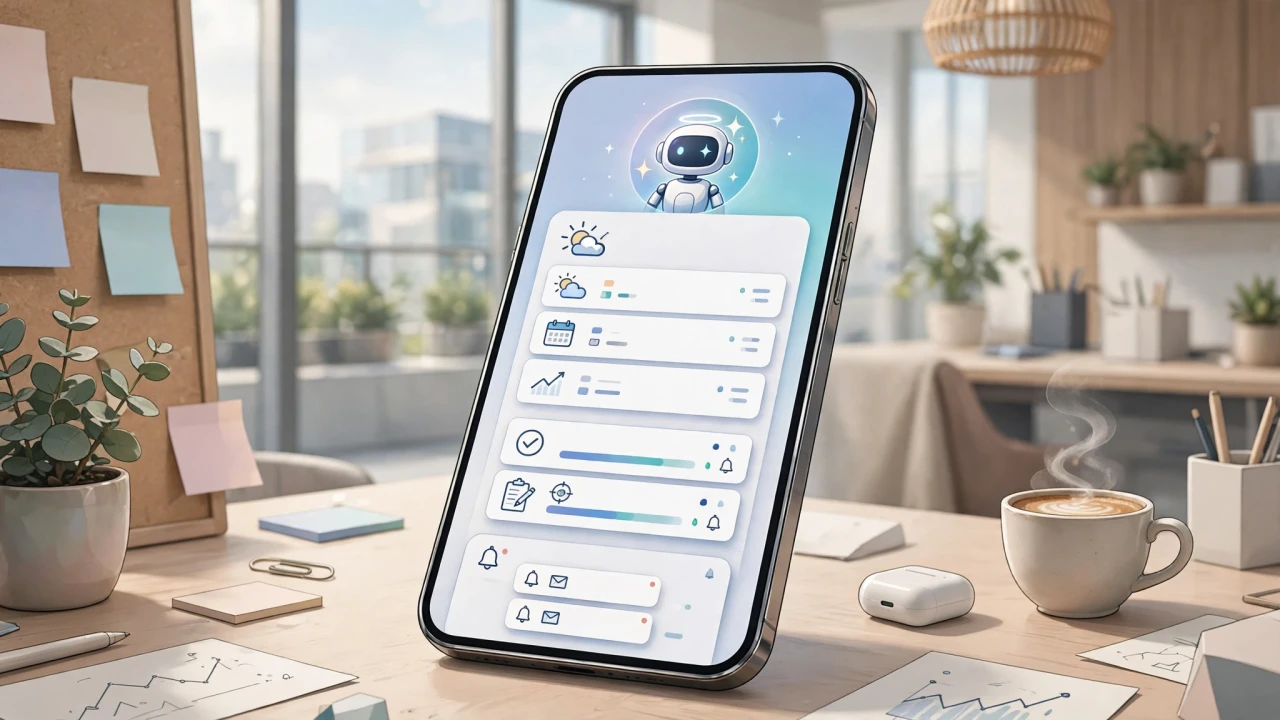
Illustration: a smartphone showing a proactive AI agent app with task cards, notifications and a daily briefing. This is an AI-generated illustration, not a real photograph.
What Happened
Anthropic announced Claude Duet on October 21, 2026, positioning it as an always-on agent built around the company's Opus 5.5 model, according to Reuters. The app is designed for people who want an assistant that comes to them when something needs attention, keeps working even when the user steps away, and checks back when a task is complete or needs review. Instead of waiting for typed questions, the agent watches, decides what needs the user, and asks first.
The company said Duet will be available through a waitlisted research preview and will initially be open to subscribers in the United States on Pro and Max plans, sharing the usage limits of the plans users already hold. Availability is limited to iOS, Android and the claude.ai web app at launch. Anthropic described the release as a research preview, signaling that the product will evolve rapidly based on how early users put it to work and where its judgment succeeds or fails.
Duet's capabilities span the everyday work of professionals and small businesses. Anthropic says the agent delivers a daily briefing and handles tasks from scheduling meetings to building financial forecasts and web apps. It accesses the user's memory, skills and connected apps for context, works even when the user's devices are switched off, and notifies them when a task is finished or needs review, according to PYMNTS.
Connectivity is the engine of the product. Duet integrates with more than 6,000 connectors and plug-ins in the Claude Marketplace, including workplace staples such as Gmail and Slack, allowing the agent to act across the tools people already use. It can also spend money: Anthropic says users can have Claude Duet purchase business supplies using Link, Stripe's digital wallet — the agent confirms the item, Link asks the user to approve the spend, and the payment goes through on a virtual card so the real card number is never shared. It can also check out at online stores using Shop Pay from Shopify.
Anthropic has paired the autonomy with guardrails: Duet waits for approval before sending a message, making a payment, signing a document or deleting anything. At the same time, the company acknowledged the agent's limits — it can misjudge urgency and remains less effective at personal tasks such as booking tickets. "What makes Claude Duet so helpful is its judgment," Anthropic said. "We designed it around Claude Opus 5.5 and built it to be resourceful and to decide what needs you, what can wait and when to check with you first."
Background
Claude Duet arrives in the middle of the industry's decisive shift from chatbots that answer to agents that act. The launch follows OpenAI's release last month of always-on "dots" agents that pursue user goals across apps such as Slack and Microsoft Teams, and comes as Meta's Muse AI agent has drawn millions of downloads and fueled investor interest in autonomous AI services, according to Reuters. Every major AI lab now has a flagship always-on agent, and the competition has moved from who has the smartest model to whose agent a user will trust with their inbox, calendar and wallet.
Anthropic's bet is that the winning agent will be the one embedded deepest in workplace software: with more than 6,000 connectors and plug-ins in the Claude Marketplace, Duet can reach into email, messaging, documents and storefronts. The philosophy is that an agent is only as useful as the systems it can see and the actions it may take — hence the emphasis on monitoring connected apps and surfacing items that need attention.
The payments integration signals where Anthropic thinks agents are headed. By routing purchases through Stripe's Link and Shopify's Shop Pay, the company treats commerce as a native agent capability. The two-step pattern — the agent confirms the item, the provider asks the user to approve the spend — squares autonomy with safety: the agent does the legwork, but the human still says yes. For small-business owners buying supplies, a trusted agent could save hours a week.
Why It Matters

Illustration: a glowing AI assistant helping a professional organize schedules and financial forecasts. This is an AI-generated illustration, not a real photograph.
Claude Duet matters because it pushes the AI industry across a psychological threshold: from software you consult to software that acts. A chatbot waits for instructions; an agent that monitors your apps, works while your phone is off, and messages you when something needs attention is closer to a colleague — one that never sleeps and, in Anthropic's telling, knows what can wait. If that model earns trust, it changes the daily texture of professional work far more than another incremental model upgrade would.
The trust question is the product's entire gamble. Anthropic's approval requirements — no sending messages, payments, signatures or deletions without the user — are an explicit admission that autonomous agents are only as good as their judgment, and that judgment is fallible. The company's own acknowledgment that Duet can misjudge urgency is refreshingly candid, and it sets the terms of the experiment: the research preview will show whether users find the agent's interruptions helpful or intrusive, and whether the virtual-card payment flow is reassuring enough to let an agent buy things on their behalf.
The competitive stakes are equally high. With OpenAI's agents, Meta's Muse and now Claude Duet converging on the same vision, the differentiator is no longer the model but the ecosystem: connectors, payment rails and user trust. Anthropic's 6,000-connector marketplace and Stripe and Shopify partnerships are its answer. The next phase of the AI race will be fought not in benchmarks but in inboxes.
What Happens Next
The immediate next step is the waitlist. Duet is rolling out as a research preview, and Anthropic will be watching closely how early users deploy it — which tasks they hand over, where the agent's judgment about urgency holds up, and where it breaks down. Research previews historically serve as both a testing ground and a pressure valve: real-world use surfaces the failure modes that no internal evaluation catches, from misread calendar invites to overeager purchasing. Expect the product's boundaries to shift as that feedback arrives.
Expansion is the obvious trajectory. The launch is limited to US subscribers on Pro and Max plans, but Anthropic's framing — professionals and small-business owners — suggests ambitions well beyond that initial group. More connectors, deeper integrations with the tools businesses already pay for, and broader geographic availability are the natural next moves. The payments story will also be worth watching: if the Link and Shop Pay flow proves trustworthy, expect more commerce rails to plug in and more agents to start buying.
The wider question is regulatory. As agents that can spend money, send messages and sign documents enter everyday use, they will attract scrutiny over liability when an agent errs, data practices when an agent reads inboxes around the clock, and jobs when tireless assistants do work people used to do. Duet's launch does not answer those questions — but it makes them unavoidable.

Illustration: rival AI agent platforms racing to complete tasks autonomously. This is an AI-generated illustration, not a real photograph.
Sponsored: explore today's featured sponsored offers
FAQ
What is Claude Duet?
Claude Duet is a standalone AI agent app unveiled by Anthropic on October 21, 2026. Built around the Opus 5.5 model, it acts as a proactive assistant for professionals and small-business owners: it monitors connected apps, delivers a daily briefing, and handles tasks from scheduling meetings to building financial forecasts and web apps, checking with the user before sensitive actions.
How is Duet different from a regular AI chatbot?
A chatbot waits for your questions. Duet inverts that: it comes to you when something needs attention, keeps working even when your devices are off, and periodically checks connected accounts, messaging you when something requires review. It pursues goals across apps such as Gmail and Slack rather than just answering in a chat window.
Who can use Claude Duet and how do I get it?
At launch, Duet is a waitlisted research preview on iOS, Android and claude.ai, initially for US subscribers on Anthropic's Pro and Max plans, sharing those plans' usage limits. Anthropic has not announced a timeline for broader availability, but research previews typically expand as feedback arrives.
Can Claude Duet spend money on my behalf?
Yes, within strict limits. Duet can buy items such as business supplies via Stripe's Link digital wallet or check out with Shopify's Shop Pay. There is a human checkpoint: Duet confirms the item, the payment provider asks you to approve the spend, and a virtual card keeps your real card number private. Approval is always required before payments, messages, signatures or deletions.
What are Claude Duet's limitations?
Anthropic acknowledges Duet can misjudge urgency — flagging things that could wait, or missing things that cannot — and that it is less effective at personal tasks such as booking tickets. As a research preview, its capabilities and guardrails are still being refined, so expect its behavior to change over time.
Sources
- Reuters — "Anthropic unveils Claude Duet AI agent app," October 21, 2026
- PYMNTS — "Anthropic's New AI Agent Purchases Business Supplies," October 21, 2026
- Anthropic — Claude Duet announcement, October 21, 2026
Comments
Post a Comment