
CANBERRA, 28 October 2026 — Australia has formally handed back two limestone statue heads dating from China's Northern Song Dynasty, returning the 1,000-year-old artefacts from the National Gallery of Australia to China's National Cultural Heritage Administration at a ceremony in Canberra on Wednesday afternoon.
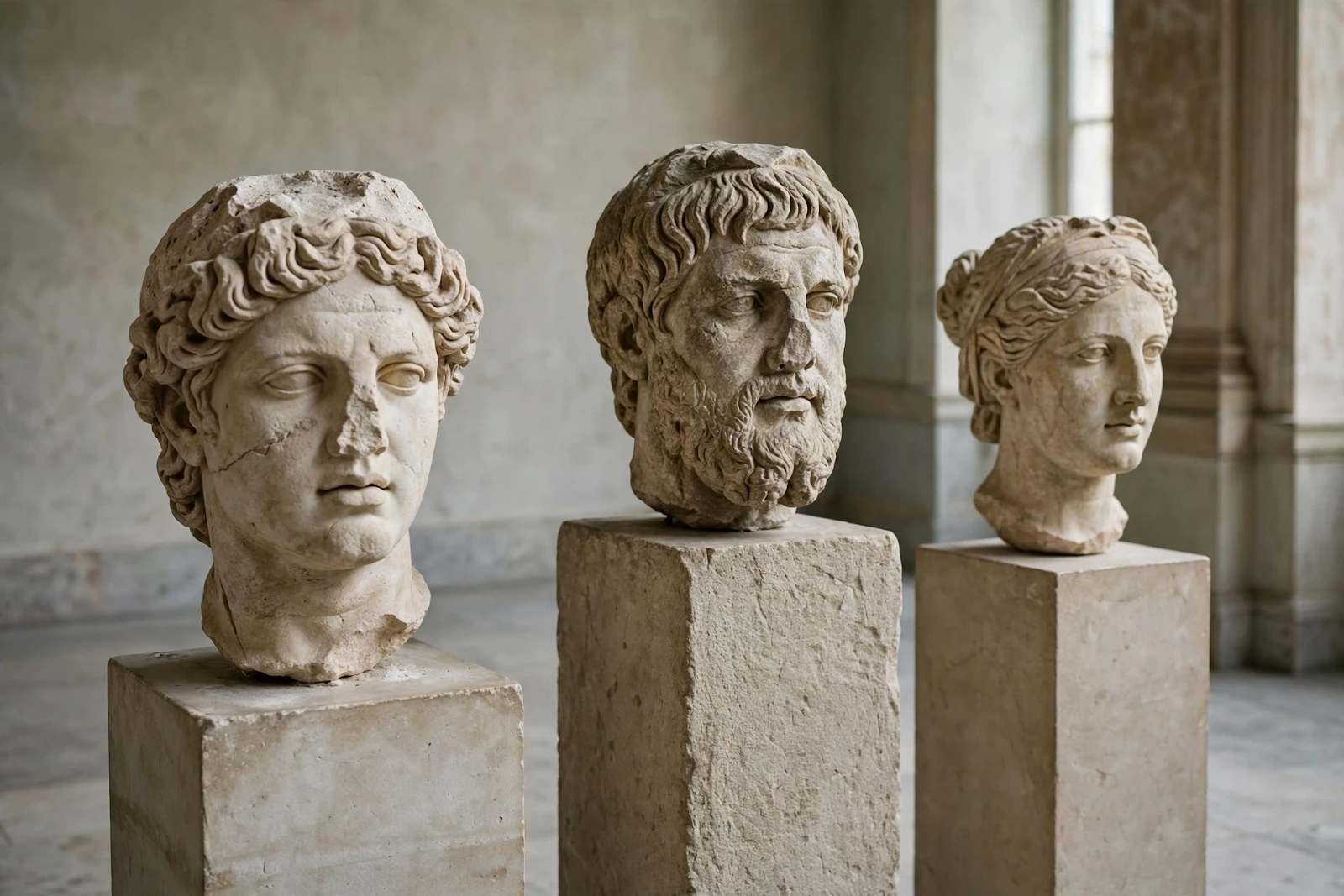
Illustration: Ancient carved stone statue heads displayed in a museum gallery.
What Happened
On the afternoon of 28 October 2026, local time, China's National Cultural Heritage Administration formally received two lost Chinese cultural relics from the National Gallery of Australia in Canberra. The handover ceremony was attended by Tang Wei, deputy director of the National Cultural Heritage Administration; Liu Jinsong, Chinese Ambassador to Australia; and Nick Mitzevich, director of the National Gallery of Australia, along with representatives from Australia's Department of Foreign Affairs and Trade and the federal arts ministry.
The two returned items are limestone heads from stone statues at Northern Song Dynasty imperial mausoleums in Gongyi, Henan Province: the head of a civil official statue from Yongchang Mausoleum and the head of a military official statue from Yongyu Mausoleum. According to the gallery's collection records, the military official head is 68 centimetres tall and weighs 132 kilograms, while the civil official head is 70 centimetres tall and weighs 223 kilograms.
Xinhua, reporting from Canberra on Wednesday, confirmed the handover and dated both pieces to the Northern Song Dynasty (960-1127). The agency's photographs from the ceremony showed the two heads being prepared for their journey home, closing a chapter that began with an investigation by Chinese heritage and public security authorities.
Background
The Northern Song Dynasty ruled China from 960 to 1127, and its emperors were buried in a complex of imperial mausoleums near Gongyi in present-day Henan Province. The tombs were guarded by avenues of stone figures — civil officials, military officers, animals and mythical beasts — carved from limestone and arranged as a spirit road leading to the burial mounds. Over the centuries, many of those statues were damaged, looted or dispersed, and fragments, including heads, ended up in collections around the world.
China's National Cultural Heritage Administration, together with public security and cultural relics authorities in Henan Province, conducted investigations into the two heads and submitted a formal memorandum to the National Gallery of Australia in 2025 to initiate the repatriation process. The return was carried out under the framework of the 1970 UNESCO Convention on the Means of Prohibiting and Preventing the Illicit Import, Export and Transfer of Ownership of Cultural Property, and based on a 2009 bilateral memorandum of understanding between China and Australia on the protection of cultural heritage.
The return is part of a wider pattern of repatriations in recent years. According to a Xinhua timeline published alongside Wednesday's handover, the United States returned 64 Chinese cultural relics and palaeontological fossils to China on 17 September 2026, and the Smithsonian's National Museum of Asian Art formally returned the Zidanku Silk Manuscript volumes II and III from the Warring States period in May 2025. Italy returned 56 lost Chinese cultural relics in November 2024. Australia itself had previously returned a Qing Dynasty statue to China in 2015, as reported by People's Daily Online.

Illustration: Officials at a formal cultural handover ceremony beside packed crates.
Why It Matters
The return matters for three reasons. First, it restores two significant pieces of China's imperial heritage to their country of origin, where they can be studied, conserved and eventually displayed in their proper historical context rather than as isolated fragments in a foreign collection. Stone heads of this size and age are rare survivors, and their reunion with the archaeological record of the Gongyi mausoleums adds to scholarly understanding of Song Dynasty funerary art.
Second, the handover is a concrete example of how international heritage law is supposed to work. The 1970 UNESCO Convention and bilateral agreements such as the 2009 China-Australia memorandum give museums and governments a framework for resolving claims without litigation, and the fact that both sides described the outcome as a product of cooperation — rather than confrontation — sets a precedent other institutions can follow. The Chinese side emphasised that returning lost cultural relics to their countries of origin is a just act that safeguards cultural security and respects cultural rights and national sentiment; the Australian side said the return reflects respect for cultural heritage, responsibility and international partnership.
Third, the return comes at a moment when China-Australia relations are being rebuilt across trade, education and culture, and heritage cooperation has become one of the least contentious areas of that relationship. Both sides said the handover would help deepen friendly relations and promote continued cooperation in cultural heritage protection — language that signals the return is valued as diplomacy as well as scholarship.
What Happens Next
The two heads are now in the custody of China's National Cultural Heritage Administration, which will oversee their conservation and decide on their eventual display. Given their size and weight, transport and conservation will be a careful process, and heritage officials in Henan are expected to be involved in decisions about whether the pieces are exhibited near their original mausoleum sites or in a national museum.
The return is also likely to encourage further claims. Museums around the world are under growing pressure to review the provenance of their collections, particularly for objects acquired during periods of conflict or colonial rule, and successful, negotiated returns such as this one strengthen the case for institutions to examine their holdings proactively. China's heritage administration has pursued a steady programme of repatriation claims in recent years, and Wednesday's handover will be cited as evidence that the process can work.
For Australia, the handover reinforces the National Gallery's stated commitment to ethical collecting. The gallery's director, Nick Mitzevich, attended the ceremony, and the Australian side framed the return as an expression of respect for cultural heritage and international partnership — a position that is likely to shape how the gallery handles future provenance questions.

Illustration: Ancient imperial tombs and weathered stone statues in a green countryside landscape.
Sponsored: explore today's featured sponsored offers
FAQ
What did Australia return to China on 28 October 2026?
Australia returned two limestone statue heads from Northern Song Dynasty imperial mausoleums: a civil official head from Yongchang Mausoleum and a military official head from Yongyu Mausoleum.
Where did the statue heads come from?
Both heads come from imperial mausoleums near Gongyi in Henan Province, China, which date from the Northern Song Dynasty (960-1127).
How big are the two statue heads?
According to the National Gallery of Australia's collection records, the military official head is 68 centimetres tall and weighs 132 kilograms, while the civil official head is 70 centimetres tall and weighs 223 kilograms.
Under what framework was the return made?
The return was carried out under the framework of the 1970 UNESCO Convention and based on a 2009 bilateral memorandum of understanding between China and Australia on the protection of cultural heritage.
Has Australia returned Chinese cultural relics before?
Yes. Australia previously returned a Qing Dynasty statue to China in 2015, and the two countries have cooperated on heritage protection under their 2009 memorandum.
Sources
- China News (news.cemsg.com), "Australia Returns Two Lost Chinese Cultural Relics", 28 October 2026
- Xinhua News Agency, "Australia returns 2 cultural relics to China" and "Timeline: Major Chinese cultural relics returned from overseas in recent years", 28 October 2026
- People's Daily Online, "Handover ceremony for repatriation of Chinese cultural objects held in Australia" (background on the 2015 return), 2023
Comments
Post a Comment