
The autumn internationals begin this weekend with far more than pride at stake: every result between now and the end of November will feed directly into the seedings for the 2027 Rugby World Cup, whose draw takes place on 3 December in Australia.
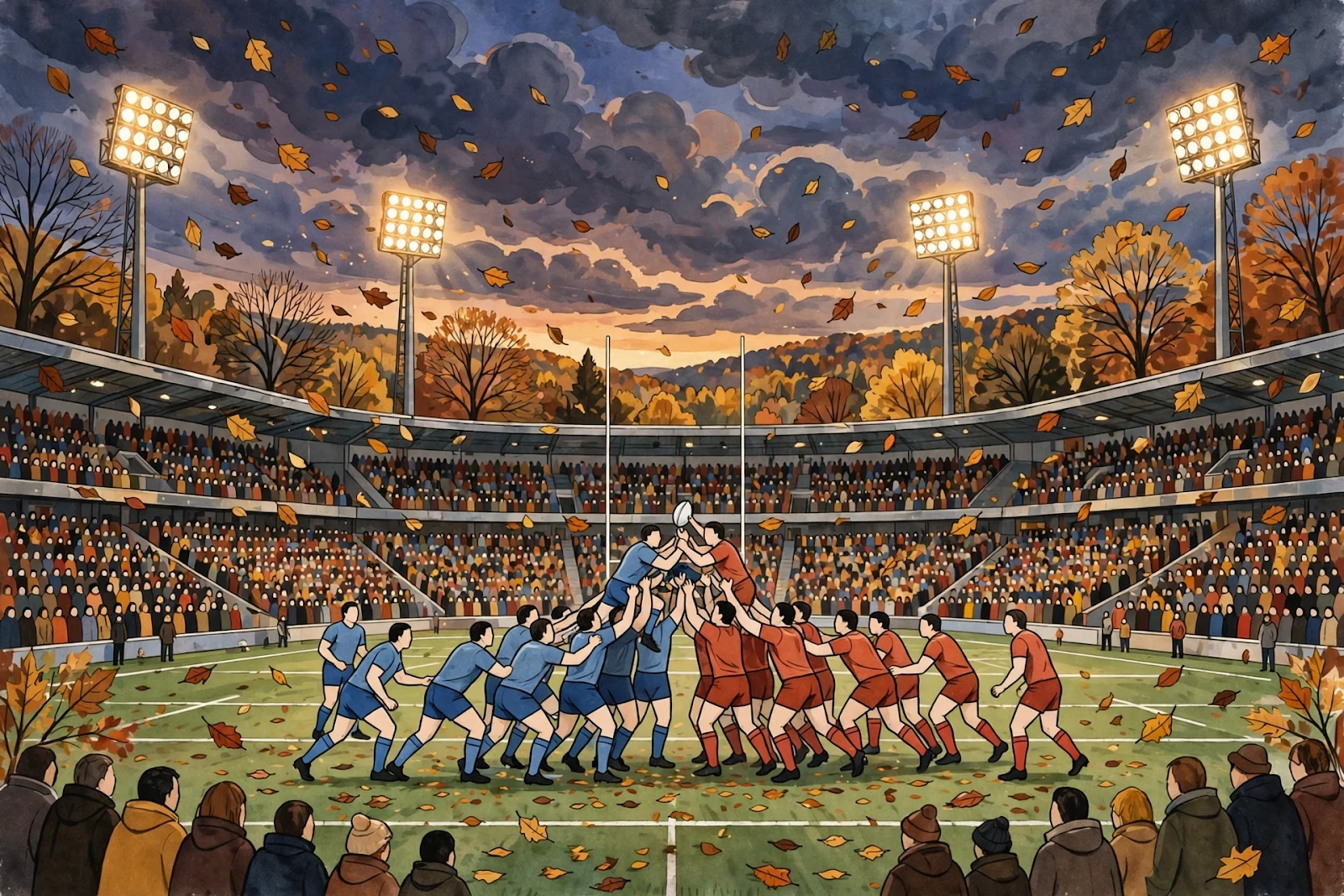
Illustration: Rugby players contesting a lineout under floodlights in an autumn stadium.
What Happened
As the Autumn Nations Series gets under way, the world's leading rugby nations enter a final stretch of ranking rugby before the draw for the 2027 tournament. According to BBC Sport's preview of the series, teams will be drawn into six pools of four for the group stage in Australia, and the current top six sides in the world rankings will occupy the top seeding band, avoiding one another in the pool stage.
That puts a premium on every November result. World Rugby's rankings work on a points-exchange system, in which teams gain or lose points based on the result, the relative strength of the two sides, the margin of victory and an allowance for home advantage. A win against a higher-ranked opponent is therefore worth considerably more than a routine victory over a lower-ranked one, and a heavy defeat can be costly.
As the series begins, the top six are South Africa, New Zealand, Ireland, France, England and Argentina, BBC Sport reports. South Africa, winners of the last two World Cups, lead the table on 92.20 points, ahead of New Zealand on 90.02 and Ireland on 89.83. France sit on 87.82, England on 87.64 and Argentina on 83.82, with hosts Australia seventh on 83.30 and Scotland eighth on 81.57, both still within striking distance of the top band.
The chasing pack has its own battles to fight. Wales, in twelfth place on 74.05 points, hold the last spot in the second seeding band, with Japan close behind on 73.25. Dropping out of that band would mean a considerably harder pool draw, and potentially a much tougher route to the knockout rounds.
Background
The 2027 Rugby World Cup, to be played in Australia, will be the first edition of the men's tournament to feature 24 teams, up from 20. The expanded field is divided into six pools of four, with the draw seeding teams into bands based on their world ranking at the cut-off point after the autumn series.
The autumn internationals have long served as the sport's annual measuring stick between World Cups and Six Nations campaigns. Northern-hemisphere teams host southern-hemisphere visitors in November, and the fixtures regularly produce the most consequential ranking movements of the year because so many top-ten sides meet in a short window.
South Africa arrive as the team to beat. The Springboks have won the last two World Cups and, according to the rankings reported by BBC Sport, hold a lead of more than two points over second-placed New Zealand. New Zealand, Ireland, France and England have all spent time at or near the top of the rankings in recent years, which is why the margins between third and fifth place are so tight: Ireland on 89.83, France on 87.82 and England on 87.64.
Argentina's presence in the top six underlines how much the balance of the sport has shifted. Los Pumas, in sixth on 83.82 points, sit ahead of the tournament hosts, and their autumn results will decide whether they keep a top seeding or slip back into the chasing pack.

Illustration: A golden rugby trophy displayed in a stadium, symbolising the 2027 Rugby World Cup.
Why It Matters
The draw bands matter because they shape the entire tournament. A top-seeded team avoids the other five leading sides in its pool, giving it a clearer path to the quarter-finals. A team that slips into the second band, by contrast, is guaranteed to face one of the top six, and a team that falls further could find itself in a pool with two heavyweights.
For Australia, the stakes are especially sharp. As hosts, the Wallabies will carry the hopes of a home crowd, but they begin the autumn in seventh place, just over half a point behind Argentina. A strong November could lift them into the top band and transform their draw; a poor one could leave them facing a group-stage meeting with South Africa, New Zealand or another leading side.
Scotland face a similar calculation. Eighth on 81.57 points, they are less than two and a half points behind Argentina, and a win over a top-six side in the autumn window would be worth far more than a routine home victory. Wales, meanwhile, are defending a position rather than chasing one: twelfth place keeps them in the second band, but Japan, Georgia and others are close enough that a bad autumn could push them down.
Beyond the seedings, the series is also a development exercise. With the World Cup still more than a year away at the time of the draw, BBC Sport notes that coaches use the autumn matches to blood new players and test tactics. The results therefore serve two purposes at once: they set the draw, and they reveal which squads are building depth for a long tournament.

Illustration: A stadium rankings board showing a rugby league ladder with fans cheering.
What Happens Next
The autumn fixtures will run through November, with the rankings updated after each round of matches. The final standings at the end of the series will determine the seeding bands for the draw on 3 December.
Supporters should watch three races in particular. The first is the battle for sixth place, where Argentina must hold off Australia and Scotland. The second is the fight for the final second-band spot, where Wales must stay ahead of Japan. The third is the contest at the very top, where South Africa will try to protect their lead while New Zealand, Ireland, France and England jostle for position behind them.
Once the draw is made, attention will turn to the pools themselves: which heavyweight pairings emerge, which groups look like a "group of death", and which emerging nations have been handed a realistic route into the knockout rounds. Until then, every autumn scoreline carries a double meaning, as both a result in its own right and a deposit, or a withdrawal, in the ranking bank that decides the road to Australia 2027.
Sponsored: explore today's featured sponsored offers
FAQ
When is the 2027 Rugby World Cup draw?
According to BBC Sport, the draw for the 2027 Rugby World Cup takes place on 3 December, after the autumn internationals have concluded.
How many teams will play at the 2027 Rugby World Cup?
The tournament in Australia will feature 24 teams, drawn into six pools of four for the group stage.
How do the world rankings decide the seedings?
Teams are placed into seeding bands based on their world ranking. The top six sides form the first band and avoid each other in the pool stage, with the next six forming the second band.
Who leads the world rankings as the autumn series begins?
South Africa lead the rankings on 92.20 points, according to the standings reported by BBC Sport, ahead of New Zealand on 90.02 and Ireland on 89.83.
Why do autumn results matter so much for the draw?
World Rugby's points-exchange system means wins over higher-ranked opponents earn the most points, so a strong autumn can lift a team into a higher seeding band, while defeats can push a team down into a harder pool.
Sources
- BBC Sport, "Autumn Nations Series: Why world rankings matter for 2027 Rugby World Cup draw", October 2026
- World Rugby rankings, as reported by BBC Sport, October 2026
- Rugby World Cup 2027 tournament format, Australia
Comments
Post a Comment