
China Names New Chiefs in Six Provinces Days Before Secretive Communist Party Plenum Opens in Beijing
BEIJING — China's ruling Communist Party has announced new party chiefs and senior appointments in six provinces just two days before its closed-door plenum opens in Beijing on October 26, 2026, in a reshuffle that sets the stage for a meeting expected to shape party discipline and leadership ahead of the next party congress.
The appointments, announced on Saturday, October 24, 2026, were reported by Reuters. They come as the party's Central Committee prepares to gather from October 26 to 29 for its fifth plenary session, a secretive meeting whose official focus is party governance and discipline, though personnel questions could also feature.

Illustration: A closed-door assembly hall in Beijing ahead of China's Communist Party plenum. This is an AI-generated illustration, not a photograph of the meeting.
What Happened
According to Reuters, the party announced key personnel changes in six provinces on October 24. State Council Vice Secretary-General Wang Zhijun was named Communist Party secretary of the southern province of Hunan, replacing Shen Xiaoming. Wang is a full member of the Central Committee, the party's largest top decision-making body.
Mo Gaoyi, a vice minister at the party's publicity department and director of the State Council Information Office, was named party secretary of the southwestern province of Yunnan, replacing Wang Ning.
Further appointments signalled coming changes at provincial government level. Xie Weijiang, Hunan's deputy party secretary and party chief of Yueyang, was named secretary of the provincial government's party group, signalling he is set to succeed Governor Mao Weiming. Guo Ningning, Fujian's deputy party secretary and party chief of the provincial capital Fuzhou, was named secretary of the provincial government's party group, signalling she is set to become governor.
Lin Tao was named Fujian deputy party secretary, while Qin Haixiang replaced Guo as Fuzhou party chief. Zhuge Yujie, previously deputy party secretary of central Hubei province, was named deputy party secretary of the northwestern province of Qinghai and secretary of its provincial government's party group, signalling he is set to become governor. Chen Yongqi, southern Jiangxi's deputy party secretary and head of its political and legal affairs commission, was named secretary of the provincial government's party group, signalling he is set to replace former governor Ye Jianchun, who was placed under investigation in August.
Background
The plenum opening on October 26 is the fifth time the roughly 300 full and alternate members of the Central Committee have gathered since the 2022 party congress confirmed top leader Xi Jinping's norm-breaking third term in office, according to Reuters. The Brookings Institution notes the committee comprises 205 full members and 152 alternates, and that the party counts about 101 million members.
Plenums are a tradition of the party-state: almost annual, closed-door meetings that signal major policy directions. The official theme this time is tightening discipline in the party's ranks, Reuters reported, but key personnel deliberations and the fate of disgraced former officials are also likely to feature prominently.
Secrecy is part of the format. To prevent leaks, attendees are traditionally confined to the venue for the duration of the meeting, Reuters reported, and little if any news of the proceedings becomes public until it closes. Foreign media and most Chinese reporters are given no access. On the closing day, the official Xinhua news agency is expected to issue a dispatch giving details of what was agreed, typically in opaque party terminology, with a more detailed document usually following several days later.
Past plenums have been held under tight security at the Soviet-era Jingxi Hotel in western Beijing, Reuters noted, though the location of this year's meeting has not been announced. The contrast with 1978 is often cited: a watershed conclave overseen by Deng Xiaoping that kick-started China's economic reforms and began the country's transformation from a centrally planned economy into a global economic power.

Illustration: A stylised map of China highlighting provinces with new party chiefs. This is an AI-generated illustration, not an official map.
Why It Matters
The plenum matters because it lays the groundwork for the party's next quinquennial congress, due in late 2027, when roughly 2,000 delegates will gather in Beijing and Xi's likely fourth five-year term begins, according to Brookings. Decisions about discipline, personnel and the party's direction taken behind closed doors this week will shape that congress — and therefore China's leadership for years to come.
The personnel context is unusually turbulent. Brookings reports that since last year's plenum, Xi's anti-corruption campaign has toppled two more Politburo members, leaving 21 members, and that the purge of the Politburo has become its most sweeping since the aftermath of the 1989 Tiananmen crackdown. The party's supreme military council, the Central Military Commission, has shrunk from seven members at the start of Xi's third term to just two — Xi himself and General Zhang Shengmin, who oversaw the purges of his peers — while as many as 33 officers at theatre-command level have been removed.
For the rest of the world, the plenum's outcome will affect how China governs itself at a moment of trade tension, technological rivalry and regional security strain. A party that emerges more disciplined and more centralised will negotiate, trade and make security decisions differently from one divided over personnel and policy — and foreign governments, investors and neighbours will read the closing communique closely for clues.
The provincial reshuffle itself matters too. Party secretaries run China's provinces day to day, controlling budgets, appointments and policy implementation. The six changes announced on October 24 put new hands on the levers of power in Hunan, Yunnan, Fujian, Qinghai and Jiangxi just as the central leadership gathers to set its course.
What Happens Next
The plenum runs from Monday, October 26, to Thursday, October 29. During those four days, expect silence: no briefings, no leaks of substance, and no public agenda beyond the official theme of discipline.
On the closing day, watch for the Xinhua dispatch. It will confirm what was agreed in general terms and may reveal personnel decisions, including any changes to the Politburo or the military commission. A fuller document is expected several days later, and analysts will parse its language for shifts in emphasis on discipline, governance and the economy.
After the plenum, attention will turn to the provincial governments, where the newly signalled governors in Hunan, Fujian, Qinghai and Jiangxi are expected to be formally confirmed, and to the run-up to the late-2027 party congress, where the longer-term leadership picture will be settled.
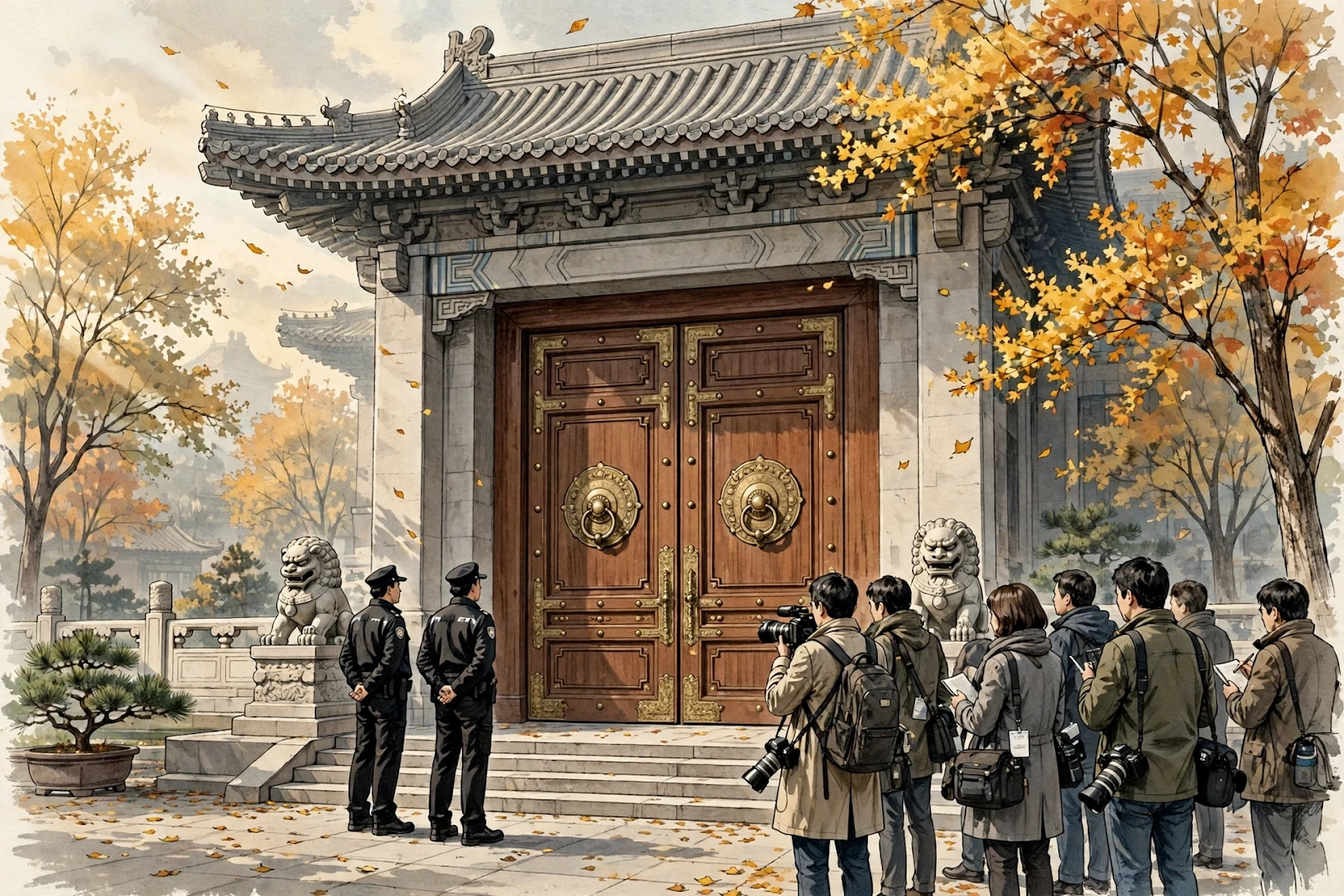
Illustration: Journalists waiting outside a closed conference venue in Beijing. This is an AI-generated illustration, not a photograph of the plenum.
Sponsored: explore today's featured sponsored offers
FAQ
What is China's Communist Party plenum?
It is a plenary session of the party's Central Committee — the roughly 300 full and alternate members who form its largest top decision-making body — held behind closed doors to set policy direction and discuss personnel.
When does the October 2026 plenum take place?
From Monday, October 26, to Thursday, October 29, 2026, in Beijing, according to Reuters.
Who was appointed in the October 24 reshuffle?
New party secretaries were named in Hunan (Wang Zhijun) and Yunnan (Mo Gaoyi), with further appointments signalling new governors in Hunan, Fujian, Qinghai and Jiangxi, as reported by Reuters on October 24, 2026.
Why is this plenum especially closely watched?
Because it sets the political tone ahead of the late-2027 party congress, and because it follows sweeping purges of the Politburo and the military high command, according to Brookings Institution analysis.
When will the plenum's decisions become public?
Reuters reports that Xinhua is expected to issue a dispatch on the closing day, with a more detailed document usually following several days later.
Sources
- Reuters, "China's Communist Party names new provincial chiefs ahead of fifth plenum," October 24, 2026.
- Reuters, "How China's October 26 to 29 Communist Party plenum works," October 23, 2026.
- Brookings Institution, "Xi's party: What to look for at the upcoming Chinese Communist Party plenum," October 2026.
Comments
Post a Comment