
ByteDance, Alibaba and Tencent have ordered more than 3 million of Nvidia's new RTX PRO 5500 graphics cards — a collective order worth over $35 billion — in a rush for powerful but export-compliant chips amid U.S. restrictions on trade with China. The scale of the orders, reported by Reuters on October 20, 2026 and not previously disclosed, underscores Chinese tech giants' unrelenting appetite for Nvidia hardware despite Washington's curbs. And in a twist that says everything about the state of the global AI race, Nvidia has told customers and partners it cannot guarantee it can fill the orders — demand far exceeds planned production.
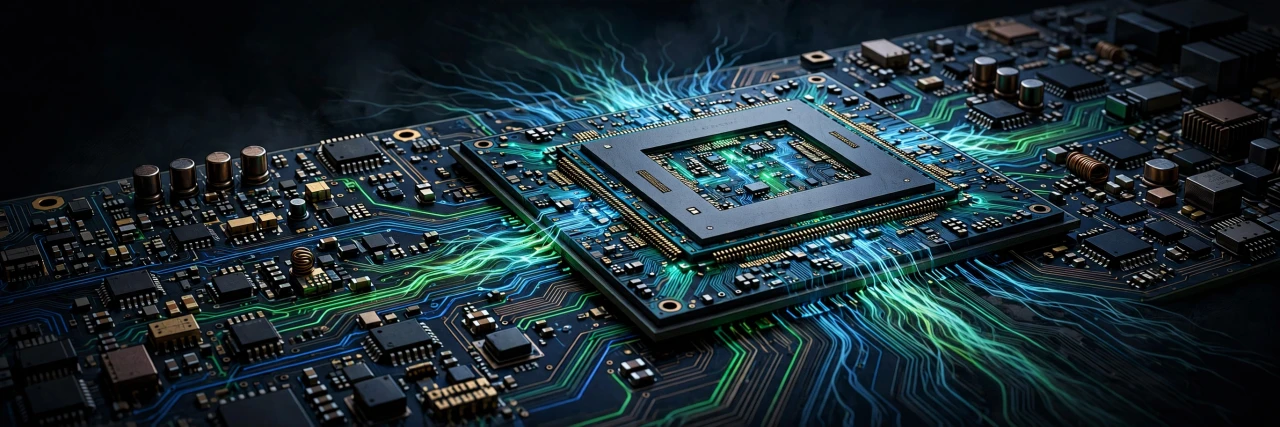
Illustration: a high-end workstation graphics chip on a circuit board. This is an AI-generated illustration, not a photograph of the actual product.
What Happened
According to two people familiar with the matter who spoke to Reuters on condition of anonymity — they were not authorized to speak to the media — the three Chinese technology giants have placed orders for Nvidia's RTX PRO 5500 cards at a price of about $11,400 each, giving the combined orders a potential value of more than $35 billion. The RTX PRO 5500 is a workstation chip, designed for powerful professional computers rather than the large data-center clusters that use Nvidia's most advanced AI processors. But it is among the most powerful Nvidia chips still available to Chinese buyers under U.S. export controls.
The supply picture is stark. One source told Reuters that Nvidia had told partners they might receive only 5% to 10% of the quantities requested. Another said the company had indicated it could produce no more than 3 million RTX PRO 5500 cards globally in 2027 — while total orders from customers in China alone have exceeded 6 million. In other words, Chinese buyers are chasing at least twice as many cards as Nvidia expects to make for the entire world next year.
The orders reflect a calculated bet on what remains legal. Nvidia's Blackwell-based B300 data-center chip is not allowed to be sold to Chinese buyers under U.S. export controls, while exports of its Hopper-based H200 are reviewed on a case-by-case basis and subject to licensing conditions. The RTX PRO 5500 sits just inside the compliance boundary — powerful enough to matter for AI development, restrained enough to clear the export rules.
Background
The chip scramble is playing out against a rapidly escalating technology standoff. On October 16, China's commerce ministry announced a proposal to add 40 technologies across the artificial intelligence, biomedicine and photovoltaic sectors to its catalogue of technologies prohibited or restricted from export. Public comment is being sought until November 15, with interim pre-export registration management already in effect. Among the technologies in the proposed revision are AI models, intelligent agents and computing clusters — described in the reporting as the three fundamental building blocks of China's AI industry. The ministry said the move was routine and did not target any specific country, region or entity.
Illustration: a futuristic technology headquarters campus at night, evoking China's AI giants. This is an AI-generated illustration, not a photograph of a real company.
The broader numbers show why demand is so ferocious. Taiwan's export orders hit a record $114.21 billion in September 2026, up 62.4% from a year earlier — the 20th straight monthly gain — credited by the island's economy ministry to strong demand for AI, high-performance computing and cloud services. The ministry expects October orders to rise 62% to 67% and full-year export orders to reach $1.1 trillion. Taiwan, home to TSMC, the world's largest contract chipmaker, is considered a bellwether of global technology demand.
South Korea tells the same story. Customs data released on October 21 showed the country's exports surged 105.4% in the first 20 days of October from a year earlier, led by record chip sales driven by global AI investment. Semiconductor exports rose 222.5% and accounted for 44.7% of the total — a staggering concentration that shows how completely AI hardware now dominates the trade picture.
And it is not only the chipmakers winning. On October 20, server maker Super Micro Computer said it expects preliminary first-quarter revenue of between $18.5 billion and $19.5 billion — well above analysts' average estimate of $15.23 billion — driven by demand for AI platforms. The AI infrastructure boom is lifting the entire supply chain, from silicon to servers.
Why It Matters
The $35 billion order book is a stress test for the entire U.S. export-control regime. Washington's strategy has been to slow China's AI progress by choking off access to the most advanced chips — while the RTX PRO 5500 episode shows Chinese giants adapting in real time, redirecting tens of billions of dollars toward the most powerful hardware they can still legally buy. The question for policymakers is whether the compliance boundary is holding back China's AI ambitions or simply rerouting them.
For Nvidia, the episode is both a windfall and a warning. More than $35 billion in orders from just three customers would be a dream backlog — if the company could fulfill it. That it cannot, with Chinese orders alone running at twice the planned 2027 global production, illustrates how supply-constrained the AI hardware market remains even as investment pours in. Allocation decisions — who gets 5% and who gets 10% — are about to become some of the most politically sensitive calls in the technology industry.
For the global AI race, the message is simpler: the appetite for compute is not slowing. Record export orders in Taiwan, record chip sales in South Korea, a record revenue guide from Super Micro, and a $35 billion scramble for workstation cards all point in the same direction. Whatever the export rules say, the world's biggest technology companies are buying every AI-capable chip they can get their hands on.

Illustration: rows of AI data-center server racks with blinking lights. This is an AI-generated illustration.
What Happens Next
Watch Nvidia's production ramp through 2027: the company has indicated a ceiling of about 3 million RTX PRO 5500 cards globally for the year, and how it allocates that scarce supply — between Chinese buyers, Western workstation customers and other markets — will be closely watched. Any sign of expanded production, or of further U.S. tightening on this class of chip, would move markets.
On the regulatory front, China's proposed export-control catalogue remains open for public comment until November 15, with interim registration requirements already biting. Whether Beijing finalizes the restrictions on AI models, intelligent agents and computing clusters — and how Washington responds — will shape the next phase of the technology standoff.
And the demand signals keep coming: Taiwan's October export orders, due next month, are expected to rise another 62% to 67%, while South Korea's full-month October trade data will show whether the 105% surge held. If the AI hardware boom has a ceiling, nobody has found it yet.
Sponsored: explore today's featured sponsored offers
FAQ
What did ByteDance, Alibaba and Tencent order?
The three Chinese tech giants ordered more than 3 million of Nvidia's RTX PRO 5500 graphics cards at about $11,400 each — a combined value of over $35 billion, according to two sources familiar with the matter cited by Reuters on October 20, 2026.
What is the RTX PRO 5500?
It is a workstation chip designed for powerful professional computers rather than large data-center clusters. Crucially, it is among the most powerful Nvidia chips still available to Chinese buyers: the Blackwell-based B300 data-center chip is banned for China under U.S. export controls, and H200 exports face case-by-case licensing.
Can Nvidia fulfill the orders?
Apparently not in full. Nvidia told customers it cannot guarantee fulfillment because demand far exceeds planned production. One source said partners might receive only 5% to 10% of requested quantities; another said Nvidia could make no more than 3 million cards globally in 2027, while China orders alone exceed 6 million.
How does this connect to China's own export controls?
On October 16, China's commerce ministry proposed adding 40 technologies — including AI models, intelligent agents and computing clusters — to its export-control catalogue, with public comment open until November 15. The ministry called the move routine and said it targets no specific country.
What does this say about global AI demand?
Demand remains extraordinary: Taiwan's September export orders hit a record $114.21 billion on AI demand, South Korea's chip exports jumped 222.5% in early October, and Super Micro guided first-quarter revenue well above estimates on AI platform demand.
Sources
- Reuters — "ByteDance, Alibaba and Tencent place over $35 billion worth of Nvidia chip orders" (October 20, 2026)
- Reuters — "China proposes adding 40 AI, biotech, solar technologies to export control list" (October 16, 2026)
- Reuters — "Taiwan September export orders hit record value on solid AI demand" (October 20, 2026)
- Reuters — "South Korea October 1-20 exports surge 105% on record chip sales" (October 21, 2026)
Comments
Post a Comment