
China Clears DeepSeek and MiniMax to Deploy AI Models Globally, Days After Proposing AI Export Controls

Illustration: two glowing AI robot figures facing a globe wrapped in network connections, symbolizing Chinese AI models approved for global use
BEIJING, Oct 23 — China has granted state approval for global use of artificial intelligence models developed by DeepSeek and MiniMax, according to a social media account affiliated with state broadcaster CCTV — a striking signal that Beijing wants its AI champions to compete internationally even as it draws up sweeping export controls on AI technology.
The announcement lands just days after China's commerce ministry proposed adding 40 technologies — including AI models, intelligent agents and computing clusters — to its catalogue of restricted or prohibited exports, underscoring the balancing act Beijing is attempting between controlling strategic technology and exporting its AI industry to the world.
What Happened
On Thursday, October 22, the social media account Yuyuan Tantian — which is affiliated with state broadcaster CCTV — posted that major Chinese AI developers DeepSeek and MiniMax had won state approval for global use of their AI models, Reuters reported on October 23. In a separate post on Friday, the account said overseas internet users had also urged other Chinese open-source large language models to follow suit.
DeepSeek and MiniMax did not immediately reply to requests for comment, according to Reuters. The nature of the approval — whether it takes the form of a specific license, a regulatory clearance for overseas deployment, or a broader policy blessing — was not detailed in the posts reported by Reuters.
MiniMax is a publicly listed Chinese AI company whose shares trade in Hong Kong, while DeepSeek is the Hangzhou-based startup whose low-cost, high-performance AI model stunned global markets in early 2025 and ignited the open-source AI race. Both have become symbols of China's challenge to American dominance in artificial intelligence.
The timing is notable. On October 16, China's commerce ministry proposed adding 40 technologies across artificial intelligence, biomedicine and photovoltaics to its catalogue of technologies prohibited or restricted from export. The ministry is seeking public opinions on the proposed revision until November 15 and is simultaneously implementing interim pre-export registration management for the relevant technologies.
Those included in the proposed revision are AI models, intelligent agents and computing clusters — what Reuters described as the three fundamental building blocks of China's AI industry. The ministry said the revision was proposed because applications of related technologies in sensitive fields are constantly expanding, and stressed that the move was routine and did not target any specific country, region or entity.
Background
The DeepSeek and MiniMax approvals highlight a dual strategy at the heart of China's AI policy. On one hand, Beijing is tightening control over the transfer of technologies it views as vital to national security, amid intensifying geopolitical competition with Washington. The proposed export controls cover overseas deployment of AI models containing restricted technology — a direct attempt to stop frontier AI capabilities from leaking abroad.
On the other hand, China's commerce ministry has signaled that most AI technologies would remain exportable, with simplified licensing for open-source technology exports and for Chinese companies operating their own computing centers overseas. That carve-out matters: China's leading AI firms, including DeepSeek, have built their international reputation precisely on open-weight models that developers worldwide can download, modify and deploy freely.
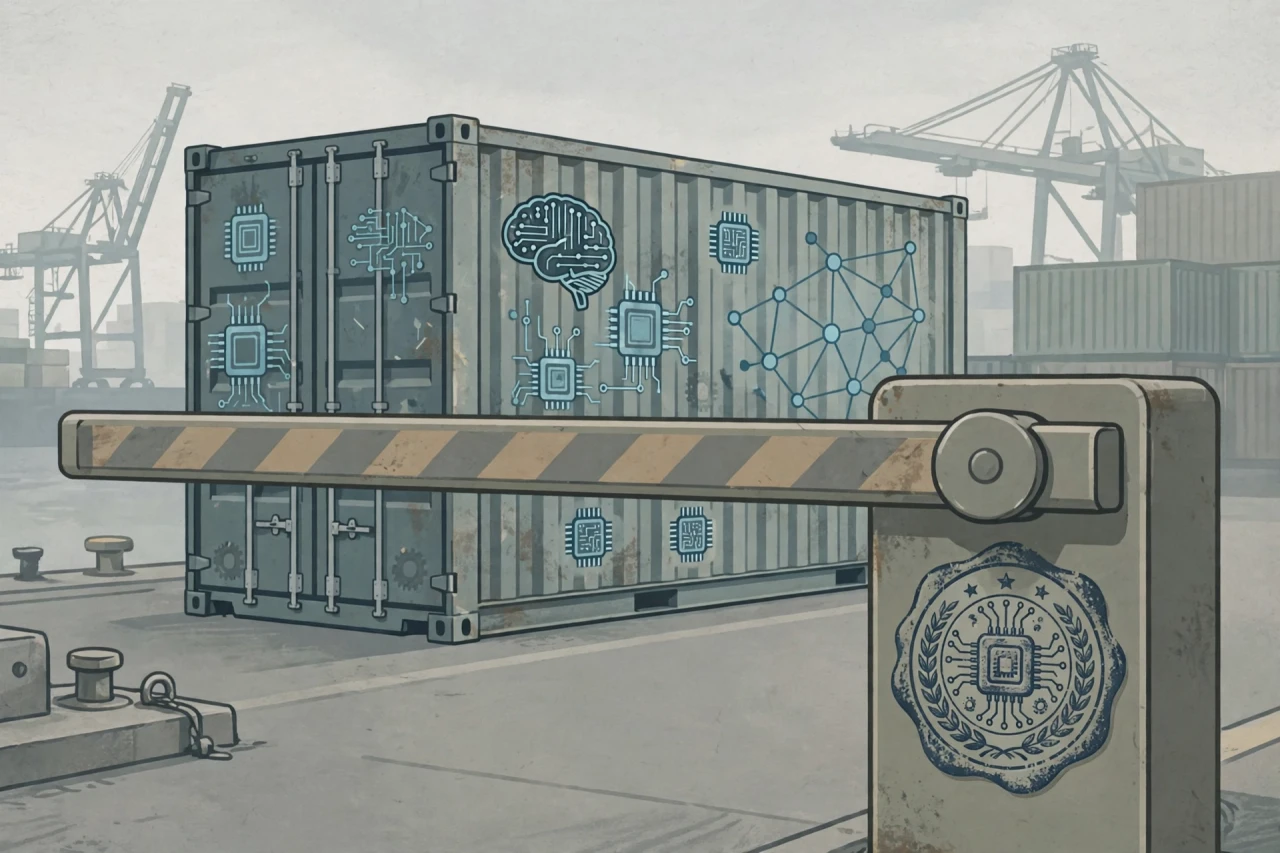
Illustration: a shipping container decorated with AI and computer chip icons behind a customs barrier gate, illustrating AI export control proposals
The distinction between "open-source AI" and "restricted AI technology" is where the policy gets complicated. Open-weight models are freely distributed by design; once released, they can be downloaded anywhere. The approvals for DeepSeek and MiniMax suggest Beijing intends to keep that door open for its champions — effectively blessed outward expansion — while retaining the ability to block specific transfers it considers sensitive.
The context is a global race in which AI has become both an economic prize and a security concern. Washington has spent years restricting China's access to advanced AI chips and semiconductor manufacturing equipment, and in October 2026 a bipartisan group of US lawmakers pushed to bar Chinese-made data-center components from sensitive American government systems. Beijing's latest moves show it is now playing offense as well as defense: exporting its AI while guarding the technology that produces it.
MiniMax's profile is also worth noting. Unlike DeepSeek's lean, research-driven image, MiniMax is a publicly traded company whose valuation is tied directly to its ability to commercialize AI models globally. A formal state approval for global deployment is, in effect, a regulatory green light for its international business — and a signal to investors that Beijing backs its overseas expansion.
Why It Matters
The approvals are Beijing's clearest statement yet that it does not intend to fence off its AI industry from the world — only to control the terms of its global reach. For developers, startups and governments across the Global South, that means continued access to Chinese open-weight models that have become genuine alternatives to American systems, often at a fraction of the cost.
For the United States, the move sharpens a strategic dilemma. Washington has sought to slow China's AI progress by denying it advanced hardware, but China's open-source strategy allows its software to propagate globally regardless of chip restrictions. If DeepSeek-class models run on widely available hardware, Beijing can win users and influence without needing to export restricted technology at all.
The export-control proposals add a layer of regulatory risk for anyone doing business with Chinese AI firms. Companies operating their own computing centers overseas or licensing open-source exports will be watching how "simplified licensing" works in practice — and where Beijing draws the line between routine global business and sensitive technology transfer.
There is also a signaling dimension aimed at Washington. By proposing export controls on AI technologies while simultaneously approving global deployment for its national champions, Beijing is mirroring the posture the United States has taken for years: restrict what must be restricted, export what can be exported, and keep the frontier capabilities under sovereign control.
What Happens Next
Several things will clarify the picture in the coming weeks. First, the public consultation period on the export-control catalogue runs until November 15, and the final list — and how strictly it is enforced — will determine how much of China's AI industry can actually operate abroad.

Illustration: an open laptop with glowing code streams flowing across a world map, representing open-weight AI models being shared globally
Second, developers and cloud providers will be watching whether other Chinese open-source models receive similar approvals, as the CCTV-affiliated account suggested overseas users are urging. A widening list of blessed models would confirm that Beijing sees open-source AI as a strategic export, not a loophole to be closed.
Third, Washington's response will matter. The United States has shown it is willing to extend its own export controls to cover Chinese software and components, not just hardware. If Beijing's approvals accelerate global adoption of Chinese models, pressure in Washington to restrict their use in American systems — and those of allies — is likely to grow.
Finally, the market will judge the commercial winners. For MiniMax, state approval for global use is a catalyst for international partnerships and enterprise deals. For DeepSeek, which has operated as a more opaque research lab, the approval may presage a more commercial posture. Either way, Beijing's message is unmistakable: Chinese AI is going global — on Beijing's terms.
Sponsored: explore today's featured sponsored offers
FAQ
What approval did DeepSeek and MiniMax receive?
According to a CCTV-affiliated social media account, the two Chinese AI developers won state approval for global use of their AI models. The precise legal form of the approval — license, clearance or policy blessing — was not detailed in the reports. Neither company immediately replied to Reuters' requests for comment.
Why is China proposing AI export controls at the same time?
On October 16, China's commerce ministry proposed adding 40 technologies — including AI models, intelligent agents and computing clusters — to its export-control catalogue, to limit transfer of tools it views as vital to national security. The ministry said most AI technologies would remain exportable with simplified licensing, and called the move routine and not targeted at any specific country.
What does "simplified licensing for open-source exports" mean?
It suggests Beijing plans to keep the door open for Chinese companies to export open-weight AI models and operate their own computing centers overseas under a streamlined approval process, while reserving the right to block transfers of restricted technology. The practical details are still being worked out.
How does this fit into the US-China AI competition?
Washington has restricted China's access to advanced AI chips for years. Beijing's approach is now symmetric: approve its champions' global expansion while controlling the underlying technology. Open-weight Chinese models can reach users worldwide without restricted hardware transfers, making them a powerful tool of technological influence.
What should developers and businesses watch?
The export-control catalogue is open for public comment until November 15 — the final text will define the compliance burden. Watch also for whether more Chinese models receive global-use approvals, and whether Western governments respond with new restrictions on Chinese AI systems in sensitive applications.
Sources
- Reuters, Oct 23, 2026 — "China's DeepSeek, MiniMax win approval for AI global use, state media-affiliated entity says"
- Reuters, Oct 16, 2026 — "China proposes adding 40 AI, biotech, solar technologies to export control list"
- Reuters, Oct 23, 2026 — "HKEX launches AI and semiconductor indexes, licenses AI index in China"
Comments
Post a Comment