
ECB Rate Hikes Back on the Table: Why Europe May See a Third Increase in December 2026
Frankfurt's central bankers are changing course again. With eurozone inflation running at 3.8% — nearly double the European Central Bank's 2% target — economists and policymakers now expect another interest rate increase in December, just months after the ECB had appeared to be done tightening.
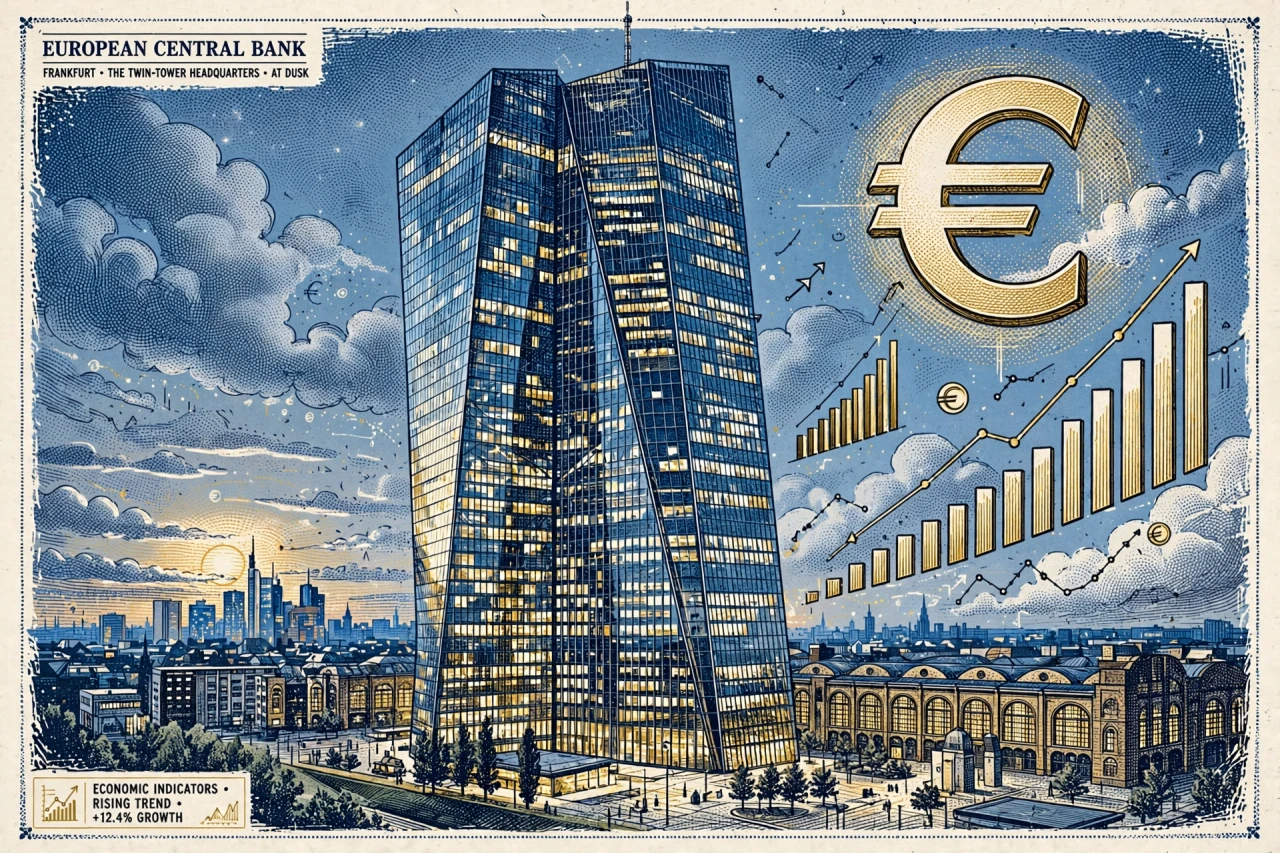
Illustration: the European Central Bank's twin-tower headquarters in Frankfurt at dusk, with a euro symbol and rising chart lines.
What Happened
European Central Bank policymakers are lining up the December 17, 2026 meeting as the most likely moment for a third interest rate hike this year, according to officials who spoke to Bloomberg on the sidelines of the IMF and World Bank Annual Meetings in Bangkok, as reported on October 18, 2026.
A December increase would take the ECB's key deposit rate — the bank's main policy rate — to 2.75%, its highest level in years, after two quarter-point hikes in June and September already lifted it to 2.50%.
The shift follows a sharp jump in eurozone inflation. Annual consumer price growth hit 3.8% in September 2026, up from 3.2% in August, according to Eurostat. The surge was driven almost entirely by energy: the energy component of the harmonised index of consumer prices rose 18.8%, up from 14.3% the previous month, which Eurostat attributed to the conflict in the Middle East.
Market sentiment has moved in the same direction. A Reuters poll of 73 economists conducted October 5–8 found that all but three expected the ECB to hold rates at 2.50% at the October 29 meeting — but a near-90% majority, 64 of the 73, now anticipate a 25-basis-point increase in December. That marks a clear reversal from September's poll, when more than 90% of economists still expected rates to stay on hold.
The International Monetary Fund added its voice on October 16, 2026, saying in its regular regional forecast for Europe that "at least one further 25 bps increase in policy rates in 2026 will be required to ensure that core inflation remains well contained," as reported by Reuters from Bangkok.
Background
The ECB's return to rate hikes is a dramatic turn from the easing cycle that dominated 2024 and 2025, when the bank steadily cut rates as inflation fell from its post-pandemic peaks. That easing ended abruptly this year after the US-Israeli war with Iran sent global energy prices soaring, pushing crude oil above $100 a barrel and straining shipping through the Strait of Hormuz.
The first two hikes — in June and September 2026, each a quarter of a percentage point — lifted the deposit rate from 2.00% to 2.50%, and moved the main refinancing rate and the marginal lending rate to 2.65% and 2.90% respectively. The September move came when annual inflation stood at just 3.2%; September's further jump to 3.8% has since strengthened the case for more.
The ECB's own staff projections, released in September, see headline inflation averaging 3.0% this year, 2.5% in 2027 and 2.1% in 2028, with economic growth of 0.9%, 1.4% and 1.5% over the same period. The bank describes the risks to inflation as leaning upward and the risks to growth as leaning downward — central-bank language for a delicate balancing act.
President Christine Lagarde has called for a "measured response," stressing that the bank will decide meeting by meeting based on incoming data and is not committing to any particular path. Officials who spoke in Bangkok echoed that caution: Gediminas Simkus, Lithuania's central bank chief, said the Governing Council prefers to act when the most data is available but did not rule out a move as early as October 29. His Latvian counterpart, Martins Kazaks, warned that decisions ahead will be tougher, since rising government bond yields are making borrowing more expensive and could drag on growth.
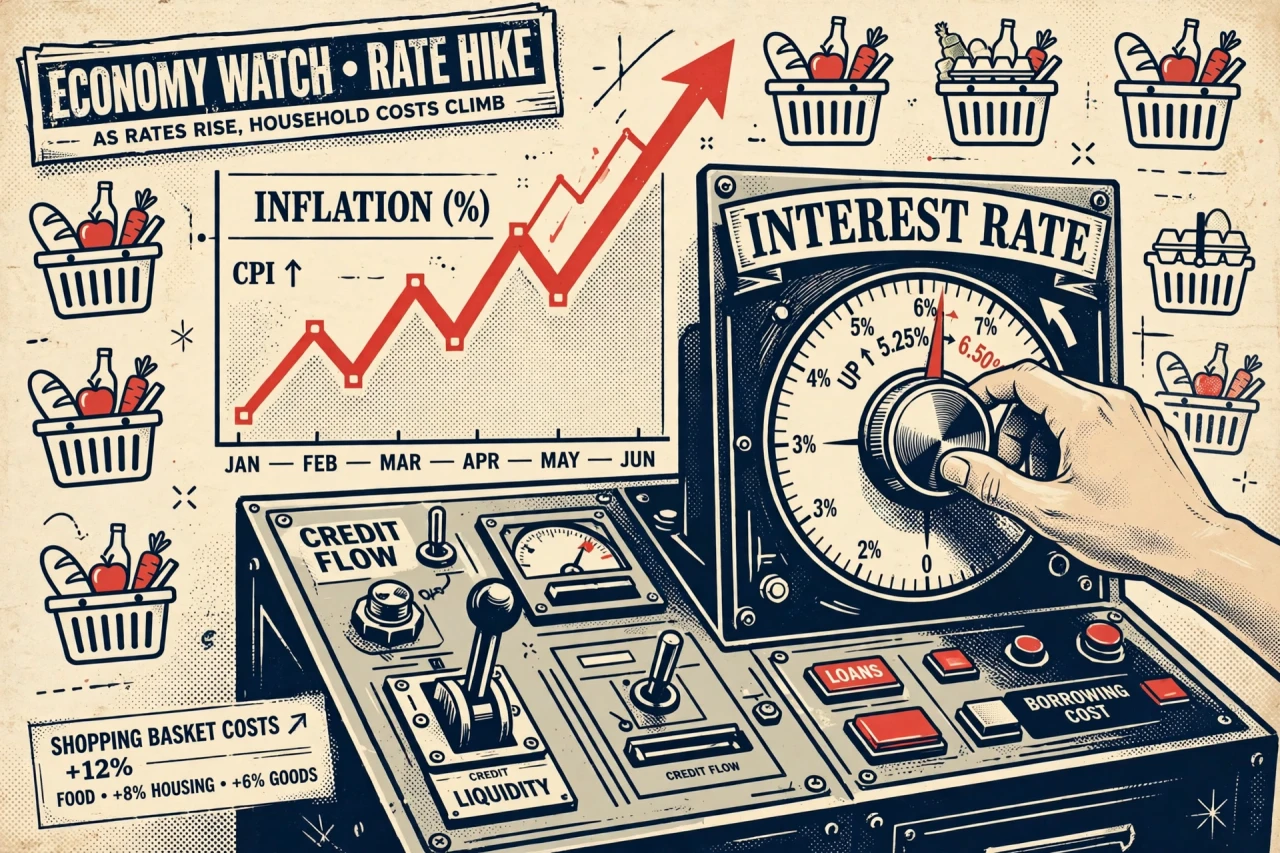
Illustration: a hand turning an interest-rate dial upward on a giant control panel, with a rising inflation chart in the background.
Why It Matters
For Europe's 350 million euro-area citizens, another rate hike means higher borrowing costs on everything from mortgages to business loans and government debt. The ECB estimates that the policy tightening already in place is still working its way through the economy, and a third hike would reinforce that cooling effect just as the energy shock is already squeezing household budgets.
The timing matters globally, too. The ECB is one of the world's most influential central banks, and its moves affect financial conditions far beyond Europe — from emerging-market debt costs to the euro-dollar exchange rate that shapes global trade pricing. A eurozone that keeps tightening while growth slows raises the risk of a policy mistake that could ripple outward.
There is also a political dimension. Governments across Europe are already spending heavily to cushion households from high energy prices, and the IMF explicitly warned in its October 16 report that "fiscal support to mitigate the effects of higher energy prices, if not carefully calibrated, could undermine disinflation efforts." The clash between fiscal cushioning and monetary tightening is a classic policy tension — and it rarely ends quietly.
Perhaps most striking is how fast expectations have moved. Just weeks ago, the consensus was that the ECB was done. Now, a 58% majority of economists in the Reuters poll see the deposit rate peaking at 2.75%, while more than a third — 24 economists, up from just two last month — expect 3.00%. Markets are reportedly pricing nearly three further hikes by the end of 2027.
What Happens Next
The immediate focus is the ECB's October 28–29 meeting, with the decision announced on October 29. Almost no one expects a move that day: prediction-market platforms have pointed to roughly a 91% chance of no change. The real decision point is December 17, when the bank releases fresh economic projections alongside its rate decision — giving policymakers their fullest picture of the outlook before acting.
Several data releases will shape that decision. Eurostat's flash inflation estimate for October, due November 4, will show whether September's 3.8% reading was a spike or the start of a trend. Oil prices and developments in the Middle East remain the wild card: the ECB itself has said energy is driving the outlook, and that it sees so far only limited spillover into wages and other consumer prices — a spillover that, if it materialises, would be a trigger for further hikes.
"Given uncertainties, the ECB is likely to remain on the current quarterly adjustment path and that should get us to another hike in December... the main risk is there may actually be one more hike, maybe in March," Jens Eisenschmidt, chief Europe economist at Morgan Stanley, told Reuters. Others are less convinced the tightening stops there: "I do not have a very strong conviction they go to 2.75% and stay there," he added.
If December brings a hike and inflation keeps running hot into 2027, Europe's economy faces a difficult combination: above-target inflation, rising borrowing costs, and growth that the ECB itself forecasts at just 1.0% this year and 1.2% next. That is why this story will not end in December — and why the ECB's December projections, released the same day as the decision, may matter as much as the rate move itself.
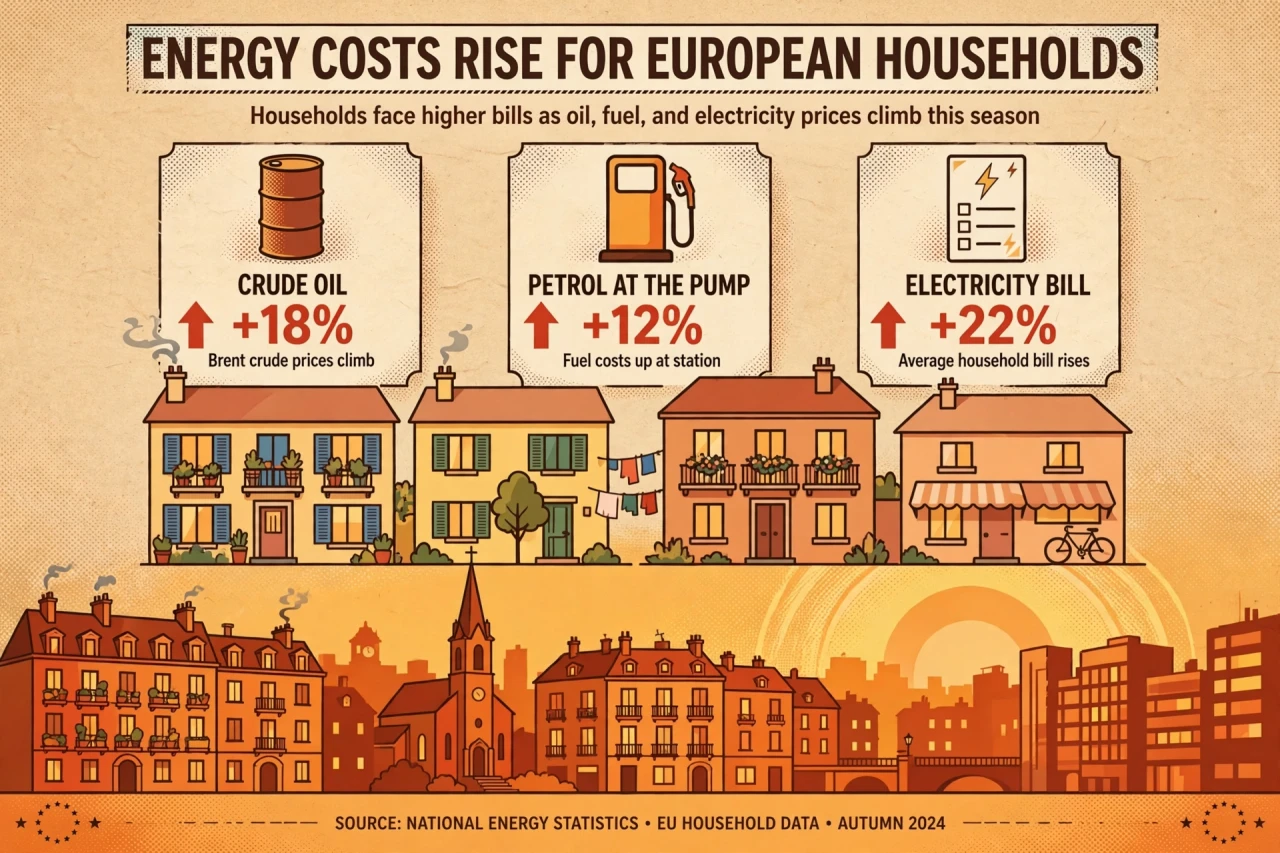
Illustration: European households and a city skyline with oil barrel, gas pump and rising bill icons under a sunset sky.
Sponsored: explore today's featured sponsored offers
FAQ
What is the ECB's deposit rate?
The deposit facility rate is the interest the European Central Bank pays banks for money they deposit with it overnight. It is the ECB's main steering rate — it sets a floor for money-market rates and influences what households and businesses pay to borrow. It currently stands at 2.50% after hikes in June and September 2026.
Why is eurozone inflation rising again?
The main driver is energy. Eurozone inflation reached 3.8% in September 2026, up from 3.2% in August, with the energy component of consumer prices rising 18.8%. Eurostat attributed the spike to the conflict in the Middle East, including the US-Israeli war with Iran and tensions around the Strait of Hormuz, which pushed oil above $100 a barrel.
When will the ECB make its next rate decision?
The ECB's Governing Council meets on October 28–29, 2026, with the decision announced on October 29 — but almost no one expects a change then. The meeting economists are watching is December 17, when the bank releases new economic projections alongside its decision. A 25-basis-point hike that day would take the deposit rate to 2.75%.
What does a rate hike mean for ordinary Europeans?
Higher policy rates typically translate into higher mortgage costs, more expensive consumer credit and costlier business loans. They also make government borrowing more expensive, squeezing budgets already stretched by energy support measures. On the other hand, savers tend to benefit from higher deposit rates, and tighter policy is intended to bring inflation back down.
Could the ECB raise rates beyond December?
It is possible. A Reuters poll in early October found that more than a third of economists expect the deposit rate to reach 3.00%, and markets are pricing nearly three further hikes by the end of 2027. The ECB says it will decide meeting by meeting based on the data, with wage growth and any spillover of energy costs into other prices as the key things to watch.
Sources
- Bloomberg (via QNC News), October 18, 2026 — ECB officials eye December 17 meeting for a third rate hike as eurozone inflation hits 3.8%.
- Reuters, October 8, 2026 — ECB expected to pause in October before hiking rates in December, poll of 73 economists.
- Reuters (via 96.5 FM/95.5 FM), October 16, 2026 — IMF expects at least one more 25 bps ECB rate hike in 2026, reporting by Jan Strupczewski from Bangkok.
- EUbusiness.com, October 2026 — ECB faces tough decision in October as equities wilt under high interest rates.
- The Luxembourger, October 18, 2026 — explainer on the ECB's September hike and the inflation outlook.
Comments
Post a Comment