
The European Investment Bank announced on October 22 that it will double its financing for climate adaptation projects to €30 billion, targeting heatwaves, droughts, wildfires, and floods as world leaders prepare to gather in Turkey for the COP31 climate summit on November 9.
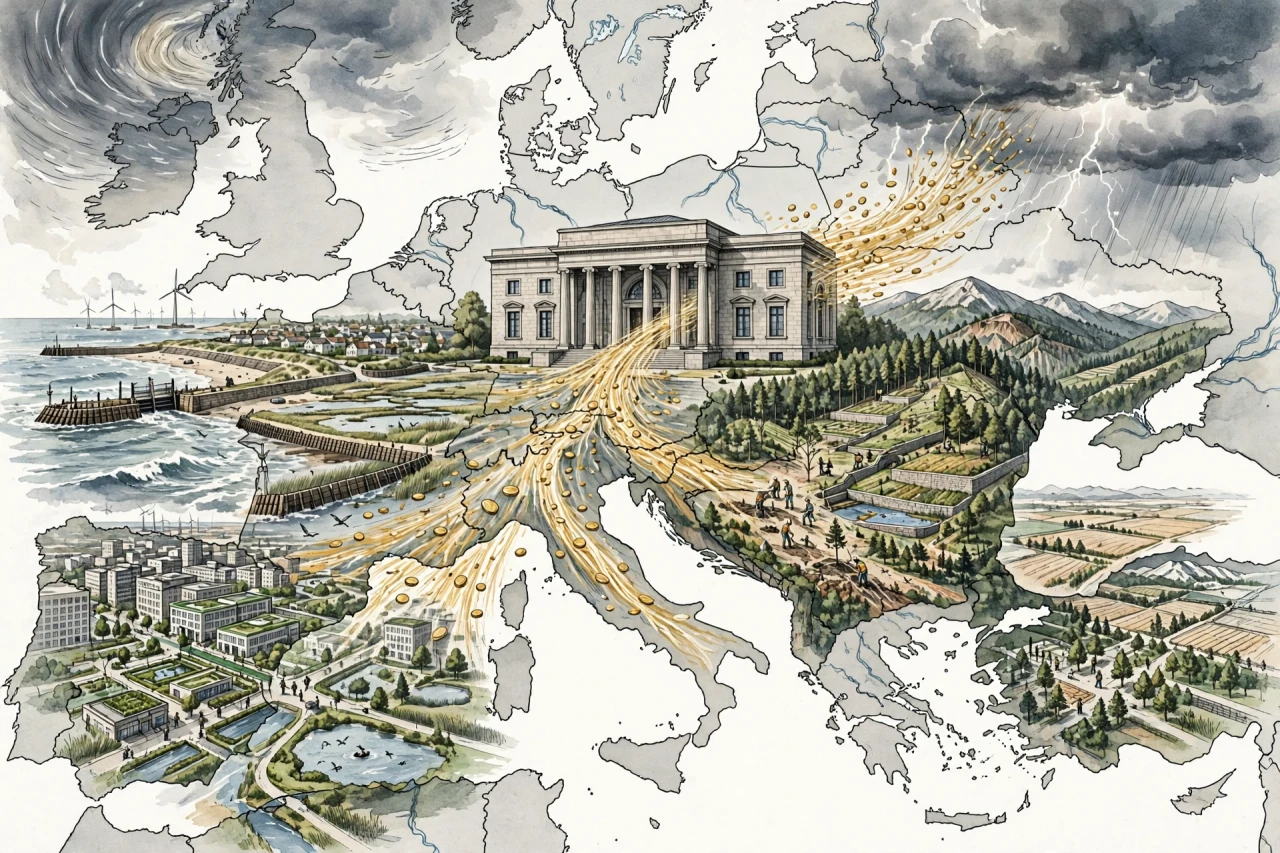
Illustration: The EIB says doubling adaptation funding will help Europe and vulnerable nations prepare for extreme weather.
What Happened
The European Investment Bank (EIB) revealed a new target to double its financing for climate adaptation to €30 billion before the end of the decade, according to a Reuters report published on October 22. The figure is roughly double the amount set out under the bank's previous five-year plan.
The announcement lands just weeks before the COP31 climate summit, scheduled to begin on November 9 in Turkey, where adaptation finance is expected to be a central negotiating point.
Under the new plan, the EIB will channel funding, guarantees, and advisory support into projects that help communities withstand the effects of a warming climate — including energy networks, water systems, and agriculture. It will also work to scale up European climate technology companies working on cooling, energy, and water solutions.
EIB Group President Nadia Calviño made the economic case for adaptation in the bank's statement: "every euro invested in prevention and adaptation to climate change saves 10 euros in damages and repairs." That ten-to-one ratio has long been cited by disaster economists, and the EIB is now putting a major balance-sheet commitment behind it.
The bank also pledged support for small island developing states and least-developed countries — the nations most exposed to sea-level rise and extreme weather despite contributing least to global emissions. Eligible projects are expected to include water management, coastal protection, early-warning systems, resilient transport infrastructure, and disaster-risk management.
Reuters reported the announcement as part of its COP sustainability coverage, noting that $1 was worth approximately 0.8934 euros at the time of publication.
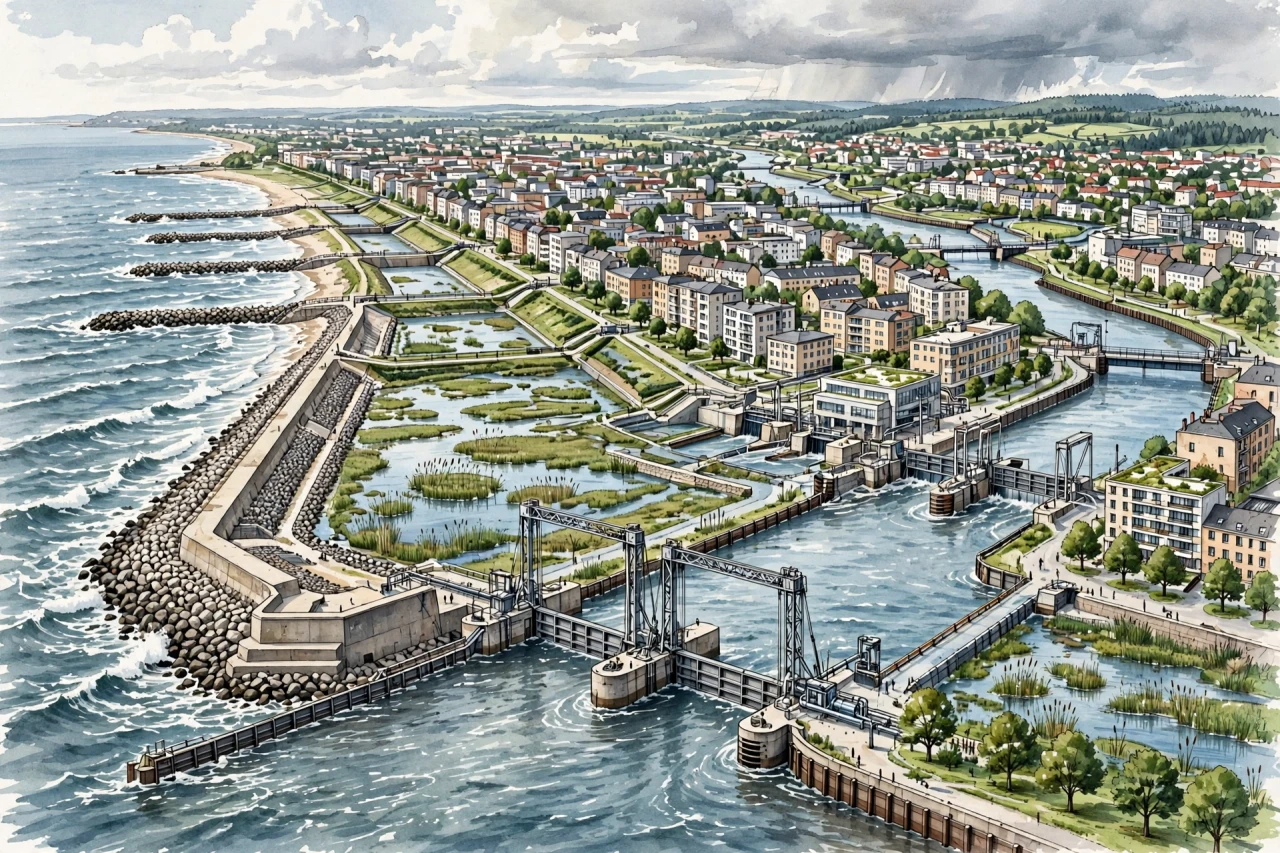
Illustration: Adaptation projects such as flood barriers, water management, and early-warning systems are the focus of the new funding.
Background
The EIB is the European Union's long-term lending institution and one of the world's largest financiers of climate action. It has been steadily increasing the share of its lending dedicated to climate and environmental sustainability, and its previous five-year adaptation plan set the baseline that the new €30 billion target now doubles.
Adaptation — measures that help societies live with climate change that is already happening — has historically received far less money than mitigation efforts such as renewable energy and emissions cuts. The United Nations Environment Programme has repeatedly flagged this gap, estimating that adaptation finance needs in developing countries alone run into hundreds of billions of dollars per year, far above current flows.
The financing shortfall has become more politically visible as climate disasters intensify. 2026 has seen a punishing run of extremes across the globe, from wildfires and heatwaves to catastrophic flooding, raising pressure on governments and development banks to fund resilience, not just emissions reductions.
COP31, set for Turkey in November, arrives at a moment when adaptation funding pledges are being closely watched. Past climate summits have produced headline commitments on adaptation that developing countries say were slow to materialize; negotiators are expected to press for concrete, measurable delivery plans this time.
Why It Matters
Adaptation finance is one of the few climate levers that saves lives and money immediately. Flood barriers, drought-resistant crops, and heat-action plans pay off long before global emissions trends change. The EIB's ten-to-one savings claim underscores why development economists view adaptation as one of the highest-return investments available.
The timing matters too. By announcing the doubled target ahead of COP31, the EU's bank sets a benchmark for other public lenders and sends a signal to private investors that resilience projects are bankable. Blended finance — public money used to de-risk private investment — has been the favored model for scaling adaptation funding beyond what public budgets alone can provide.
For vulnerable regions, including small island states and least-developed countries named in the announcement, access to adaptation funding can determine whether communities can stay where they are. Coastal protection and early-warning systems are often the difference between a manageable storm and a catastrophe.
The plan also has an industrial dimension: scaling European climate technology firms working on cooling, water, and energy systems positions the EU's companies to compete in a global adaptation market that is expected to grow sharply as climate impacts intensify.

Illustration: COP31 in Turkey will put adaptation finance at the center of negotiations.
What Happens Next
The EIB has not yet published a detailed project-by-project breakdown of how the €30 billion will be allocated, but the bank said financing, guarantees, and advisory services will flow through its existing climate lending channels, with projects spanning water management, coastal protection, early-warning systems, resilient transport, and disaster-risk management.
All eyes now turn to COP31 in Turkey, opening November 9. Adaptation finance is expected to be one of the summit's defining issues, and the EIB's doubled target will likely be cited by EU negotiators as evidence of the bloc's delivery. Watch for whether other development banks and donor countries respond with their own commitments — and whether any of it translates into faster-moving project pipelines.
Critics of past adaptation pledges will also be watching for accountability: how much of the €30 billion represents genuinely new money versus relabeled existing lending, and how quickly projects reach the communities most exposed to climate risk.
Sponsored: explore today's featured sponsored offers
FAQ
What did the EIB announce?
The European Investment Bank announced it will double its financing for climate adaptation projects to €30 billion before the end of the decade — twice the amount of its previous five-year plan.
Why is adaptation funding important?
Adaptation helps communities cope with climate impacts that are already happening, such as floods, droughts, heatwaves, and wildfires. The EIB says every euro invested in prevention and adaptation saves about ten euros in damages and repairs.
Which regions will benefit?
The EIB said it will support projects across Europe and beyond, with specific mention of small island developing states and least-developed countries, which face the greatest climate risks.
What is COP31 and why does the timing matter?
COP31 is the UN climate summit beginning November 9 in Turkey. Adaptation finance is expected to be a key negotiating topic, and the EIB's announcement sets a benchmark ahead of the talks.
How will the money be used?
Through financing, guarantees, and advisory support for projects in water management, coastal protection, early-warning systems, resilient transport, and disaster-risk management, while also scaling up European climate technology companies.
Sources
- Reuters — "EIB to double financing for climate adaptation to 30 billion euros," October 22, 2026.
Comments
Post a Comment