
EU Rules Out New Climate Finance Pledges at COP31 as African Nations Demand Adaptation Funding Triple
BRUSSELS — The European Union will offer no new climate finance pledges at the COP31 climate summit in Antalya, Türkiye, its climate chief Wopke Hoekstra has said, describing talks on fresh commitments as "dead in the water" in comments reported by Bloomberg on 29 October 2026.
Hoekstra's assessment sets up a difficult negotiation when COP31 opens on 9 November 2026 and runs until 20 November. African countries have written to United Nations climate chief Simon Stiell demanding that adaptation finance be tripled at the summit — directly at odds with the EU's position.

Illustration: EU climate finance negotiations in Brussels, with officials discussing climate funding. This is an AI-generated illustration, not a real photograph.
What Happened
According to Bloomberg's report of 29 October 2026, Hoekstra said negotiations on new climate finance commitments were "dead in the water" — a signal that the EU does not expect, or intend to support, a fresh round of funding promises at COP31, just days before negotiators gather in Antalya.
The EU's position, set out on 12 October 2026, is that the priority now is faster emissions cuts and the implementation of promises already made, rather than new pledges. In Hoekstra's words, "Let's not fall into the trap to have endless new rounds on financing." He added: "What we do need is to deliver on the stuff we know that needs to be done."
The message is not that the EU has stopped paying. The EU and its member states provided €32.3 billion — about $36 billion — in public climate finance in 2025, according to official EU data, up by around €600 million from 2024. The EU remains the world's largest provider of public climate finance, even as it resists adding new commitments. Some coverage has rounded the total to around €33 billion; the official €32.3 billion figure is the more precise number, and it is the one used here.
African countries have written to Stiell, the UN climate convention's executive secretary, demanding that adaptation finance be tripled at COP31. Adaptation funding — money to help communities cope with drought, flooding and rising seas, rather than only to cut emissions — has long been a central demand of developing countries, which argue they bear the heaviest climate costs despite having contributed least to the problem.
Background
Climate finance has been the hardest argument at almost every recent UN climate summit. Developing nations accuse developed countries of moving too slowly on money promised in earlier deals, while donor governments point to tight budgets and the scale of the sums now discussed.
The backdrop is the Baku to Belém roadmap, which sets a goal of mobilising $1.3 trillion a year in climate finance for developing countries by 2035, from all sources, public and private. That dwarfs current public flows, and how to reach it is a central question in Antalya.
There was, however, good news in the same week: the Green Climate Fund, the UN's flagship climate finance body, approved a record $1.97 billion in new funding on 29 October 2026 — its largest approval ever.

Illustration: Delegates gathering for the COP31 climate summit in Antalya, Türkiye. This is an AI-generated illustration, not a real photograph.
Why It Matters
The clash goes to the heart of trust in the negotiations. For developing countries, finance is not abstract: it determines whether a farming community can build irrigation to survive drought, whether a coastal city can defend itself against rising seas, and whether a country can expand clean energy without unsustainable debt. When new pledges stall, those plans stall with them.
For the EU, Brussels argues that endless financing talks risk becoming a substitute for action — headline promises delivered slowly, if at all. By insisting on implementation first, the EU hopes to rebuild credibility around existing pledges and push other major economies to contribute more.
Adaptation finance is the sharpest edge of the debate. While money for cutting emissions has grown, funding to help countries adapt to unavoidable climate impacts has lagged behind. Tripling adaptation finance would rebalance funding towards people already living with its consequences.
What Happens Next
When negotiators arrive in Antalya on 9 November, finance will be near the top of the agenda and the EU's position tested immediately. Developing countries are expected to press for stronger adaptation language and a clearer path to the $1.3 trillion goal, while the EU and other donors push back against new binding pledges.
Watch for three things: whether any compromise emerges on adaptation finance — a phased increase, a target or a timetable — giving African and other developing nations something concrete; whether the Baku to Belém roadmap gains detail on private finance and development banks; and whether the record Green Climate Fund approval translates into faster disbursement.
Hoekstra's comments suggest the EU will not be moved easily in Antalya. But summits often produce late compromises, and pressure from African countries — backed by the growing costs of drought, floods and heat — will be hard to ignore. COP31 has not yet begun, and its finance outcome remains open: delivery versus new promises, adaptation versus mitigation.
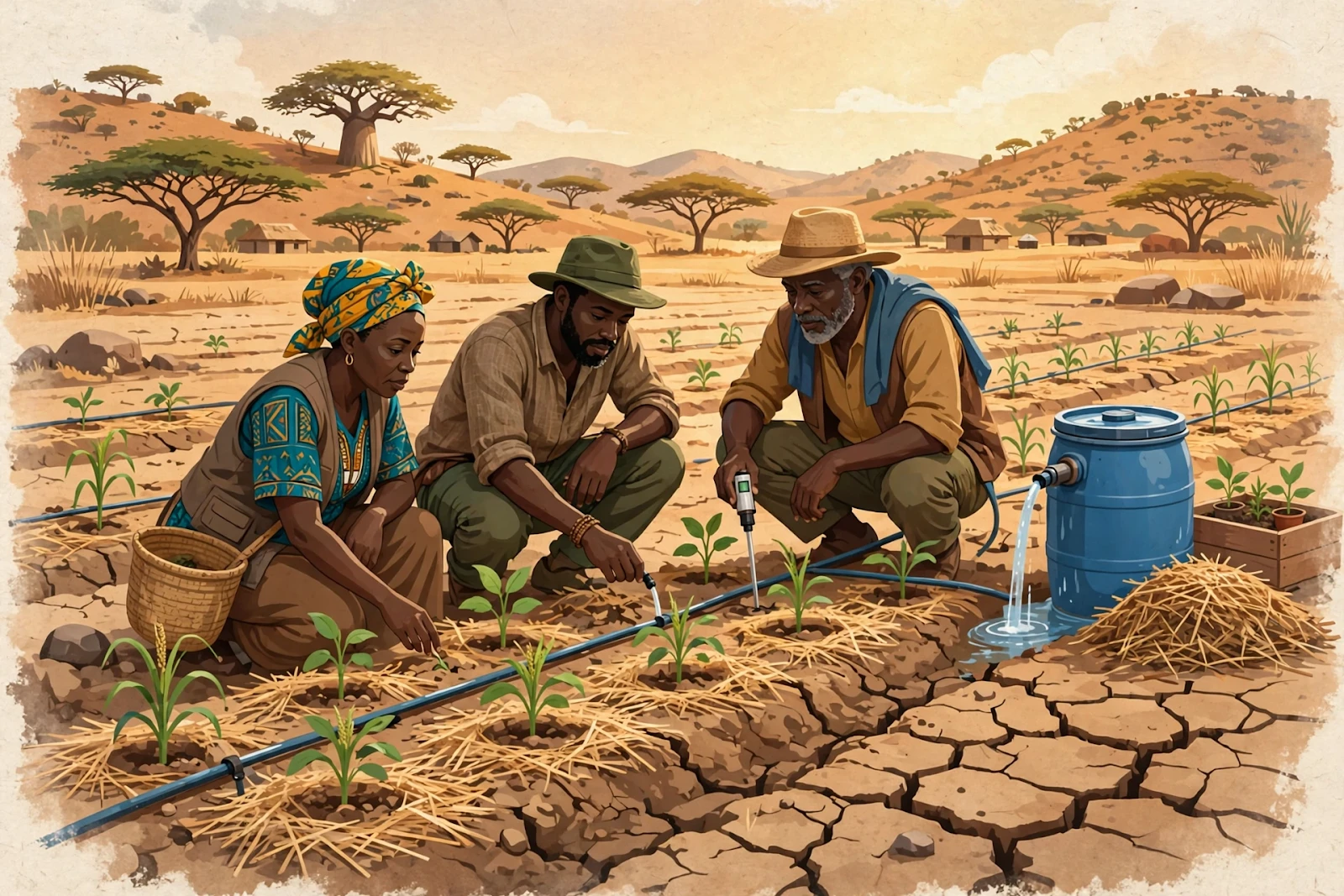
Illustration: African farmers facing drought and working on climate adaptation in dry fields. This is an AI-generated illustration, not a real photograph.
Sponsored: explore today's featured sponsored offers
FAQ
What did EU climate chief Wopke Hoekstra say about COP31 climate finance?
Hoekstra said COP31 finance talks are "dead in the water", Bloomberg reported on 29 October 2026, warning against "endless new rounds on financing".
Has the EU cut its climate finance?
No. The EU and its member states provided €32.3 billion, about $36 billion, in public climate finance in 2025, according to official EU data — up by around €600 million from 2024.
What are African countries demanding at COP31?
African countries have written to UN climate chief Simon Stiell demanding adaptation finance be tripled at COP31, to help communities cope with drought, flooding and rising seas.
When and where is COP31 taking place?
COP31 runs from 9 to 20 November 2026 in Antalya, Türkiye. It has not yet started.
What is the $1.3 trillion climate finance goal?
The Baku to Belém roadmap sets a goal of mobilising $1.3 trillion a year in climate finance for developing countries by 2035, from all sources, public and private.
Sources
Bloomberg, 29 October 2026, via OilPrice and Bloomberg Law, on Hoekstra's "dead in the water" comments; Carbon Brief Daily Briefing, 29 October 2026, on €32.3 billion EU climate finance in 2025 and the African adaptation demand; EU COP31 position, 12 October 2026; Green Climate Fund, 29 October 2026, on its record $1.97 billion approval.
Comments
Post a Comment