
The US Federal Reserve will skip raising interest rates at its October 27-28 meeting and deliver a hike in December, according to nearly all economists polled by Reuters, as central banks around the world from London to Ottawa position for further tightening.
An overwhelming 94 of 100 economists in the Reuters poll, conducted October 16-20, expect the Fed to hold the federal funds rate in the 3.75%-4.00% range at this month's meeting — just days before the November midterm elections. But all 100 respondents expect a rate hike in December, a sharp reversal from less than half who said so in last month's poll.
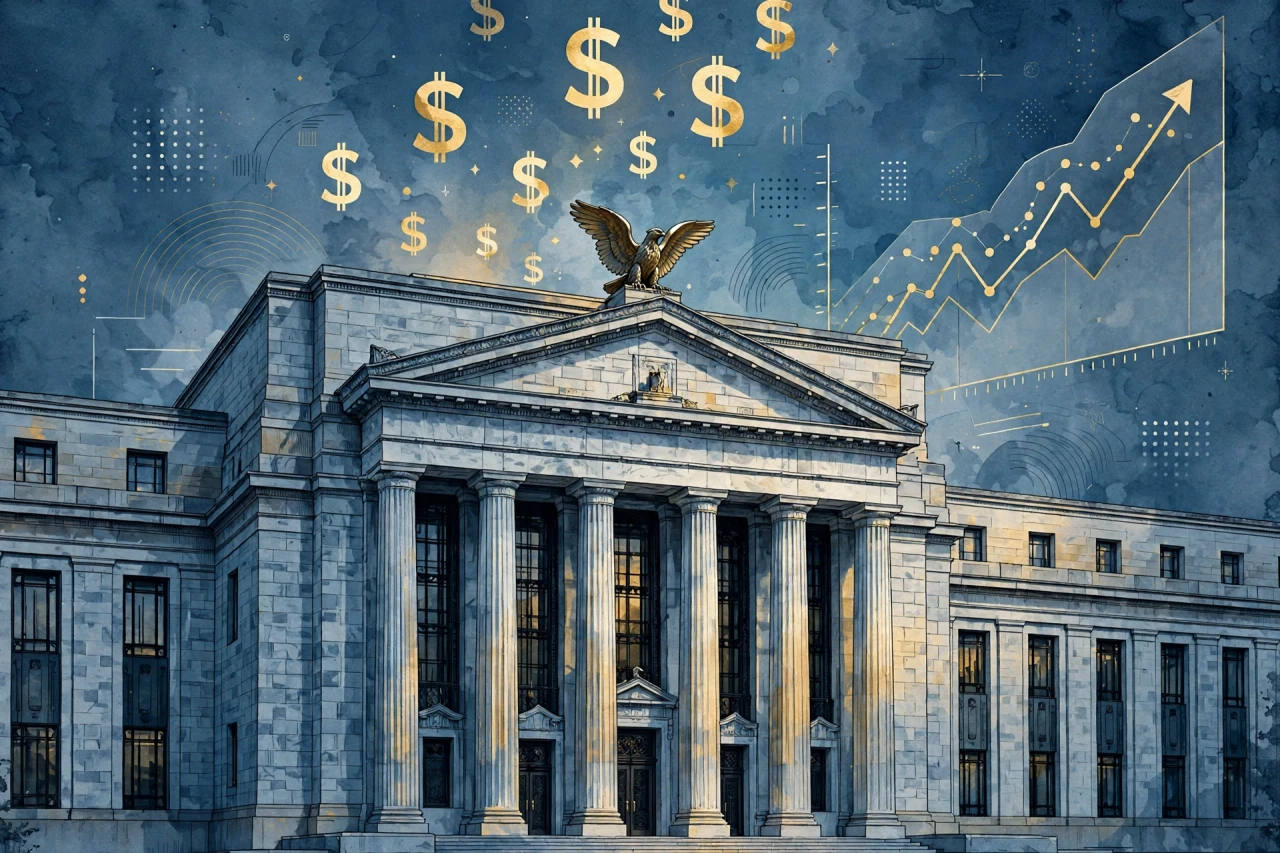
Illustration: the Federal Reserve building with a rising interest-rate chart.
What Happened
Reuters published the results of its latest poll of economists on October 20, 2026, showing a near-consensus that the Federal Reserve will stay on hold at its October 27-28 meeting before raising rates again in December. The Federal Open Market Committee unanimously raised rates by 25 basis points in September, and Fed officials have since signalled patience even as inflation remains stubborn.
Fed Chair Kevin Warsh, who has made clear he is not keen on giving forward guidance, has kept publicly quiet on timing, according to Reuters. Recent comments from other Fed officials suggest policymakers are in no rush to hike again: Warsh expressed optimism about US economic strength on Friday but gave no indication of whether or when more hikes will be needed.
"You have a strong economy and you have inflation. There's really no reason for you to worry so much about getting interest rates higher, this is like the easiest choice," Alex Pelle, senior US economist at Mizuho Securities, told Reuters. "Unfortunately, the Fed is really not getting more on top of the issue, they're just treading water and perhaps even getting a little behind."
The tension is visible in bond markets. Longer-dated Treasury yields surged to multi-decade highs on October 7 on higher inflation and near-term rate expectations, before retreating nearly 25 basis points as the likelihood of an October hike slipped away. Rate-sensitive two-year Treasury note yields have been whipsawed higher and then sharply lower.
Background
The Fed's dilemma — a strong economy paired with hotter-than-expected inflation — is mirrored across advanced economies, where many central banks are converging on tighter policy. The shift stands in sharp contrast to last year's easing cycles, when much of the developed world was cutting rates.
In Britain, sterling rose on Tuesday, October 20, after jobs data pointed toward a bottoming in the labour market, reinforcing expectations that the Bank of England will raise rates when it meets on November 5. A preliminary measure of payrolled employees rose, the unemployment rate fell, and average hourly earnings grew faster than expected in the three months to August, according to official figures cited by Reuters.
"The UK economy is surprising on the upside. There's room for more hiking," Tommy von Brömsen, FX strategist at Handelsbanken, said. Money-market futures were almost fully pricing in a quarter-point Bank of England hike on November 5, and investors were fully pricing in four rate hikes by the middle of next year. Sterling was last up 0.3% at $1.3343 against the dollar, and at its strongest level against the euro since May 2025.
Canada is on a similar path. Traders are pricing in nearly an 85% chance of a quarter-point Bank of Canada hike next week, according to LSEG data cited by Reuters, after September inflation came in above the central bank's upper limit. A Bank of Canada survey released Monday also showed Canadian firms' outlook had deteriorated after the collapse of trade talks with the United States, though sentiment remained stronger than at the peak of last year's trade tensions.
One outlier is Israel, where the central bank is expected to pause its easing cycle — holding rates at a four-year low of 3.25% — ahead of the October 27 election, after cuts in May, July and September. According to a Reuters poll, all 15 economists surveyed expect the Bank of Israel to hold, even though at least one more cut to 3% is widely expected longer-term. Political uncertainty, with both Benjamin Netanyahu's bloc and the main opposition falling short of a majority in opinion polls, has made policymakers reluctant to move before the vote.

Illustration: British pound coins and banknotes beneath a rising rate arrow.
Why It Matters
A synchronised global turn toward tighter money would mark a decisive shift in the post-inflation policy cycle. Higher rates in the US, UK and Canada at once would tighten global financial conditions, raise borrowing costs for governments, companies and households, and ripple through emerging markets — even as investors there remain relatively optimistic.
The Fed's December decision carries particular weight. It would be the second hike in three months, and it would land just after the November midterm elections — a politically sensitive backdrop for the world's most important central bank. Markets and economists are, as Reuters put it, "following the messaging, not the data": conflicting signals from the Fed have recently ridden roughshod over bond markets, and the multi-decade highs in Treasury yields on October 7 showed how quickly expectations can move prices.
For Europe, the tightening wave adds pressure on already fragile public finances. Reuters reported that investor concern over fiscal trajectories in the US, Japan, much of the euro zone and the UK has sent government bond yields across the industrialised world to the highest levels in decades — a backdrop that makes every central bank move felt in every other country's borrowing costs.
The divergent cases are instructive too. Israel's pause shows how politics can override economics: with inflation at 1.6%, within the 1%-3% target, and an election six days after the rate decision, the Bank of Israel is expected to sit on its hands rather than risk appearing to help the incumbent government. Brazil's central bank, meanwhile, is preparing household-debt measures rather than rate moves, as consumer indebtedness dominates its presidential runoff debate.
What Happens Next
The immediate calendar is crowded. The Fed meets October 27-28, with markets expecting a hold; the Bank of England decides on November 5, with a hike almost fully priced; the Bank of Canada is expected to move next week with an 85% probability in market pricing; and the Bank of Israel decides on Wednesday, with a hold widely anticipated.
The December Fed meeting is now the main event. With all 100 economists in the Reuters poll expecting a hike, any sign from Chair Warsh or his colleagues that the bar for December is lower — or higher — will swing bond and currency markets. Watch Treasury yields and the dollar for the earliest signals.
Beyond central banks, the geopolitical backdrop remains a risk to the tightening narrative. Brent crude was at five-month highs above $110 a barrel after Yemen's Houthis said they launched attacks on Saudi energy sites, and France imposed curfews in several cities after a weekend of riots — reminders that energy prices and political stability can still rewrite the inflation outlook faster than any policy meeting.
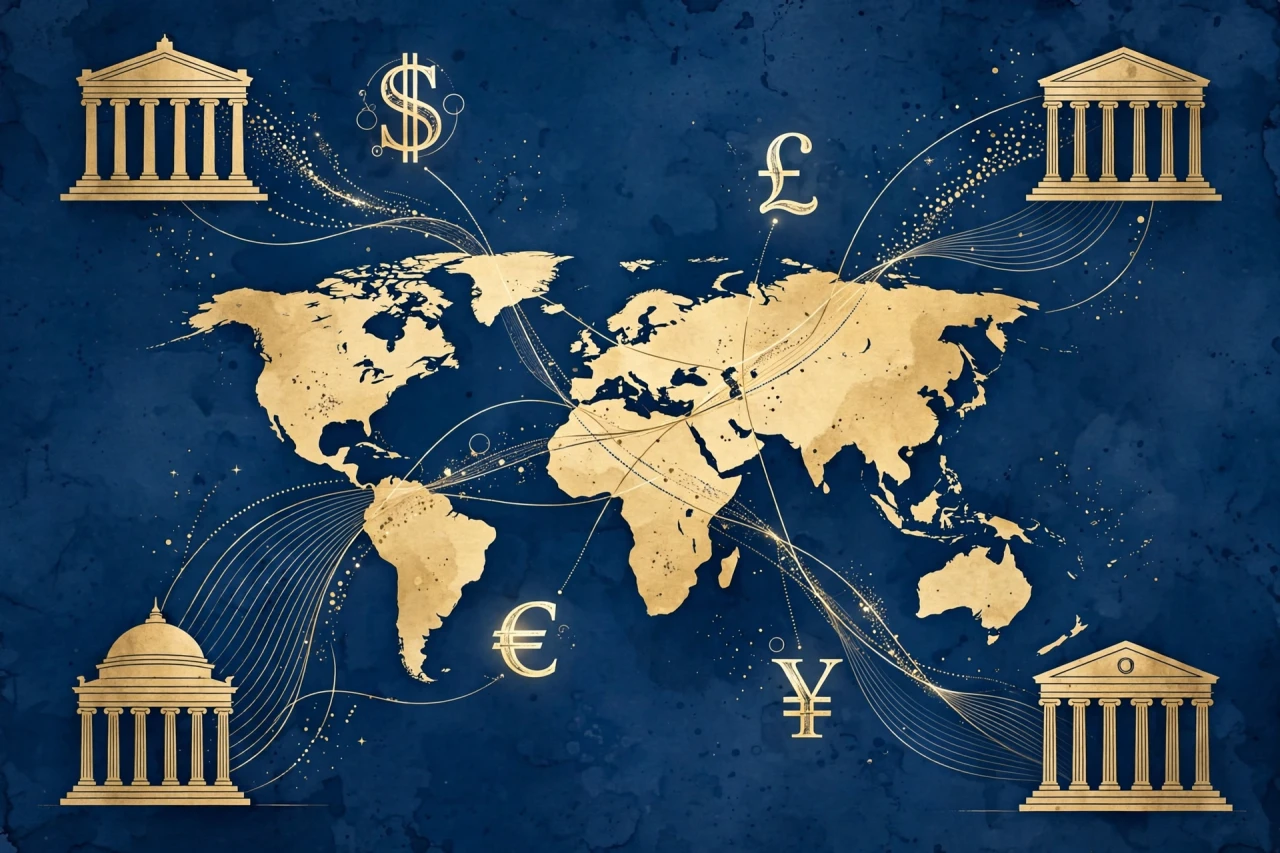
Illustration: a world map with central bank buildings and currency symbols.
Sponsored: explore today's featured sponsored offers
FAQ
Will the Federal Reserve raise rates in October 2026?
Almost certainly not. 94 of 100 economists polled by Reuters on October 16-20 expect the Fed to hold the federal funds rate at 3.75%-4.00% at its October 27-28 meeting.
When is the Fed expected to hike next?
All 100 economists in the Reuters poll expect a rate hike in December 2026 — a sharp reversal from less than half who expected one in last month's poll.
Is the Bank of England also raising rates?
Markets are almost fully pricing in a quarter-point Bank of England hike on November 5, 2026, after stronger-than-expected UK jobs data, with four hikes priced by mid-next year.
What about other central banks?
The Bank of Canada is expected to hike next week (about an 85% probability in market pricing), while the Bank of Israel is expected to pause its easing cycle and hold at 3.25% ahead of the October 27 election.
Why are bond yields moving so much?
US longer-dated Treasury yields surged to multi-decade highs on October 7 on inflation and near-term rate expectations, then retreated nearly 25 basis points as October-hike odds faded. Analysts say markets are following central-bank messaging rather than economic data.
Sources
- Reuters (October 20, 2026): Fed to skip October, raise rates again in December, nearly all economists say
- Reuters (October 20, 2026): Sterling rises as strong labour market data reinforces rate-hike bets
- Reuters (October 20, 2026): Bank of Israel to pause rate cuts ahead of October 27 election
- Reuters (October 20, 2026): TSX futures dip as inflation expectations, US trade tensions weigh
- Reuters (October 20, 2026): Brazil's central bank looks to encourage responsible lending in consumer debt crackdown
- Reuters (October 20, 2026): Global markets
Comments
Post a Comment