
Festival de las Almas 2026: Jalisco's Day of the Dead Celebration Doubles to 12 Municipalities and 350+ Free Events
From October 24 to November 15, the Mexican state of Jalisco will host the second edition of Festival de las Almas, a statewide Day of the Dead celebration spanning 12 municipalities — double last year's six — with more than 350 free activities connecting the traditions of the celebration to each region's cultural and tourism attractions, the Jalisco Tourism Board announced via PRNewswire on October 21.
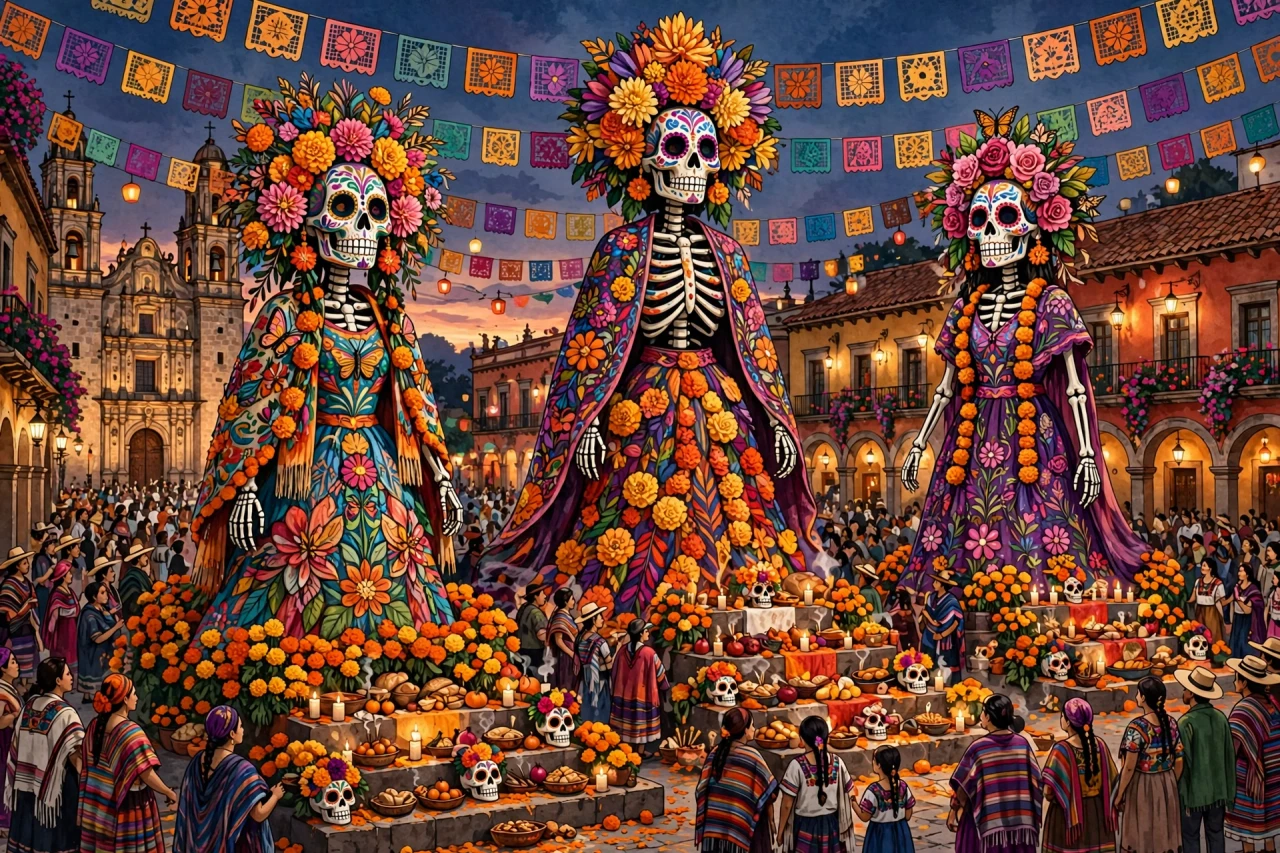
Illustration: Monumental catrinas, marigold altars and parades will fill Jalisco's towns and cities during the Festival de las Almas, which runs October 24 to November 15.
What Happened
Jalisco's Tourism Secretariat and the State Entertainment Agency unveiled the second edition of Festival de las Almas 2026, a coordinated statewide program that brings together local Day of the Dead celebrations into a single tourism calendar. The festival will run from October 24 to November 15 across 12 municipalities, offering more than 350 free activities including altars, exhibitions, parades, tours, and musical performances.
The program has doubled in size since its debut: in the first edition, held in 2025, six municipalities participated. For 2026, San Pedro Tlaquepaque, Tequila, Sayula, Mazamitla, Lagos de Moreno, and Cocula join the returning destinations — Guadalajara, Zapopan, Tlajomulco de Zúñiga, Chapala, Puerto Vallarta, and Zapotlanejo.
The organizers structured the festival around Jalisco's regions: the Guadalajara Metropolitan Area, the mountains, the Lake Chapala region, the agave valley, Los Altos, and the coast — all operating under the theme "one state, many identities, one shared memory." The goal, according to the announcement, is to encourage travel across destinations, expand visitor experiences, and create economic opportunities for communities.
Day of the Dead — Día de Muertos, observed on November 1 and 2 — is one of Mexico's most internationally recognized traditions. It honors deceased loved ones with ofrendas (offerings), marigold paths believed to guide spirits home, candlelight vigils, and communal celebration. UNESCO inscribed the celebration on its Representative List of the Intangible Cultural Heritage of Humanity in 2008, and Jalisco's version is steeped in the state's own folklore, from mariachi music to the literary legacy of writers like Juan Rulfo.
The announcement makes clear the ambition is not just cultural but economic: by concentrating more than 350 free activities into a statewide calendar, the Government of Jalisco is betting that coordinated celebration will draw visitors deeper into the state's towns and villages — not just its capital — and give families and travelers more reasons to stay longer.
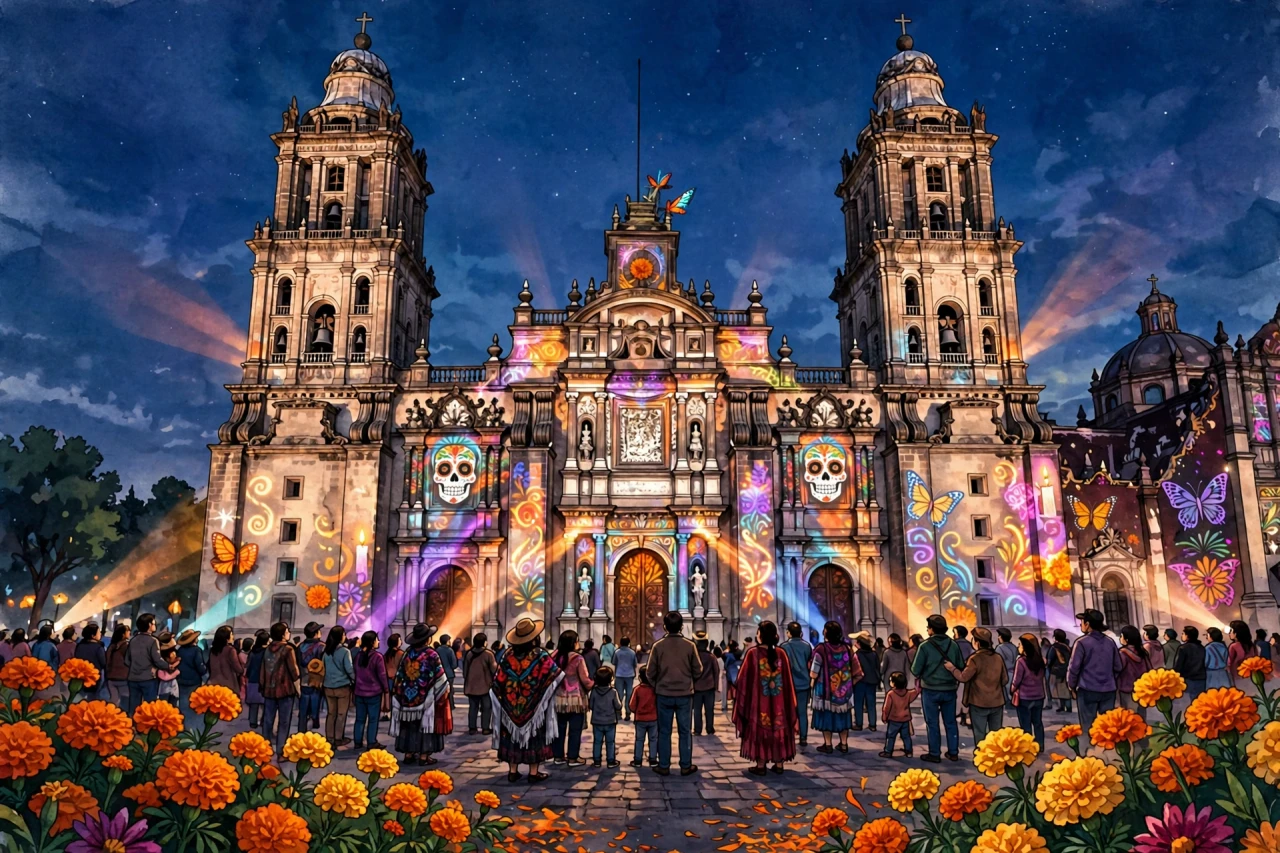
Illustration: In Guadalajara, projection mapping will illuminate the Cathedral on October 31 and November 1 as part of the El Espíritu del Charro exhibition.
Background
The Day of the Dead's modern form blends pre-Hispanic beliefs about the afterlife with colonial-era Catholic observances of All Saints' Day and All Souls' Day. Central symbols are instantly recognizable worldwide: the elegant skeleton figure of La Catrina, created by illustrator José Guadalupe Posada in the early 1900s and popularized by the muralist Diego Rivera; the cempasúchil marigold, whose scent and color are said to guide the dead back to the living; sugar skulls, pan de muerto, and altars crowded with photographs, food, and candles.
Jalisco holds a special place in Mexico's cultural identity. The state is the birthplace of mariachi — the town of Cocula, one of the festival's new 2026 participants, is famously tied to the genre's origins — and of tequila, distilled from blue agave in the valley around the town that bears its name. Sayula, another new participant, is the hometown of Juan Rulfo, the author of "Pedro Páramo" and "The Burning Plain," whose spectral, haunting prose is itself deeply connected to themes of death and memory.
Statewide festival formats like this one reflect a broader trend in Mexican cultural tourism: rather than concentrating celebrations in a single city, governments are linking towns into routes and circuits that spread visitor spending. The distances cited in the announcement make the pitch explicit — trips from Guadalajara to Chapala and Tequila take just over an hour; Mazamitla and Lagos de Moreno, just over two hours; and Puerto Vallarta, less than four hours.
The first edition in 2025 served as the proof of concept. With only six municipalities, it established the brand and the logistics of a coordinated calendar; the 2026 expansion to twelve — with new programming in the mountains, the agave valley, Los Altos, and the coast — suggests the organizers consider the formula a success worth scaling up.
Why It Matters
Festival de las Almas matters because it treats a living tradition as both heritage and livelihood. For the communities involved, Day of the Dead is not a performance for tourists but a genuine communal observance; by folding local celebrations into a state calendar, the festival gives artisans, musicians, food vendors, and family-run guesthouses a wider audience and a longer season of economic activity.
The geographic design is deliberate. Smaller municipalities like Sayula, Cocula, Mazamitla, and Zapotlanejo rarely make international travel itineraries on their own. Tying their local traditions — Rulfo's literary legacy, mariachi roots, mountain cuisine, textile craftsmanship — to the statewide program puts them on the map for visitors who might otherwise stay only in Guadalajara or Puerto Vallarta.
There is also a preservation argument. Traditions survive when they are practiced and valued by younger generations. A festival that fills plazas with catrina parades, fashion shows, night tours of historic cemeteries, and performances of La Llorona on Lake Cajititlán gives young people visible, festive reasons to learn and carry forward the rituals — from building ofrendas to laying sawdust carpets.
And the timing is shrewd. With Day of the Dead now a global cultural phenomenon — amplified by films, fashion, and social media — Jalisco's festival positions the state to capture part of the growing international interest in authentic, community-rooted celebrations rather than commercial imitations.
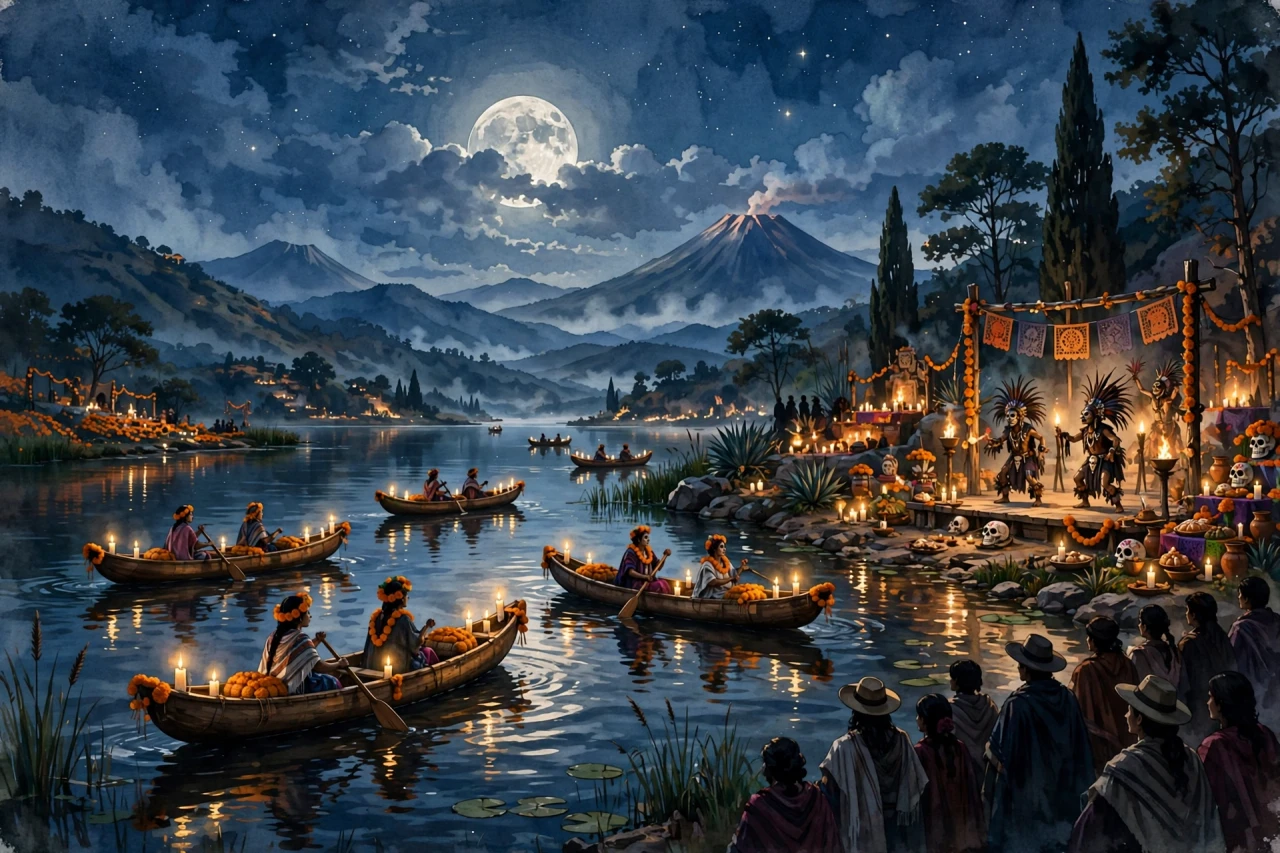
Illustration: In Tlajomulco de Zúñiga, the El Mictlán program includes a performance of La Llorona in canoes on Lake Cajititlán.
What Happens Next
The festival opens on October 24, and the program runs for more than three weeks, through November 15. Highlights by municipality, as announced:
Guadalajara: The El Espíritu del Charro exhibition runs October 30 to November 13, featuring monumental catrina figures in Plaza Guadalajara, projection mapping on the Cathedral on October 31 and November 1, and the main parade on October 31 from 6 to 8 p.m. Theatrical nighttime tours of the Belén and Mezquitán cemeteries will also be offered.
Tlajomulco de Zúñiga: El Mictlán will be open October 31 to November 2, with a monumental arch, the Alley of Legends, a performance of La Llorona in canoes on Lake Cajititlán, and the Tree of Souls.
San Pedro Tlaquepaque: Approximately 80 activities from October 25 to November 2 under the program "Living Tradition, Clay That Transcends" — including the opening parade on October 25, the El Alabado procession on October 30, the Walk of Souls on November 1, and the procession of catrina brides on November 2.
Chapala: A path of marigolds along the waterfront promenade, plus projection-mapping displays at City Hall. Tequila: Cultural tours through the agave landscape, a traditional fair, and façade-decorating contests. Zapopan: The Path of Corn on the Andador pedestrian walkway — the announcement lists it for November 20th.
Sayula: Altars dedicated to writer Juan Rulfo and sawdust carpets honoring the town's literary tradition. Cocula: Musical performances at the Mariachi Museum and the Templo de la Cruz. Mazamitla: Catrina fashion shows and mountain cuisine. Zapotlanejo: A 22-meter-tall Catrina and cinematic sets paying tribute to the local textile industry. Lagos de Moreno: A horseback parade of charros in formal attire and the Grand Offering of Los Altos Pride. Puerto Vallarta: "Boats of Light" and "Guardian of the Ocean" installations along the waterfront promenade.
Travelers planning around the festival can find the full program at the Jalisco tourism site. With the opening just a day away, the test now is execution: whether twelve municipalities, hundreds of activities, and one shared theme add up to the cohesive statewide celebration the organizers promise.
Sponsored: explore today's featured sponsored offers
FAQ
What is the Festival de las Almas?
It is a statewide Day of the Dead celebration in Jalisco, Mexico, organized by the state's Tourism Secretariat and State Entertainment Agency. The second edition runs from October 24 to November 15, 2026, across 12 municipalities with more than 350 free activities.
Which municipalities are participating?
Guadalajara, Zapopan, Tlajomulco de Zúñiga, Chapala, Puerto Vallarta and Zapotlanejo return from the first edition; San Pedro Tlaquepaque, Tequila, Sayula, Mazamitla, Lagos de Moreno and Cocula are new for 2026.
What are the festival highlights?
Among the highlights: the El Espíritu del Charro exhibition and cathedral projection mapping in Guadalajara, the El Mictlán program with La Llorona performed in canoes on Lake Cajititlán, ~80 activities in Tlaquepaque, a 22-meter-tall Catrina in Zapotlanejo, and light installations on the Puerto Vallarta waterfront.
What is Day of the Dead?
Día de Muertos, observed November 1–2, is a Mexican tradition honoring deceased loved ones with ofrendas (offerings), marigolds, candles and communal celebration. UNESCO inscribed it on the Intangible Cultural Heritage of Humanity list in 2008.
Is the festival free and how do visitors plan a trip?
Yes — the announcement describes more than 350 free activities. Destinations are clustered within easy reach of Guadalajara: Chapala and Tequila are just over an hour away, Mazamitla and Lagos de Moreno just over two hours, and Puerto Vallarta less than four hours, making multi-town itineraries practical.
Sources
- PRNewswire (Hispanic PR Wire) — "12 Municipalities Join the Festival de las Almas 2026 Program to Celebrate Day of the Dead," October 21, 2026 (source: Jalisco Tourism Board).
Comments
Post a Comment