
A freeze-dried vaccine that needs no refrigeration has passed its first test in people: 60 healthy adults in the United Kingdom who received the experimental tetanus-diphtheria shot, known as SPVX02, tolerated it well and mounted strong immune responses, according to results published in September 2026. Laboratory data suggest the powder formulation can remain stable for at least 24 months at temperatures up to 30°C — a breakthrough that, if it holds through larger trials, could transform how vaccines reach remote communities, conflict zones and fast-growing cities where the cold chain keeps breaking down.
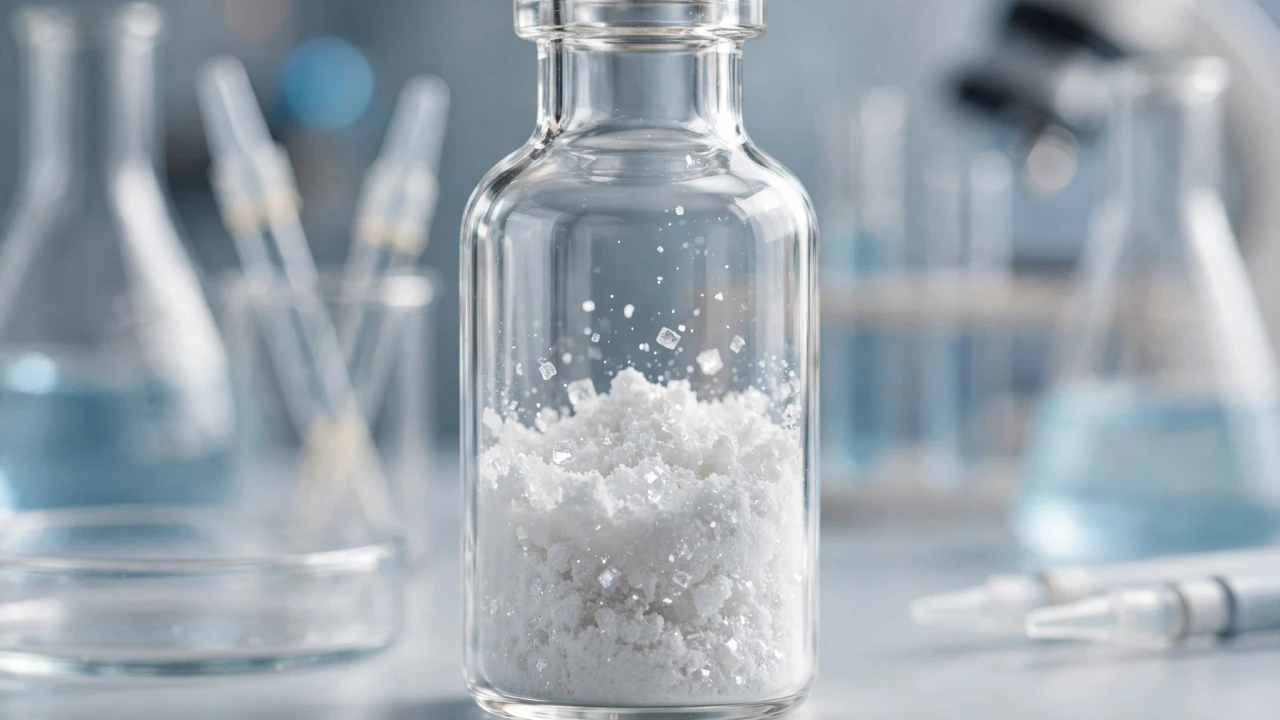
Illustration: a vial of freeze-dried vaccine powder that stays stable without refrigeration. This is an AI-generated illustration, not a real scene.
What Happened
The UK biotechnology company Stablepharma began the first human trial of its "fridge-free" tetanus-diphtheria vaccine in April 2025, and the results were published in eClinicalMedicine — a journal of The Lancet — in September 2026. Sixty healthy adults were randomly assigned to receive either the experimental freeze-dried vaccine or one of two licensed tetanus-diphtheria vaccines, MedicalXpress reported.
The technology at the heart of the shot is trehalose, a naturally occurring sugar that protects some plants and organisms during drying. The vaccine is freeze-dried with trehalose into a powder, stored without refrigeration, and mixed with water before injection. In the trial, the experimental formulation was well tolerated and generated what the researchers described as excellent immune responses — the body's ability to recognize and fight infections.
Stability testing done before the trial indicated that the fridge-free vaccine can remain stable for at least 24 months at temperatures of up to 30°C. Immunization experts Charles Shey Wiysonge and Chinwe Juliana Iwu-Jaja, writing in The Conversation, called the result "an important proof of concept" — but cautioned that the product is not ready for immunization programs in Africa yet, and that further studies in larger and more diverse populations, including the intended users of the vaccine, are needed.
Background
Keeping vaccines at the right temperature is one of the least visible — and most fragile — links in global health. Most vaccines must remain between 2°C and 8°C from the factory to the patient's arm, and some require far colder conditions. That uninterrupted system of refrigeration is called the cold chain: refrigerated vehicles, national cold rooms, district cold rooms, health-facility fridges, cold boxes, ice packs, fuel, maintenance technicians and trained health workers, all working without a break.
Failure at any point can leave shots unusable or their quality uncertain. The demands are hardest in remote communities, areas affected by conflict and facilities with unreliable electricity. After fighting erupted in Sudan in April 2023, UNICEF reported that unstable electricity and fuel shortages for generators had compromised the central cold chain holding millions of vaccine doses. Health workers running outreach sessions must haul vaccines in cold boxes with conditioned ice packs — and the weight, limited storage space and the need to return to the facility within a set time restrict how far teams can travel and how long they can stay in communities.
Immunization programs have already found some workarounds. The vaccine vial monitor — a small heat-sensitive label on each vial that changes color with cumulative heat exposure — lets health workers judge whether a vial can still be used. The "controlled temperature chain" approach allows certain approved vaccines to be kept outside the standard 2–8°C range for a limited, monitored period just before use. The meningitis A vaccine MenAfriVac, developed for Africa, was authorized for use at temperatures up to 40°C for four days under a controlled temperature chain, and its use in Benin showed vaccinators could reach remote populations with a lighter logistical burden. The World Health Organization has also prequalified human papillomavirus, typhoid and cholera vaccines for controlled-temperature-chain use.
The new fridge-free approach goes further than all of these: it seeks to remove refrigeration entirely, through prolonged storage and distribution — not just for a monitored few days before injection.

Illustration: a health worker carrying a vaccine cooler by motorbike on a rural road. This is an AI-generated illustration, not a real scene.
Why It Matters
If the technology proves out, the practical gains could be enormous — and they would accrue exactly where immunization programs currently fail. In the Sahel and the Horn of Africa, mobile teams could reach pastoralist and nomadic communities without depending on ice-pack production. In island, mountainous and sparsely populated settings, vaccines could tolerate far longer journeys. In conflict and humanitarian emergencies, doses could be positioned closer to displaced populations even where electricity and secure transport are intermittent.
There are economic and environmental dividends too. Lower requirements for refrigeration, fuel, equipment and specialized transport could reduce the cost of delivery — and the carbon footprint of vaccine programs. Crowded refrigerators in fast-growing urban areas and during mass campaigns would be under less pressure. And the same freeze-drying approach might eventually be adapted to other vaccines and temperature-sensitive medicines — though each product would need its own evidence and regulatory approval.
The experts stress, however, that fridge-free does not mean logistics-free. Health workers usually deliver several vaccines together, and most of those would still require refrigeration for many years — meaning countries could operate mixed systems with different handling rules for a long time. Ambient temperatures in many African settings frequently exceed 30°C, and while there are claims of stability at higher and fluctuating temperatures, these need independent verification under realistic transport and storage conditions.
A powdered vaccine also introduces its own risks: it must be mixed with exactly the right amount of the specified sterile liquid before injection, and reconstitution can introduce dosing errors or contamination. Unused reconstituted vaccine may have to be discarded quickly, which could increase wastage. Affordability will be decisive — a technology that works in a lab but prices out the countries that need it most will not move the needle on coverage.
What Happens Next
The path from proof of concept to program use is long. The developers and their academic partners will need to run larger trials in more diverse populations — including, crucially, the people who would actually receive and deliver the vaccine in low-resource settings. Regulators will need to review safety, stability and manufacturing data, and the WHO's prequalification process will be the gateway to procurement by major global health funders.
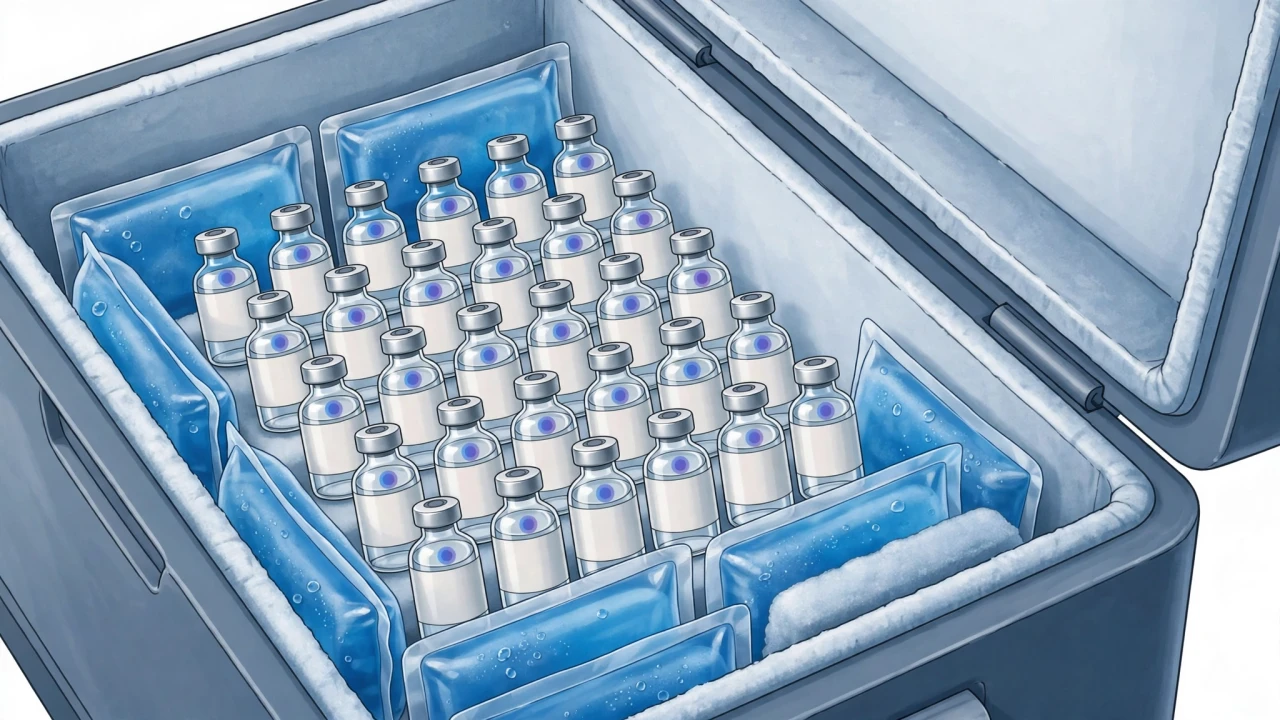
Illustration: vaccine vials with heat-sensitive monitors in an insulated cold box. This is an AI-generated illustration, not a real scene.
Research priorities identified by the experts include testing which products and settings offer the greatest benefit, and evaluating safety, feasibility, acceptability, costs, wastage and effects on coverage and equity. The earliest real-world gains may come not from dismantling cold rooms but from more flexible last-mile outreach — teams that can stay longer in the field and reach further from the fridge.
Perhaps the most important question is the one the experts end on: whether the flexibility offered by this breakthrough would actually change who gets vaccinated. The true test of fridge-free technology, they write, is whether it enables health systems to protect more people — especially those whom current services repeatedly fail to reach. A powder that survives the heat is only half the battle; the other half is the health worker, the road, the trust and the funding that carry it the last mile.
Sponsored: explore today's featured sponsored offers
FAQ
What is the fridge-free vaccine SPVX02?
SPVX02 is an experimental tetanus-diphtheria vaccine developed by the UK company Stablepharma. It uses trehalose, a naturally occurring sugar, to freeze-dry the vaccine into a powder that can be stored without refrigeration and mixed with water before injection.
What did the first human trial find?
In the trial published in eClinicalMedicine in September 2026, 60 healthy adults in the UK were randomly assigned to receive either the fridge-free vaccine or one of two licensed tetanus-diphtheria vaccines. The experimental formulation was well tolerated and generated excellent immune responses, according to the researchers.
How long can it survive without refrigeration?
Laboratory stability data showed the vaccine can remain stable for at least 24 months at temperatures of up to 30°C. Experts caution that stability at higher and fluctuating temperatures, common in many African settings, still needs independent verification under realistic conditions.
How does it differ from existing cold-chain workarounds?
Existing measures — vaccine vial monitors, controlled temperature chains, and vaccines like MenAfriVac authorized for short periods outside refrigeration — only relax cold-chain rules temporarily. The fridge-free approach aims to remove refrigeration entirely during prolonged storage and distribution.
When could it be used in real immunization programs?
Not soon. Experts say further studies are needed in larger and more diverse populations, plus regulatory review and WHO prequalification, before the technology could be deployed. Affordability, reconstitution safety, and the reality that most other vaccines still need cold chains are additional hurdles.
Sources
- MedicalXpress / The Conversation — "Fridge‑free vaccines could reach more people, but there are still practical challenges in African settings" (October 20, 2026)
- eClinicalMedicine (The Lancet) — first-in-human trial publication of the SPVX02 freeze-dried tetanus-diphtheria vaccine (September 2026)
- Gavi, the Vaccine Alliance — reporting on refrigeration dependence and cold-chain innovation in immunization programs (2026)
- World Health Organization — guidance on vaccine vial monitors and controlled temperature chain use
- UK Health Research Authority — first-in-human trial registry entry for the Stablepharma freeze-dried vaccine (April 2025)
Comments
Post a Comment