
Global warming driven by fossil fuel emissions is accelerating, pushing many of the Earth's most important ecosystems close to their tipping points, Johan Rockström — director of the Potsdam Institute for Climate Impact Research — said on Tuesday, October 20, 2026, in a stark warning delivered just weeks before the UN's COP31 climate talks open on November 9.
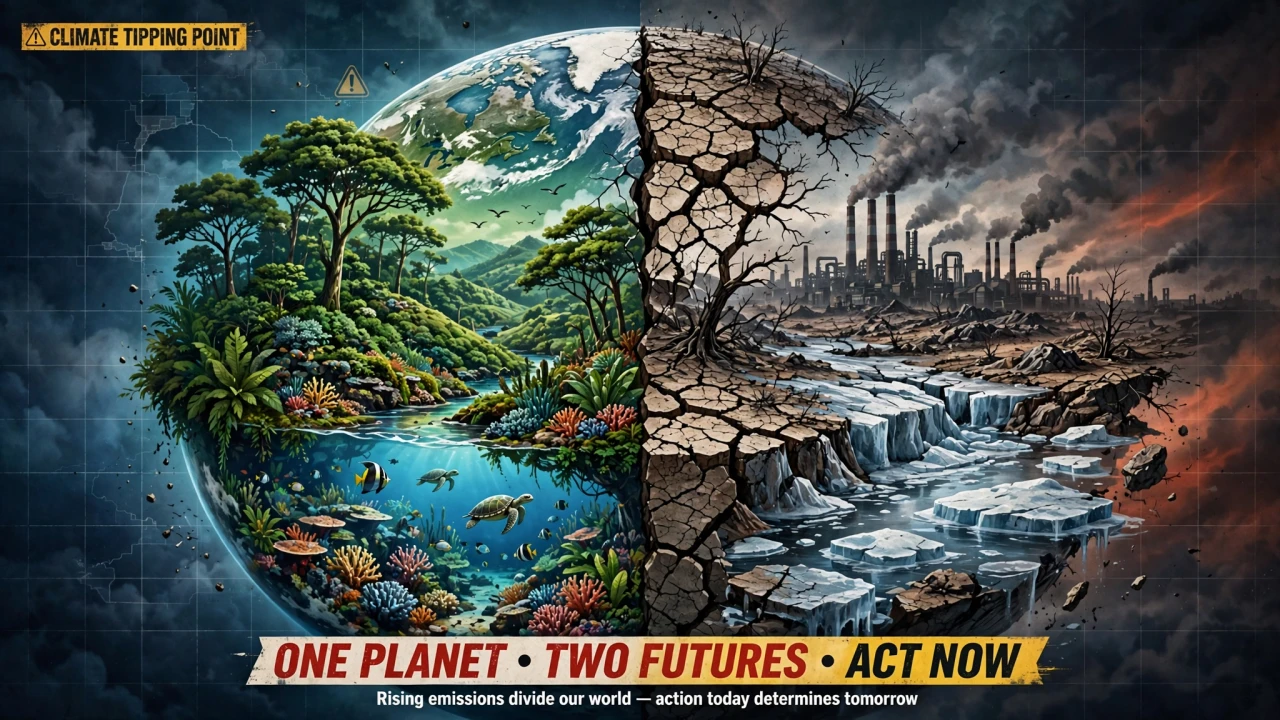
Illustration: Earth split between lush green forests and cracking dry soil under industrial skies.
What Happened
Speaking at the Reuters Sustainability Europe conference in London on October 20, 2026, Rockström said damage to coral reefs and the Amazon rainforest was close to becoming irreversible. Parts of the Atlantic Ocean circulation system — including the current that carries warm water from the Caribbean and moderates Western Europe's climate — were close to collapse, he said, according to Reuters reporting from the event.
"The latest science confirms the world is on course to exceed a 1.5 degree Celsius rise in average surface temperature in the next few years," Rockström said, warning that breaching that threshold would increase the frequency and intensity of extreme weather events worldwide.
Rockström is one of the world's most cited Earth-system scientists, and his warning carries particular weight because of its timing: the UN's COP31 climate summit begins in Turkey on November 9, where governments will negotiate the next round of emissions commitments under the Paris Agreement. He urged companies to treat climate and nature as a single integrated agenda rather than separate issues — prioritizing decarbonization while also investing in preserving nature, particularly biodiversity and fresh-water reserves.
Rockström also aimed a barb at political backsliding. He said it was "incredibly disturbing" to see lobbying for an easing of rules on phasing out internal combustion engine vehicles, and pointed to subsidies for petrol and diesel that he said were undermining consumer demand for electric vehicles.
Background
Rockström's warning did not arrive in a vacuum — it capped a year of record-shattering climate signals. In September 2026, an intensifying El Niño broke a Pacific temperature record, according to Copernicus data reported in October, raising global risks for extreme weather in the months ahead. Strong El Niño conditions pump extra heat into the global climate system, and the current event is unfolding on top of long-term warming.
Europe just endured a brutal summer. Just over half of the continent experienced "very strong" levels of heat stress at times this summer — the highest share on record, the EU's Copernicus Climate Change Service said on October 2. Western Europe recorded its hottest summer since records began, with "very strong" heat stress on 13 days, and Europe's rivers recorded their lowest flows in more than three decades. The World Meteorological Organization has identified Europe as the world's fastest-warming continent.
The 1.5-degree threshold Rockström referenced is the central target of the 2015 Paris Agreement, under which governments committed to limit warming to 1.5 degrees Celsius above the 1850–1900 pre-industrial average. Last month, the UN's environmental body warned the world would exceed that threshold "within a few years" — a timeline Rockström's remarks now reinforce.
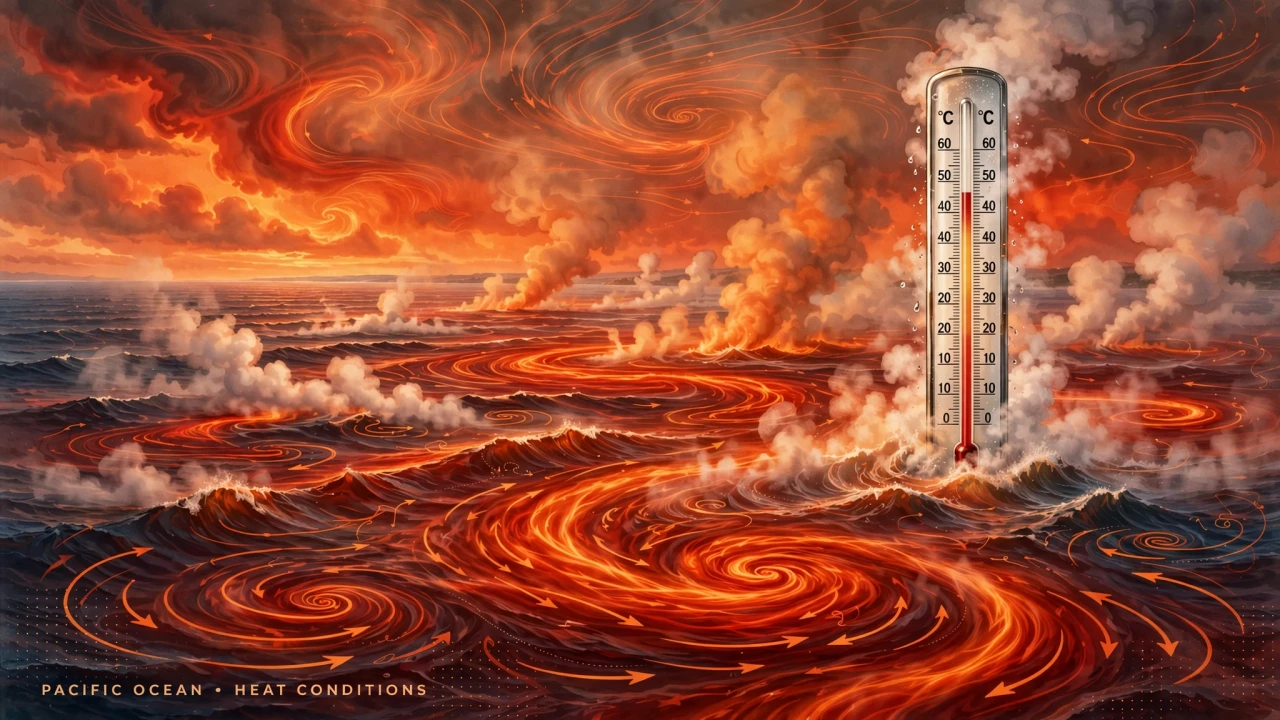
Illustration: the Pacific Ocean glowing red with swirling heat as a thermometer rises above the waves.
Pre-COP31 diplomacy has already begun. A ministerial meeting held in Fiji and Tuvalu on October 7 warned that countries must urgently scale up commitments, stating that "deep, rapid and sustained emissions reductions are required to minimise the magnitude and duration of overshoot" of the 1.5-degree target. "As global temperature increases approach 1.5C and we face strong El Nino conditions, we reiterate that every fraction of a degree of warming accelerates the impacts of climate change and increases the risk of irreversible loss and damage for climate vulnerable communities," the statement said.
For Pacific nations, the threat is existential. Tuvalu's sea levels have risen about 15 centimeters (6 inches) in the three decades to 2023, according to NASA researchers — twice as fast as the global average. The pre-COP31 meeting reaffirmed the importance of continuing sovereignty and maritime-zone rights under international law even as rising seas reshape coastlines.
The tipping points Rockström named are the nightmare scenarios of climate science. Coral reefs, which support a quarter of all marine life, bleach and die as oceans warm. The Amazon, the planet's largest rainforest and a giant carbon store, risks flipping toward savanna if deforestation and drought push it past a critical threshold. And a slowdown of Atlantic circulation — the system that keeps Western Europe far warmer than its latitude would suggest — would redraw the climate map of an entire continent.
Why It Matters
Rockström's intervention matters because of who he is talking to and when. The Reuters Sustainability Europe audience is not a room of activists — it is executives, investors, and policymakers. His framing was deliberately practical: companies should build resilience into their operations now, treating climate adaptation and nature preservation as core business strategy rather than corporate philanthropy.
The timing, three weeks before COP31, is equally deliberate. Climate summits succeed or fail on political momentum, and a respected scientist declaring that warming is "accelerating" and ecosystems are near "tipping points" raises the cost of inaction for negotiators. It also sets a scientific baseline against which the summit's pledges will be judged: anything short of deep, rapid emissions cuts will look inadequate next to Rockström's assessment.
The economic stakes are enormous. Extreme weather already costs the global economy hundreds of billions of dollars a year in damages, insurance losses, and disrupted supply chains. If warming accelerates as Rockström warns, those costs compound — and they land hardest on the countries least responsible for emissions, from Pacific island states facing rising seas to African and South Asian nations facing deadly heat.
His criticism of internal-combustion lobbying touches a live political nerve. Across several major economies, automakers and fuel interests have been pushing to delay or dilute EV mandates and emissions rules. Rockström's point is that subsidies for petrol and diesel do not just slow the energy transition — they actively undermine it, locking in emissions for decades through the cars sold today.
What Happens Next
The immediate focus is COP31, opening November 9 in Turkey. Negotiators will face pressure to close the gap between current national pledges and what the science demands. The Fiji–Tuvalu ministerial statement already laid down a marker: every fraction of a degree matters, and overshoot of 1.5 degrees must be minimized in magnitude and duration.
Watch for three things at the summit. First, whether major emitters strengthen their 2030 and 2035 targets — the "ratchet" mechanism of the Paris Agreement only works if countries actually tighten their commitments. Second, whether climate finance for vulnerable nations moves from promises to disbursements; Pacific states in particular will demand concrete adaptation funding, not communiqués. Third, whether the summit produces any binding language on fossil-fuel phaseout timelines — the issue that has deadlocked recent COPs.
Beyond the negotiating halls, the El Niño now intensifying in the Pacific will shape the weather story of the coming months. Strong El Niño events historically bring drought to parts of Asia and Australia, heavy rains to the Americas, and a global temperature boost. Combined with the underlying warming trend, forecasters warn the next year could challenge or break global heat records.
For businesses and investors, Rockström's advice points to a concrete agenda: audit supply chains for climate exposure, invest in water security and biodiversity alongside emissions cuts, and stop treating nature preservation as optional. The companies that build resilience now, he suggested, will be the ones still standing when the tipping points he described start to bite.
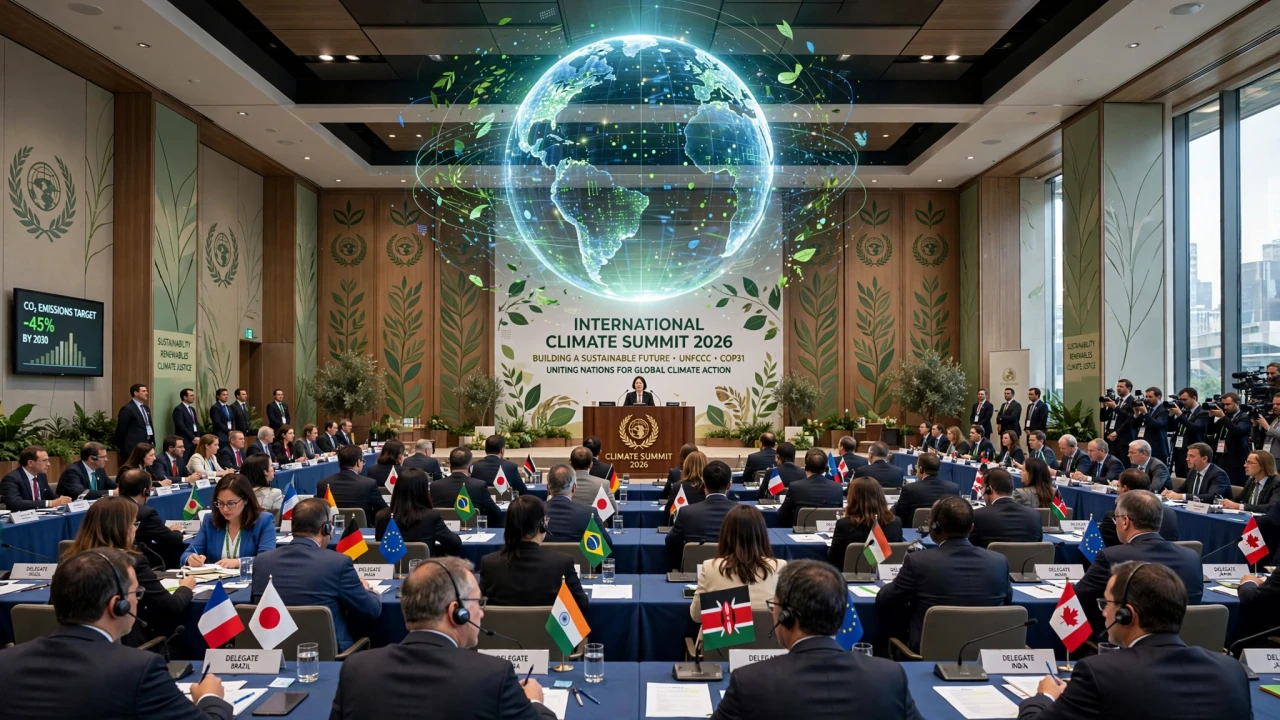
Illustration: delegates at a climate summit hall with a glowing globe hologram above the podium.
Sponsored: explore today's featured sponsored offers
FAQ
Q: Who is Johan Rockström and what did he say?
A: Rockström is the director of the Potsdam Institute for Climate Impact Research. Speaking at the Reuters Sustainability Europe conference in London on October 20, 2026, he said fossil-fuel-driven global warming is accelerating and pushing ecosystems like coral reefs and the Amazon close to irreversible tipping points.
Q: What are the tipping points he warned about?
A: He named three: coral reefs and the Amazon rainforest nearing irreversible damage, and parts of the Atlantic Ocean circulation system — including the current that warms Western Europe — being close to collapse.
Q: When and where is COP31?
A: The UN's COP31 climate summit begins on November 9, 2026, in Turkey. Pre-summit meetings, including a ministerial session in Fiji and Tuvalu on October 7, have already called for urgent scaling up of emissions commitments.
Q: What is the 1.5-degree target, and are we on track?
A: The 2015 Paris Agreement aims to limit warming to 1.5°C above pre-industrial levels. According to Rockström and the UN's environmental body, the world is on course to exceed that threshold within a few years, which would increase extreme weather.
Q: What did Rockström say about electric vehicles?
A: He called lobbying to ease internal-combustion phaseout rules "incredibly disturbing" and said petrol and diesel subsidies are undermining consumer demand for electric vehicles — effectively locking in future emissions.
Sources
- Reuters, "Global warming is accelerating, leading climate scientist Rockström says," October 20, 2026 (reporting by Simon Jessop)
- Reuters, "Half of Europe faced very strong heat stress this summer, EU scientists say," October 2, 2026 (Copernicus Climate Change Service)
- Reuters, "Climate summit warns stronger action needed to curb global warming," October 7, 2026 (pre-COP31 Fiji–Tuvalu ministerial)
- EcoWise briefing, "Global Climate Extremes Intensify," October 12, 2026 (Copernicus El Niño Pacific temperature record)
Comments
Post a Comment