
The Hidden Side of Weight-Loss Drugs: Why Millions of GLP-1 Users Are Stacking Unregulated Supplements
For Allison Vecchio, a 42-year-old emergency-room nurse from Fort Pierce, Florida, GLP-1 weight-loss drugs were "a reset button on life" — but at a price. Gastrointestinal distress, brittle nails and waves of weakness so intense she sometimes could not leave her bed. Relief, she says, came from an unlikely place: a monthly cocktail of fiber, collagen and electrolytes costing $200 to $300 — and she is far from alone. According to a Reuters special report published October 20, 2026, millions of users of drugs like Ozempic and Wegovy are stacking loosely regulated dietary supplements to fight side effects, fueling a $74 billion boom that has doctors raising red flags and regulators weighing new rules.
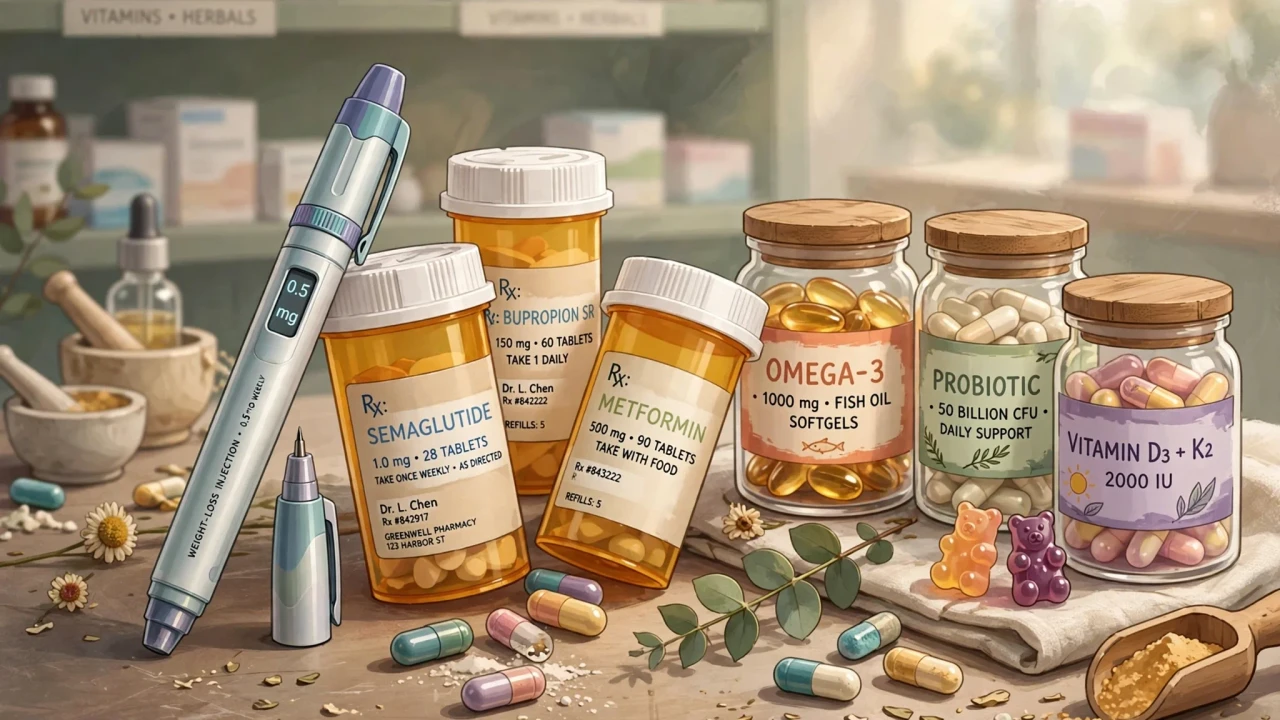
Illustration: a weight-loss injection pen alongside prescription bottles and dietary supplement jars. This is an AI-generated illustration, not a photograph of real products.
What Happened
Reuters' investigation paints a vivid picture of a new consumer ecosystem orbiting the GLP-1 revolution. GLP-1 drugs — a class led by Novo Nordisk's Ozempic and Wegovy — rank among the biggest medical breakthroughs in years, prized for their efficacy in treating obesity and type 2 diabetes and for reducing the risk of heart disease. Some 10 million Americans used them last year, and JPMorgan research cited by Reuters projects that figure could grow to 25 million by 2030.
But the drugs come with side effects, including nausea, fatigue and gastrointestinal trouble — and users are increasingly self-medicating with supplements. Nearly half of GLP-1 users started taking new vitamins and supplements after beginning the drugs, according to a survey by the Nutrition Business Journal, with probiotics, protein and fiber particularly popular. A consumer survey by Boston Consulting Group this year found that GLP-1 users spend roughly 20% more on protein, fiber and collagen — a protein that helps maintain skin structure — than before starting the drugs.
Vecchio, who has 25,000 TikTok followers and is on retainer with three supplement brands, told Reuters her symptoms eased after she began her supplement cocktail. "You really have to take the reins" to turn mere weight loss into improved health, she said. She is also a member of TikTok Shop's HealthPro creator program, which is reserved for licensed health professionals.
Terri Hart, a 52-year-old from Pittsburg, Kansas, with more than 12,000 TikTok followers, told Reuters she takes magnesium, electrolytes, B12 and other supplements — about $110 a month, costs her insurance does not cover — which she says have helped offset what she called "horrible" nausea, fatigue and constipation after beginning GLP-1s in 2023. She says she makes clear she is not a medical professional and urges followers to talk to doctors before taking her advice. "I establish my authority through my lived experience," Hart said.
Background
The supplement boom GLP-1s are riding was already underway. US supplement sales have surged in recent years, surpassing $74 billion in 2025, according to the Nutrition Business Journal. Overall US vitamin and supplement sales grew 5% in 2024 and 7% last year, and TikTok Shop alone generated more than $1 billion in dietary supplement sales in 2025 — 5.4% of all e-commerce supplement sales, the firm reported. The drugs are "bringing in new consumers and expanding existing supplement routines," said Erika Craft, a data analyst at the Nutrition Business Journal.
Illustration: pharmacy supplement shelves under a magnifying glass with a warning icon, symbolizing regulatory scrutiny. This is an AI-generated illustration, not a real scene.
Companies are racing to capture the wave. Target is widening its supplement offerings, while private equity-owned The Vitamin Shoppe has seen double-digit sales growth this year in fiber and creatine — both popular with GLP-1 users — said Jack Gayton, the chain's senior vice president of merchandising. Mergers and acquisitions are getting bigger even as deal counts shrink: there were 115 deals globally worth $7.3 billion in 2024, 95 deals worth $16.9 billion in 2025, and 68 deals worth $14.6 billion through October 6 of this year, according to financial data firm PitchBook. Procter & Gamble is set to acquire supplement maker Thorne, while Japan's Kirin Holdings announced in August it will buy Canada's Jamieson Wellness, whose US brand youtheory already sells a product aimed at GLP-1 users.
Jamieson spokesperson Ruth Winker told Reuters the company sees GLP-1s as a tailwind for growth beyond combating side effects. "As people get healthier, they tend to take more vitamins and supplements," Winker said.
The catch, experts warn, is how loosely the supplement market is policed. Vitamins and supplements do not need preapproval by the US Food and Drug Administration, making their scientific credibility hard to gauge. "If you can't know what you're taking, it's hard to know what risks you're undergoing," said Jonathan Bonnet, a clinical associate professor at Stanford and chief medical officer at the Ardmore Institute of Health in Ardmore, Oklahoma.
Social media has supercharged the problem. With influencers playing a growing role in supplement promotion, some medical researchers have called for more regulation of online supplement marketing. Rob Fried, CEO of Niagen Bioscience — which had $129 million in sales last year — cautioned that companies "can hire an influencer, or even hundreds of influencers on TikTok ... to make whatever claims will sell."
Why It Matters
The GLP-1 supplement boom sits at the collision of three powerful forces: a genuine medical breakthrough, a lightly regulated consumer industry, and a social-media marketing machine. The drugs themselves are helping millions manage obesity and diabetes — but the shadow market growing up around them operates with far less oversight than the medicines it accompanies.
For public health, the stakes are real. Patients on GLP-1s already face appetite suppression that can lead to nutritional gaps; adding unregulated supplements of uncertain content — sold on the word of influencers, some with brand retainers — creates risks that even the supplement industry's more scrupulous players acknowledge. Some makers support more regulation, Reuters reported, lamenting unscrupulous actors who spike supplements with drugs or add only tiny amounts of touted beneficial ingredients. "At a minimum, a review process should happen prior to launch," said Jacqueline Maslan, CEO of Body of Work, a vitamin startup aimed at women under 40.
For regulators, the story is a test case. US Health and Human Services Secretary Robert F. Kennedy Jr. has proposed tighter regulations, and the FDA this year has stepped up efforts to strengthen oversight of new dietary ingredients, issuing new guidance on what submissions for review should include. Many supplement makers currently avoid that review through a pathway allowing food companies to declare ingredients "generally recognized as safe" without notifying the FDA — but a proposed rule would eliminate that option. The proposal has divided the industry: the Council for Responsible Nutrition trade group warns the rule would cause months of backlogs as the FDA reviews thousands of ingredients, while Thorne CEO Colin Watts called it "improbable" the FDA could review new ingredients "at the speed needed to keep up with innovation." An HHS spokesperson told Reuters the FDA is mulling opportunities "to modernize its regulatory approach to keep pace with an evolving marketplace," while ensuring product safety "while supporting consumer choice."
What Happens Next
The regulatory fight is the story to watch. If the FDA moves forward with eliminating the "generally recognized as safe" self-declaration pathway, supplement makers could face a dramatically different approval landscape — and the months of backlogs industry groups warn about. How the agency balances safety against the innovation speed executives like Watts describe will set the rules for a $74-billion-plus industry for years.
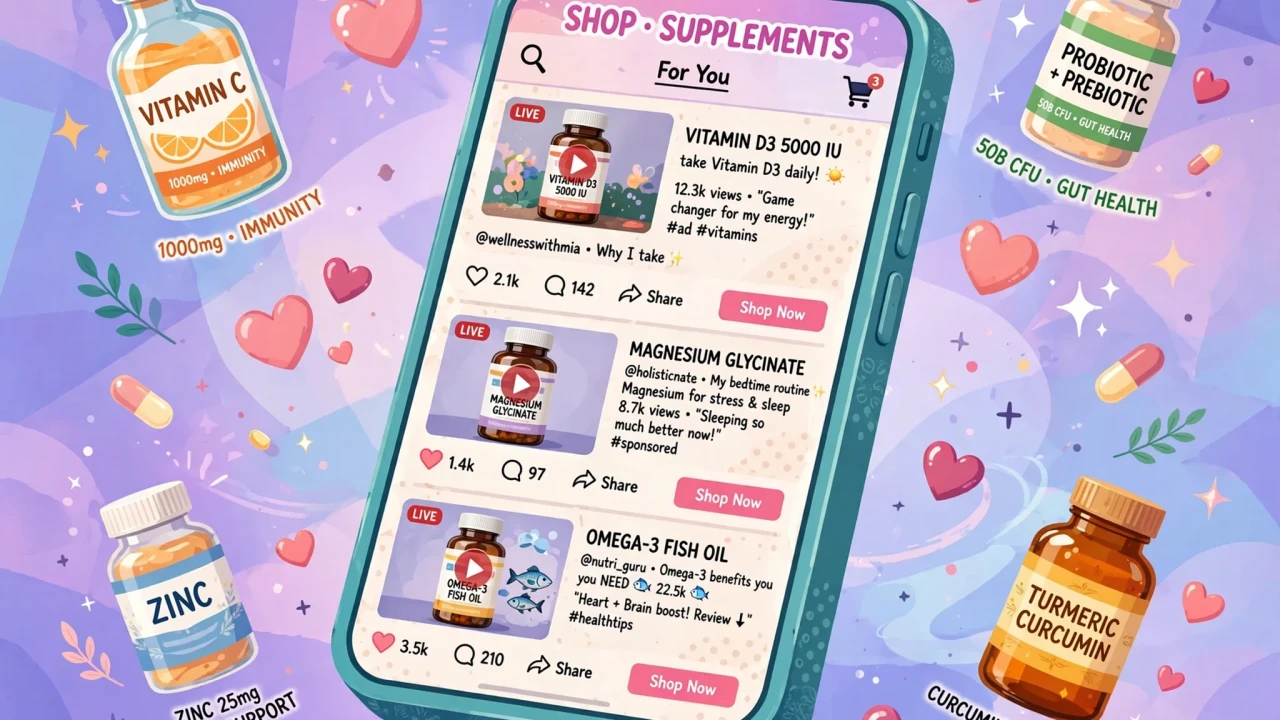
Illustration: a smartphone displaying a social-media supplement shopping feed surrounded by floating vitamin bottles. This is an AI-generated illustration, not a real screenshot.
Consolidation is likely to continue regardless. With M&A values climbing and giants like Procter & Gamble and Kirin Holdings buying into the space, the supplement industry is professionalizing even as its wildest corner — influencer-driven social commerce — keeps growing. Expect more products explicitly marketed to GLP-1 users, and more scrutiny of the claims behind them.
For patients, the medical consensus remains simple and worth repeating: talk to a doctor before adding supplements to a prescription regimen — especially one that already alters appetite, digestion and nutrient intake. Vecchio's and Hart's stories show supplements can help some people; the data also show the market is full of products whose contents nobody can verify. The next chapter of the GLP-1 revolution will be written not just in prescriptions, but in how well society manages everything that comes with them.
Sponsored: explore today's featured sponsored offers
FAQ
What are GLP-1 drugs and why are they so popular?
GLP-1 drugs, including Novo Nordisk's Ozempic and Wegovy, are medicines originally developed for type 2 diabetes that also drive significant weight loss and reduce heart-disease risk. Some 10 million Americans used them last year, and JPMorgan research projects 25 million users by 2030, according to Reuters.
Why are GLP-1 users turning to dietary supplements?
Side effects such as nausea, fatigue and gastrointestinal distress lead many users to self-medicate. Nearly half of GLP-1 users started new vitamins and supplements after beginning the drugs, with probiotics, protein and fiber most popular, a Nutrition Business Journal survey found.
Are dietary supplements regulated in the United States?
Only lightly. Vitamins and supplements do not need preapproval by the FDA, so their exact contents and scientific backing can be hard to verify. The FDA has proposed tightening rules, but industry groups warn of review backlogs and capacity problems.
What role does social media play?
A large one. TikTok Shop generated over $1 billion in supplement sales in 2025, and influencers — some on brand retainers — promote products to millions of followers. Doctors and researchers warn that marketing claims on social media often outrun the evidence.
Should I take supplements alongside a GLP-1 drug?
This article is informational, not medical advice. Reuters' reporting shows supplements help some users manage side effects, but experts stress that unregulated products carry uncertain risks — so consult your doctor before adding supplements to any prescription regimen.
Sources
- Reuters — "As weight-loss drug users turn to dietary supplements, doctors, regulators raise flags" (October 20, 2026)
Comments
Post a Comment