
SAO PAULO, Brazil — Google and McKinsey have agreed to buy 320,000 metric tons of carbon removal credits over 10 years in the first large-scale silvopasture project of its kind, betting that planting trees alongside grazing cattle across Brazil's degraded pastureland can become a scalable weapon against climate change, the companies announced on Monday, October 19, 2026.
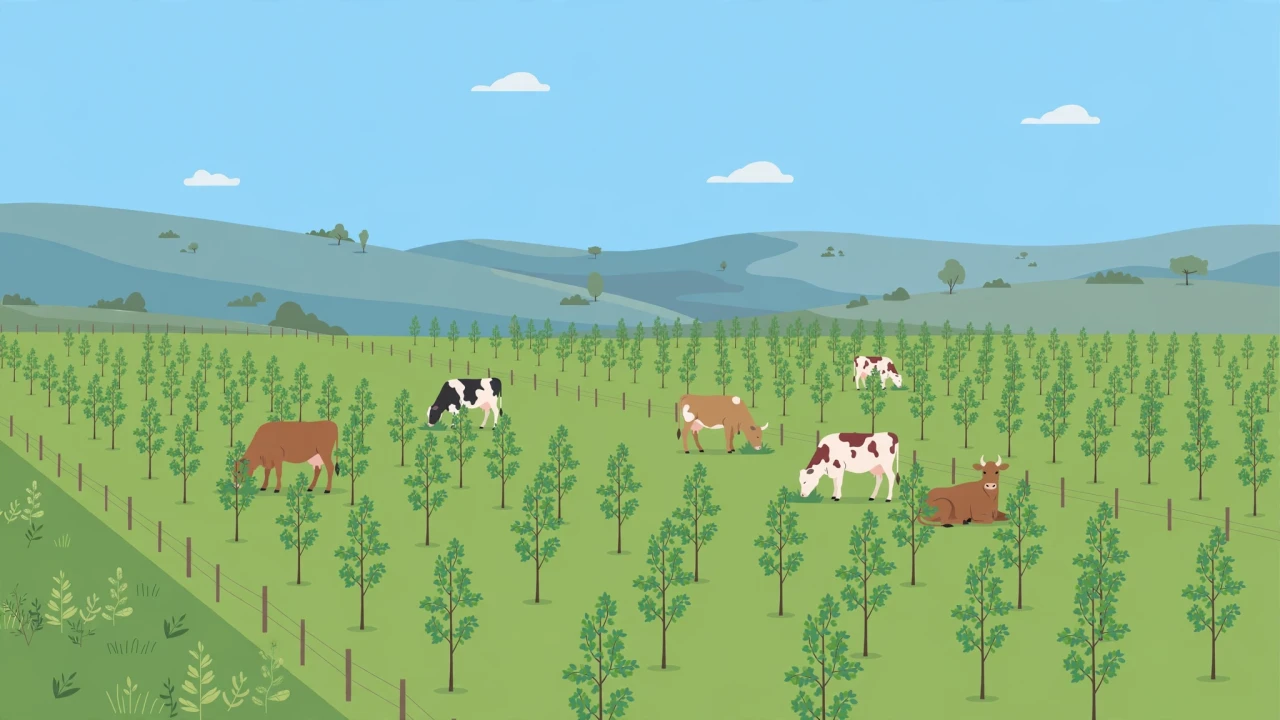
Illustration: rows of young trees planted among grazing cattle in a Brazilian pasture, depicting silvopasture farming.
What Happened
The long-term purchase agreements, announced Monday through the Symbiosis Coalition, will support an effort by Working Trees, a climate technology company, to convert degraded cattle pasture into mixed-species systems across Brazil's southeastern Amazon and Cerrado regions. It is one of the first attempts to deploy carbon-funded silvopasture at a meaningful scale.
Silvopasture integrates trees directly into cattle pastures, allowing ranching to continue while boosting carbon sequestration and reducing pressure for deforestation. The deal will help fund the restoration of 8,700 hectares (21,500 acres) of degraded and semi-degraded pastureland as part of a broader 50,000-hectare project.
"Silvopasture, within the various different approaches for sequestering carbon via natural systems, is one of the pathways with the most promising potential for scale. And carbon finance has a role to play in financing that solution," Julia Strong, executive director of the Symbiosis Coalition, told Reuters.
Background
The Symbiosis Coalition is a buyers' group whose members include Alphabet's Google, Microsoft, Meta, and Salesforce. It focuses on long-term carbon removal contracts rather than short-term offsets, and its members have pledged more than 20 million tons of offsets by 2030. The group's bet is that durable, advance purchase agreements can unlock investment in projects that would otherwise never get off the ground — precisely the role these 10-year contracts play for Working Trees.
Working Trees plants rows of commercial timber and native tree species directly into existing cattle pasture, leaving space for grazing. The company says the model improves cattle productivity — shaded cattle are less heat-stressed — while generating future timber revenue that encourages landowners to maintain the systems after carbon-credit income declines.
Brazil is a natural venue for the experiment. The country's nascent carbon market has attracted increased interest from investors and lenders as companies seek high-quality carbon-removal projects to meet their climate goals. Brazil's vast degraded pasturelands — the legacy of decades of ranching expansion into forest frontiers — are exactly the kind of land where silvopasture could scale to millions of hectares, supporters argue.
"This project and the potential to scale to millions of hectares in this part of Brazil is a really exciting opportunity to showcase what good looks like," Strong said, adding that Working Trees had demonstrated the model through a pilot project.
Illustration: a glowing digital certificate above a restored Brazilian forest, symbolizing carbon removal credits.
Why It Matters
Technology companies are under growing pressure to square their climate pledges with their energy appetite. The rapid expansion of energy-intensive artificial intelligence infrastructure has sent data-center emissions climbing, and tech giants are increasingly looking for ways to offset emissions linked to that buildout. Long-term removal contracts like this one are meant to answer that need with credits that represent carbon actually pulled out of the atmosphere, rather than merely emissions avoided elsewhere.
Working Trees chief executive Leif Gonzales-Kramer said the long-term purchase commitments were critical to unlocking investment for such projects. "If you believe that the world will continue to eat beef and that the world will take climate action seriously, the only way that you can actually achieve both at the same time is through silvopasture," he said.
The deal also matters for the credibility of the voluntary carbon market itself, which has been dogged by scandals over low-quality credits. Silvopasture's appeal is that it produces verifiable results — trees that can be measured, cattle that can be counted, timber that has a market — while keeping ranchers on the land rather than pushing them toward new forest frontiers.
Still, critics caution that offsets can let polluters avoid the harder work of reducing their own emissions. Whether corporate carbon deals accelerate climate action or merely buy absolution remains one of the fiercest debates in climate policy — and this 320,000-ton agreement will be watched as a test case.
What Happens Next
Working Trees will now move to scale up planting across the targeted 8,700 hectares, with the 10-year purchase agreements providing the revenue certainty needed to attract project financing. The coalition says the broader ambition is a 50,000-hectare footprint — and, ultimately, millions of hectares across Brazil's degraded pasture belt if the model proves out.
For the Symbiosis Coalition, the silvopasture deal is a template it hopes to replicate: long-term, bankable contracts that de-risk novel removal methods so that private capital can follow. With member pledges totaling more than 20 million tons of offsets by 2030, more announcements of this type are likely.
And for Brazil, the project lands at a moment when the country's carbon market is still taking shape. If silvopasture deals like this one deliver measurable carbon removal alongside productive ranching, they could become a showcase for how the world's biggest beef-producing nation turns its degraded lands into a climate asset rather than a liability.
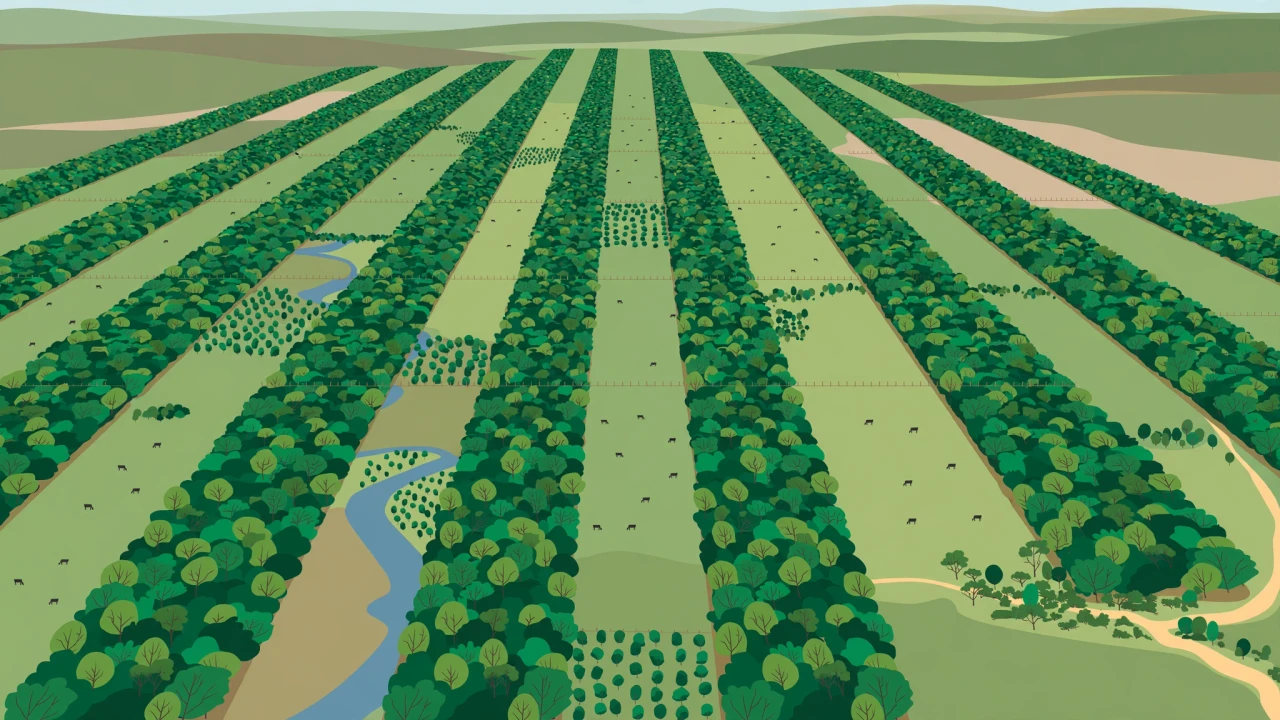
Illustration: an aerial view of alternating forest and pasture strips in a large-scale Brazilian reforestation project.
Sponsored: explore today's featured sponsored offers
FAQ
What is silvopasture?
Silvopasture is a farming system that integrates trees into cattle pastures. Ranchers plant rows of timber and native tree species directly into grazing land, so cattle continue to graze while the trees sequester carbon, provide shade, and eventually yield timber revenue.
What did Google and McKinsey agree to buy?
They agreed to purchase 320,000 metric tons of carbon removal credits over 10 years through the Symbiosis Coalition, in long-term agreements announced on October 19, 2026. The credits come from a Working Trees project restoring degraded pastureland in Brazil.
What is the Symbiosis Coalition?
It is a buyers' coalition of major companies — including Google, Microsoft, Meta, and Salesforce — focused on long-term carbon removal contracts. Its members have pledged more than 20 million tons of carbon offsets by 2030.
How large is the Brazilian project?
The deal funds the restoration of 8,700 hectares (21,500 acres) of degraded and semi-degraded pastureland across Brazil's southeastern Amazon and Cerrado regions, as part of a broader 50,000-hectare effort that Working Trees aims to scale up further.
Do critics support carbon offset deals like this one?
Not all of them. Some critics argue that buying offsets allows polluting companies to avoid reducing their own emissions. Supporters counter that high-quality removal credits with long-term contracts finance real, measurable climate benefits — and this deal will be closely watched as a test of that claim.
Sources
- Reuters, October 19, 2026 — Google, McKinsey strike Brazil carbon removal deal with silvopasture project (320,000 metric tons over 10 years, Symbiosis Coalition, Working Trees, 8,700 hectares of 50,000-hectare project, Julia Strong and Leif Gonzales-Kramer quotes).
Comments
Post a Comment