
Green Climate Fund Approves Record $1.97 Billion as COP31 Nears, but UN Warns Restoration Finance Must Quadruple
29 October 2026 — The Green Climate Fund has approved a record $1.97 billion for 21 projects at its latest board meeting, its executive director told Reuters on Thursday, in a funding surge timed to the COP31 climate talks in Turkey in early November.
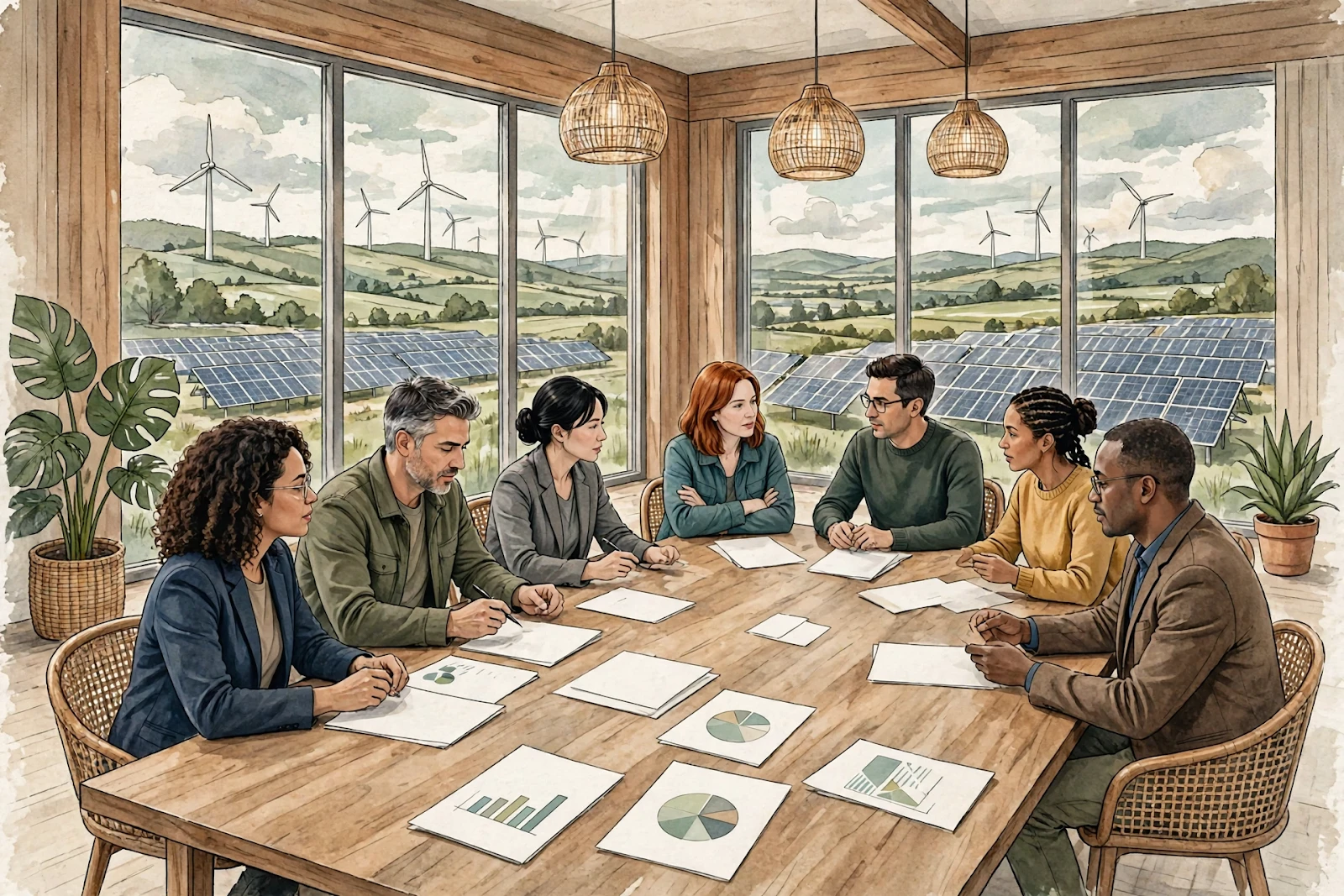
Illustration: A climate finance board meeting reviews green project funding proposals.
What Happened
The world's biggest multilateral climate investment fund approved $1.97 billion for 21 projects, taking its total funding for the year to a record $3.2 billion, executive director Mafalda Duarte told Reuters. The latest round included $682 million for six private-sector initiatives, a sign of the fund's effort to draw more business money into climate projects in developing countries.
The approvals take the fund's total investments to $22.3 billion across 379 projects, and to $86.4 billion once co-financing is included, Duarte said. The fund has historically mobilised $3 of additional resources for every $1 it invests, and $4.5 for its private-sector projects. That overall multiplier rose to $9 last year, Duarte said, but she argued there was further to go.
"We should be talking about multipliers that are higher than 10 for each dollar of GCF resources," Duarte told Reuters, adding that she was being "very conservative". To help encourage more money to move, she said the fund was developing co-investment platforms, where sovereign and non-sovereign investors could team up in particular sectors, projects and markets.
The timing matters. The approvals come ahead of COP31 and against what Reuters described as a fractious political backdrop, with richer countries reluctant to commit more money as they face other financial and political pressures. As the fund prepares for its third replenishment round, Duarte said a first-ever policy allowing contributions from non-sovereign and alternative sources could broaden its funding base beyond national governments.

Illustration: Solar and wind projects are among the clean energy investments climate finance supports.
Background
The Green Climate Fund was set up to channel money from developed countries to developing countries for projects that cut emissions and help communities adapt to a warming climate. It is the largest dedicated multilateral climate fund of its kind, and its board decisions are closely watched as a barometer of whether climate finance is keeping pace with the pledges governments have made.
That barometer has been under strain. Developing countries have long argued that promised climate finance arrives too slowly and in too small a volume, while donor governments point to tight budgets, competing crises and questions about how effectively money is spent. The fund's answer, under Duarte, has been to focus less on the size of its own cheques and more on how much additional money each dollar can unlock — from development banks, private investors and recipient governments.
The same day brought a second, sobering measure of the gap. A United Nations report published on Thursday said global efforts to restore degraded land, sea and freshwater ecosystems by the end of the decade are having an impact but need to be scaled up rapidly. Some 252 million hectares across 149 countries are currently being restored, the largest global restoration effort to date, the report said, against a UN goal of 1 billion hectares of ecosystem restoration by 2030.
Asia accounts for 192.2 million hectares of the restoration total, followed by Africa with 36.3 million hectares, Europe with 9.1 million hectares, North and Central America with 5.8 million hectares, South America with 5.4 million hectares and Oceania with 3.2 million hectares, according to the report cited by Reuters. Restoring 15% of global priority areas could capture and store 30% of the carbon dioxide equivalent emissions generated since the industrial revolution and help avoid 60% of species extinctions, the report said.
Why It Matters
First, the record round shows that the climate finance system can still move at scale even when the politics are difficult. A $3.2 billion year, with a rising private-sector share, gives negotiators heading to COP31 something concrete to point to — proof, in the fund's terms, that public money can still crowd in private money rather than simply substitute for it.
Second, the UN restoration figures show why that proof is not enough on its own. To reach the 2030 restoration goal, annual finance must more than quadruple from $64 billion to $296 billion by 2030, the report said. The Green Climate Fund's entire portfolio, even with co-financing, is a fraction of that annual need — a reminder that restoration, adaptation and clean energy all draw on the same scarce pool of climate money.
Third, the replenishment fight ahead will test whether the fund can widen who pays. Allowing non-sovereign and alternative contributions for the first time could bring in new money, but it also raises questions about governance and accountability that governments will want answered before COP31. Duarte said she was hoping to see a "strong signal of political support and commitment towards a very strong replenishment" at the talks, and that the fund already had demand for funding of more than $11 billion.
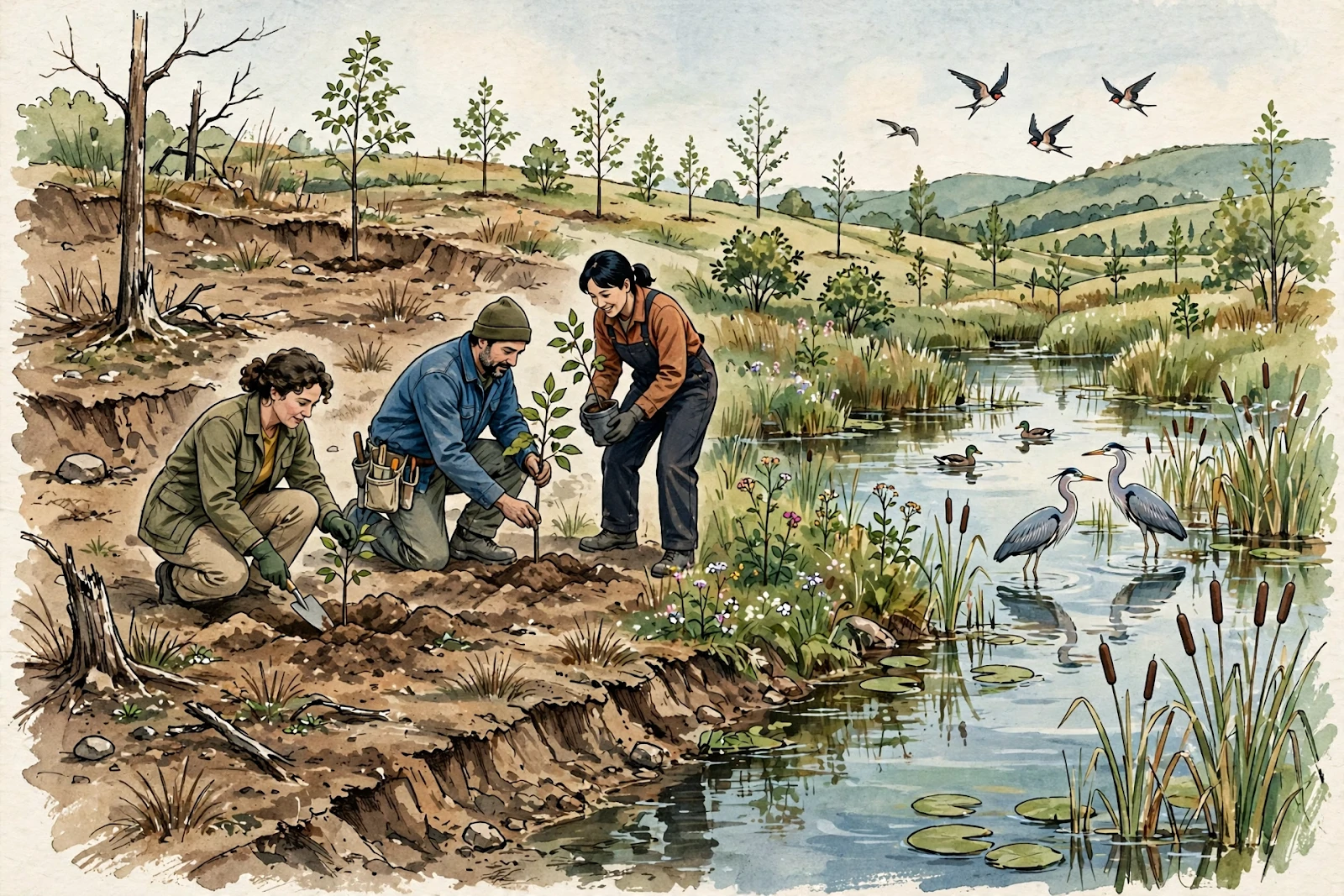
Illustration: Workers plant trees on degraded land as part of an ecosystem restoration effort.
What Happens Next
All eyes now turn to COP31 in Turkey in early November, where governments will debate the fund's replenishment and the broader climate finance agenda. The key question is not only how much governments pledge, but whether the new non-sovereign contribution policy and the co-investment platforms can turn pledges into projects that private investors are willing to back at the higher multipliers Duarte is targeting.
For recipient countries, the test will be delivery: whether the 21 newly approved projects move quickly from board approval to construction, and whether the private-sector projects in particular demonstrate the higher leverage the fund is promising. For the restoration agenda, the test is scale — closing a finance gap that, on the UN's figures, requires more than a fourfold increase in annual spending within four years.
If COP31 delivers a strong replenishment signal, the record 2026 round could mark the start of a larger funding cycle. If it does not, the fund's record year may instead stand as evidence of what is possible — and of how far short the system still falls.
Sponsored: explore today's featured sponsored offers
FAQ
What did the Green Climate Fund approve on 29 October 2026?
It approved $1.97 billion for 21 projects, including $682 million for six private-sector initiatives, taking its total funding for the year to a record $3.2 billion.
How big is the Green Climate Fund's portfolio now?
Its total investments now stand at $22.3 billion across 379 projects, or $86.4 billion including co-financing, according to executive director Mafalda Duarte.
What is the fund's leverage target?
The fund has historically mobilised $3 for every $1 invested, and $4.5 for private-sector projects, rising to $9 last year. Duarte said multipliers above 10 per dollar should be the goal.
What did the UN restoration report find?
Some 252 million hectares across 149 countries are being restored, the largest effort to date, but annual finance must more than quadruple from $64 billion to $296 billion by 2030 to reach the goal of 1 billion hectares.
What happens next at COP31?
Governments meeting in Turkey in early November will discuss the fund's third replenishment round, including a first-ever policy allowing non-sovereign and alternative contributions, amid demand for funding of more than $11 billion.
Sources
- Reuters, "Green Climate Fund approves record near $2 billion funding", 29 October 2026.
- Reuters, "UN says ecosystem restoration efforts must be rapidly scaled up", 29 October 2026.
- Reuters reporting on COP31 preparations and the EU's COP31 strategy, October 2026.
Comments
Post a Comment