
NEW DELHI — On 20 October 2026, India took a quiet but significant step toward future World Heritage recognition when UNESCO's World Heritage Centre added three Indian sites — a cave-and-mud-volcano landscape in the Andaman Islands, a pair of volcanic islands in the Andaman Sea, and an ancient temple town in central India — to the country's World Heritage Tentative List, the official waiting room for any site hoping one day to join the World Heritage List.
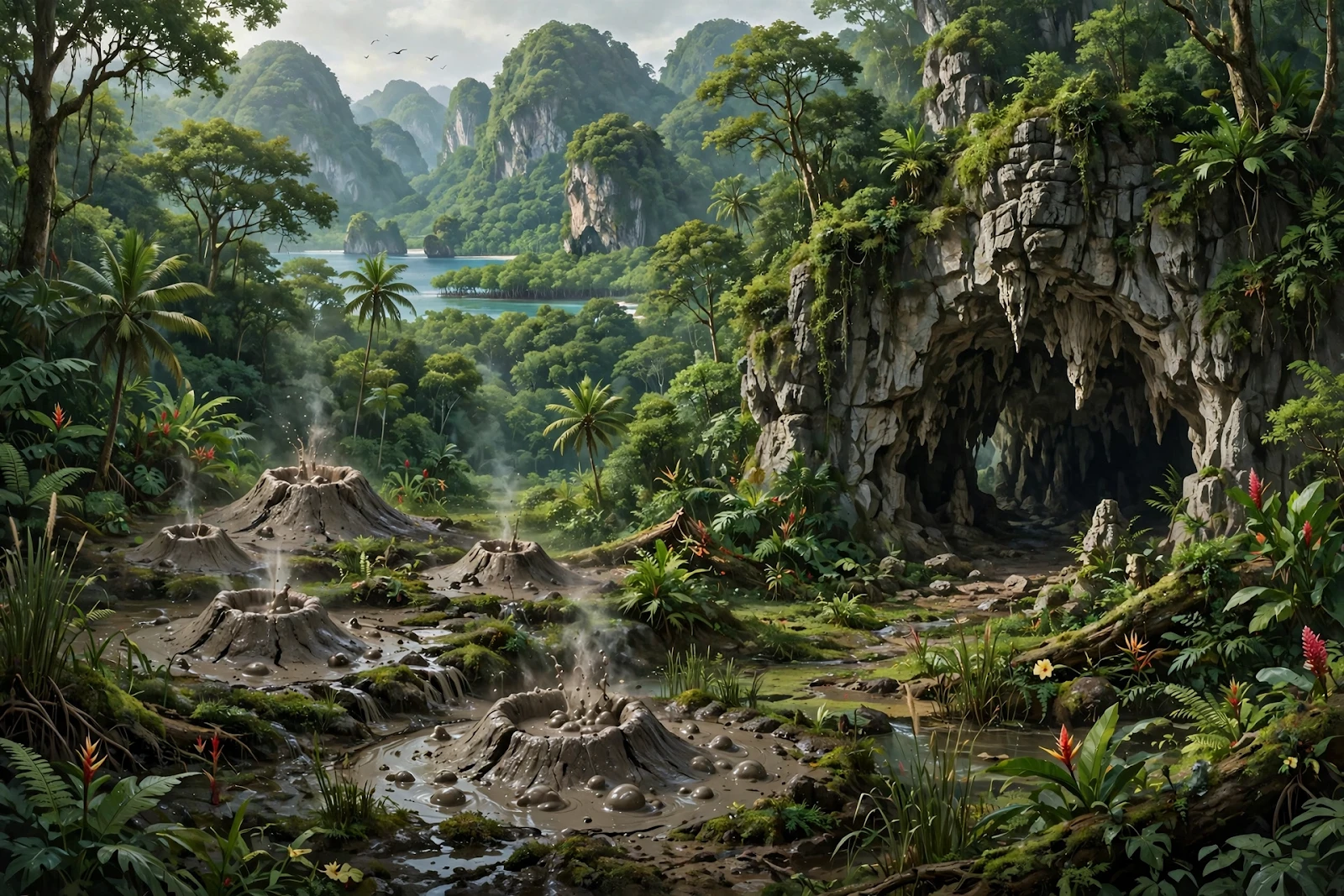
Illustration: Mud volcanoes bubbling among limestone caves and dense tropical forest on Baratang Island, concept illustration.
What Happened
India's Permanent Delegation to UNESCO announced the additions in a press release dated 20 October 2026, and the news was reported the following day by the Asian News International (ANI) news agency and Indian press. The three new entries are the Karst-mud-volcano Complex of Baratang, the Andaman Subduction Volcanoes, and the Sirpur Cultural and Archaeological Landscape in Chhattisgarh. According to UNESCO's records, the proposals were submitted on 28 September 2026, and the additions take the total number of Indian properties on the Tentative List to 81.
The announcement was welcomed publicly by India's culture authorities, with the Press Information Bureau's culture wing posting that "India's heritage shines brighter", and the Indian mission thanking the Archaeological Survey of India (ASI) for its work preparing the documentation and heritage research behind the nominations. Travel and Leisure Asia covered the additions on 24 October 2026, noting that the list now spans Barren Island, Narcondam, Baratang and Sirpur.
It is important to be precise about what this step does — and does not — mean. Inclusion on a Tentative List is a prerequisite for nomination to the World Heritage List, but it is not itself World Heritage status. A site on the Tentative List has been recognised as a candidate worth considering; it must still go through a formal nomination, expert evaluation and a decision by UNESCO's World Heritage Committee before it can be inscribed. Many tentative-list properties wait years, and some never advance at all.
Background
UNESCO's Tentative List system exists so that countries plan their nominations in advance rather than putting forward sites on impulse. Each country keeps an inventory of the cultural and natural properties it considers to have outstanding universal value, and only properties on that inventory can later be nominated. India, one of the world's most prolific heritage nations, already has 45 inscribed World Heritage Sites — 37 cultural, seven natural and one mixed — following the inscription of the ancient Buddhist site of Sarnath in July 2026, according to Indian press reporting of the latest additions.
The two Andaman entries showcase geology rather than monuments. Baratang Island, part of the Great Andaman chain between South Andaman and Middle Andaman, brings together limestone caves and active mud volcanoes in its south-western region. Its rugged terrain is cut by deep gaps and narrow cracks, and its limestone formations developed over millions of years from accumulated marine material, including shells, corals and skeletal fragments, giving the landscape scientific and research importance, according to UNESCO material cited in the coverage.
The Andaman Subduction Volcanoes entry covers Barren Island and Narcondam Island in the Andaman Sea. Barren Island is India's only active volcano, while Narcondam is a small, remote volcanic island. Together, the two islands tell the story of the tectonic forces where one of the Earth's plates dives beneath another — the subduction process named in the entry — and of island ecosystems shaped by eruptions and isolation.
Sirpur, by contrast, is a story of people. The Sirpur Cultural and Archaeological Landscape lies in Mahasamund district of Chhattisgarh, on the banks of the Mahanadi River, about 78 kilometres from the state capital Raipur. Its monuments include ancient brick temples, among them the Laxman Temple, as well as monastic remains that speak to a time when Hindu, Buddhist and Jain traditions flourished side by side. Reporting on the listing highlighted that coexistence of faiths as one of Sirpur's defining features, and its remains offer researchers a window into historical architecture, religious life and cultural exchange in central India.

Illustration: A volcanic island rising from the sea with a faint smoke plume above its crater, concept illustration.
Why It Matters
The three additions matter for several reasons that go beyond prestige. First, they widen the map of Indian heritage beyond the famous monuments that dominate postcards. Two of the three entries are geological landscapes in a remote island chain, and the third is an archaeological landscape in a state that rarely features in international heritage discussions. That breadth reflects a broader shift in heritage thinking: value is found not only in grand buildings, but in caves, volcanoes, river landscapes and the layered remains of everyday religious life.
Second, tentative-list status can change how a place is treated at home. Inclusion brings a site into an international process, which tends to draw attention from researchers, conservation planners and policymakers. For fragile places such as island caves and volcanic terrain, that attention can support protection measures, visitor management and scientific study before tourism pressure grows. For Sirpur, it can support the conservation of brick and stone remains that are vulnerable to weather, vegetation and development.
Third, the listing carries economic and community implications. Heritage recognition, even at the tentative stage, can raise a destination's profile and support responsible tourism that benefits local guides, artisans and hospitality workers. The challenge, as heritage experts regularly note, is to make sure that growth does not damage the very qualities that earned the recognition — a balance that is especially delicate on small islands with limited infrastructure.
Finally, the additions underline India's active role in the global heritage system. India hosted the Intergovernmental Committee for intangible heritage for the first time at Delhi's Red Fort, and its mission in Paris has been steadily building its tentative inventory. With 81 properties now waiting in the wings, India has one of the deepest benches of future candidates of any country — a pipeline that will shape its nominations for years to come.

Illustration: Ancient brick temples and monastery ruins beside a wide river in Sirpur at golden hour, concept illustration.
What Happens Next
The road from tentative list to World Heritage inscription is long and deliberately slow. India must choose which of its 81 tentative properties to advance, prepare a detailed nomination dossier for each chosen site, and submit it for evaluation by UNESCO's advisory bodies, which assess cultural and natural value, protection arrangements and management plans. The World Heritage Committee then decides whether to inscribe, defer or reject each nomination at its annual session.
For the three new entries, the immediate work is likely to be unglamorous but essential: completing surveys, strengthening legal protection, planning visitor facilities and monitoring the condition of caves, volcanic terrain and temple remains. Local communities, researchers and the Archaeological Survey of India will all have a role, and the experience of places already on the World Heritage List suggests that early, careful planning pays off far more than a rushed nomination.
Visitors, meanwhile, should keep expectations in check. A tentative-list site is not a World Heritage Site, and travel guides that describe these places as "UNESCO sites" without qualification are getting ahead of the process. What travellers can do now is visit responsibly: respect restricted areas on fragile islands, follow local guidance at archaeological sites, and remember that the landscapes in question are still working environments for the people who live around them. If any of the three does eventually win inscription, the groundwork laid now will be part of the reason why.
Sponsored: explore today's featured sponsored offers
FAQ
What is UNESCO's World Heritage Tentative List?
It is an inventory of properties that a country considers candidates for future World Heritage nomination. A site must be on a country's Tentative List before it can be nominated, but tentative-list status is not the same as World Heritage inscription.
Which three Indian sites were added in October 2026?
The Karst-mud-volcano Complex of Baratang, the Andaman Subduction Volcanoes (Barren Island and Narcondam Island), and the Sirpur Cultural and Archaeological Landscape in Chhattisgarh.
When were the additions announced?
India's Permanent Delegation to UNESCO issued a press release on 20 October 2026, and the additions were reported by ANI and Indian press on 21 October 2026. The proposals had been submitted on 28 September 2026.
How many Indian properties are now on the Tentative List?
According to UNESCO's records cited in the coverage, the additions bring India's total to 81 tentative-list properties.
Does this mean Baratang, the Andaman volcanoes and Sirpur are now World Heritage Sites?
No. They are candidates for possible future nomination. Each would still need a formal nomination dossier, expert evaluation and a decision by UNESCO's World Heritage Committee before it could be inscribed on the World Heritage List.
Sources
- Permanent Delegation of India to UNESCO, press release, 20 October 2026 (via ANI / Daily Prabhat, 21 October 2026)
- Times of India / India News, "Two Andaman, one Chhattisgarh site added to UNESCO World Heritage tentative list", 21 October 2026
- Travel and Leisure Asia, "UNESCO Tentative List Now Includes Three New Indian Sites", 24 October 2026
- UNESCO World Heritage Centre, Tentative Lists (India), submission date 28 September 2026
Comments
Post a Comment