
Iran Is Prolonging US Talks to Weaken Trump Before the Midterms, Officials Tell Reuters, as Hegseth Meets Netanyahu and Yemen Toll Rises
Iran has deliberately prolonged talks with the United States in a bid to weaken Donald Trump politically ahead of November's midterm elections, three senior Iranian officials told Reuters on October 20, 2026 — a revelation that landed as the US defense chief held an unannounced meeting with Israel's prime minister and the death toll from a Houthi strike on a Yemeni training camp rose to 73.

Illustration: a diplomatic negotiation room with an empty table. This is an AI-generated illustration, not a photograph of a real meeting.
What Happened
In an exclusive report published October 20, 2026, Reuters quoted three senior Iranian officials and an Iranian insider, all speaking on condition of anonymity, as saying Tehran has intentionally drawn out negotiations with Washington — and that the clerical establishment is determined not to hand Trump a political victory. "Iran is preparing for renewed Israeli and US attacks, not for a deal with America to end the war," one of the officials said.
Tehran analyst Saeed Leylaz told Reuters that, by prolonging the talks, "Iran is influencing the US election without taking any unlawful action." The officials also said they were convinced the US president was ready to resort to renewed attacks to break the stalemate in the eight-month-old war, which began in February when the United States and Israel launched strikes on Iran.
On the same day the report broke, US Defense Secretary Pete Hegseth made an unannounced visit to Israel on October 19, meeting Prime Minister Benjamin Netanyahu at Ovda Air Base in southern Israel — where US refueling planes and fighter jets are deployed — according to reporting by Axios, cited by multiple outlets. The meeting came eight days before Israel's October 27 parliamentary election and followed Trump's public "Complete and Total Endorsement" of Netanyahu.
Meanwhile, the regional fallout continued in Yemen: the death toll from a Houthi attack on a government security forces training camp in Shabwa province rose to 73, Reuters reported on October 20, with more than 200 injured and 14 people still missing. The Houthis also claimed attacks on Saudi energy and airport sites — including an Aramco facility in Yanbu, the Shaybah oilfield and the Riyadh and Abha airports — though Reuters said it could not independently verify those claims.
Background
The eight-month war has reshaped the Middle East and global energy markets. When the US and Israel launched strikes on Iran in February 2026, the conflict quickly widened: Iran effectively closed the Strait of Hormuz — a vital global energy shipping route — reducing ship traffic through it to a trickle, according to Reuters. Washington responded with a maritime blockade and trade sanctions that cut off Iran's oil export revenues and deepened the country's economic woes.
The war has become a domestic political problem for Trump. Reuters reported that the conflict has helped drive his approval rating to a record low, as polls suggest Americans worried about high gasoline prices will punish his Republican Party in the November 3 congressional elections. Trump has repeatedly said he expects oil prices to drop after the elections, but has not offered a detailed plan to end the war and reopen the strait. On October 20, Brent crude was trading near $110 a barrel — among the highest levels of the year — after the Houthis' claimed Saudi strikes rattled Gulf markets.
Indirect negotiations between Washington and Tehran have continued fitfully throughout the war, but the officials' comments to Reuters suggest Tehran sees little incentive to conclude them before the midterms. With Iran refusing to make concessions it believes could benefit Trump politically, the officials said there is little chance of a breakthrough before the elections.
Why It Matters
The Reuters exclusive matters because it reveals the strategic logic on the Iranian side: Tehran is not merely stalling — it is, according to the officials, playing for time in the American electoral calendar. If Iranian negotiators genuinely believe that a quick deal would hand Trump a political victory, then every deadline and proposal must be read as part of a campaign-season calculation. That makes the November 3 midterms not just a date in American politics but the de facto deadline for the current phase of diplomacy.
The Hegseth-Netanyahu meeting adds a harder edge to the same story. Axios reported, citing two sources familiar with the visit, that the previously unannounced meeting took place at an air base hosting US fighter jets and refueling aircraft — the hardware that would matter in any renewed campaign. The Pentagon and the Israeli embassy declined to comment, and neither side publicly disclosed what was discussed. But the optics — a secretive defense-chief visit eight days before an Israeli election, immediately after Trump's endorsement — signal that military options remain very much on the table alongside the diplomacy.

Illustration: oil tankers in a contested strait under a military helicopter. This is an AI-generated illustration, not a photograph of a real scene.
And the Yemen escalation shows how the war's blast radius keeps expanding. The Shabwa attack — which Reuters said involved three ballistic missiles hitting security forces during training — is one of the deadliest Houthi strikes of the year. The Houthis and Yemen's internationally recognised government, backed by a Saudi-led coalition, have been trading attacks since September, when the group advanced toward the Bab el-Mandeb Strait, the shipping chokepoint at the Red Sea's mouth. The Houthi military spokesperson, Yahya Saree, claimed the camp was run by Saudi forces — an assertion Saudi authorities did not immediately respond to.
The claimed strikes on Saudi energy targets matter even when unverified: Gulf stock markets fell in early trading on October 20, Saudi Arabia's benchmark index dropped 1.1%, and more than 45% of departures from the kingdom's airports have been cancelled since October 8, according to aviation analytics firm Cirium. Saudi Arabia also postponed its flagship investment conference until next year — a concrete economic cost of the widening conflict.
What Happens Next
Three dates now dominate the calendar. First, Pakistan's army chief, Field Marshal Asim Munir, is visiting Iran on October 20, according to Reuters — Pakistan has played a mediating role between the US and Iran this year, and any de-escalation channel may run through Islamabad. Second, Israel's parliamentary election on October 27 will determine whether Netanyahu — freshly endorsed by Trump — remains in office to conduct the war. Third, the US midterms on November 3, which Tehran's officials appear to be treating as the real decision point.
Until then, the pattern the officials described to Reuters is likely to hold: talks that drag on, a military posture that stays tense, and regional spillover — from Yemen to the Red Sea to the Strait of Hormuz — that keeps energy markets and diplomats on edge. The officials' central warning bears repeating: they believe Trump may resort to renewed attacks to break the stalemate, and Tehran says it is preparing for that outcome rather than for a deal.
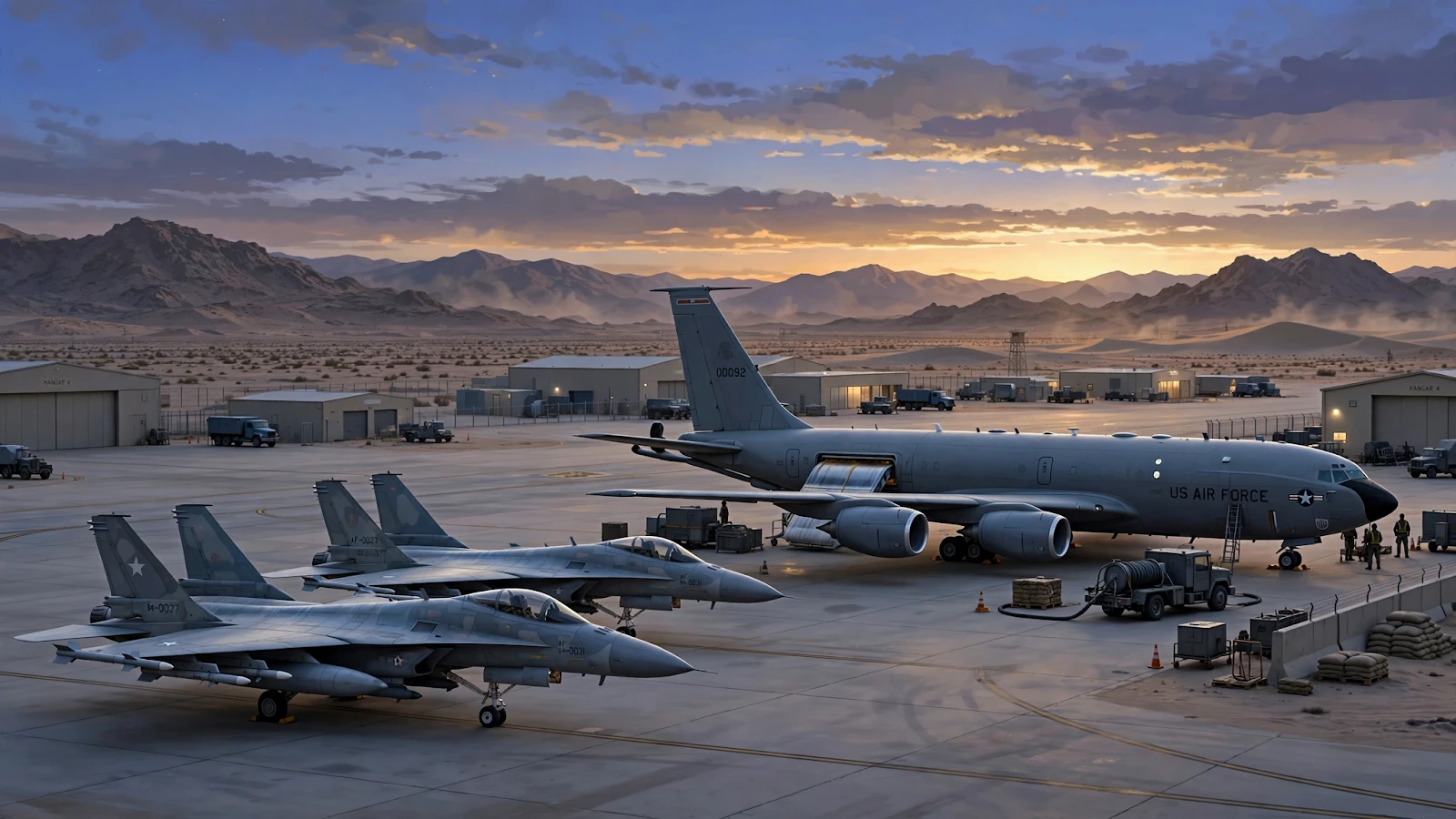
Illustration: military aircraft on a desert air base at dusk. This is an AI-generated illustration, not a photograph of a real base.
Sponsored: explore today's featured sponsored offers
Frequently Asked Questions
What did the Iranian officials tell Reuters?
Three senior Iranian officials and an Iranian insider, speaking anonymously, told Reuters on October 20, 2026, that Tehran has deliberately prolonged talks with the US to try to weaken Donald Trump politically ahead of the November 3 midterm elections. One official said Iran is "preparing for renewed Israeli and US attacks, not for a deal with America to end the war."
When and why did the US-Iran war start?
According to Reuters, the eight-month-old war began in February 2026, when the United States and its ally Israel launched strikes on Iran. Iran has since effectively closed the Strait of Hormuz to most shipping, while a US maritime blockade and sanctions have cut off Iran's oil export revenues.
What happened in the Hegseth-Netanyahu meeting?
US Defense Secretary Pete Hegseth made an unannounced visit to Israel on October 19 and met Prime Minister Benjamin Netanyahu at Ovda Air Base in southern Israel, where US refueling planes and fighter jets are deployed, according to Axios, citing two sources familiar with the visit. The Pentagon and the Israeli embassy declined to comment; what was discussed has not been publicly disclosed.
What was the Houthi attack in Yemen?
On October 19, Yemen's Iran-aligned Houthi movement attacked a government security forces training camp in Shabwa province. Reuters reported on October 20 that the death toll had risen to 73, with more than 200 injured and 14 missing. The Houthis also claimed strikes on Saudi energy and airport targets on the same day; Reuters said it could not independently verify those claims.
How is the conflict affecting markets and daily life?
Brent crude traded near $110 a barrel on October 20 as the Houthis' claimed Saudi strikes unsettled markets. Gulf stock markets fell, more than 45% of departures from Saudi airports have been cancelled since October 8, according to aviation analytics firm Cirium, and Saudi Arabia postponed its flagship investment conference until next year.
Sources
- Reuters — "Iran has deliberately prolonged talks with the US to try to weaken Donald Trump politically ahead of November's midterm elections, senior officials say" (October 20, 2026)
- Reuters — "Death toll in Houthi attack on Yemen training camp rises to 73" (October 20, 2026)
- Reuters — "Most Gulf bourses retreat after Houthis claim attacks on Saudi energy, airport sites" (October 20, 2026)
- Axios — reporting on Defense Secretary Hegseth's unannounced meeting with Prime Minister Netanyahu at Ovda Air Base (October 19-20, 2026)
- Just Security — "Early Edition: October 20, 2026" (news roundup)
Comments
Post a Comment