
Le Pen's National Rally Launches 2027 Presidential Campaign as "Act II" Protests Sweep France
ORLÉANS, France — Marine Le Pen's far-right National Rally (RN) launched its 2027 presidential campaign at a two-day party congress on October 24–25, 2026, even as a new wave of cost-of-living protests — dubbed "Act II" — swept French cities and a major counter-demonstration gathered just kilometers from the party's rally in Orléans. The charged weekend, reported by Le Monde on October 24, shows how street unrest, economic anxiety and party politics are converging six months ahead of France's May 2027 presidential election.
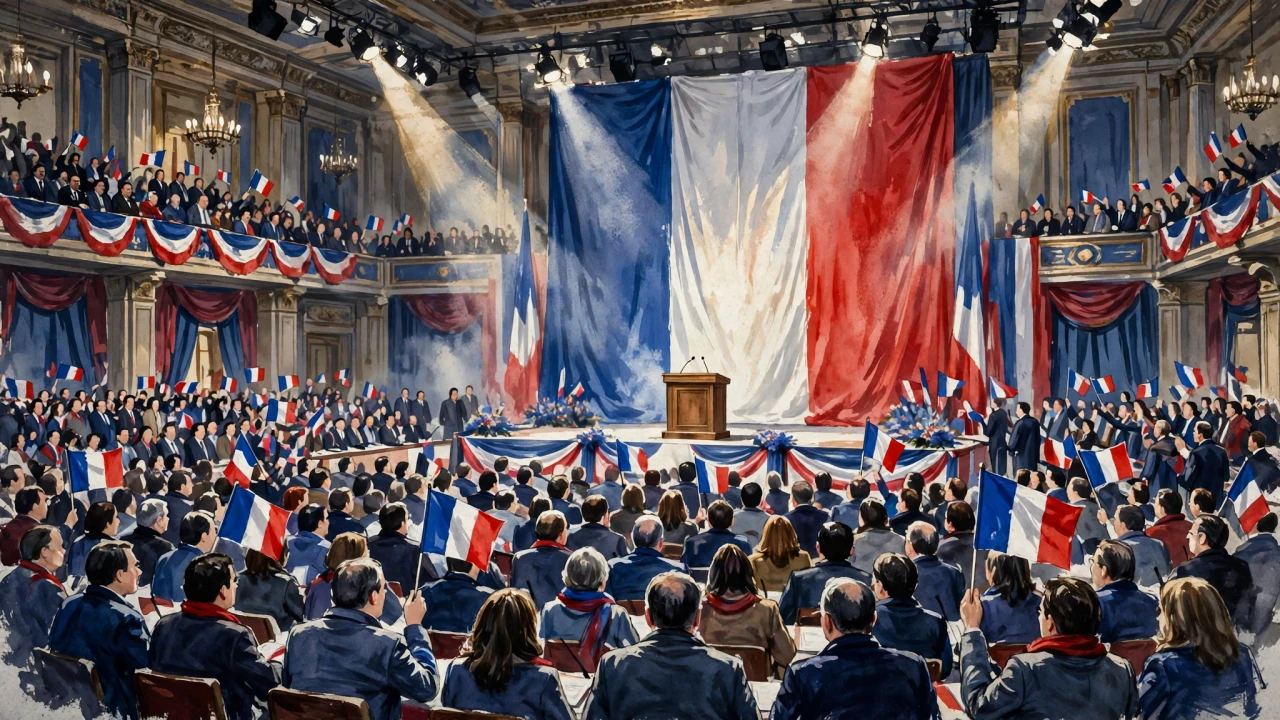
Illustration: A stylized depiction of a French political party congress, with delegates gathered beneath a tricolor flag backdrop.
What Happened
France's far-right Rassemblement National gathered for its party congress on the weekend of October 24–25, formally launching its presidential campaign with a major rally in the central city of Orléans, where the party said it expected around 10,000 supporters. The two-day gathering came as several groups, including the "Yellow Vest movement coordination," called for a new day of nationwide protests against the rising cost of living and in support of high school students' demands — a second wave, dubbed "Act II," following the October 17 demonstrations that ended with looting and clashes in Paris and other cities.
Interior Ministry officials told organizers that "several tens of thousands" of counter-demonstrators were expected at a march in Orléans, held just 4 kilometers from the arena where the RN rally took place, under heavy police protection. According to Le Monde's October 24 reporting, the counter-protest is set to be the largest anti-far-right demonstration outside an election context since the 1997 protest against the far-right party's congress in Strasbourg.
Meanwhile, Parisian shop owners were bracing for possible violence. A letter from the Paris Police Prefecture, made public by news channel BFM-TV on October 22, warned that "calls to loot and destroy are circulating on social media" and advised businesses, especially those along protest march routes, to "strengthen their security," including "using private security guards, if necessary accompanied by canine patrols," checking alarm systems and adjusting opening hours. Several groups of shop owners reported conflicting instructions from authorities and described themselves as at a loss, caught between difficult economic realities and escalating tensions stoked on social media.
Le Pen received assurances from Prime Minister Sébastien Lecornu and, according to her team, was in regular contact with the regional prefect. She chose to press ahead with the congress, accusing the left of being quick to "obstruct the organization of a democratic party congress."
Background
The RN arrived at the congress after a turbulent few weeks. The chaos that erupted on the sidelines of the October 17 protests — which brought law and order back to the center of public debate — arrived at a convenient moment for the party: according to Le Monde, it overshadowed a series of setbacks for the far right, including reported disagreements between party president Jordan Bardella and Marine Le Pen, the party's presidential candidate; allegations reported by Mediapart that Bardella made antisemitic remarks in private when he was younger, which he is challenging in court; and criticism of his alternative budget as amateurish.
Rather than defend, the RN attacked. The party's spokespeople dominated the media landscape, presenting the RN as the embodiment of a "return to order" that much of the French public wants. Le Pen positioned herself as a presidential figure of "unity and reason," and her eight-minute address, delivered in a deliberately presidential tone, went viral on social media, racking up 18 million views, Le Monde reported.
The deeper backdrop is France's simmering economic discontent. The "Act II" protests are driven by the rising cost of living, while the party has also been drawn into youth politics: high school student protests have seen a surge in anti-RN messages, and RN opponents frame the party as a target of the country's restive younger generation. Fiscal pressure adds to the tension — French borrowing costs have been rising, a topic central banks and bond markets are watching across Europe.
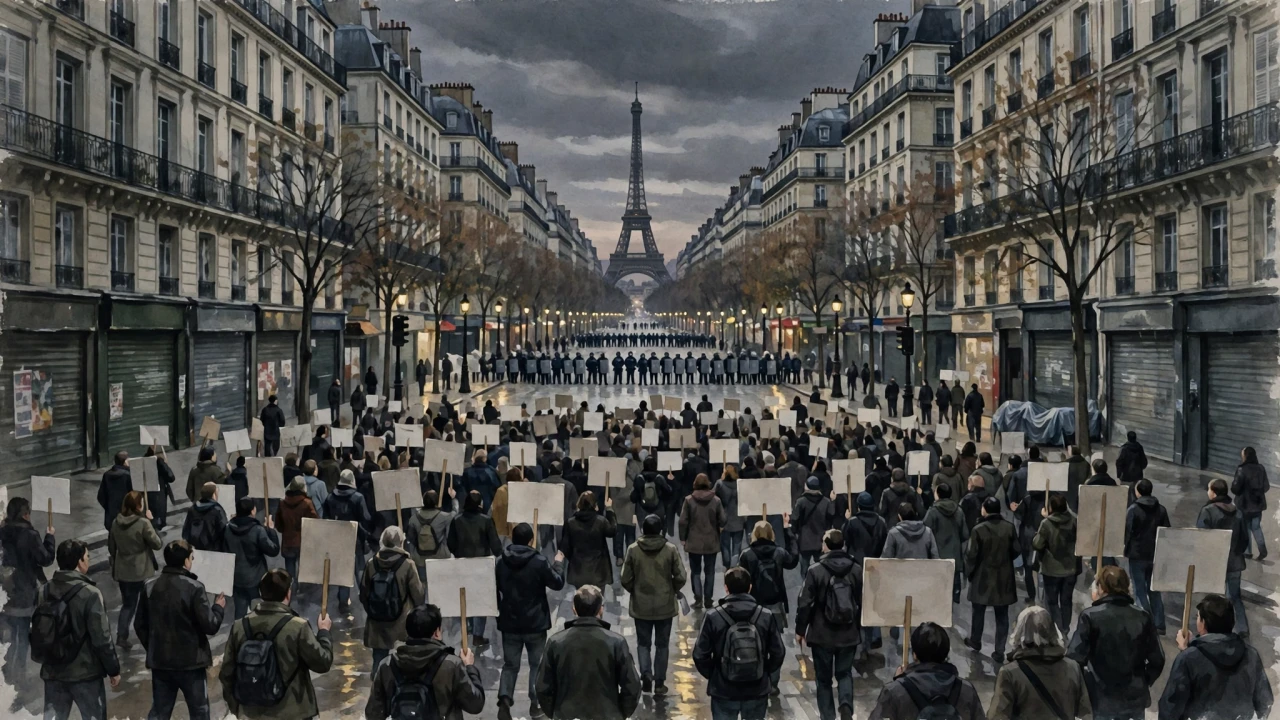
Illustration: A stylized depiction of street protests in Paris, with demonstrators marching past shuttered shops as shop owners brace for looting.
Why It Matters
The RN congress lays bare the two-track reality of the French election cycle. On one track, the RN has grown into a formidable political machine: the party now counts around 113,000 dues-paying members, nearly three times as many as in 2022, and the 2024 snap parliamentary elections gave it an annual state subsidy of nearly €15 million — funds that financed flashier headquarters in Paris's 16th arrondissement and a professionalized communications operation. Its electoral success in the 2024 European parliamentary elections and the 2026 municipal and Senate elections further boosted its record. The campaign materials make the succession plan explicit: "Marine president – Bardella government."
On the other track, the party's internal strains are public. Bardella is the only candidate to remain president of the RN, leaving the composition of his future executive board as the main question of the congress. Le Monde reported internal criticism that Bardella has focused on self-promotion while delegating party management, with the party's 2022 "Matignon plan" fiasco — exposed by the snap elections of 2024 — cited as a low point. Two-thirds of the party's local federations have changed leadership since 2022, including 22 in the last six months.
The weekend also shows how protest politics and electoral politics now feed each other. "Of course, we embody the return to order," said Philippe Olivier, a special adviser to Le Pen. "We are asking for nothing more than the return of the state and the enforcement of the law." But far-right MP Bruno Bilde, a loyal supporter of Le Pen, struck a note of defiance about the counter-demonstrators: "Every time this kind of climate arises, we will be seen as the victims in the eyes of public opinion, and that will be reflected in the polls."
What Happens Next
Several things will be watched closely in the days ahead. First, whether the "Act II" protests pass without the looting and clashes that marked October 17 — a repeat of violence would hand the RN its preferred law-and-order narrative, while a calm weekend would strengthen the government's position. Second, the congress's internal votes: the election of Bardella's executive board and the showing of figures such as Jean-Philippe Tanguy, Le Pen's chief supporter, in the Conseil National vote will signal how the party's grassroots are distributing power between the two leaders.
Third, the parliamentary math. France's fiscal pressures — rising borrowing costs and the cost-of-living crisis — will keep testing Prime Minister Lecornu's government, and every protest weekend becomes a test of the state's capacity to maintain order. With the presidential election in May 2027, Le Monde notes, the RN knows it doesn't need to change much on the core issues it has championed for decades: it believes it can win over exasperated non-voters and disappointed supporters of the Macron camp simply by embodying the return to order.
Illustration: A stylized depiction of a French ballot box, symbolizing the May 2027 presidential election ahead.
Sponsored: explore today's featured sponsored offers
FAQ
What is France's National Rally launching this weekend?
The far-right Rassemblement National (RN) is holding a two-day congress on October 24–25, 2026, including a rally in Orléans, to formally launch its campaign for the May 2027 French presidential election. Marine Le Pen is the party's presidential candidate, with party president Jordan Bardella positioned as her would-be prime minister.
What are the "Act II" protests in France?
"Act II" refers to a new day of protests called for October 24 by several groups, including the "Yellow Vest movement coordination," against the rising cost of living and in support of high school students' demands. It follows October 17 demonstrations that were marred by looting and clashes, and is the second wave of the current protest movement.
How are Paris shop owners preparing for the protests?
The Paris Police Prefecture advised businesses, especially those on protest march routes, to strengthen security — including hiring private guards, potentially with canine patrols — check alarm systems and adjust opening hours. The advisory followed reports of calls to loot and destroy circulating on social media, though many shop owners describe the guidance as conflicting and costly.
What controversies has the RN faced ahead of the congress?
According to Le Monde's reporting, the party has faced reported disagreements between Jordan Bardella and Marine Le Pen, allegations reported by Mediapart that Bardella made antisemitic remarks in private when he was younger (which he is challenging in court), and criticism of his alternative budget as amateurish. The unrest around the October 17 protests shifted public attention back to law and order, the party's strongest issue.
When is France's next presidential election?
The first round of France's presidential election is scheduled for May 2027. The RN campaign is built around the message "Marine president – Bardella government," presenting Le Pen as the presidential candidate and party president Jordan Bardella as her future prime minister if she wins.
Sources
- Le Monde, "Le Pen's RN gathers for congress amid nationwide unrest," October 24, 2026.
- Le Monde, "October 24 protests: Parisian shop owners face dilemma on how to prevent looting," October 24, 2026.
- BFM-TV, Paris Police Prefecture advisory letter to businesses, reported October 22, 2026.
- Mediapart, reporting on alleged private remarks by Jordan Bardella, cited by Le Monde, October 2026.
Comments
Post a Comment