
ZAGREB, 28 October 2026 — Zagreb's Mimara Museum has completed a six-year restoration costing approximately €75 million and will welcome visitors back to its historic building on 7 November 2026, after extensive work to repair earthquake damage and renew one of the Croatian capital's most prominent cultural institutions. The museum held its formal reopening event on the evening of 27 October 2026, according to Croatia Week, as reported on 28 October 2026.
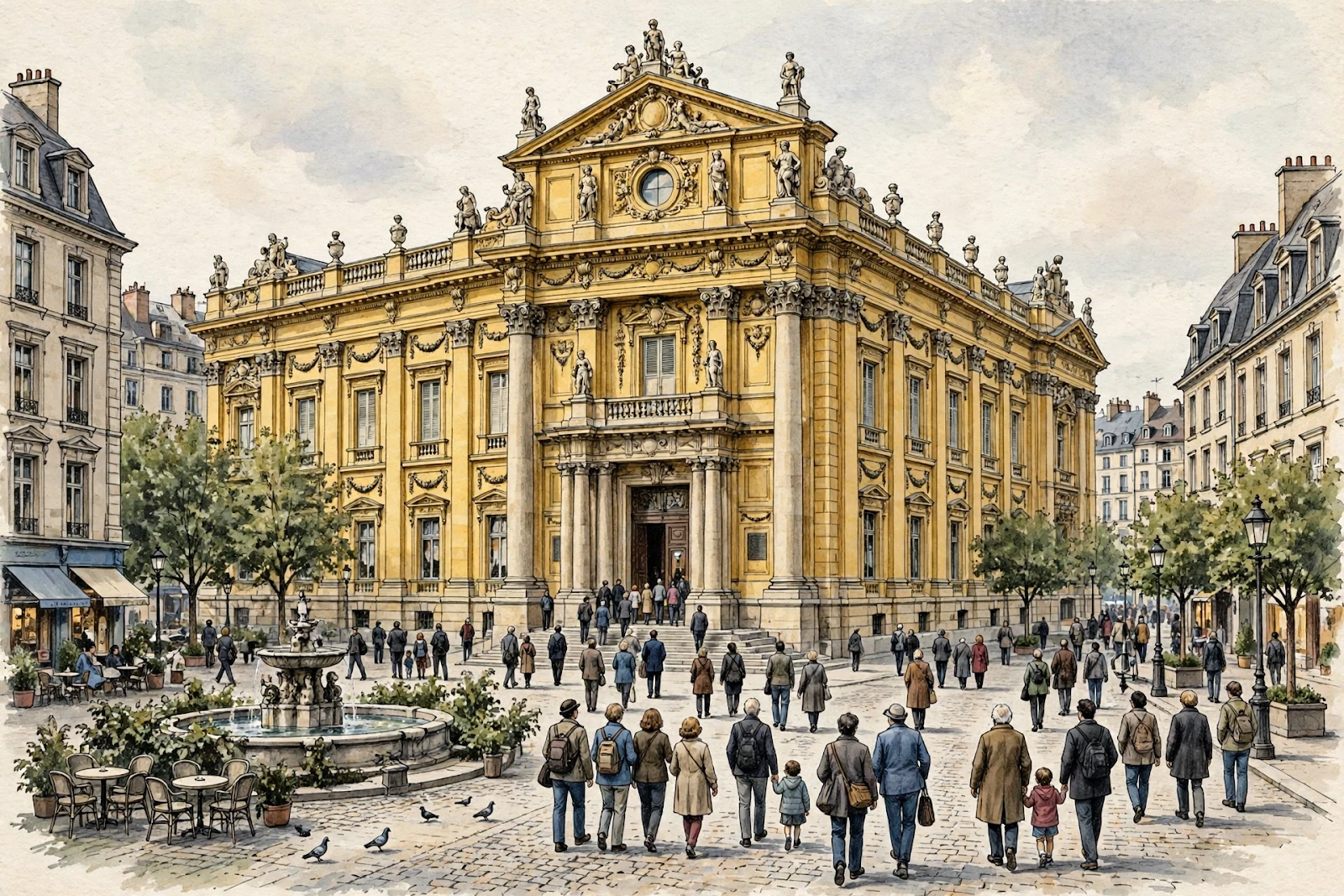
Illustration: A grand historic yellow museum building with an ornate facade in a European city square.
What Happened
The restoration returned the museum's original yellow facade and reinstated decorative elements inside and outside the building, which had suffered earthquake damage. The work went beyond the structure itself: the museum has also prepared a new permanent display intended to present its collection in a contemporary format while respecting the building's historic character.
Speaking at the official reopening ceremony, Zagreb Mayor Tomislav Tomašević highlighted the museum's importance to the city's cultural identity. He also pointed to the wider programme of cultural renewal under way in the capital, including the completed renovation and extension of the Croatian Natural History Museum and the ongoing reconstruction, extension and equipping of the Museum of Arts and Crafts, which is expected to return to its renovated building in 2027. A permanent location has also been secured for the Croatian School Museum at Starčević House, where a new Children's Culture House is planned.
The mayor said the investments were intended to support the future of Zagreb's cultural life and to provide residents with accessible, modern cultural institutions. Details of opening hours, ticket prices and the full exhibition programme should be checked with the museum before planning a visit, Croatia Week noted.
Background
The Mimara Museum's building has been a prominent feature of central Zagreb for more than a century. Constructed in 1895, during a period of intensive development in the city following the devastating earthquake of 1880, it became home to the museum in 1987. The museum houses around 3,800 works of art donated to the Croatian people by its donor, Ante Topić Mimara, representing a range of artistic periods and traditions.
The latest restoration was made necessary by earthquake damage in Zagreb and the surrounding areas, which created a major reconstruction task for public buildings, cultural institutions and other facilities. The Mimara project is one example of that effort: restoring historic architecture while making it suitable for continued public use, rather than simply preserving a shell.

Illustration: Visitors viewing classical paintings and sculptures in a bright renovated museum gallery.
The scale of the project — six years and approximately €75 million — makes it one of the more substantial cultural-building projects undertaken in Zagreb in recent years, both because of its cost and the scope of the work involved. Restoring a 19th-century building to modern museum standards is a delicate operation: the facade and decorative elements must be conserved, while behind them the building needs the climate control, security and accessibility that a modern collection demands.
The new permanent display reflects that balance. Rather than recreating the old arrangement exactly, the museum has sought to present the collection in a way that connects the historic setting with contemporary approaches to museum interpretation — giving long-held works a fresh context for visitors who may be encountering them for the first time, and for returning visitors seeing familiar pieces anew.
Why It Matters
The reopening matters first to Zagreb itself. The Mimara is not a niche institution: its collection of some 3,800 works, donated to the Croatian people, was intended from the outset to contribute to the country's national cultural holdings. Six years without its historic home has been a long absence, and its return restores a piece of the city's cultural geography — a building that residents recognise and visitors seek out.
It also matters as a statement about recovery. Earthquake damage forces difficult choices on a city: which buildings to save, how much to spend, and how quickly to act. Completing a €75 million restoration and reopening with a renewed display signals that cultural buildings are treated as essential infrastructure, not as optional extras to be addressed after everything else. The mayor's framing — accessible, modern cultural institutions supporting the future of the city's cultural life — makes that argument explicitly.
The project also sits within a wider pattern across Zagreb. The Natural History Museum's renovation is complete, the Museum of Arts and Crafts is due back in 2027, and the School Museum has a secured future home. Taken together, these projects amount to a systematic renewal of the city's museum estate, rather than a single isolated reopening. For visitors, that means a capital whose cultural offer is being rebuilt in concert; for residents, it means institutions designed for everyday use, not only for special occasions.
Finally, the reopening has a European resonance. Cities across the continent are grappling with the same questions: how to conserve historic buildings damaged by disaster or decay, how to fund the work, and how to present old collections to new audiences. Zagreb's answer — a long, expensive, careful restoration paired with a contemporary redisplay — is one model among several, and its reception after 7 November will be watched by others facing similar choices.
What Happens Next
The immediate next step is the public reopening on 7 November 2026, when visitors will be able to enter the restored building and see the new permanent display for the first time. The first weeks will be the real test of the project: how the new display reads in practice, how the building handles visitor numbers, and whether the balance between historic character and contemporary presentation satisfies both regulars and first-time visitors.

Illustration: Restoration workers carefully repairing ornate historic building details inside a museum.
Beyond the opening, attention will turn to the museum's exhibition programme, which the museum itself will announce in detail. A reopened institution needs more than a permanent display to sustain momentum: temporary exhibitions, educational programmes and events will determine whether the initial curiosity of reopening converts into lasting attendance.
The wider Zagreb programme will also continue to unfold. The Museum of Arts and Crafts is expected to return to its renovated building in 2027, and the Children's Culture House at Starčević House is planned for the School Museum's new home. If those milestones land as scheduled, the Mimara reopening will come to be seen not as an isolated celebration but as the first major step in a renewed cultural quarter — a fitting outcome for a building that has stood at the centre of Zagreb's cultural life for well over a century.
Sponsored: explore today's featured sponsored offers
Frequently Asked Questions
When does the Mimara Museum reopen to visitors?
The museum will welcome visitors back to its historic building on 7 November 2026, following its formal reopening event on the evening of 27 October 2026.
How long did the restoration take and what did it cost?
The restoration took six years and cost approximately €75 million, covering repairs to earthquake damage, restoration of the original yellow facade and decorative elements, and preparation of a new permanent display.
What is in the Mimara Museum's collection?
The museum houses around 3,800 works of art donated to the Croatian people by Ante Topić Mimara, representing a range of artistic periods and traditions.
How old is the Mimara Museum building?
The building was constructed in 1895, during a period of intensive development in Zagreb following the earthquake of 1880. The museum itself opened in the building in 1987.
What other Zagreb museums are being renovated?
According to the mayor's remarks at the reopening, the Croatian Natural History Museum's renovation and extension are complete, the Museum of Arts and Crafts is expected to return to its renovated building in 2027, and a permanent location has been secured for the Croatian School Museum at Starčević House.
Sources
- Croatia Week, "Mimara Museum reopens after six-year, €75 million restoration," 28 October 2026, as carried by Bytes Europe.
- Bytes Europe, "Mimara Museum reopens after six-year, €75 million restoration," 28 October 2026.
Comments
Post a Comment