
NASA Confirms Its 6,000th Exoplanet — Three Decades After 51 Pegasi b Opened the Floodgates
NASA has confirmed the 6,000th planet beyond our Solar System, the space agency announced on October 19, 2026, marking a milestone in a field that barely existed three decades ago. The first exoplanet orbiting a Sun-like star, 51 Pegasi b, was discovered in 1995; since then, discoveries have accelerated so fast that the total stood at only 5,000 three years earlier — meaning astronomers have confirmed another 1,000 new worlds in just the last three years, with more than 8,000 additional candidates still waiting to be checked.
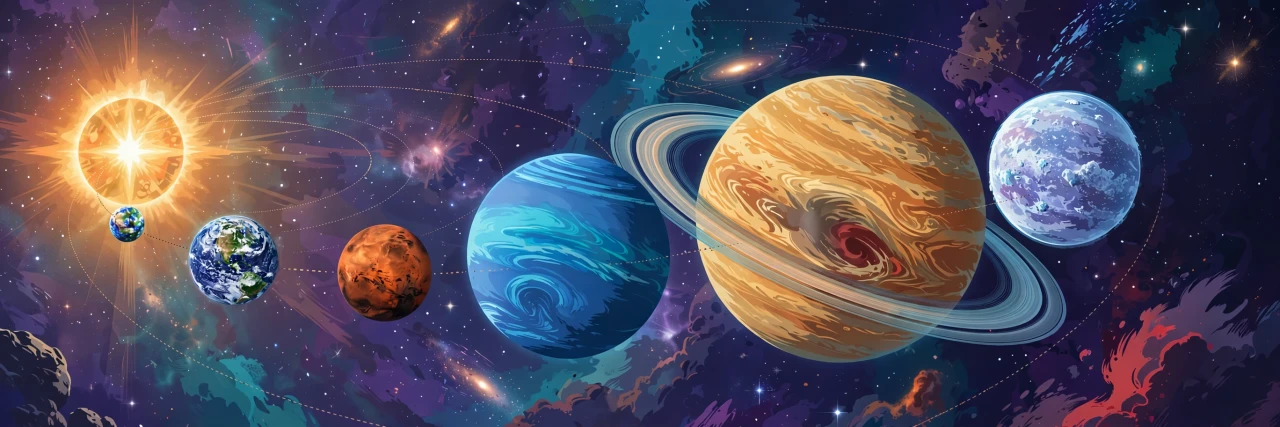
Illustration: a parade of diverse exoplanets of many sizes and colors orbiting a distant star.
What Happened
NASA marked the moment with a celebratory video, declaring: "We're entering the next great chapter of exploration — worlds beyond our imagination. To look for planets that could support life and to remind us the universe still holds worlds waiting to be found." The 6,000th confirmed exoplanet — a planet orbiting a star other than our Sun — joins a catalog maintained by the NASA Exoplanet Archive that has become one of the most remarkable data sets in modern science.
The pace of discovery is the real story. When astronomers announced 51 Pegasi b in 1995, a giant gas planet orbiting a Sun-like star, exoplanets were a curiosity. Three decades later, they are a population. The jump from 5,000 to 6,000 in roughly three years reflects a maturing discovery machine: space telescopes like Kepler and TESS (the Transiting Exoplanet Survey Satellite) scanning hundreds of thousands of stars, automated pipelines flagging candidates, and follow-up observatories confirming them one by one.
Confirmation takes time, which is why the archive holds more than 8,000 additional planet candidates that have not yet been verified. Each candidate must survive rigorous checks — ruling out false positives from stellar activity, binary companions, and instrumental noise — before it is promoted to the confirmed list. The 6,000th planet is simply the latest to clear that bar.
In the anniversary video, NASA added a tantalizing coda: "There's one we haven't found — a planet just like ours." The search for a true Earth twin remains the field's defining unfinished business.
Background
Finding an exoplanet is an exercise in detecting the almost undetectable. Stars are millions of times brighter than the planets orbiting them, making the planets nearly impossible to see directly — like trying to spot an insect next to a giant floodlight from thousands of miles away. Fewer than 100 exoplanets have ever been directly photographed.
Instead, astronomers mostly detect planets by their effects on their stars. The workhorse is the transit method: watching for a star to dim slightly as a planet passes in front of it, like moving a hand across a torch beam. The depth of the dip reveals the planet's size; the timing reveals its orbit. Another technique, gravitational microlensing, detects the tiny signal produced when a planet's gravity bends and magnifies the light of a distant background star. Radial-velocity measurements — sensing the wobble of a star tugged by an orbiting planet — were how 51 Pegasi b was found and remain essential for measuring planetary masses.
The 6,000 confirmed worlds fall into families that map the diversity of planetary systems. According to figures carried by the BBC, the tally includes 2,035 Neptune-like planets (similar in size to Neptune or Uranus), 1,984 gas giants (massive, stormy worlds like Jupiter), 1,761 super-Earths (larger than Earth but smaller than Neptune — the name refers to size, not habitability), 700 rocky planets made of solid rock like Earth or Mars, and seven of still-unknown type. Gas giants and Neptune-like worlds dominate because they are the easiest to detect, not because they are the most common — a detection bias astronomers correct for when estimating how planets are truly distributed.
The next instruments promise to push further. The Nancy Grace Roman Space Telescope — whose launch and early operations have been followed closely this year — will survey vast swaths of sky for transits and microlensing events with a field of view far wider than Hubble's. And the James Webb Space Telescope is already analyzing the chemistry of exoplanet atmospheres, reading the molecular fingerprints that could one day reveal whether a distant world has the conditions for life.
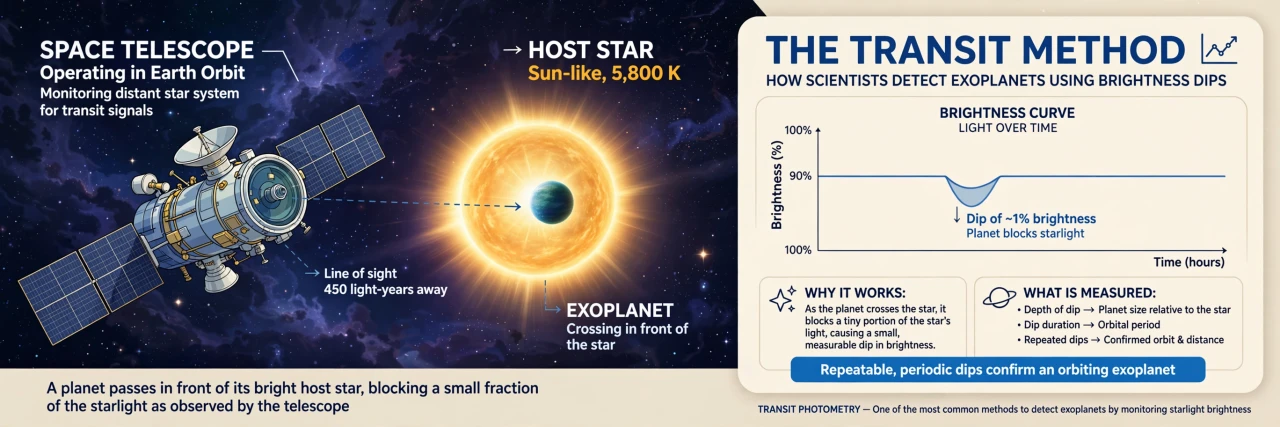
Illustration: a space telescope watching a planet transit its bright host star, with a brightness-dip diagram.
Why It Matters
Six thousand is more than a round number — it is a statistical sample. With thousands of confirmed planets, astronomers can move from stamp-collecting to demography: how common are rocky planets? How often do planets orbit in the habitable zone, where liquid water could exist? Do planetary systems like ours — small rocky worlds close in, gas giants farther out — turn out to be typical or rare?
Dawn Gelino, head of NASA's Exoplanet Exploration Program, put it this way: "Each of the different types of planets we discover gives us information about the conditions under which planets can form and, ultimately, how common planets like Earth might be, and where we should be looking for them." Every new world is a data point in the answer to the oldest question in astronomy: are we alone?
The milestone also matters as a measure of scientific infrastructure. The 8,000-plus candidates waiting for confirmation represent a pipeline that will keep delivering for years. The Kepler mission's legacy data, TESS's ongoing all-sky survey, and Roman's coming wide-field census form a relay that should carry the catalog well past 10,000 — with Webb and future observatories characterizing the most promising targets in detail.
And there is the cultural weight of the moment. In 1995, the existence of planets around other Sun-like stars was a hypothesis. In 2026, schoolchildren learn that thousands of worlds are known, that some orbit in habitable zones, and that the hunt for a planet "just like ours" — NASA's own words — is an active, funded, international enterprise. The 6,000th exoplanet is a milestone on the road from speculation to census.
What Happens Next
The immediate future is confirmation and characterization. Teams around the world will work through the backlog of 8,000-plus candidates, confirming the real planets and discarding the impostors. Each confirmation refines the statistical picture — particularly for small, rocky planets, which are the hardest to find but the most interesting for habitability.
Atmospheric characterization is the next frontier. Webb's spectrographs can already detect molecules like water, carbon dioxide, and methane in the atmospheres of transiting exoplanets, and astronomers are building target lists of the most promising rocky and sub-Neptune worlds for deep follow-up. The goal is to move from counting planets to understanding them — their climates, their chemistry, and, eventually, their potential for life.
The Nancy Grace Roman Space Telescope will add a new discovery engine, expected to find thousands of exoplanets through microlensing — including cold, distant worlds that transit surveys miss — and to conduct one of the most sensitive searches yet for the statistical signature of Earth-like planets. Its wide-field infrared vision was designed, in part, to answer exactly the question NASA posed in its anniversary video.
And the long game remains the Earth twin: a rocky planet, roughly Earth's size, orbiting a Sun-like star at a distance where liquid water is stable, with an atmosphere that could be probed for biosignatures. NASA's message at 6,000 was clear — the catalog will keep growing, the instruments will keep improving, and the one world still missing is the one that looks like home.
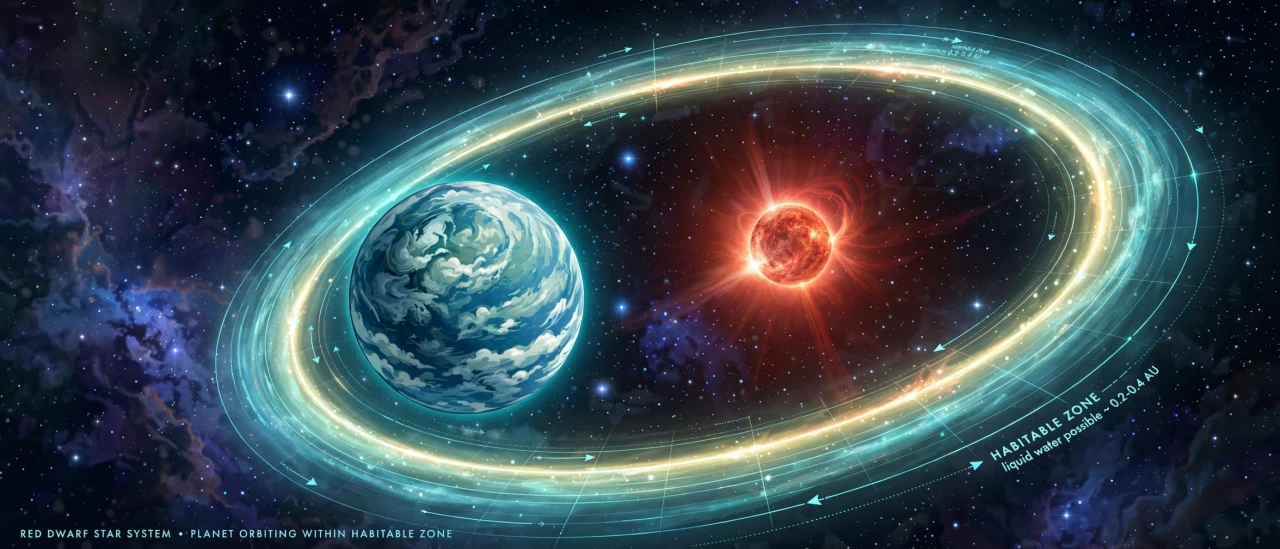
Illustration: an Earth-like planet inside the glowing habitable zone of a small red dwarf star.
Sponsored: explore today's featured sponsored offers
FAQ
1. What is an exoplanet?
An exoplanet is a planet that orbits a star other than our Sun. Scientists first began discovering them about 30 years ago; the first found around a Sun-like star was 51 Pegasi b, a gas giant announced in 1995. NASA's confirmed catalog now stands at 6,000 worlds.
2. How do astronomers find planets they cannot see directly?
Because stars outshine their planets millions to one, fewer than 100 exoplanets have ever been directly photographed. Most are found by the transit method — watching a star dim as a planet crosses it — or by gravitational microlensing, where a planet's gravity bends a background star's light, or by measuring the star's wobble from a planet's gravitational tug.
3. What kinds of exoplanets have been found?
According to NASA figures carried by the BBC, the 6,000 confirmed worlds include 2,035 Neptune-like planets, 1,984 gas giants, 1,761 super-Earths, 700 rocky planets, and seven of unknown type. Large planets dominate the count because they are easier to detect, not because they are the most common.
4. Has NASA found a planet like Earth?
Not yet. As NASA put it in its anniversary video: "There's one we haven't found — a planet just like ours." Hundreds of rocky planets are known, and some orbit in their stars' habitable zones, but no confirmed true Earth twin — an Earth-size rocky world around a Sun-like star with a characterizable atmosphere — has been found.
5. What comes next in the search?
More than 8,000 planet candidates await confirmation. The James Webb Space Telescope is analyzing exoplanet atmospheres for molecules like water and methane, and the Nancy Grace Roman Space Telescope will add thousands more discoveries through its wide-field surveys — including cold worlds that current methods miss.
Sources
- BBC Newsround — "Exoplanets: Nasa has discovered 6,000 worlds beyond our Solar System," October 19, 2026.
- NASA Exoplanet Exploration Program — 6,000th-exoplanet anniversary video; statement by Dawn Gelino, head of NASA's Exoplanet Exploration Program.
- NASA Exoplanet Archive — confirmed-planet catalog and candidate statistics (6,000 confirmed; 8,000+ candidates pending).
Comments
Post a Comment