
WASHINGTON, Oct 23 — NASA has opened one of the most remarkable archives of the modern space age: more than 800 gigabytes of science data from the Artemis II mission, uploaded to the agency's public Planetary Data System on October 7. The release includes over 11,000 full-resolution images and videos, 8.5 hours of crew audio with transcripts, and hand-annotated lunar photographs — the first planetary-science dataset captured primarily by humans in more than half a century.
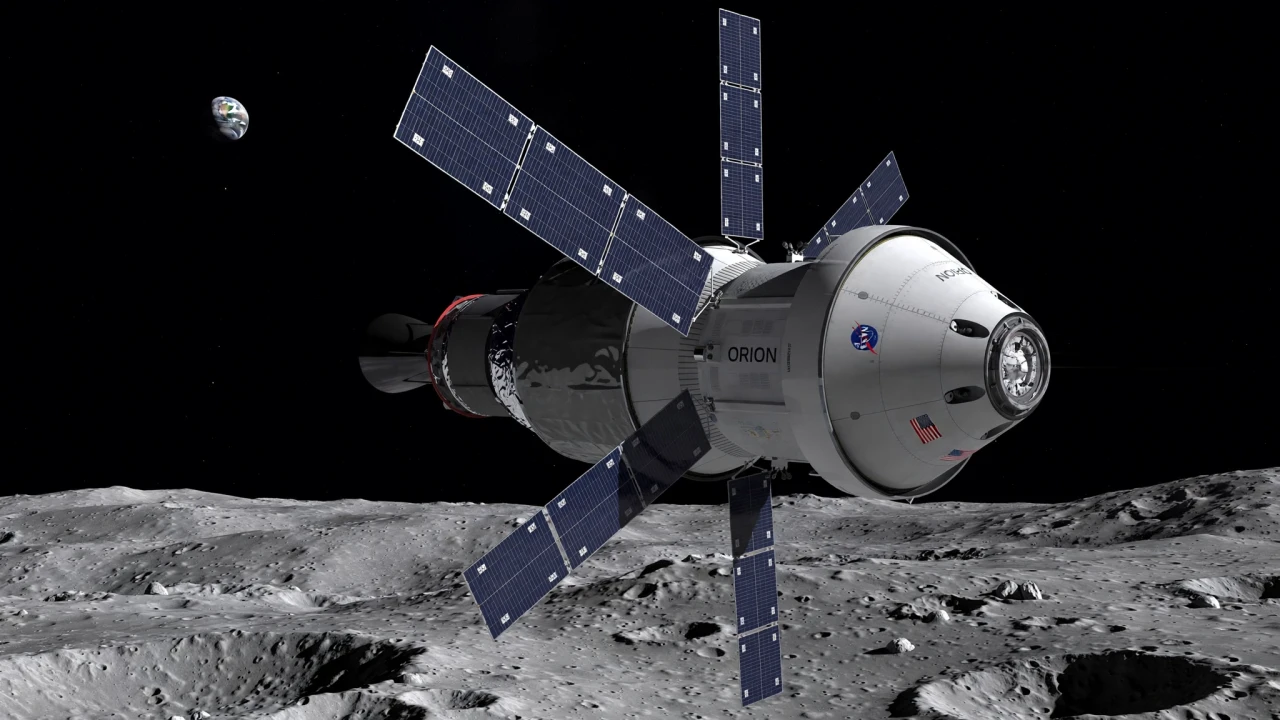
Illustration: the Orion spacecraft with solar panels extended flying close past the cratered surface of the Moon with Earth visible in the distance
What Happened
NASA announced on October 7, 2026, that it had uploaded more than 800 gigabytes of Artemis II lunar science data to its Planetary Data System (PDS), the public repository that preserves and distributes scientific information from the agency's planetary missions. The release, which NASA described as a "first delivery," arrived six months after the crewed spacecraft swung around the Moon in April.
The archive contains more than 11,000 full-resolution images and videos captured with the crew's handheld Nikon D5 and Z9 cameras as well as Orion's own cameras, roughly 8.5 hours of audio recordings documenting the crew's real-time scientific observations, transcripts, cabin temperature and humidity logs, and images the astronauts annotated by hand. Some of the material had never been released before.
Three companion documents came with the files: the Artemis II Preliminary Lunar Science Report, the Lunar Science Operations Report, and the Lunar Science Data User Guide. The guide is recommended as the starting point by the PDS Geosciences Node, since it explains how the archive is organized and how to use it. NASA was clear about one caveat: the release is a curated scientific-observation archive assembled by the lunar science team — it does not include all of the spacecraft's telemetry and operational data.
Media coverage of the release highlighted one striking detail: a screenshot from a crew member's tablet shows handwritten annotations made during the lunar flyby on April 6, atop a visualization of the dark Moon eclipsing the Sun. Three crew members signed their first names to the image — NASA astronauts Reid Wiseman and Victor "Ike" Glover wrote in blue and green, while Canadian Space Agency astronaut Jeremy Hansen wrote in red — noting impact flashes and their locations.

Illustration: an astronaut inside a spacecraft cabin photographing the Moon through a large window with a handheld camera
Background
Artemis II was the first crewed flight around the Moon in more than half a century. The Space Launch System rocket carrying the Orion spacecraft lifted off from Kennedy Space Center in Florida on April 1, 2026, with four astronauts aboard: NASA's Reid Wiseman, Victor Glover and Christina Koch, and the Canadian Space Agency's Jeremy Hansen. About three and a half hours after liftoff, Orion separated from the rocket's first stage and began its nearly ten-day journey around the Moon.
At closest approach on April 6, the spacecraft came within roughly 6,545 kilometers — about 4,067 miles — of the lunar farside, a region no human eyes had seen up close since Apollo 17 in 1972. The crew spent roughly seven hours taking turns at Orion's windows during the close approach, photographing the surface, describing what they saw, and making rapid decisions about observation targets. Orion then splashed down in the Pacific Ocean off San Diego on April 10, after 9 days, 1 hour and 32 minutes in space. The mission was reported to have set the record for the greatest distance traveled from Earth by humans — some 406,823 kilometers.
Although Artemis II was primarily a test flight to demonstrate Orion's capabilities, NASA wove a real science program into it. Kelsey Young, NASA's Artemis II lunar science lead, and the Artemis II Lunar Science Team integrated science into flight operations — training the crew to act as observers, selecting targets, and building the archive now being released. The astronauts photographed the Moon's far side and phenomena around the lunar shadow, and their notes supplement data from the earlier Apollo missions and uncrewed probes.
Nature reported the release on October 8, noting that planetary scientists were getting "fresh Moon joy" — more than 800 gigabytes of images, audio, written notes and other data — six months after the flight, marking the moment the mission's science was formally handed to the broader research community.
Why It Matters
The value of the archive lies less in any single discovery than in what human observers bring to a dataset. As analysts of the release have noted, a spectacular image becomes scientifically useful when its timing, viewing geometry, target identification and acquisition circumstances are recoverable — and a recorded impression becomes useful when another researcher can trace it to an image and a mission phase. The Artemis II dataset offers an unusually direct window not only into what the cameras captured, but into how a trained human crew chose what to document and why particular features mattered to them.
That is why NASA calls it "the first planetary science dataset captured primarily by humans in more than half a century" — a deliberate echo of the Apollo era, when astronauts' field judgments were inseparable from the science they returned. For a student with a laptop, the archive means being able to hear a pilot describe lunar terrain as he saw it, scroll through the craters the crew framed by hand, and reuse the material for new analysis.
The release also matters as a planning asset. NASA says the information is already being used to plan Artemis III — now repurposed as a 2027 low-Earth-orbit mission that will test rendezvous and docking with the lunar landers — and the later missions aimed at returning astronauts to the lunar surface in 2028. A longer stay on the Moon will require knowledge of surface conditions, lighting, communications, navigation and observation sites, and human observations carry a different value from fully pre-programmed robotic measurements. The Artemis II archive gives mission planners a preview of what astronaut-guided observation can deliver.
And there is a cultural dimension. By placing the archive in the public Planetary Data System with free tools to read it, NASA is treating the Artemis program's science as a shared resource from the start — not a vault to be opened decades later, but a living dataset anyone can explore, challenge and build on.
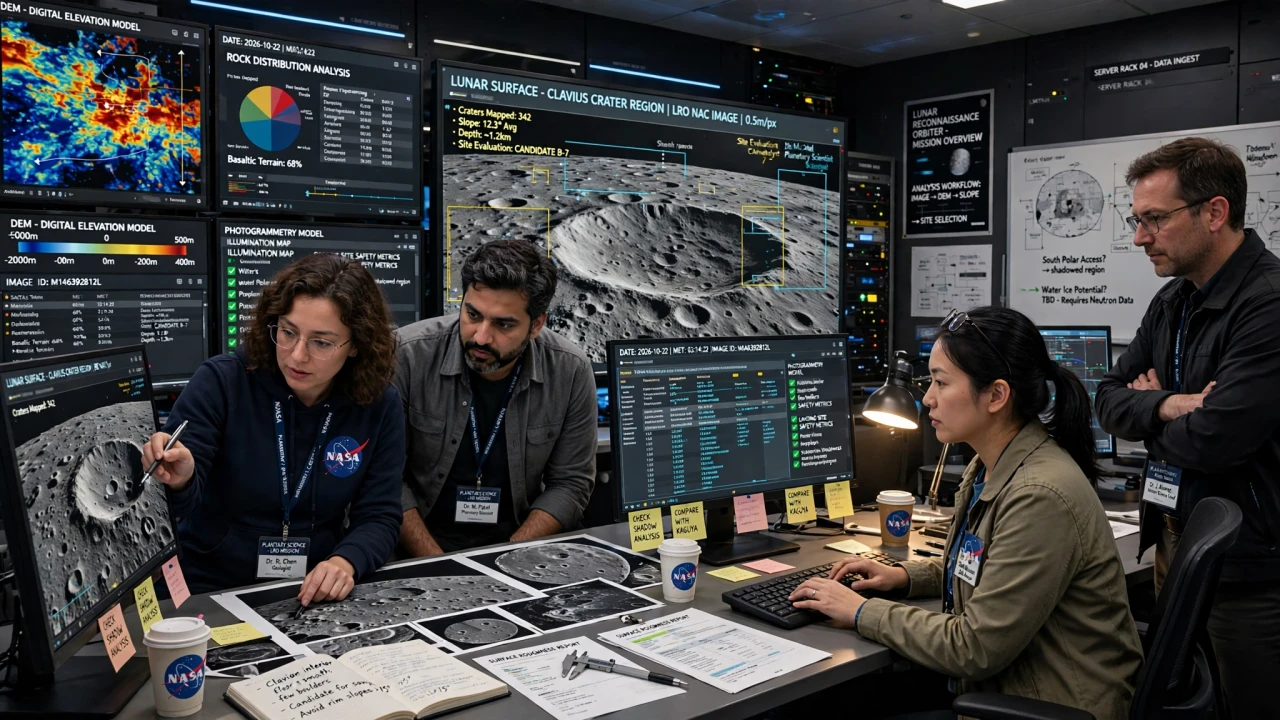
Illustration: planetary scientists analyzing detailed lunar surface photographs on large computer monitors in a mission control data room
What Happens Next
The "first delivery" framing suggests more is coming. Researchers will now begin working through the 800 gigabytes — mapping the annotated images, correlating audio observations with flight phases, and publishing analyses that may take months or years to appear. Watch for papers citing the Preliminary Lunar Science Report, and for the archive to surface in unexpected ways, from citizen-science projects to classroom use.
The data will also feed directly into the Artemis pipeline. With NASA's "Artemis Acceleration" briefing on October 23 laying out the road toward the 2028 landing goal, the Artemis II observations offer the clearest precedent yet for how astronaut-guided science will operate on future missions — including the robotic Commercial Lunar Payload Services landers already flying and the crewed landings to come.
For the public, the immediate payoff is simpler: 11,000 images, 8.5 hours of voices from the far side of the Moon, and handwritten notes from the four people who were there. Anyone can open them.
Sponsored: explore today's featured sponsored offers
FAQ
What exactly did NASA release?
On October 7, 2026, NASA uploaded more than 800 gigabytes of Artemis II lunar science data to its public Planetary Data System. The release includes over 11,000 full-resolution images and videos from the crew's handheld cameras and Orion's cameras, about 8.5 hours of crew audio with transcripts, crew-annotated images, cabin temperature and humidity logs, plus three companion documents: the Preliminary Lunar Science Report, the Lunar Science Operations Report, and a Data User Guide.
When did Artemis II fly?
Artemis II launched on April 1, 2026, from Kennedy Space Center in Florida, reached its closest approach to the Moon's farside on April 6 — within about 6,545 kilometers (4,067 miles) — and splashed down in the Pacific Ocean off San Diego on April 10, after 9 days, 1 hour and 32 minutes in space. The crew was NASA astronauts Reid Wiseman, Victor Glover and Christina Koch, plus Canadian Space Agency astronaut Jeremy Hansen.
Why is this dataset special?
NASA describes it as the first planetary-science dataset captured primarily by humans in more than half a century. Unlike robotic data, it preserves the crew's real-time judgments — what they chose to photograph, what they said as they saw it, and their handwritten annotations — giving researchers insight into how trained astronauts observe and interpret the lunar surface.
Does the release include everything from the mission?
No. NASA cautions that this is a curated scientific-observation archive assembled by the lunar science team; it does not include all spacecraft telemetry and operational data. It is also described as a "first delivery," implying further material may follow.
How will the data be used?
NASA says the information is already being used to plan Artemis III and later missions, since human observations of surface conditions, lighting, navigation and observation sites inform longer lunar stays. Researchers can also use it for lunar geology and studies of the Moon's impact history, and the public can access it freely through the Planetary Data System.
Sources
- AIAA (American Institute of Aeronautics and Astronautics), "NASA Makes Artemis II Lunar Mission Science Data Public," October 8, 2026 (summarizing SpaceNews reporting on the October 7 release to the Planetary Data System)
- Nature, "NASA releases trove of Moon data from historic Artemis II flight," October 8, 2026 (doi:10.1038/d41586-026-03197-7; 800+ gigabytes, images, audio, written notes)
- Daily Galaxy, "NASA Just Released 800 GB of Artemis II Moon Data, and Scientists Are Only Beginning to Explore It," October 2026 (11,000 images/videos, Nikon D5 and Z9 cameras, 8.5 hours audio, crew annotations — Wiseman/Glover/Hansen — three companion documents, PDS Geosciences Node)
- EduFabTech, "NASA Releases Artemis II Lunar Science Data," October 2026 (October 7 release to Planetary Data System; closest approach April 6; seven hours at Orion's windows; 4,067 miles from surface)
- Newsy Today, "NASA Releases 800GB of Artemis II Lunar Data and Media," October 2026 (April 1 launch; 9 days, 1 hour, 32 minutes; April 10 splashdown; Kelsey Young, Artemis II lunar science lead)
Comments
Post a Comment