
Nigeria Confirms First Ebola Case in Over a Decade as Deadly Outbreak Spreads to a Fourth African Country
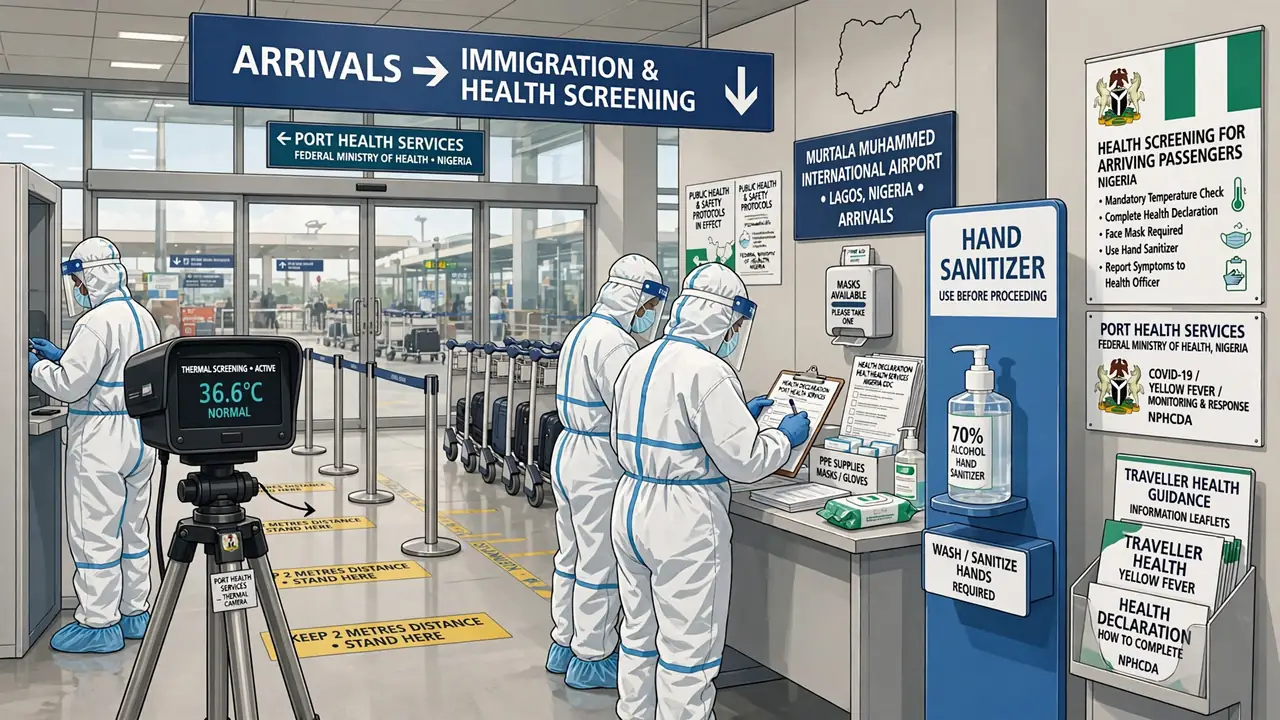
Illustration: health screening at Nigerian airports is being tightened after the country's first confirmed Ebola case in more than a decade.
ABUJA — Nigeria has reported its first Ebola case in more than a decade, becoming the fourth African country — and the most populous one yet — to be hit by an outbreak that health officials have described as the fastest-spreading on record, Reuters reported on Wednesday, October 21.
What Happened
The Nigerian case involves a Ugandan woman who arrived in the country's capital, Abuja, via Addis Ababa on October 5, Odianosen Ehiakhamen of the Nigeria Centre for Disease Control told Arise TV on Tuesday. She began feeling unwell two days later and sought treatment at a private hospital in Abuja on October 11 with malaria-like symptoms, but her condition did not improve, Ehiakhamen said.
After health officials learned she had recently travelled to Uganda — one of the countries affected by the current outbreak — they tested her for Ebola on October 19. The positive result was confirmed on Tuesday, October 20.
Authorities have identified 44 contacts of the patient, most of them healthcare workers, according to Reuters. They included the patient's husband, a Swiss national who lives with her in Abuja. Officials are also tracing passengers who travelled on the same flights, although they do not believe she was symptomatic during air travel — a crucial detail, since Ebola patients are generally not considered contagious before symptoms appear.
Health Minister Muhammad Ali Pate told public broadcaster NTA that the woman was in isolation and receiving treatment. He said Nigeria had the systems in place to respond to the new case, pointing to the country's successful containment of Ebola in 2014 during the West African epidemic — the largest outbreak on record.
"Ebola is now affecting three regions of Africa. The situation demands urgent action and political leadership at the highest level," Africa Centres for Disease Control and Prevention Director General Jean Kaseya said in a statement on X on Wednesday.
The Ebola species behind the outbreak kills about half of those infected and has no approved treatment or vaccine, Reuters reported. Since the first cases were confirmed in the Democratic Republic of Congo in May, the disease has killed 4,646 people. Health officials fear misinformation and funding shortfalls could fuel further spread within the region and across borders.
Background
The current outbreak began in the Democratic Republic of Congo in May and has become the country's worst on record, with more than 9,500 Ebola cases recorded across eight provinces, according to Uganda's health ministry, cited by Reuters. From there the disease has repeatedly crossed borders: Uganda reported 20 cases in May and June, mostly imported from Congo, although the World Health Organization declared the country Ebola-free in August.
Earlier this month, Kenya reported its first Ebola case, involving a traveller who arrived from Congo via Uganda. The country has since reported nine cases, all linked to the same patient, according to Reuters. The spread to Kenya raised questions about the effectiveness of border screening systems designed to prevent cross-border transmission.
Uganda's health ministry said the woman now in Abuja had travelled to Congo. "Travel through Uganda does not establish that infection occurred here," the ministry said, adding that the country currently has no active Ebola cases. It was not immediately clear where she had been in Congo.
Nigeria's last brush with Ebola came during the devastating 2014–2016 West African epidemic, when the country's rapid response — including aggressive contact tracing and isolation — was widely credited with preventing a far larger catastrophe. Health Minister Pate invoked that record explicitly this week, signaling confidence that the country's disease-control infrastructure is battle-tested.
But the context is very different this time. Steep international aid cuts have led to shortages of some life-saving medications across the region, Reuters reported in mid-October, and misinformation about the disease has complicated response efforts — including false beliefs that keep mothers and children away from healthcare facilities in eastern Congo.
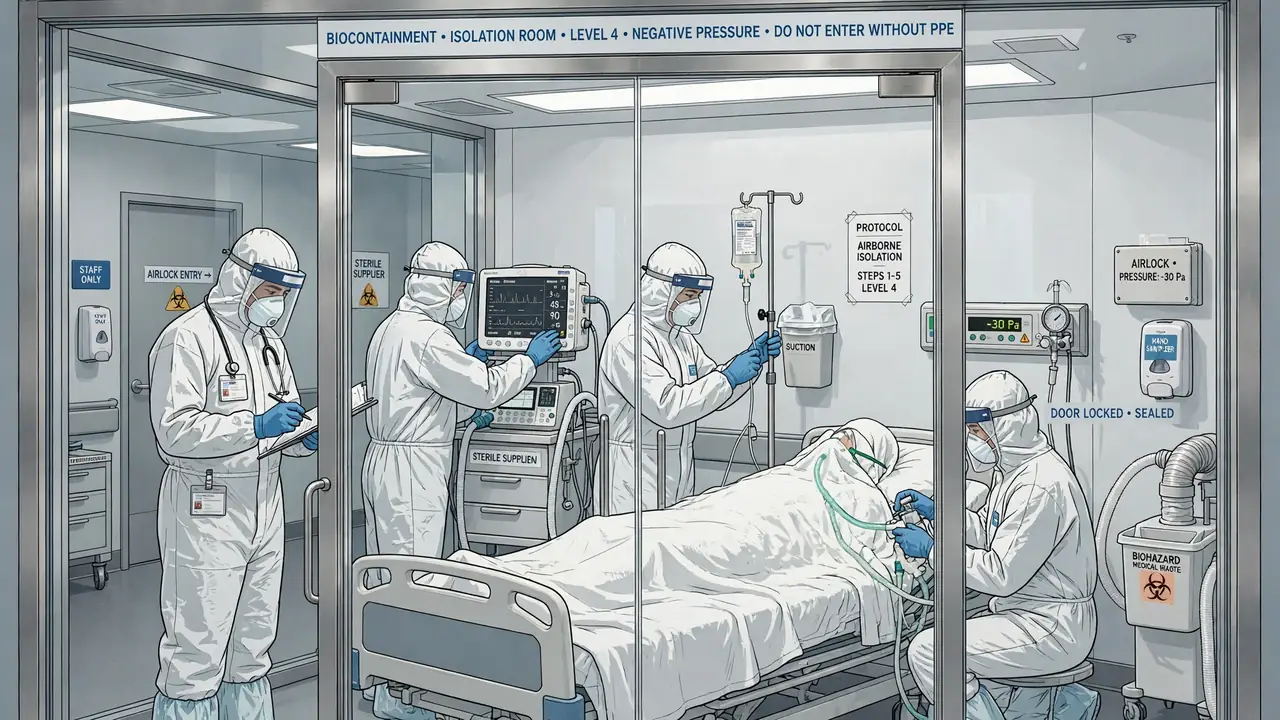
Illustration: the patient is in isolation and receiving treatment at an Abuja hospital, Nigeria's health minister said.
Why It Matters
The leap to Nigeria changes the calculus of this outbreak. Nigeria is Africa's most populous country and its largest economy, with an extensive network of international air links — Lagos and Abuja are major regional hubs. An undetected chain of transmission in a city of several million people would be far harder to contain than in rural eastern Congo, and the fact that the patient spent several days seeking care at a private hospital before Ebola was suspected means the contact list is long and sensitive: 44 people, most of them healthcare workers.
The pattern of spread is also troubling. The outbreak has now reached four countries — Congo, Uganda, Kenya and Nigeria — through travellers who passed through multiple international airports. Each new border crossed is evidence that the screening systems meant to catch symptomatic travellers at land borders and airports are leaking, as analysts noted after the Kenya case.
There is a broader warning in the funding picture. The same week Nigeria's case was confirmed, Reuters reported that international aid cuts have left health systems in the outbreak zone short of basic supplies — the precise conditions under which a fast-moving outbreak accelerates. The Africa CDC chief's call for "political leadership at the highest level" is a signal that the response so far has been insufficient.
And the disease itself remains one of the world's deadliest. With no approved treatment or vaccine for this Ebola species and a fatality rate of roughly one in two, every new case carries a toll that is personal and immediate — not just a statistic in a ministry briefing.
What Happens Next
The immediate priority is the 44 identified contacts, who will be monitored for the full incubation period — typically up to 21 days after exposure. Any additional symptomatic cases among them would transform this from a single imported case into a transmission chain, the scenario Nigerian health authorities are racing to prevent.
Officials are also still tracing passengers who shared the woman's flights from Addis Ababa to Abuja. Nigeria's disease-control agency will need to determine whether any of those passengers have since developed symptoms or travelled onward to other countries.
Beyond Nigeria, the Africa CDC is expected to push for a coordinated regional response, including tighter airport screening and faster information-sharing between the four affected countries. The agency's director general has made clear that piecemeal national responses are no longer enough.
The outbreak's trajectory will also be measured in the coming weeks against the two forces officials fear most: misinformation, which keeps sick people away from care and drives rumours that vaccines or medicines carry the virus, and funding shortfalls, which have already hollowed out parts of the regional health response. How Nigeria's 44 contacts fare in the next three weeks will tell the world whether the world's most populous African nation has, once again, managed to slam the door shut on Ebola — or whether the fastest-spreading outbreak on record has found its hardest challenge yet.
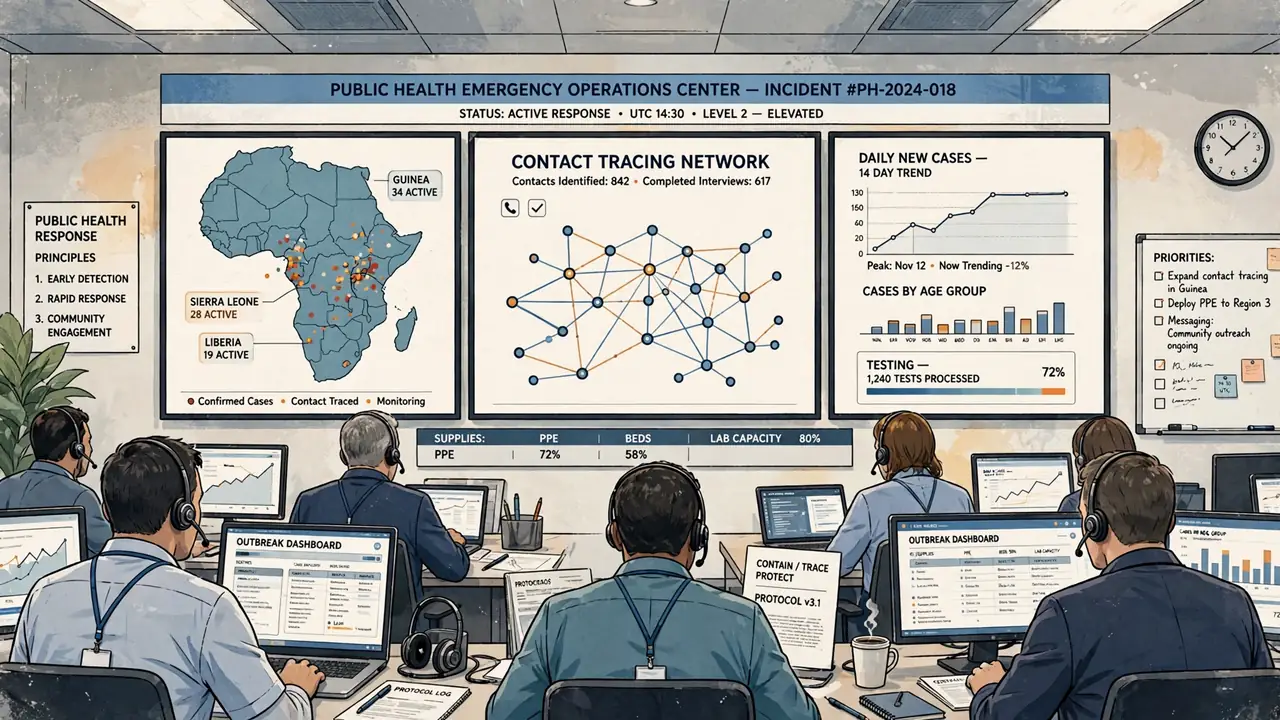
Illustration: contact tracing is under way, with 44 contacts identified — most of them health workers.
Sponsored: explore today's featured sponsored offers
FAQ
When was Nigeria's Ebola case confirmed?
The positive test result was confirmed on Tuesday, October 20, 2026, after the patient — a Ugandan woman who arrived in Abuja on October 5 — was tested on October 19. Reuters reported the case on October 21. It is Nigeria's first Ebola case in more than a decade.
Which countries has this outbreak reached?
Four African countries: the Democratic Republic of Congo, where the first cases were confirmed in May; Uganda, which reported 20 cases in May and June before being declared Ebola-free in August; Kenya, which confirmed its first case earlier this month and has since reported nine linked cases; and now Nigeria.
How many people has the outbreak killed?
Since the first cases were confirmed in Congo in May, the disease has killed 4,646 people, according to Reuters. More than 9,500 cases have been recorded across eight Congolese provinces. Health officials have described it as the fastest-spreading Ebola outbreak on record.
Is there a vaccine or treatment?
The Ebola species behind this outbreak kills about half of those infected and has no approved treatment or vaccine, according to Reuters. Care is supportive — patients are isolated and given treatment for symptoms while their immune systems fight the infection.
What is Nigeria doing to contain the case?
The patient is in isolation and receiving treatment in Abuja, health minister Muhammad Ali Pate said. Authorities have identified 44 contacts — most of them healthcare workers — and are tracing fellow air passengers. Nigeria previously contained Ebola in 2014 during the West African epidemic, and the minister says the systems built then remain in place.
Sources
- Reuters — "Nigeria reports Ebola case, fourth African country affected by outbreak" (October 21, 2026): first Nigerian case in over a decade confirmed October 20; patient timeline (arrived Abuja October 5 via Addis Ababa, treated October 11, tested October 19); 44 contacts identified; minister Muhammad Ali Pate statement; 4,646 deaths since May; Kenya nine cases; Uganda no active cases.
- Africa Centres for Disease Control and Prevention Director General Jean Kaseya — statement on X (October 21, 2026): "Ebola is now affecting three regions of Africa. The situation demands urgent action and political leadership at the highest level."
- Reuters — "As Ebola spreads in eastern Congo, mothers and children shun vital care" (October 14, 2026): aid cuts causing medication shortages; misinformation keeping women from seeking care in eastern Congo.
- Arise TV / Nigeria Centre for Disease Control — Odianosen Ehiakhamen interview (October 20, 2026, via Reuters): patient travel and treatment timeline.
Comments
Post a Comment