
Oil Above $112 and Houthi Strikes Rattle Global Markets as a Pivotal Week of Central Bank Decisions Looms
Brent crude surged more than 3% to over $112 a barrel on Thursday — its highest level since May — as fresh Houthi attacks on Saudi Arabia jolted energy markets, setting up a pivotal week of central bank decisions that will test whether the world's policymakers can keep inflation in check as borrowing costs creep higher.
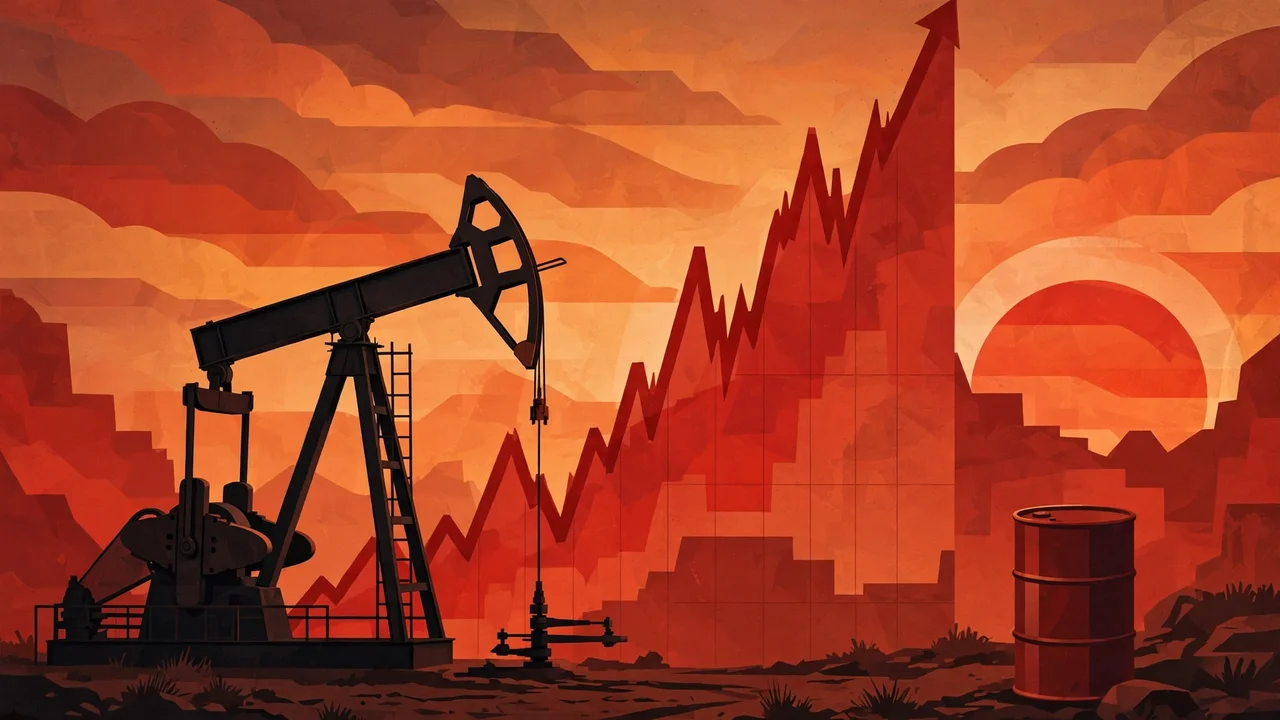
Illustration: An oil pumpjack silhouette against a steeply rising price chart. Brent crude climbed above $112 a barrel on October 22. (AI-generated illustration)
What Happened
Futures tracking Canada's blue-chip stocks slipped on Thursday as rising oil prices fanned inflation concerns and reinforced expectations for higher-for-longer US interest rates, Reuters reported on October 22. Brent crude rose 2.6% to its highest since May after more Houthi attacks in Saudi Arabia heightened fears of a broader escalation in the Middle East conflict and prolonged disruption to crude supplies.
London's FTSE 100 slipped to its lowest level in a week, falling 0.5% to 10,699.33 points, dragged down by sharp declines in heavyweight banks as rising oil prices dampened risk appetite, Reuters reported separately. Energy stocks were the biggest gainers; banks were the biggest drag, with Barclays dipping after missing third-quarter profit estimates and announcing plans to cut about 5,000 jobs.
The energy shock extended beyond crude. European natural gas prices shot up after reported attacks near the Strait of Hormuz and low storage levels, according to CaixaBank Research's October 22 financial markets daily report. Precious and industrial metals miners fell more than 3% as gold and copper prices slipped over 1%.

Illustration: A central bank building with scales weighing inflation against growth. (AI-generated illustration)
Background
The oil spike is colliding with a crowded central-bank calendar. Traders are pricing in a quarter-point US Federal Reserve rate hike in December, though they expect the central bank to keep rates on hold at its policy meeting next week, according to LSEG data cited by Reuters. Expectations are building that the Bank of Canada will hike next week against an expected hold by the Fed, and the Reserve Bank of New Zealand is also expected to raise rates, Reuters reported from Singapore on October 22.
In Europe, French sovereign bond yields hit the 5% threshold for the first time since 2002, while UK gilt yields rose after stronger-than-expected inflation data, CaixaBank Research noted — a reminder that hotter inflation is narrowing policymakers' room to maneuver. Sterling hit a one-month high of $1.3409 earlier in the week, supported by that inflation surprise.
Fresh concerns over AI spending added to the market unease after Meta's results, putting global chip-related stocks under pressure, Reuters reported. Meanwhile, Canada's benchmark stock index had closed at a four-week high on Wednesday, lifted by the government's C$9 billion ($6.4 billion) support package for sectors hit hard by US tariffs.
Why It Matters
Energy is the tax every economy pays. When oil jumps this fast, it strips away the buffer central banks had for looking through temporary price shocks — forcing them toward rate hikes that squeeze households and businesses. European households, more directly exposed to utility prices, are particularly vulnerable, and the coming week's decisions will set borrowing costs for months to come.
The yen's jump through its 50-day moving average to 157.3 per dollar — on the heels of gains for sterling and currencies in Canada, Australia and New Zealand — shows the dollar's long one-way bet is wobbling as AI-related debt jitters shake confidence, Reuters reported. Currency markets are rarely wrong about regime shifts, and investors everywhere are recalibrating.

Illustration: A stock trading floor with volatile charts on large screens. (AI-generated illustration)
What Happens Next
All eyes turn to next week's central bank meetings — the Fed, the Bank of Canada and the Reserve Bank of New Zealand — followed by the Bank of England's November decision, which markets have largely priced in as a hike. Key data points include Canada's September producer inflation figures due later today and next week's global CPI prints. If energy prices hold above $110, expect the "higher-for-longer" chorus to grow louder — and risk assets to stay choppy.
Sponsored: explore today's featured sponsored offers
FAQ
Why did oil prices surge on October 22?
Brent crude rose more than 3% to over $112 a barrel — its highest since May — after more Houthi attacks in Saudi Arabia heightened fears of a broader Middle East escalation and prolonged supply disruption, according to Reuters.
Which central banks meet next week?
The US Federal Reserve, the Bank of Canada and the Reserve Bank of New Zealand all have policy meetings next week. Markets expect the Fed to hold, while the Bank of Canada and New Zealand's central bank are expected to hike, Reuters reported.
How did European markets react?
London's FTSE 100 fell 0.5% to 10,699.33, its lowest in a week. French bond yields hit 5% for the first time since 2002, and European natural gas prices shot up on reported Hormuz attacks and low storage, according to Reuters and CaixaBank Research.
Why is the yen rallying?
The yen jumped through its 50-day moving average to 157.3 per dollar as investors pulled back from long-dollar bets amid wobbles in AI-related stocks and debts, with hawkish holds expected at next week's central bank meetings, Reuters reported.
What data should investors watch next?
Canada's September producer inflation data due later today, next week's CPI prints worldwide, and the outcome of the Fed, Bank of Canada and RBNZ meetings will determine whether this is a temporary selloff or a longer correction.
Sources
- Reuters, October 22, 2026 — "TSX futures fall as inflation fears, tech selloff dent sentiment"
- Reuters, October 22, 2026 — "UK stocks slip as banks drag; earnings in focus"
- Reuters, October 21, 2026 — "Yen rallies as dollar wobbles toward Fed meeting"
- CaixaBank Research, October 22, 2026 — "Financial Markets Daily Report"
Comments
Post a Comment