
Palantir Says NATO's AI Battlefield System Has No "Kill Switch" as Europe Questions Its Dependence on US Tech
BRUSSELS — Palantir's top executive for the UK and Europe told Reuters on October 21 that neither his company nor the United States government can switch off the Maven Smart System AI platform used by NATO and several European armed forces, as fallout from restrictions on Ukraine's Starlink service deepens European fears about relying on American technology.
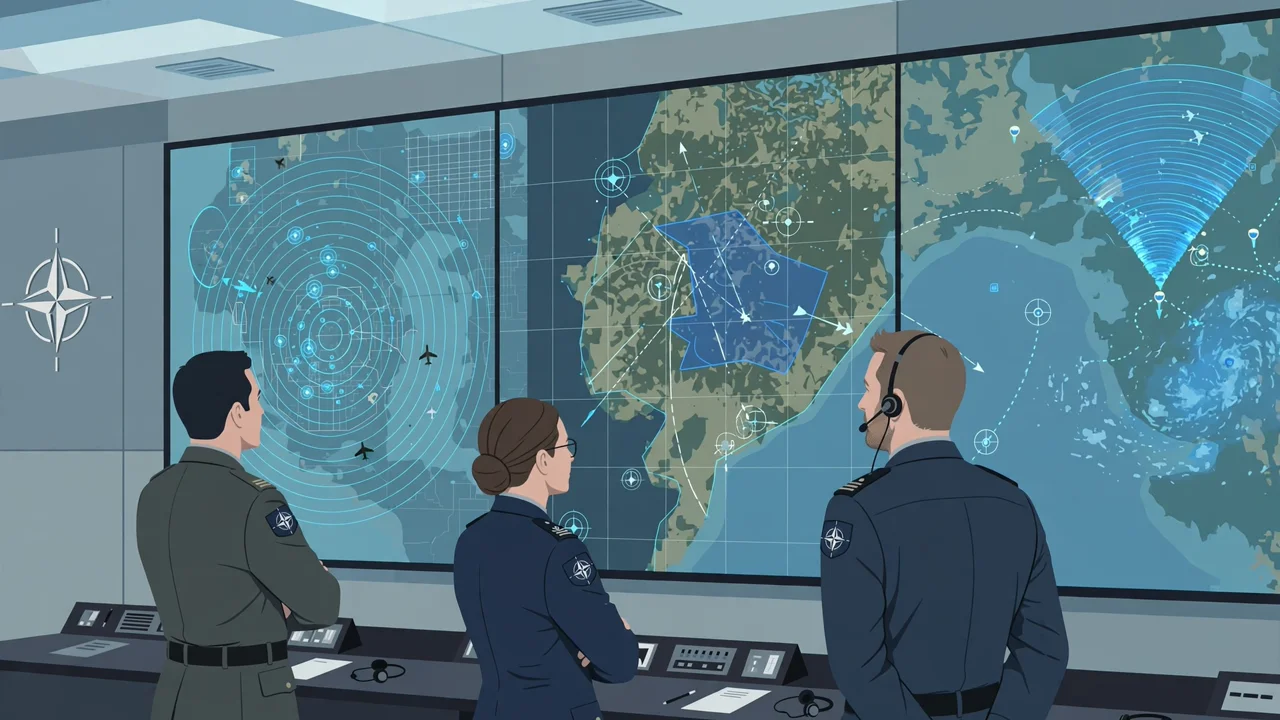
Illustration: A NATO military command center with officers watching a digital battlefield map, as Palantir moves to reassure European allies over its AI platform. (AI-generated illustration)
What Happened
In an interview in Brussels reported on October 22, 2026, Louis Mosley, Palantir's executive vice president for the UK and Europe, sought to reassure Europeans that the military AI system used by NATO's military headquarters has no "kill switch" — after disruptions to Ukraine's Starlink services heightened concerns about dependence on US tech firms.
"What we have seen in the news over the past few days around Starlink is extremely concerning," Mosley told Reuters. "But as concerns Palantir, I can provide categorical reassurance that where customers have bought our software, they are in full operational control of that software," he said. "There are no kill switches. There's no ability for Palantir or the US government to reach in and switch it off."
The reassurance follows Ukraine's report last week that its use of the military-grade Starshield satellite service, which uses SpaceX's Starlink constellation, had been restricted so that terminals stopped working on fast-moving platforms — hampering tasks such as using interceptor drones to thwart Russian attacks. US and Ukrainian officials and SpaceX chief executive Elon Musk have offered conflicting explanations for the disruption. But Ukrainian and European officials said they suspected a political motive, because the move came after US President Donald Trump demanded that Ukraine stop hitting Russian oil refineries.
Those suspicions prompted fresh concern among European policymakers that the continent is too dependent on US defense technology that could be cut off, limiting its ability to defend itself.
Background
The Maven Smart System processes vast amounts of data from satellites, radars and other sensors to give military officers a picture of the battlefield and speed up decision-making. NATO bought Maven for its Supreme Headquarters Allied Powers Europe in 2025, and declared the system had achieved "full technical operational capability" in June this year.
But some European NATO members, such as Germany and France, have not adopted Maven for their own armed forces, citing concerns about relying on a US company amid frequent tensions between Trump and European leaders. In April this year, the head of Germany's cyber command ruled out buying Maven, saying it was "inconceivable" for employees of a private company to have access to the country's national military database.
Mosley said it was "entirely at the discretion of the customer" whether Palantir employees were involved in operating the system. Such employees would be citizens of the country concerned and have the required security clearance, he said. "It can absolutely be operated independently of us, and we have many, many customers around the world — both actually in the military and in the corporate world — who do that," he added.

Illustration: Communication satellites above a battlefield map, with one signal beam cut off — symbolizing the dispute over restrictions to Ukraine's military satellite service. (AI-generated illustration)
Why It Matters
The reassurance goes to the heart of Europe's strategic-autonomy debate. The Starlink episode showed that a private American company — or the US government behind it — can degrade a capability that Ukrainian forces depend on, at a moment of maximum military pressure, for reasons that have never been fully explained. For European policymakers, the question is no longer abstract: if satellite communications can be throttled, what guarantees that AI-driven battlefield intelligence cannot?
Palantir's answer is contractual and technical: customers own and operate the software, and no remote switch exists. But skeptics note that assurances are easy to give and hard to verify from the outside — which is precisely why Germany and France have held back. The divide between NATO's headquarters, which runs Maven at full operational capability, and two of Europe's largest militaries, which refuse it, is the clearest measure of how seriously the sovereignty question is taken.
What Happens Next
European capitals will keep weighing Maven adoption against indigenous alternatives. Germany's cyber command has already ruled out a purchase, and France has stayed on the sidelines — positions that are unlikely to shift on the strength of one interview. Meanwhile, the unresolved dispute over the Starlink restrictions continues to color every conversation about dependence on US technology.
Longer term, the episode is accelerating Europe's push for defense-tech sovereignty: domestic satellite constellations, European AI stacks for military use, and procurement rules that treat "who holds the off switch" as a first-order requirement. Whether those ambitions produce deployable alternatives — or whether reassurance plus convenience wins out — will define transatlantic defense technology for the rest of the decade.
Illustration: A circuitry shield between the EU and US flags, symbolizing Europe's debate over dependence on American defense technology. (AI-generated illustration)
Sponsored: explore today's featured sponsored offers
FAQ
What is the Maven Smart System?
Maven is Palantir's AI platform that fuses data from satellites, radars and other sensors to give military officers a real-time picture of the battlefield and speed up decision-making. NATO bought it for its Supreme Headquarters Allied Powers Europe in 2025, and it reached full technical operational capability in June 2026.
What exactly did Palantir promise?
Executive vice president Louis Mosley told Reuters there are "no kill switches" and that neither Palantir nor the US government can remotely disable the system. He said customers are in full operational control, that Palantir staff involvement is entirely at the customer's discretion, and that the system can be operated independently of the company.
Why is Europe worried about US tech dependence now?
Ukraine reported last week that its military-grade Starshield satellite service was restricted so terminals stopped working on fast-moving platforms, hampering drone defenses. Ukrainian and European officials suspected a political motive after Trump demanded Ukraine stop hitting Russian oil refineries — raising fears that other US-controlled capabilities could be throttled too.
Which countries use Maven — and which have refused it?
NATO's military headquarters and several European armed forces use it. Germany and France have not adopted it for their own forces; in April 2026, the head of Germany's cyber command ruled out buying Maven, calling it "inconceivable" for a private company's employees to access the national military database.
What happens next in the sovereignty debate?
European capitals continue to weigh adoption against home-grown alternatives, while the unresolved Starlink dispute keeps the issue politically live. Longer term, Europe is pushing for its own satellite constellations and military AI stacks — though whether those arrive in time to replace US systems is an open question.
Sources
- Reuters — "Palantir says it cannot shut off NATO AI system as Europeans fear US tech dependence" (October 22, 2026)
Comments
Post a Comment