
WARSAW, 27 October 2026 — Poland and the United Kingdom have signed a three-year defence cooperation plan, deepening their military partnership while insisting that stronger European defence must not come at the expense of the transatlantic alliance with the United States. Polish Defence Minister Wladyslaw Kosiniak-Kamysz and British Defence Minister Wes Streeting announced the plan at a joint press conference in Warsaw on Tuesday, 27 October 2026, where both men stressed that there was no alternative to cooperation with Washington.

Illustration: Two defence officials shaking hands at a signing table, the Warsaw agreement in symbolic form.
What Happened
"We share a similar view of the alliance with the United States. Both Poland and the United Kingdom support strengthening this alliance," Kosiniak-Kamysz said at the joint press conference, according to Reuters. He said both countries backed efforts to strengthen Europe's defence capabilities and strategic autonomy, but not at the expense of ties with Washington.
"There is no alternative to transatlantic cooperation. Any other solution is simply worse, it is bad. But our capabilities, British capabilities, Polish capabilities, and European capabilities must be strengthened for production, for collective defense, for cooperation," he said.
Poland and Britain signed the three-year defence cooperation plan on Tuesday, covering joint military exercises and the development of defence capabilities, Reuters reported. Kosiniak-Kamysz also said Poland would seek to ensure that Britain could benefit from the European Union's SAFE defence financing programme, and assured that Poland would strive to "bring the United Kingdom closer to the European Union."
According to the UK defence ministry's announcement of the agreement, as reported on 27 October, the deal — described as the Warsaw Defence Plan — sets out the first phase of defence cooperation under the UK-Poland Security and Defence Partnership Treaty. It covers joint work across sea, land, air, cyber and industry, including collaboration on the manufacture and development of the next generation of air defence missiles and the co-development of drone and counter-drone technologies.
Background
The new plan builds on a partnership the two countries have been deepening all year. According to UNITED24 Media's reporting on the Polish defence ministry's announcement, the agreement follows a prior defence partnership pact signed in May 2026, and on 27 May 2026 Polish Prime Minister Donald Tusk and British Prime Minister Keir Starmer signed a Security and Defence Partnership Treaty in London that designated Russia as the primary threat to European stability.
That treaty was designed to elevate bilateral military cooperation and enable rapid, direct defence responses in the event of a regional crisis. The October plan is the first detailed phase of cooperation under it, translating the treaty's ambitions into specific areas of joint work.
The context is a Europe rethinking its own defence. Russia's drone incursions across the continent — cited in the UK announcement as a reason for the new drone and counter-drone work — have sharpened the argument that European countries need to be able to protect their own airspace and critical infrastructure, while keeping the United States firmly inside the security architecture. Poland, on NATO's eastern flank and one of the alliance's biggest defence spenders, has become a central partner in that effort; Britain, outside the EU but inside NATO, has been building bilateral bridges back towards the continent's defence structures.

Illustration: Allied soldiers training together, the joint exercises at the heart of the new plan.
Why It Matters
The plan matters for three reasons. First, it hardens NATO's eastern flank: joint exercises, shared air-defence development and drone defences are practical capabilities, not just declarations, and they are aimed at the threats Europe is actually facing. Second, it binds Britain closer to the EU's defence machinery: Poland's push for British access to the SAFE financing programme would give London a route into joint European defence projects that Brexit had closed off. Third, it states a position on the transatlantic question that has divided European capitals — that European strength and American partnership are complements, not alternatives.
Streeting framed the partnership in historical terms, according to the UK announcement, noting that Poland has been a vital partner for British defence for nearly a century, from flying together in the Battle of Britain to breaking the Enigma code. The new plan, he said, honours that cooperation and sets out how the two countries will continue to work together today, building a stronger Europe in a stronger NATO — including through NATO exercises that deter adversaries and joint support for Ukraine.
For Ukraine, watching from the sidelines of this agreement, the signal is also relevant: two of its most active military supporters are institutionalising their cooperation, including on the drone technologies that have defined the war's recent phases.
What Happens Next
The plan runs for three years, and its test will be in delivery: the joint exercises it promises, the air-defence and drone projects it launches, and whether Britain does gain access to the EU's SAFE programme with Poland's backing. Defence watchers will also look for whether other European allies follow the bilateral model — deep, practical partnerships between individual countries that can move faster than alliance-wide consensus.
The wider question the Warsaw press conference raised — how Europe strengthens itself without loosening the American tie — will not be settled by one plan. But Poland and Britain have now put their answer in writing, and the next three years will show how far it carries.
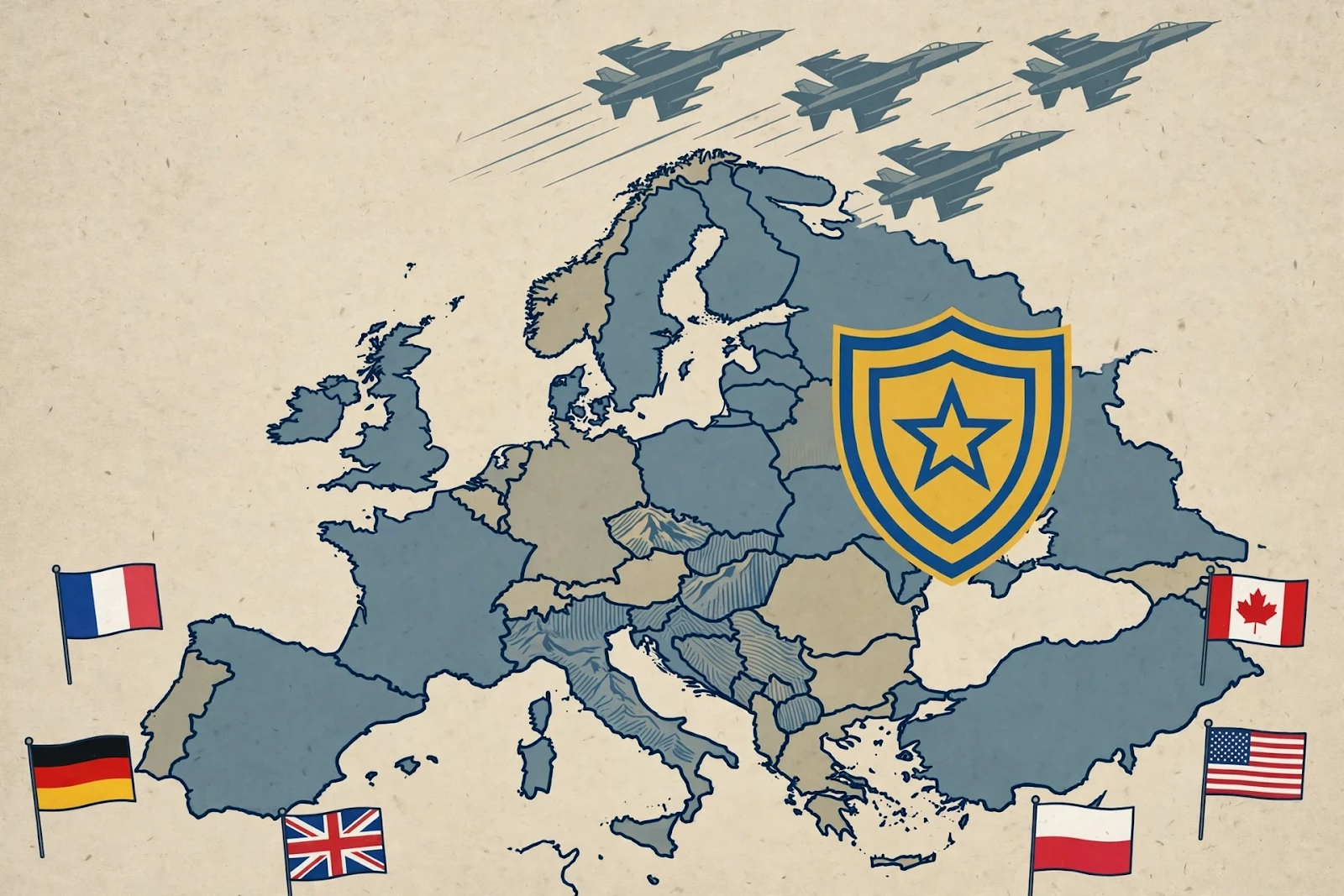
Illustration: A symbolic map of Europe's eastern flank, where the new cooperation is focused.
Sponsored: explore today's featured sponsored offers
FAQ
What did Poland and the UK agree on 27 October 2026?
They signed a three-year defence cooperation plan covering joint military exercises and the development of defence capabilities, announced at a joint press conference in Warsaw.
Who announced the plan?
Polish Defence Minister Wladyslaw Kosiniak-Kamysz and British Defence Minister Wes Streeting, at a joint press conference in Warsaw on 27 October 2026.
What is the EU's SAFE programme?
It is the European Union's defence financing programme; Poland said it would seek to ensure Britain could benefit from it, as a way of bringing the UK closer to the EU on defence.
Does the plan replace cooperation with the United States?
No. Both ministers stressed that there is no alternative to transatlantic cooperation, and that stronger European capabilities should complement, not replace, ties with Washington.
What specific projects does the plan cover?
According to the UK announcement, it includes joint work across sea, land, air, cyber and industry, including next-generation air defence missiles and drone and counter-drone technologies.
Sources
- Reuters, "Poland and UK support strong transatlantic alliance, Polish minister says," 27 October 2026.
- UK defence ministry announcement on the Warsaw Defence Plan, as reported 27 October 2026.
- Polish Ministry of Defense announcement on the three-year plan, as reported by UNITED24 Media, 27 October 2026.
Comments
Post a Comment