
On October 20, 2026, U.S. Secretary of State Marco Rubio announced that the leaders of the Quad — the United States, India, Japan and Australia — plan to hold their next summit in Manila on the sidelines of the ASEAN meetings in November. Speaking in an interview with Indian news channel CNN-News18 during his visit to Mumbai, Rubio said the four leaders are expected to convene during the November 16–18 gathering hosted by the Philippines, which holds the ASEAN chairmanship this year. It would be the first Quad leaders' summit in more than two years, and it would land just days before an anticipated meeting between President Donald Trump and Chinese President Xi Jinping.
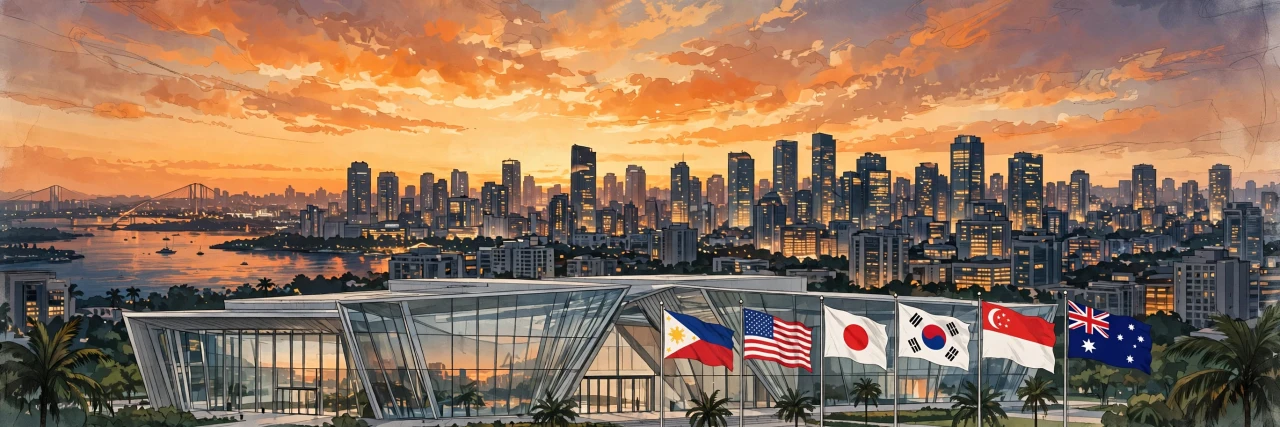
Illustration: the Manila skyline at dusk, with the modern conference center set to host November's ASEAN meetings. This is an AI-generated illustration, not a photograph of a real event.
What Happened
Rubio's announcement came in an exclusive conversation with Network18 in Mumbai on October 20, where the Secretary of State also said that negotiations for a long-awaited India–U.S. bilateral trade deal are down to technical language and could conclude in "weeks, not months." On the Quad, Rubio was confident but careful: "The specific date has not yet been determined, but the meeting will take place, and I am very much looking forward to it," he said, according to the South China Morning Post's account of the interview, reported on October 21.
According to the reporting, Quad foreign ministers will finalize preparations for the summit at a G20-related foreign ministers' meeting in Atlanta at the end of October. The Philippines has already put the machinery of a major diplomatic gathering in place: the government has declared November 16 to 18 special non-working days across the National Capital Region for the 49th ASEAN Summit and its related meetings, under Proclamation No. 1447. Initial descriptions of the Quad plan identify November 16 to 17 as the likely window — the same period when Indian Prime Minister Narendra Modi is expected in Manila.
The timing matters. The Quad summit is expected to take place just before the Asia-Pacific Economic Cooperation (APEC) summit, scheduled for November 18–19 in Shenzhen, China, where Trump and Xi are anticipated to hold their third bilateral meeting of the year. That sequencing — Quad partners gathering first, then a U.S.–China encounter — gives the Manila meeting an unmistakable strategic backdrop.
Not everything is locked in. The precise date, format, participant list and agenda still await final confirmation, and arrangements partly depend on Trump's attendance. His travel has reportedly been weighed against the demands of the U.S. midterm elections in November, though the Philippine president's office has said Trump is expected at the ASEAN gathering.
Background
The Quad — formally the Quadrilateral Security Dialogue — brings together the United States, Japan, India and Australia as a grouping widely viewed as aimed at countering China's expanding influence in the Indo-Pacific. The last leaders-level summit took place in September 2024 in Wilmington, Delaware, then-President Joe Biden's hometown. India was supposed to host the next summit in 2025, but the meeting was repeatedly postponed as relations between India and the United States deteriorated over tariffs, sanctions on Russian oil, and visa restrictions. Australia currently holds the rotating chairmanship.
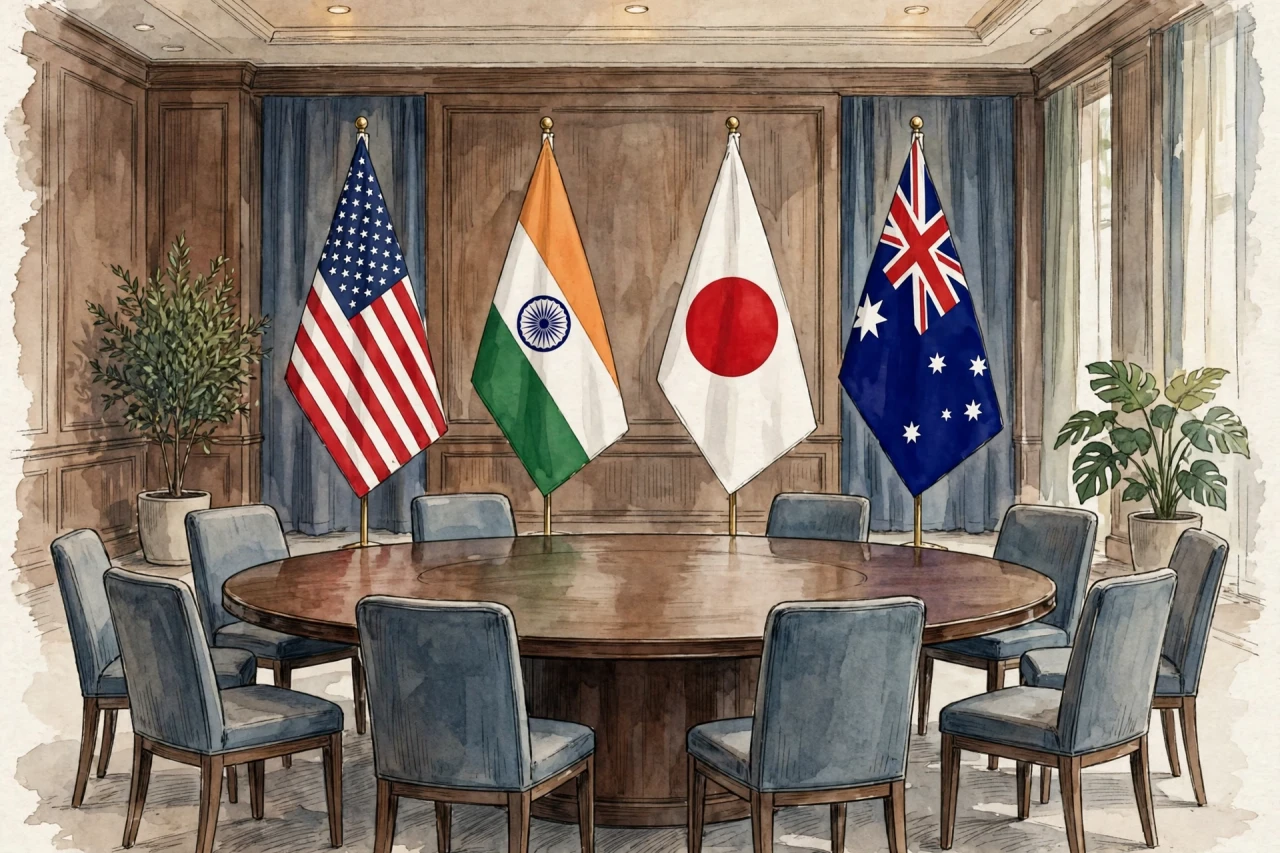
Illustration: a diplomatic roundtable with the flags of the four Quad members — the United States, India, Japan and Australia. This is an AI-generated illustration, not a photograph of a real meeting.
The gap matters because the region has not stood still. Rubio's India trip itself illustrates the thaw: alongside the Quad announcement, he discussed joint energy security — including a previewed visit to Reliance's Jamnagar refinery — Western Hemisphere crude refining, and the Iran war and Strait of Hormuz shipping risks. The planned India–U.S. trade deal, which Rubio described as "incredibly close," is aimed at establishing what he called sustainable, mutually beneficial tariff rates while unlocking strategic supply chains.
Meanwhile, the South China Morning Post noted that the Quad announcement comes amid shifting priorities in U.S. Asia-Pacific policy since the Trump administration took office. Regional allies have been watching for signals about Washington's long-term security commitments: the U.S. recently reverted the name of its Indo-Pacific Command back to Pacific Command, undoing a change made in 2018; in August, Trump directed a reduction in the annual U.S.–South Korea joint military exercises from 11 days to 5 days; and the administration has pressed regional allies and partners to increase their own defense spending.
For the Philippines, hosting is itself a statement. Manila has taken a bolder stance on the South China Sea in recent years while pursuing closer defense ties with its treaty ally the United States, plus Australia and Japan — precisely the other Quad partners. Holding the first Quad leaders' summit in over two years on Philippine soil, on the margins of ASEAN, places Manila at the center of the region's most consequential diplomatic choreography.
Why It Matters
A leaders-level Quad summit would mark the grouping's return to the top table after a two-year hiatus — and a test of whether the partnership can hold together despite the strains of the past year. The postponement of the 2025 summit was itself a symptom of how badly U.S.–India relations had frayed over tariffs and energy sanctions; convening all four leaders in Manila would signal that the damage has been repaired enough for the grouping to function again.
The summit's agenda, while not yet confirmed, is expected to touch the familiar pillars: regional security, trade-route tensions, infrastructure cooperation, and coordination with Southeast Asian partners. Reporting on the plan suggests disaster preparedness and infrastructure may also feature. For regional observers, the question is whether the Quad emerges from Manila with concrete deliverables or with communique language — and whether the meeting reads as reassurance to allies or as a prelude to the Trump–Xi encounter in Shenzhen days later.
There is also a domestic calendar hanging over everything. The announcement explicitly acknowledges that Trump's travel is weighed against the November midterm elections. A leaders' summit that depends on one man's schedule is inherently fragile — but Rubio's public confidence suggests Washington is prepared to make it happen.
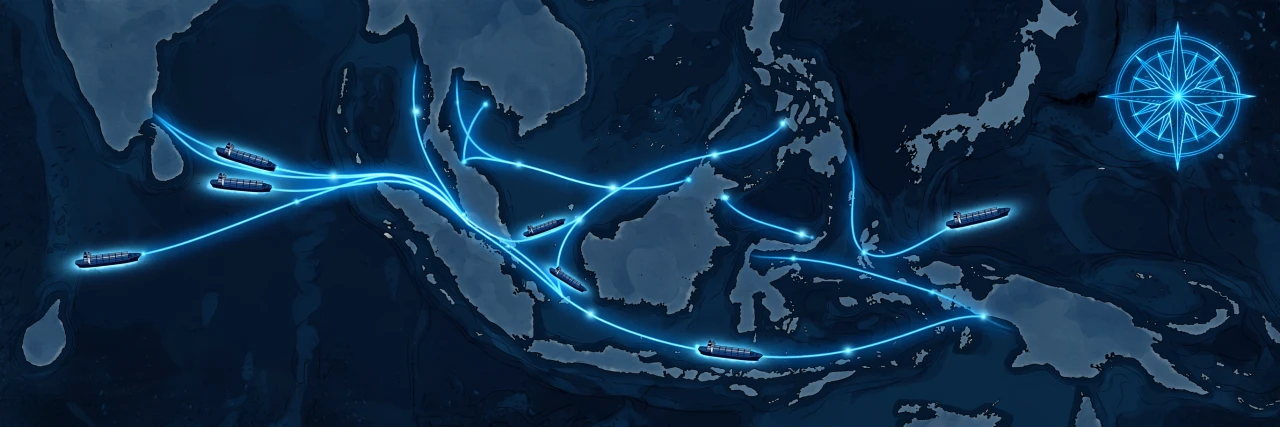
Illustration: stylized shipping lanes across the Indo-Pacific, the region at the center of the Quad's agenda. This is an AI-generated illustration.
What Happens Next
The immediate next step is the G20-related foreign ministers' meeting in Atlanta at the end of October, where Quad foreign ministers are expected to finalize preparations for the leaders' summit. Watch for the exact date and format to be announced there — or in the days after.
Then comes the main event: the 49th ASEAN Summit and related meetings in Manila from November 16 to 18, with the Quad leaders' gathering expected on the margins around November 16–17. Immediately after, the action shifts to Shenzhen for APEC on November 18–19, where the anticipated Trump–Xi meeting would be the third bilateral encounter between the two leaders this year.
Between now and then, the variables to watch are Trump's confirmed travel, the final shape of the India–U.S. trade deal Rubio described as weeks away, and any further announcements from the four capitals about what the leaders intend to deliver in Manila. After a two-year pause, the Quad is about to find out whether it still works at the leaders' level.
Sponsored: explore today's featured sponsored offers
FAQ
What is the Quad?
The Quad — the Quadrilateral Security Dialogue — is a grouping of the United States, India, Japan and Australia. It is widely viewed as a coalition aimed at countering China's expanding influence in the Indo-Pacific, focusing on regional security, infrastructure, trade routes and coordination with regional partners.
When and where will the Quad leaders meet?
U.S. Secretary of State Marco Rubio announced on October 20, 2026, that the Quad leaders plan to meet in Manila on the sidelines of the ASEAN meetings, expected around November 16–17. The exact date, format and agenda have not yet been finalized.
Why is this summit significant?
It would be the first Quad leaders' summit in more than two years — the last was in September 2024 in Wilmington, Delaware. The 2025 summit, which India was to host, was repeatedly postponed as U.S.–India ties deteriorated over tariffs and sanctions. A successful Manila meeting would signal the partnership is functioning again.
How does this relate to the Trump–Xi meeting?
The Quad summit is expected to take place just before the APEC summit in Shenzhen on November 18–19, where President Trump and Chinese President Xi Jinping are anticipated to hold their third bilateral meeting of the year. The sequencing gives the Manila gathering added strategic weight.
Is the summit officially confirmed by all four countries?
Not yet. Rubio expressed confidence the meeting will happen, but reporting notes that the precise date, format, participant list and agenda await final confirmation from all four capitals, and arrangements depend in part on Trump's travel plans.
Sources
- Aju Press — "Quad Leaders to Meet in Manila Ahead of US-China Summit" (October 21, 2026)
- South China Morning Post, via Aju Press — coverage of Rubio's CNN-News18 interview (October 21, 2026)
- Asia Daily — "Rubio Says Quad Leaders Plan Manila Summit as ASEAN…" (October 21, 2026)
- Particle News — "Quad Leaders' Summit Expected to Take Place in Manila on ASEAN Sidelines" (October 20, 2026)
- The Asian Affairs — "Quad Summit in Manila on ASEAN Sidelines" (October 2026)
Comments
Post a Comment