
Quebec City Opens the $61 Million Riopelle Pavilion, a Permanent Home for Canada's Most Celebrated Abstract Painter
QUEBEC CITY — Nearly 25 years after the death of Jean Paul Riopelle, one of Canada's most celebrated modern artists finally has a home of his own: the Espace Riopelle–Michael Audain Pavilion opened to the public at Quebec City's Musée national des beaux-arts du Québec this week, with four days of celebrations, more than 130 works spanning a 50-year career, and the largest public collection of Riopelle's art anywhere in the world.
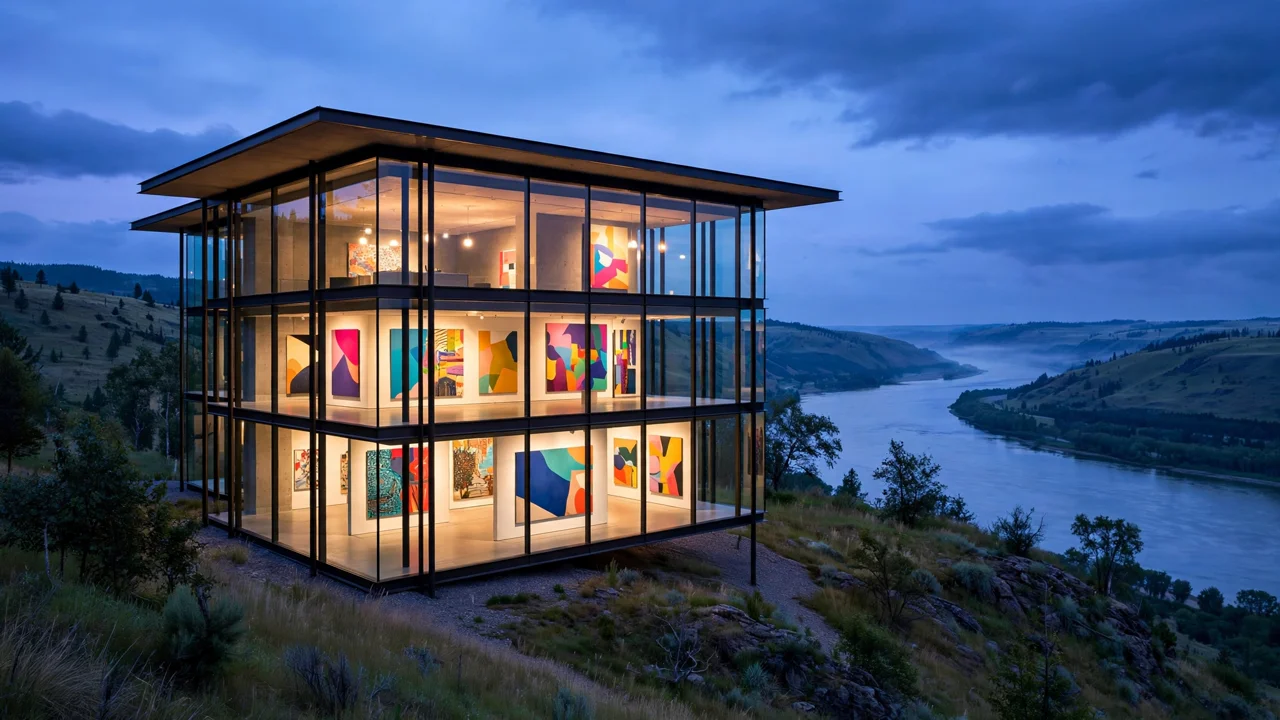
Illustration: The new Espace Riopelle–Michael Audain Pavilion glows at dusk above the St. Lawrence River in Quebec City (AI-generated illustration).
What Happened
A ribbon-cutting media event on October 21 opened one of Quebec's biggest cultural projects of the decade, followed by four days of public celebrations from October 22 to 25 as the Musée welcomed its first-ever visitors, according to the museum's announcement.
The $61-million, three-storey pavilion — nearly 54,000 square feet — was designed by Les Architectes FABG, winners of a 2022 design competition, and sits at the heart of the museum complex between its Gérard-Morisset and Charles-Baillairgé pavilions. The terraced building overlooks the Plains of Abraham and the St. Lawrence River; inside, spruce ceilings nod to the artist's home studio, while planted patios recall the northern landscapes of L'Isle-aux-Grues that Riopelle loved, as reported by Smithsonian Magazine and Canadian Architect.
The pavilion opens with four inaugural exhibitions. The primary show, Riopelle: The Expression of Gesture, is a permanent retrospective divided into seven themes tracing his constant artistic evolution — from early Automatiste-era works to his famous 1950s "mosaic" paintings, his bestiaries, his prints of Quebec's natural landscape and the murals of his later years.
The other three shows explore his relationships and perceptions. Challenging: Modern Art in Quebec features some 50 Quebecois modern artists, including fellow Automatistes; Art and Emotions invites visitors to share the feelings evoked by his works in real time, helping the museum design AI-based tools to personalize exhibition pathways. Finally, a specially designed luminous circular room houses Riopelle's largest work: the 130-foot-long Tribute to Rosa Luxemburg (1992), a 30-painting masterpiece he created over three months following the death of his longtime companion Joan Mitchell — presented with a glass wall overlooking the river and even an olfactory experience developed by sommelier François Chartier.
Background
Riopelle (1923–2002), born in Montreal, earned international recognition as an influential abstract expressionist. His signature "mosaic" style — made by squeezing oil paint straight from the tube and spreading it with a palette knife — gained particular renown, and his devotion to radical abstraction spanned more than 50 years.
"I paint all in one go, without stopping, whether it's one canvas or ten, without wondering when it began or when it'll end, completely absorbed by the act of painting," Riopelle once said, in words quoted by the museum. "I have no idea if an hour has gone by, or a whole night!"
He was a key member of the Automatistes, the radical movement founded in Quebec in the 1940s and influenced by French surrealism. In 1948, the group published the controversial manifesto Le Refus Global — Total Refusal — which sought to shatter what it saw as stodgy Quebecois culture with exhortations like: "Make way for magic! Make way for objective enigmas! Make way for love! Make way for what is needed!"
The pavilion is named for Riopelle and for Michael Audain, the philanthropist and co-founder of the Jean Paul Riopelle Foundation. "[Riopelle is] arguably Canada's most internationally known artist," Audain told The Art Newspaper, adding that he broke new ground "painting the landscape in a way that no one had ever painted it before."
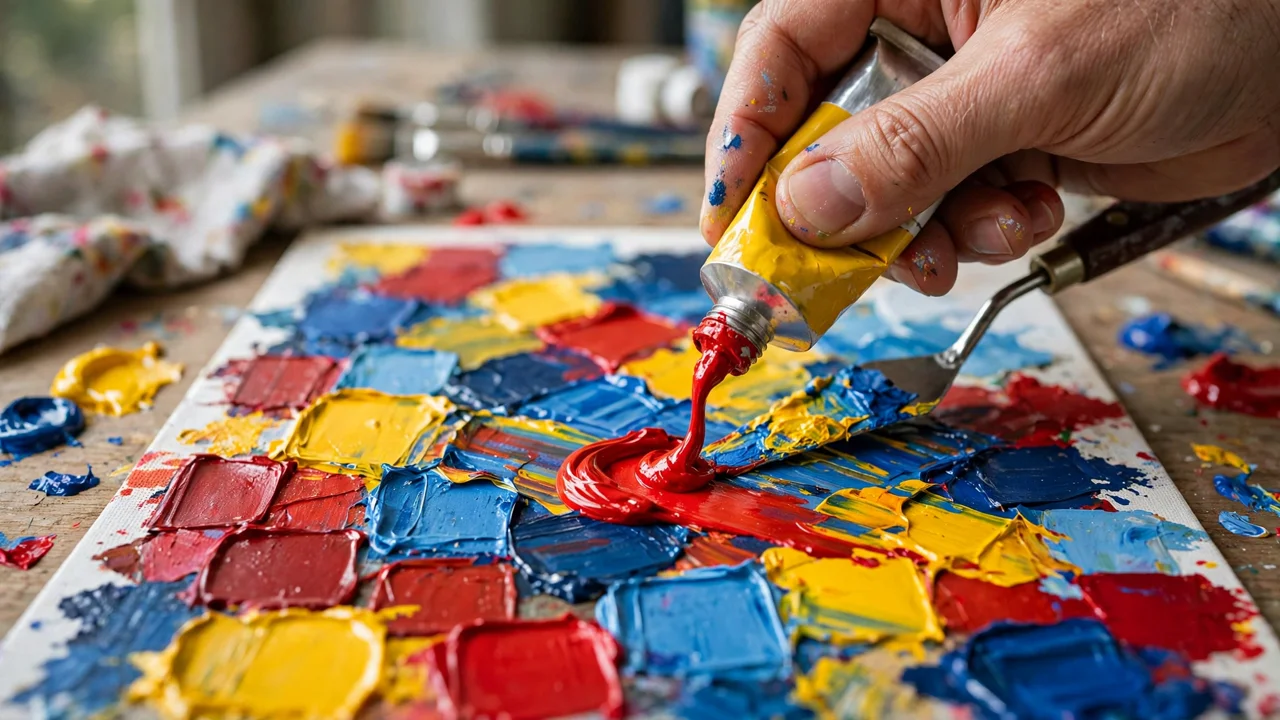
Illustration: Riopelle's signature "mosaic" technique — paint squeezed straight from the tube and spread with a palette knife — made him internationally famous (AI-generated illustration).
Why It Matters
The pavilion is the culmination of one of Quebec's biggest architectural and cultural projects — and a long-overdue recognition. With more than 130 works on display, the museum is officially home to the largest public Riopelle collection in the world. Museum director Jean-Luc Murray told The Art Newspaper: "Riopelle finally has a space entirely dedicated to him."
The building is as much a statement as the art it holds. Beyond the galleries it adds a café, boutique, multi-purpose areas, school-group facilities, and even a visible storeroom and art restoration laboratory — turning conservation itself into part of the visitor experience, according to Canadian Architect. The entrance is guarded by The Tower (1969–1970), a sculpture by Riopelle himself.
It is also a philanthropic landmark. The museum describes an $84-million project backed by the Quebec government alongside donors including Audain, Yoshiko Karasawa, Pierre Lassonde, André Desmarais and France Chrétien Desmarais — with the City of Quebec granting $5 million to create the room for Tribute to Rosa Luxemburg, and donors contributing more than 60 significant works by Riopelle and his contemporaries.
"Riopelle took lots of risks," curator André Gilbert told La Presse. "He painted his Rosa fresco using stencils and spray paint, the tools of graffiti artists. It feels as if we're dealing with five or six artists at once."
What Happens Next
The public opening celebrations run through Sunday, October 25, with the pavilion then settling into its permanent role. The flagship Riopelle: The Expression of Gesture is a permanent retrospective, while Art and Emotions pushes the museum toward AI-personalized exhibition pathways — a glimpse of how galleries may greet visitors in the future.
Nearly a quarter-century after his death, the artist who once demanded the world "make way for magic" finally has a permanent stage of his own.
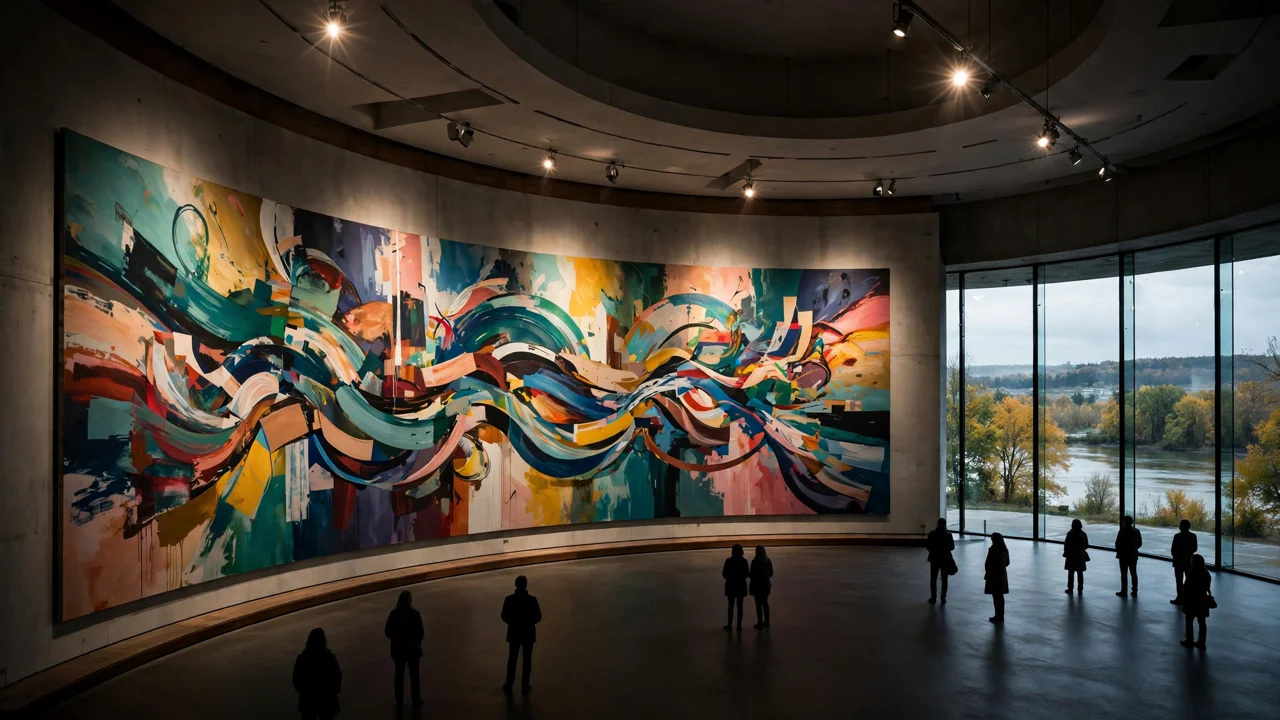
Illustration: Visitors stand before Riopelle's 130-foot-long "Tribute to Rosa Luxemburg" in its luminous circular room overlooking the river (AI-generated illustration).
Sponsored: explore today's featured sponsored offers
FAQ
Who was Jean Paul Riopelle?
A Montreal-born (1923–2002) abstract expressionist and a key member of Quebec's radical Automatistes movement, famous for his "mosaic" paintings made by squeezing oil paint straight from the tube and spreading it with a palette knife.
What is the Espace Riopelle–Michael Audain Pavilion?
A $61-million, three-storey pavilion at Quebec City's Musée national des beaux-arts du Québec, opened October 22–25, 2026, housing the world's largest public collection of Riopelle's work — more than 130 pieces drawn from the museum's 500-piece holdings.
What are the four inaugural exhibitions?
"Riopelle: The Expression of Gesture" (permanent retrospective), "Challenging: Modern Art in Quebec" (50 Quebecois modern artists), "Art and Emotions" (an interactive, AI-oriented show), and a dedicated presentation of "Tribute to Rosa Luxemburg."
What is "Tribute to Rosa Luxemburg"?
Riopelle's largest work: a 130-foot-long, 30-painting fresco created over three months in 1992 after the death of his partner Joan Mitchell, shown in a luminous circular room with a glass wall overlooking the river.
How long do the opening celebrations last?
Four days, October 22–25, 2026, with dance, music and artistic performances. The main retrospective is permanent, so the pavilion will be open to visitors year-round afterward.
Sources
- Smithsonian Magazine (Christian Thorsberg) — "The Canadian Artist Jean Paul Riopelle Was 'Completely Absorbed by the Act of Painting.' His Abstract Works Finally Have Their Own Home in a Quebec Museum" (Oct 22, 2026): https://www.smithsonianmag.com/smart-news/the-canadian-artist-jean-paul-riopelle-was-completely-absorbed-by-the-act-of-painting-his-abstract-works-finally-have-their-own-home-in-a-quebec-museum-180989735/
- Canadian Architect — "Espace Riopelle–Michael Audain Pavilion opens" (Oct 21, 2026): https://canadianarchitect.com/espace-riopelle-michael-audain-pavilion-opens/
- archup.net — "Espace Riopelle opens in Quebec City with visible storage and conservation spaces" (Oct 22, 2026): https://archup.net/espace-riopelle-opens-quebec-city/
- MNBAQ press release (newswire.ca) — "GRAND OPENING: ESPACE RIOPELLE - MICHAEL AUDAIN PAVILION" (Oct 2026): https://www.newswire.ca/news-releases/grand-opening-espace-riopelle-michael-audain-pavilion-803934368.html
Comments
Post a Comment