
Serbia's Students Face Their Defining Test as Sunday Snap Election Threatens Vucic's 12-Year Grip on Power
Serbia holds snap parliamentary elections on Sunday, October 25, 2026, in a contest that pits Aleksandar Vucic's ruling Serbian Progressive Party (SNS) against the "Students Win" electoral list — a movement born from two years of anti-corruption protests that one poll this week puts marginally ahead of the government, in what could be the most serious challenge to Vucic's 12-year dominance of Serbian politics.

Illustration: a ballot box receiving ballots in front of the Belgrade skyline at dusk, with the National Assembly dome in the distance
What Happened
On Wednesday, October 21, Reuters published an in-depth account of how Serbia's student protest movement — born after the deadly collapse of a railway station canopy in Novi Sad — has evolved into a full electoral force heading into Sunday's snap parliamentary vote for all 250 seats in the National Assembly.
The "Students Win" list is fielding a full slate of 250 candidates that includes university professors, actors, farmers and even a popular rapper, according to Reuters reporting. The list is headed by cardiologist Ilija Srdanovic, though the movement has said that does not mean he would become prime minister if it wins.
The latest published opinion poll — conducted by New Serbian Political Thought (NSPM) and released on October 20 — showed the students' list edging ahead of Vucic's Serbian Progressive Party with 44.5% of the vote to 42.7% for the SNS. Betting odds, however, still favor Vucic's party, according to the same reporting.
The vote comes just weeks after Vucic resigned as president in late September, ending his second and final five-year term roughly seven months early, in order to lead his party's campaign and seek a return as prime minister. Under Serbia's constitution, the presidential election must be completed within 90 days, with the campaign lasting between 30 and 60 days — meaning a first round of presidential voting is expected by the end of December. Outgoing parliament speaker Ana Brnabic is serving as acting president in the interim, according to reporting on the resignation.
Background
The roots of Sunday's election stretch back to November 1, 2024, when a concrete canopy at the Novi Sad railway station collapsed, killing 16 people. Evidence pointed to botched modifications during the station's refurbishment, but no official was held accountable, and the tragedy became a symbol of the corruption and negligence many Serbians say define public life.
Weeks after the collapse, when Belgrade students blocked a road in a vigil for the victims, they were attacked by a mob affiliated with Vucic's party, according to reporting by Zotpaper. The confrontation turned a protest into a nationwide movement. Students blockaded university faculties, organized mass marches, and developed a distinctive method: methodical door-to-door canvassing, peaceful protests, tightly controlled messaging, and a constant rotation of leaders to shield individuals from government smear campaigns.
Aleksa Simic, a political science student at Belgrade University who spoke to Reuters, described how, after blockading his faculty in the days after the canopy collapse, sympathetic residents brought students homemade meals, mattresses and pillows. "For the first time, I had a sense of belonging to a community. I realised that my voice mattered," he said.
The movement has now endured for two years, weathering government pressure that included an alleged attempt to intimidate a movement ally days before the election, which one early supporter, psychology professor Aleksandar Baucal, described as "yet another attempt of intimidation designed to prevent any critical position and public action." Baucal, who is now on the students' election ticket, told reporters the protests reflect a broader frustration with the state of Serbian society.
Vucic himself has dominated Serbian politics first as prime minister and then as president since 2014. His balancing act is one of the most closely watched in Europe: Serbia takes major investment from China and much of its natural gas from Russia, its traditional ally, while keeping the door open to European Union membership even as the accession process remains stalled.
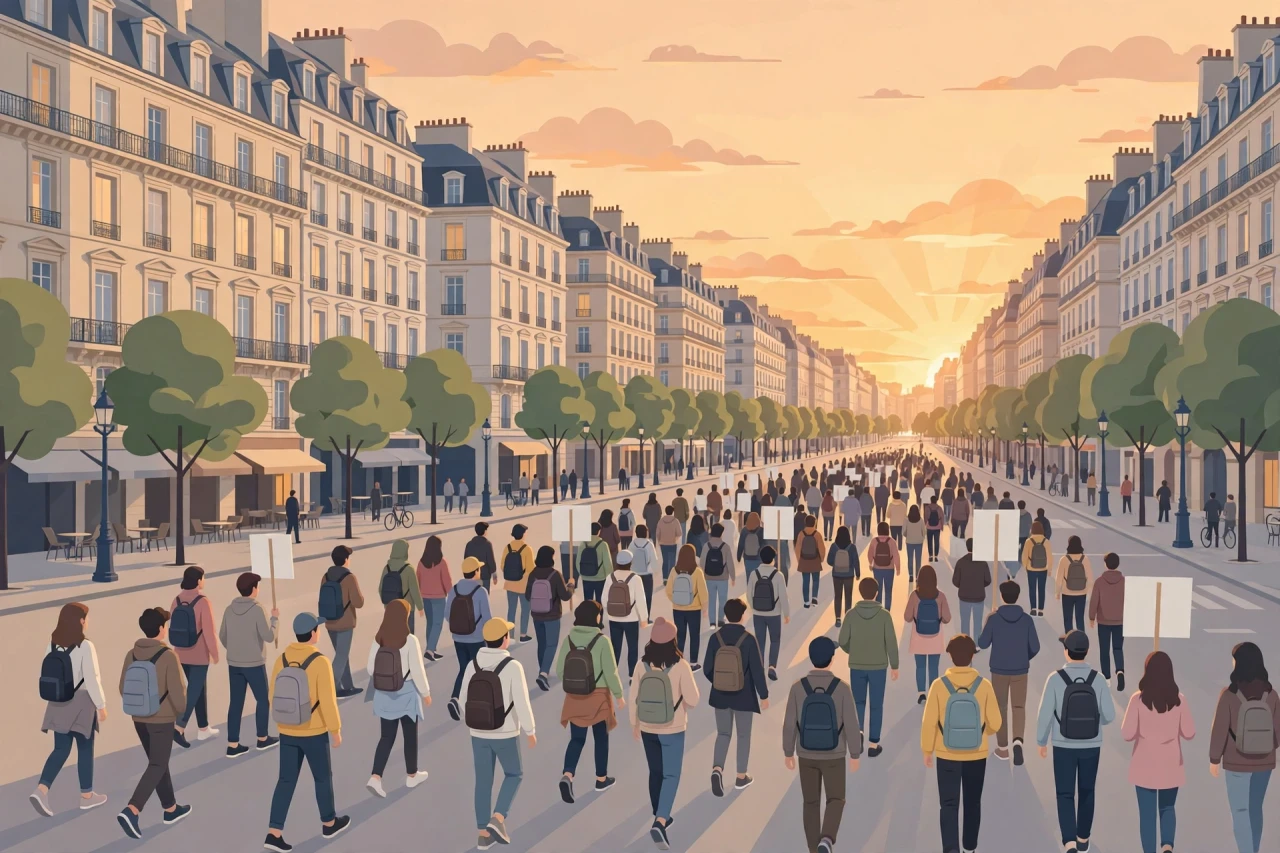
Illustration: a large peaceful crowd of young students marching down a European city boulevard at sunset, holding blank placards
Why It Matters
Serbia is the largest economy of the Western Balkans and a geopolitical pivot between East and West, so a genuine transfer of power in Belgrade would send ripples far beyond its borders. The election is also a test of whether a protest movement that deliberately avoided traditional party structures can convert street energy into governing power.
The unknowns are what analysts find most unsettling. The big question, as Reuters framed it, is how the students would actually govern should they win. Candidates were nominated by university faculties and vetted by plenums, and more than 160 reportedly hold doctorates — but the platform deliberately avoids divisive foreign policy questions. The movement says EU membership should be decided by a future referendum and claims Kosovo as part of Serbia, while pro-European opponents criticize the list for saying it would not introduce sanctions on Russia.
"A (student-led) government would pursue broad reforms to tackle corruption, overhaul key public institutions and companies, and dismantle patronage networks," the consultancy Teneo said in an analyst note this week, according to Reuters. "However, strong bureaucratic resistance could generate short-term institutional instability."
The election also lands amid a wave of street unrest across Europe, from France's cost-of-living riots to unrest in Albania and elsewhere, fueled by the high cost of living, job shortages and failing public services. The Serbian students have become an international reference point for what young people can achieve when they harness widespread discontent.
There is also the risk of contested results. Zotpaper reported that the closeness of the race raises the possibility of post-election unrest if either side rejects the outcome. Turnout will be decisive: student volunteers have spent weeks going door to door with mobile apps mapping support, and residents have told them that corruption, poor roads and failing sewers are their top complaints.
What Happens Next
- Sunday's vote: Polls close in Serbia on October 25, with the 250-seat National Assembly at stake. Preliminary results are expected late Sunday night.
- Coalition arithmetic: Neither the students nor the SNS may command an outright majority on their own. The NSPM poll suggests the two lists will be separated by fewer than two percentage points, making smaller parties and potential defectors crucial.
- Presidential race: Regardless of Sunday's outcome, Serbia must hold a presidential election by the end of December following Vucic's resignation. Who contests it will depend heavily on the parliamentary result.
- Foreign policy signals: Investors and diplomats will watch closely for any shift in Serbia's stance toward the EU, Russia sanctions policy and Kosovo — the three issues the student movement has so far refused to spell out in detail.
- Regional impact: A student-led government would mark the first peaceful, youth-driven electoral turnover in the Western Balkans in years, potentially inspiring similar movements in neighboring countries.
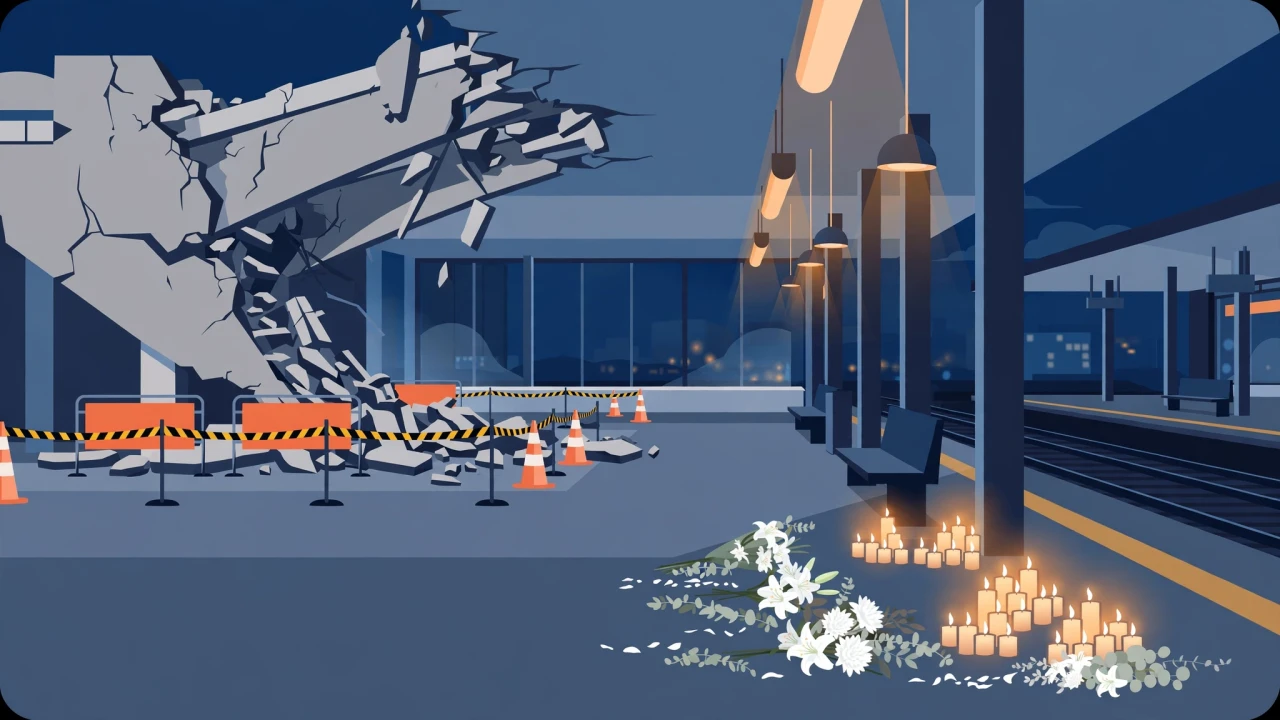
Illustration: a candlelit memorial vigil on a railway station platform at night, honoring the Novi Sad canopy tragedy
Sponsored: explore today's featured sponsored offers
FAQ
When is Serbia's snap election?
Serbia holds snap parliamentary elections on Sunday, October 25, 2026, electing all 250 members of the National Assembly. A presidential election must follow by the end of December after Vucic resigned as president in late September.
Who is leading the "Students Win" list?
The 250-candidate list is headed by cardiologist Ilija Srdanovic and includes university professors, actors, farmers and a popular rapper. More than 160 of the candidates reportedly hold doctorates. The movement says he is not necessarily its choice for prime minister.
What do the polls say?
An NSPM poll published on October 20 showed the students' list at 44.5% versus 42.7% for Vucic's Serbian Progressive Party. Betting odds, however, still favor Vucic's party, and pollsters in Serbia have a mixed track record.
What triggered the student movement?
The collapse of a concrete canopy at Novi Sad railway station on November 1, 2024, killed 16 people. Evidence pointed to botched refurbishment work with no official held accountable, sparking student blockades that grew into a two-year nationwide anti-corruption movement.
How has Vucic responded to the challenge?
Vucic resigned as president in late September to campaign for a return as prime minister if the SNS retains control of government. His party is campaigning on continuity, warning that inexperienced students could destabilize Serbia's delicate foreign-policy balance between the EU, Russia and China.
Sources
- Reuters (Ivana Sekularac) — "As Serbia votes, students emerge as greatest threat to Vucic's long rule" — October 21, 2026 — https://www.reuters.com/world/europe/serbia-votes-students-emerge-greatest-threat-vucics-long-rule-2026-10-21/
- Zotpaper — "Serbian student movement challenges Vučić in snap parliamentary elections" — October 21, 2026 — https://zot.news/article/serbian-student-movement-challenges-vucic-snap-parliamentary-tzelk
- OrbitPrime News — "2 years of protests, one crucial election: Serbia's students challenge Vucic's 14-year rule" — October 19, 2026 — https://orbitprimenews.com/2-years-of-protests-one-crucial-election-serbias-students-challenge-vucics-14-year-rule/
- Nairaland / reporting on Vucic resignation — "Serbia's President Vucic Resigns As Ruling Party Faces Youth-backed Opposition" — September 28, 2026
Comments
Post a Comment