
Shojo Manga Infinity: Tokyo's Landmark Exhibition Celebrates the Heroines Who Changed Girls' Comics Forever
TOKYO — One of the most influential art forms of the past half-century gets its first large-scale showcase at a national museum in Japan this week, when the National Art Center, Tokyo opens "SHOJO MANGA INFINITY" on Wednesday, October 28, 2026. The exhibition brings together more than 800 original artworks by three pioneering artists — Moto Hagio, Ryoko Yamagishi and Waki Yamato — whose work transformed girls' manga from simple romance into a medium capable of exploring identity, history, fantasy and the inner life.
The show runs until February 8, 2027, and is staged to mark the 20th anniversary of the National Art Center, Tokyo. It is the first large-scale shojo manga exhibition to be held at a national museum in Japan, according to the exhibition announcement published on October 27, 2026 — a milestone that signals how far manga has travelled from newsstand entertainment to recognised cultural heritage.
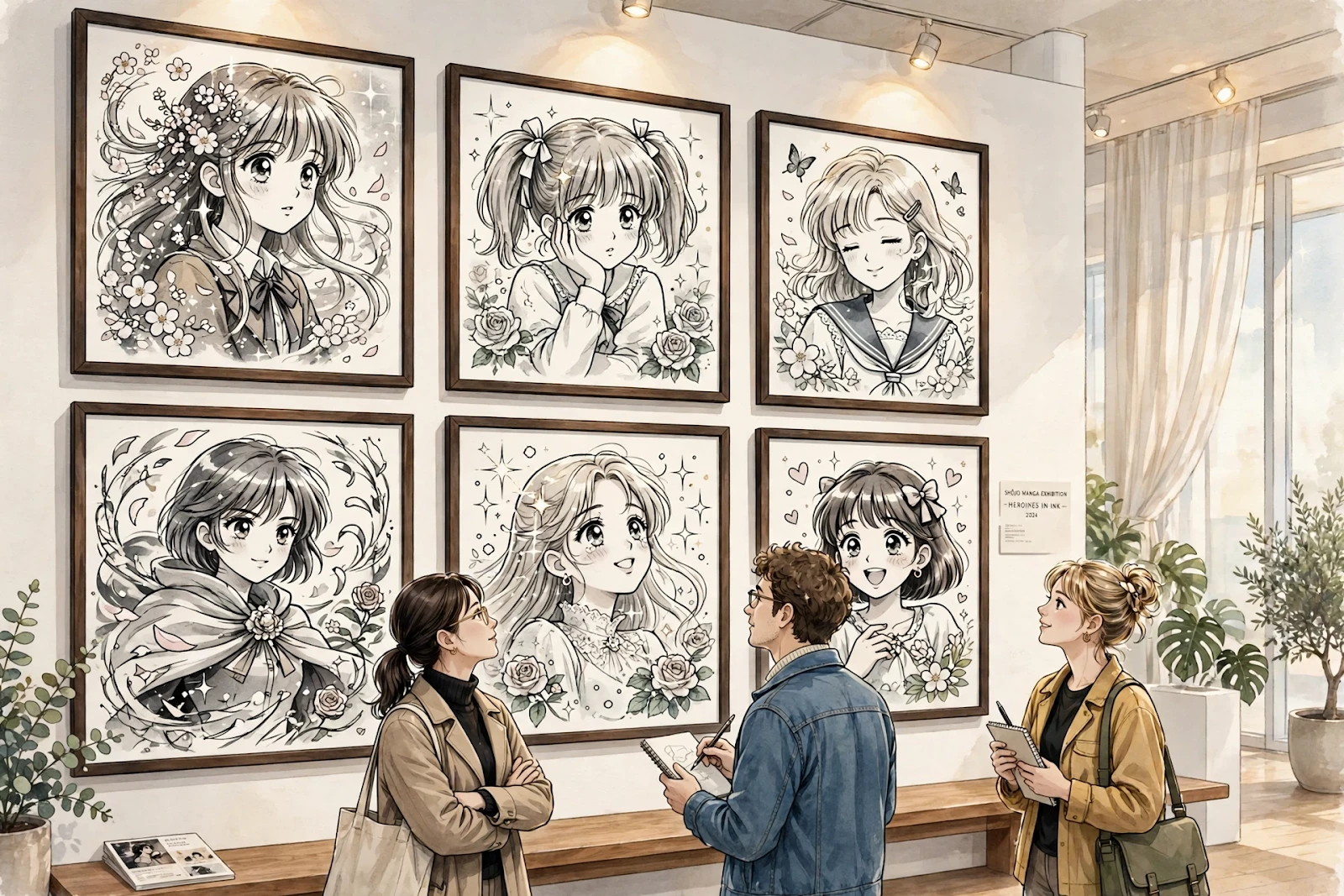
Illustration: A bright museum gallery wall covered with large framed black-and-white manga artwork panels in classic shojo style.
What Happened
The National Art Center, Tokyo announced the exhibition as a major retrospective of three artists who all began their careers in the late 1960s and became leading figures in the 1970s "golden age of shojo manga." Over nearly six decades, their work expanded the genre far beyond conventional romance, the announcement said, exploring the inner self, relationships with others, women's independence, diverse forms of sexuality, history and culture, spirituality, fantasy, science fiction and new approaches to visual storytelling.
Visitors will see more than 800 original monochrome and colour artworks, including manuscripts from some of the artists' best-known works and valuable archival materials. The organisers stress that seeing the originals matters: the delicate lines, sophisticated compositions, subtle colours and physical qualities of original manga artwork cannot be fully reproduced on the printed page.
Each of the three artists is given her own creative territory in the show. Hagio is presented through fantastic narratives and profound explorations of interior worlds; Yamagishi through incisive portrayals of human nature, spirituality and the body; and Yamato through vivid stories rooted in history and culture, often centred on women navigating social change. The title "Infinity" is meant to reflect the multilayered appeal and boundless potential of shojo manga, the announcement said.
Background
Shojo manga — literally "girls' manga" — emerged as a distinct commercial category in post-war Japan, but for years it was treated as a lesser cousin of boys' manga, confined largely to romance and school stories. That changed in the 1970s, when a generation of women artists began writing and drawing for a female readership with new seriousness and ambition.

Illustration: A manga artist's desk with ink pens, brushes and manuscript pages covered in delicate hand-drawn panels.
Hagio, Yamagishi and Yamato were at the centre of that shift. Beginning their careers in the late 1960s, they came of age as artists just as the manga industry was expanding, and they used the freedom of the girls' magazines to experiment with panel layouts, flowing compositions and interior monologue in ways that had rarely been attempted in comics before. Their influence spread far beyond their original readership: the visual language they developed — layered panels, decorative flourishes, and an emphasis on emotion and atmosphere — helped shape manga as a whole, and later anime, illustration and graphic storytelling around the world.
Their careers have lasted nearly six decades, and their work continues to be reprinted, adapted and studied. That longevity is part of what makes this exhibition unusual. Rather than a nostalgic look at a single hit series, it traces three individual creative paths side by side, showing how three artists working in the same genre at the same time arrived at very different answers to the same questions about women, society and imagination.
The National Art Center, Tokyo is one of Japan's largest exhibition spaces, and its decision to devote a major anniversary show to shojo manga is itself a statement. Manga exhibitions have become increasingly common in museums worldwide, but a large-scale national-museum survey devoted specifically to shojo — rather than manga in general — has not happened before in Japan, according to the announcement.
Why It Matters
The exhibition matters for several reasons. First, it corrects a long-standing imbalance in how comics history is told. Shojo manga has often been treated as a footnote to the supposedly more serious boys' manga tradition, even though its innovations in visual storytelling were at least as radical. A national museum show devoted to three of its pioneers gives that history institutional weight.
Second, it speaks to a global audience. Shojo manga — from romance and fantasy to historical drama — has found readers far beyond Japan, and its themes of identity, independence and social change resonate with contemporary debates about gender and representation. The exhibition's framing, which presents the genre as a language capable of addressing complex questions of identity, society, history and imagination, invites international visitors to see these works not as exotic curiosities but as major art.
Third, the show is about the material reality of manga-making. In an age when most comics are read on screens, the chance to stand in front of 800 original pages — ink on paper, with corrections, marginal notes and the texture of the artist's hand — is increasingly rare. The organisers' emphasis on originals is a reminder that manga is not just a story but a physical craft.
What Happens Next
"SHOJO MANGA INFINITY: Moto Hagio, Ryoko Yamagishi and Waki Yamato" opens at the National Art Center, Tokyo on October 28, 2026, and runs through February 8, 2027. The long run — more than three months — gives visitors from Japan and abroad ample time to see it, and the exhibition's official site, shojormanga.jp, carries further details for planning a visit.

Illustration: An elegant shojo manga style artwork panel showing three young women in flowing historical and fantasy costumes.
For the artists themselves, the show is a form of recognition that was slow in coming. When they began in the late 1960s, girls' comics were rarely discussed as art at all. Nearly sixty years later, their original pages will hang in one of Japan's most prominent museums — a measure of how completely the medium they helped create has changed the culture around it.
And for readers discovering their work for the first time, the exhibition offers an entry point into a tradition that is still expanding. The "infinity" of the title is, in that sense, a promise as much as a description: the possibilities these three artists opened up for shojo manga are still being explored by new generations of creators today.
Sponsored: explore today's featured sponsored offers
FAQ
What is "SHOJO MANGA INFINITY"?
It is a major exhibition at the National Art Center, Tokyo devoted to three pioneering shojo manga artists: Moto Hagio, Ryoko Yamagishi and Waki Yamato.
When does the exhibition run?
The exhibition opens on October 28, 2026, and runs until February 8, 2027.
How many artworks are on display?
More than 800 original monochrome and colour artworks are on display, including manuscripts from the artists' best-known works and archival materials.
What is shojo manga?
Shojo manga is manga created principally for a girls' readership. In the 1970s it expanded far beyond romance to explore identity, history, fantasy, spirituality and women's independence.
Why is this exhibition a first?
According to the organisers, it is the first large-scale shojo manga exhibition to be held at a national museum in Japan.
Sources
- Business Wire / The National Art Center, Tokyo — "SHOJO MANGA INFINITY: Moto Hagio, Ryoko Yamagishi and Waki Yamato," published October 27, 2026.
- Exhibition official site — shojormanga.jp (as listed in the announcement).
Comments
Post a Comment