
CALIFORNIA, 27 October 2026 — SpaceX has lined up roughly 40 billion US dollars in lease financing for artificial intelligence chips and data centre equipment, in a deal led by Apollo Global Management that the company calls the largest committed GPU financing ever, as lenders grow pickier about which AI borrowers they will fund.

Illustration: A vast data centre hall filled with rows of glowing server racks, symbolising AI computing infrastructure.
What Happened
Space Exploration Technologies Corp., known as SpaceX, disclosed on Monday, 26 October 2026, that it had reached a binding commitment to enter into an approximately 40-billion-dollar master finance lease for graphics processing units, or GPUs, and related equipment, with an entity managed by Apollo Global Management. The commitment letter was signed on 24 October, according to the company's announcement and its Current Report on Form 8-K filed with the US Securities and Exchange Commission.
Under the arrangement, the Apollo-managed lessor will buy GPU pods and related equipment and lease them to SpaceX for use at data centres selected by the company. SpaceX said the lease will deliver Nvidia's next-generation Vera Rubin chips for its terrestrial compute buildout. The financing was led by Apollo and Goldman Sachs, which acted as sole structuring agent, with funds and accounts managed by BlackRock and Goldman Sachs Asset Management, along with capital accounts advised by KKR, making anchor commitments.
SpaceX expects total financing principal payments of about 40 billion dollars over the terms of the lease schedules. Each equipment delivery will be subject to a separate lease schedule lasting about five to five-and-a-quarter years from its start date, with rent payable quarterly in advance, typically one-twentieth of each tranche's cost plus a fixed interest rate that has not yet been set. The final contract remains subject to closing conditions, and SpaceX expects to complete it before the end of 2026, with lease schedules beginning in the first half of 2027 as the hardware arrives.
Chief Financial Officer Bret Johnsen said the lease diversifies SpaceX's funding sources and addresses a notable portion of the funding required to deliver on its growth plans. The deal was announced the day after chief executive Elon Musk wrote on X on 25 October that debt markets had almost entirely shut off access to money for companies without substantial revenue independent of AI data centres, adding that SpaceX got its deal done because it is investment grade and has Starlink and launch revenue.
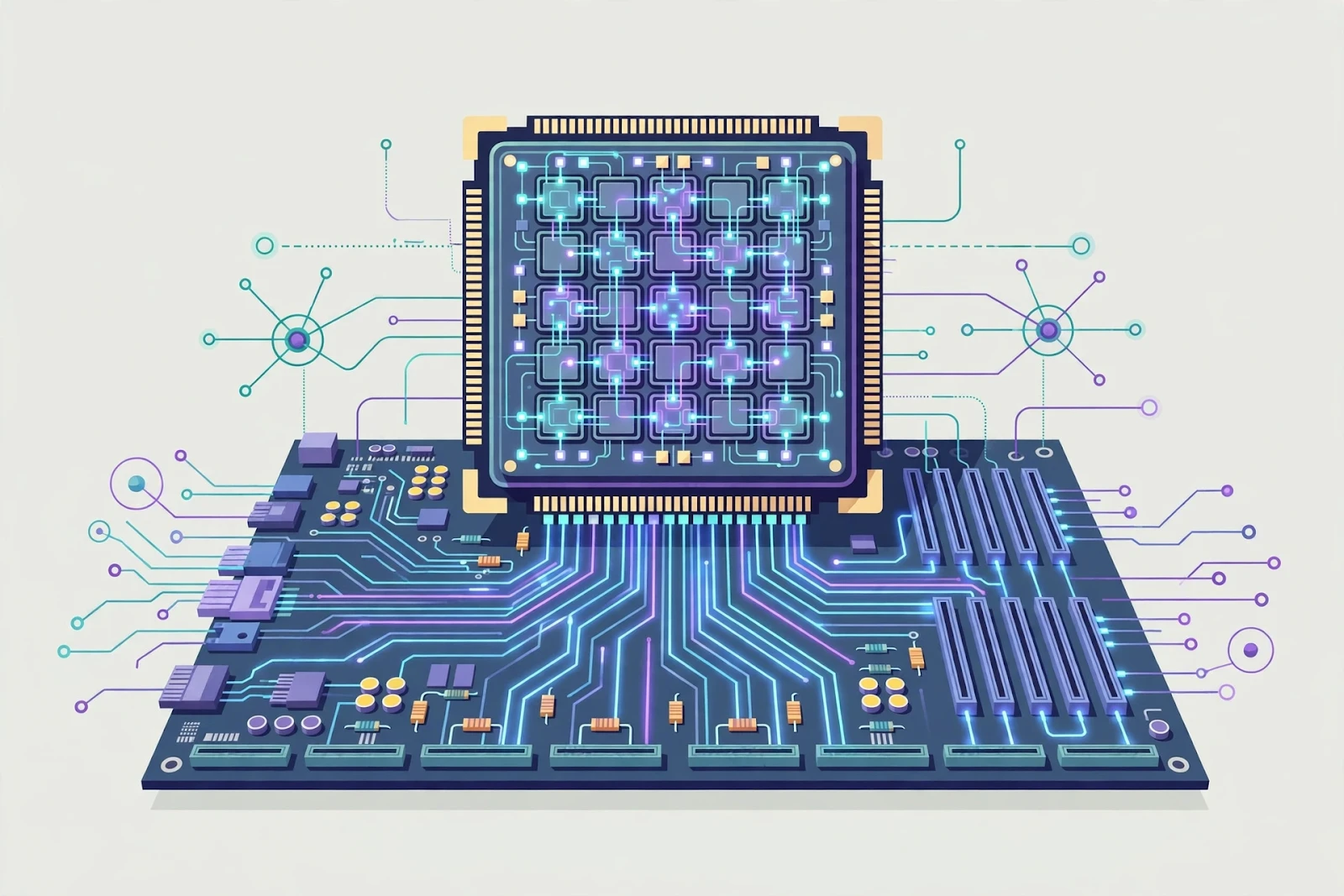
Illustration: A giant computer processor chip on a server board with glowing circuits, symbolising next-generation AI chips.
Background
SpaceX went public in June 2026 and absorbed Musk's artificial intelligence company xAI in February of the same year, creating a single listed group spanning rockets, satellite internet and AI. That combination is central to the financing story: unlike the more than 200 smaller "neocloud" firms that rent out GPU capacity and depend almost entirely on AI workloads, SpaceX also earns money from launching rockets and from Starlink satellite broadband.
The company's third quarter underlined that diversity. Revenue for the quarter ended 30 September 2026 reached 14.58 billion dollars, up 161 percent from a year earlier, while AI revenue reached 7.56 billion dollars, close to ten times the comparable period a year earlier. The AI segment includes the Grok chatbot, the Cursor coding tool and cloud computing. Capital spending jumped to nearly 20 billion dollars for the quarter, up from 6.9 billion dollars a year earlier, and Johnsen told investors on the 20 October earnings call that the company plans to spend another 35 to 40 billion dollars in the fourth quarter alone.
The wider AI infrastructure boom has been funded by a mix of cash, bonds, equity and now large equipment leases. Earlier in October, Meta announced plans to raise up to 95 billion dollars in equity to fund its AI expansion, and Anthropic publicly filed for a stock market listing, both reported in the same week as the SpaceX lease. At the same time, investors have grown nervous about how much debt the AI buildout can support, and shares and bonds of some pure-play GPU rental firms fell sharply in late October, with CoreWeave's bonds reported at record lows on 26 October.
Musk warned in his 25 October post that many of those smaller firms face consolidation and failure, writing that the 200-plus neoclouds are going to see what he called "guppy-level death and consolidation" and that not many will make it through. The SpaceX lease, by contrast, shows that lenders are still willing to commit very large sums, but increasingly to borrowers whose cash flows do not depend solely on renting out chips.
Why It Matters
The deal matters for three reasons. First, its size and structure show how the AI buildout is being financed as traditional bond markets grow cautious. A finance lease lets SpaceX obtain tens of billions of dollars of hardware without issuing conventional corporate bonds, while giving Apollo and its co-investors a claim on the equipment itself and on quarterly rent from a borrower with diverse revenues.
Second, it is a sorting moment for the AI infrastructure industry. Companies that can point to profits or revenues outside AI data centres, like SpaceX with Starlink and launches, can still raise enormous sums. Companies that cannot are finding credit much harder to obtain, which is likely to accelerate mergers, failures and a shakeout among smaller GPU cloud providers over the coming year.
Third, the deal locks in demand for Nvidia's next generation of chips. Vera Rubin is the successor to Nvidia's current AI processors, and a 40-billion-dollar commitment tied to those chips signals that the largest AI builders expect demand for computing power to keep rising steeply, even as investors question whether the spending will generate matching profits.
For the broader technology sector, the week of the announcement also brought a reminder of how much is riding on the next earnings reports. Alphabet and Microsoft were due to report results on Wednesday, followed by Amazon on Thursday, and those results will help investors judge whether AI spending is translating into revenue and profit, or mainly into ever-larger financing bills.

Illustration: A rocket launching above a satellite network beaming signals to Earth, symbolising space and communications revenue.
What Happens Next
The immediate next step is closing. SpaceX expects the master lease to be completed before the end of 2026, subject to closing conditions, and the fixed interest rate on the leases has yet to be set, so the final cost of the financing is not yet known. Once hardware begins arriving in the first half of 2027, each delivery tranche will start its own five-to-five-and-a-quarter-year lease clock.
Investors will also watch SpaceX's fourth-quarter spending. If the company spends the planned 35 to 40 billion dollars in the quarter, its full-year capital expenditure will be among the largest of any company in the world, and the question of how quickly that spending turns into AI revenue will sharpen with each quarterly report.
The neocloud shakeout that Musk predicted will be the other story to follow. If smaller GPU rental firms struggle to refinance, some may be acquired, some may fail and some may pivot to niche markets, and the terms they can obtain will be a barometer of how much appetite lenders still have for AI infrastructure risk.
Finally, the structure itself may be copied. If the Apollo lease works smoothly, other large AI builders with diverse revenues could use similar equipment leases to fund their own chip purchases, making the finance lease a standard tool of the AI era, alongside bonds, share sales and the cash flows of the biggest technology companies.
Sponsored: explore today's featured sponsored offers
FAQ
What did SpaceX agree with Apollo?
SpaceX signed a binding commitment on 24 October 2026, disclosed on 26 October, for an approximately 40-billion-dollar master finance lease with an entity managed by Apollo Global Management. The Apollo vehicle will buy Nvidia Vera Rubin GPUs and related equipment and lease them to SpaceX.
How does the lease work?
Each equipment delivery starts its own lease schedule of about five to five-and-a-quarter years. Rent is payable quarterly in advance, typically one-twentieth of each tranche's cost plus a fixed interest rate that has not yet been set. Leases begin in the first half of 2027 as hardware arrives, and the deal is expected to close before the end of 2026.
Who else is involved in the financing?
Apollo led the financing with Goldman Sachs as sole structuring agent. Funds and accounts managed by BlackRock and Goldman Sachs Asset Management, along with capital accounts advised by KKR, made anchor commitments, according to SpaceX's announcement.
Why could SpaceX raise this money when other AI firms cannot?
According to Elon Musk, debt markets have almost entirely shut off access for companies without substantial revenue independent of AI data centres. SpaceX, he said, got its deal done because it is investment grade and has Starlink and launch revenue alongside its AI business.
How big is SpaceX's AI spending?
SpaceX spent nearly 20 billion dollars on capital expenditure in the third quarter of 2026, up from 6.9 billion dollars a year earlier, and plans to spend another 35 to 40 billion dollars in the fourth quarter. Third-quarter revenue reached 14.58 billion dollars, of which AI contributed 7.56 billion dollars.
Sources
- Unite.AI — "Apollo-Led $40 Billion GPU Lease Deal Draws Binding SpaceX Pledge," 26 October 2026.
- Silicon Report — "Apollo will lease roughly $40B in AI chips and servers to SpaceX," 26 October 2026.
- Technopolis News — "SpaceX lines up roughly $40B in GPU financing with Apollo," 26 October 2026.
- TeslaNorth — "Elon Musk Says SpaceX Locked In $40B of GPU Debt as Lenders Pull Back," 25–26 October 2026.
Comments
Post a Comment