
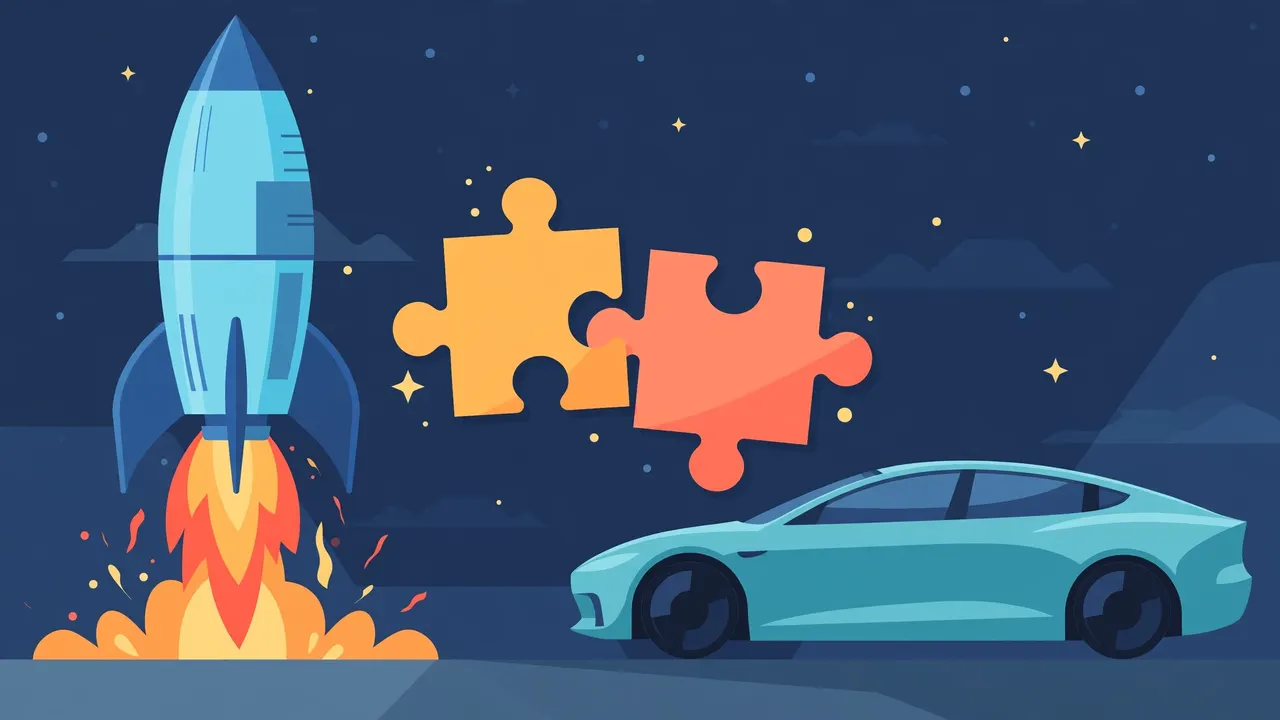
Illustration: a rocket and an electric car coming together — the proposed SpaceX-Tesla merger.
AUSTIN — Elon Musk publicly backed a merger between his two biggest companies on Tuesday, telling investors that combining Tesla and SpaceX "is a good idea" and revealing that both boards have formed special committees to study a union that would create one of the most valuable companies on Earth, worth about $3.5 trillion.
What Happened
Musk made the comments on Tuesday, October 20, during SpaceX's third-quarter earnings webcast — an event investors had already turned into a referendum on the merger idea. "When will SpaceX merge with Tesla?" was the second-most upvoted question submitted by SpaceX shareholders ahead of the call, drawing 26 upvotes; the same question received 128 upvotes on Tesla's investor relations site, according to Reuters.
"I do think there's a lot of merit to combining the companies as we are pretty much in the superintelligence singularity, and there's a lot to be gained from cooperating on developing superintelligence software, chip design, the Terafab obviously, robotics, mass-to-orbit with the Starmind constellation (of orbital data centers), connectivity," Musk said on Tuesday, as quoted by Reuters.
The news sent shares of the space and technology company up 8 percent in extended trading, Reuters reported. Musk owns nearly a fifth of Tesla and holds voting control at SpaceX, and he has long argued he needs greater influence over Tesla to pursue its AI and robotics strategy — influence a merger could consolidate.
Wall Street is already sketching the deal. Barclays suggested last week that an announcement could come before Tesla's annual shareholder meeting — which Tesla said on Monday will be held on December 3 — with SpaceX the likelier acquirer, though neither company nor Musk has officially committed to favoring a deal. In an all-stock deal, Barclays estimates Musk would hold about 37 percent of the equity and 56 percent of the votes, according to Reuters.
Analysts were quick to weigh in. "The merger has been inevitable pretty much since the announcement of the SpaceX IPO," Daniel Newman, CEO of The Futurum Group, told Reuters. "Bottom line is the two companies bring together Space, AI, Autonomy, and Robotics and would be arguably the most well positioned company on the planet for what comes next." Brian Mulberry, chief market strategist at Zacks Investment Management, cautioned that "it would still be subject to votes from each shareholder community, but it seems like things are headed that way as Elon mentioned it twice on the call just now." Yuri Khodjamirian, chief investment officer at TEMA ETFs, said the combination "makes sense" and called the special committees "a good step" toward addressing governance challenges.
Background
Once seen as largely separate businesses — one building electric cars, the other launching rockets — the lines between Tesla and SpaceX have blurred as Musk expands into artificial intelligence, robotics, advanced manufacturing, satellite communications, and computing infrastructure, including data centers on Earth and potentially in orbit, Reuters noted in its October 21 explainer.
The corporate reshaping has been accelerating for months. SpaceX absorbed Musk's AI company xAI in February, months before its own June stock-market debut, and spending by both companies now points to the same destination: AI.
Musk has already announced one major Tesla-SpaceX collaboration: Terafab, a semiconductor and AI-computing project aimed at producing the advanced chips needed for Tesla's autonomous vehicles and Optimus humanoid robots, as well as SpaceX's AI and data-center ambitions. Musk hopes Terafab can start volume production by late 2028.
Tesla gave the speculation a showpiece last Thursday, unveiling a new Roadster sports car — slated for production in 2028 — that can jump and turn over mid-air using rocket technology demonstrated at a SpaceX test site in Texas. "Musk is blending the future of mobility together by integrating auto and rocket technology; at the very least it's a subtle plant in investors' minds making an engineering efficiency argument for a merger," Bill Birmingham, head of research at REX Financial, told Reuters, adding that the timing, ahead of Tesla's annual shareholders meeting, was no coincidence.
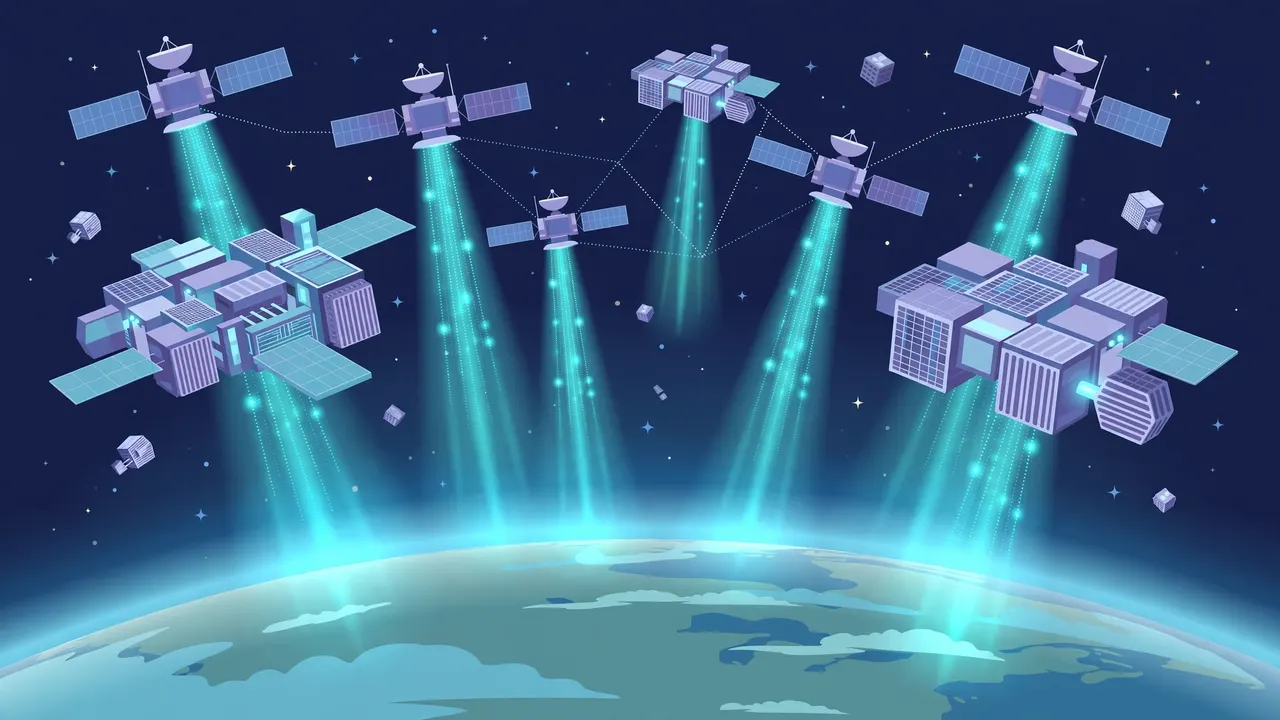
Illustration: Starlink satellites and orbital data centers — the space-side assets Musk wants to fuse with Tesla's AI ambitions.
Why It Matters
A merger would create a single company at the center of Musk's long-term vision: an integrated technology and manufacturing empire spanning AI, energy, robotics, communications, and transportation on Earth and beyond, Reuters wrote. Tesla shareholders would gain access to SpaceX's rapidly growing Starlink broadband operation, launch services business and future space ventures; SpaceX investors would gain ownership of Tesla's vehicle, energy storage, autonomous driving and robotics businesses.
The practical synergies are already visible. Starlink satellites could provide communications links for Tesla's robotaxis, autonomous systems and future generations of Optimus humanoid robots. Tesla's battery and energy-storage products could help support SpaceX's growing power needs, including future data-center projects. Tesla's expertise in large-scale factory automation could complement SpaceX's efforts to industrialize Starship production, while SpaceX technologies have already appeared in Tesla products. A merged company could also coordinate efforts to secure strategic supply chains, leveraging Tesla's scale in batteries, semiconductors and manufacturing equipment alongside SpaceX's demand for specialized metals, electronics, propulsion components and satellite hardware.
Bringing the companies together could also simplify decision-making. Many of Musk's projects already cut across multiple companies, requiring approvals from separate boards and shareholders. A combined company would give management more freedom to deploy capital, engineering talent and infrastructure where it sees the greatest opportunity, Reuters noted.
At about $3.5 trillion in combined value, the merged entity would rank among the world's most valuable corporations, with leadership positions in automobiles, robotics, satellite communications, launch services, energy storage and AI infrastructure — a concentration of strategic industries under one roof that would be without precedent in corporate history.
What Happens Next
The immediate calendar is crowded. Both companies reported third-quarter results on consecutive days this week, and the special committees will now begin the slow work of valuation, structure and governance — the phase where big merger ideas most often stall. Any deal would then face shareholder votes at both companies, where Musk's supporters and skeptics will relitigate whether combining two already complex businesses creates more value than keeping them separate.
The biggest challenges may be geopolitical. SpaceX is a major contractor for the US military, intelligence agencies and NASA, while Tesla remains deeply tied to China through its Shanghai factory, which plays a major role in vehicle production and sales. That combination could invite heightened scrutiny from US regulators and national-security officials as well as from Beijing, Reuters warned. Questions about conflicts of interest, voting control and capital allocation would inevitably follow.
Then there is execution risk. Starship, robotaxis, humanoid robots, AI data centers, mobile communications and orbital infrastructure are all expensive, technically challenging bets. As Reuters put it: combining Tesla and SpaceX would not reduce those risks — it would simply place them under one roof. Watch for signals at Tesla's December 3 annual meeting, which Barclays flagged as a possible deal-announcement window.
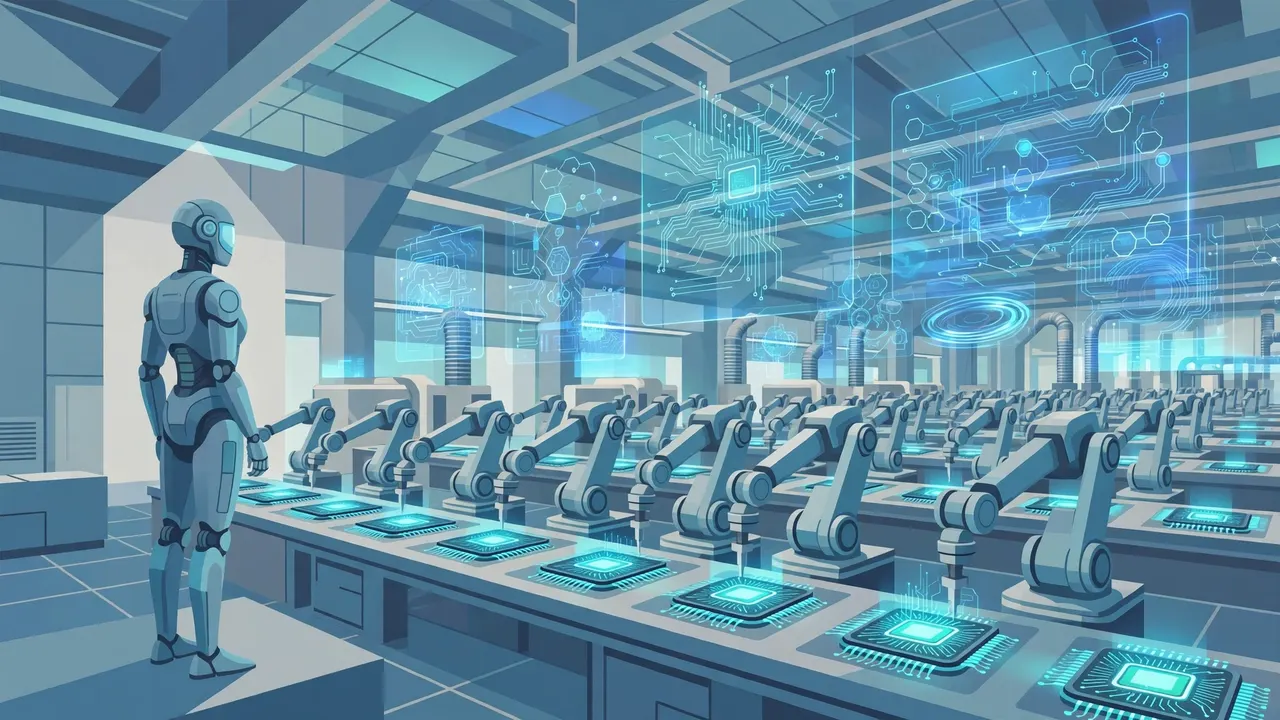
Illustration: the AI and robotics empire — from Terafab chips to humanoid robots — that a merged company would bankroll.
Sponsored: explore today's featured sponsored offers
FAQ
Did Elon Musk confirm a SpaceX-Tesla merger?
Not a done deal — but on October 20, 2026, Musk said publicly that a merger "is a good idea" and confirmed both companies have formed special committees to discuss a union. Neither company has officially committed to a transaction.
How much would the merged company be worth?
About $3.5 trillion, according to Reuters — which would make it one of the most valuable companies in the world, spanning automobiles, robotics, satellite communications, launch services, energy storage and AI infrastructure.
Why would Musk merge the two companies?
Musk argues the businesses have converged around AI, robotics, chip design (Terafab), orbital data centers (the Starmind constellation) and manufacturing. A merger would simplify decision-making across projects that currently need separate board approvals, and consolidate his influence — he owns nearly a fifth of Tesla and holds voting control at SpaceX.
What are the biggest obstacles?
Geopolitics and regulation top the list: SpaceX is a major US military, intelligence and NASA contractor, while Tesla is deeply tied to China via its Shanghai factory. Shareholder votes at both companies, governance questions and sheer execution risk (Starship, robotaxis, humanoid robots) are further hurdles.
When could a deal be announced?
Barclays has suggested an announcement could come before Tesla's annual shareholder meeting on December 3, 2026, with SpaceX seen as the likelier acquirer. In an all-stock deal, Barclays estimates Musk would hold about 37 percent of the equity and 56 percent of the votes.
Sources
- Reuters — "Why would Musk merge SpaceX and Tesla?" (October 21, 2026): explainer on the merger logic, Musk's Tuesday remarks, synergies and downside risks.
- Reuters — "A possible SpaceX-Tesla merger? Here's what people are saying" (October 21, 2026): analyst reactions from The Futurum Group, Zacks Investment Management and TEMA ETFs; shares up 8% in extended trading.
- Reuters — "SpaceX investors ahead of results press Musk on merger" (October 20, 2026): investor questions (26 upvotes on SpaceX site, 128 on Tesla IR site); Barclays analysis.
- Reuters — "SpaceX, Tesla earnings to test Musk's AI spending ambitions as merger talk grows" (October 19, 2026): Q3 earnings context, Terafab, Roadster reveal, analyst commentary from Camelthorn Investments and REX Financial.
Comments
Post a Comment