
KHARTOUM, Oct 23 — Across Sudan, farmers who have spent more than three years trying to harvest their crops through a brutal civil war are now facing a new enemy that could push the country back into famine: the weather. An El Niño-driven drought has left rainfall at its lowest in more than three decades, and aid agencies warn the risk of famine is growing across conflict-affected areas.
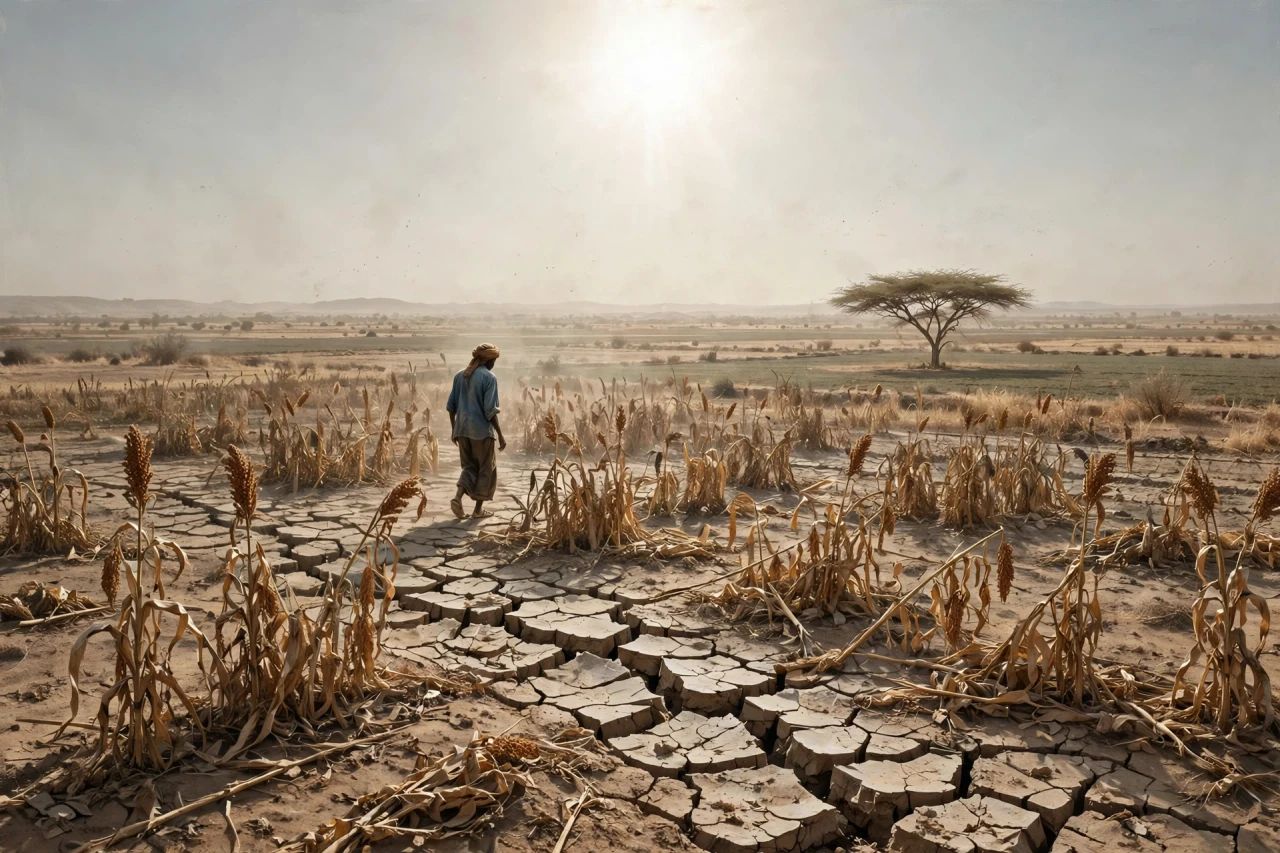
Illustration: parched, cracked farmland in Sudan under a harsh sun as El Niño-driven drought threatens the harvest
What Happened
The United Nations-backed global hunger monitor, the Integrated Food Security Phase Classification (IPC), issued an October 12 alert warning that "the risk of famine is growing in many conflict-affected areas of Sudan, with the impact of El Niño-induced drought compounding already dire conditions," according to reporting by Reuters on October 23, 2026. The warning comes as new data shows rainfall during Sudan's peak rainy season, July to September, was the lowest in more than three decades nationwide.
United States Geological Survey (USGS) data cited by Reuters shows the full scale of the shortfall: in North Darfur state in the west, rainfall was the lowest since 1984 — the same year a famine devastated Sudan and Ethiopia. In North Kordofan in the central region, it was the lowest since 1990, while in Gedaref state in the southeast, it was the lowest since 1991. The southern region, where rain-fed agriculture produces much of Sudan's food, has been hit hard, with parched conditions hurting crops and livestock across the country.
More than two dozen farmers interviewed by Reuters described the devastation firsthand. One large-scale farmer in the southern belt said he expected his harvest to be only a quarter of last year's. Many others reported failed planting or crops withered before they could mature.
The timing could not be worse. In June, the IPC estimated that 5.1 million people in Sudan faced severe hunger. Aid planners had expected those numbers to fall once harvesting began in November and December, helped by a lull in fighting in some areas. The drought has now upended that outlook: the IPC is currently updating its numbers, and the El Niño-driven shortfall is expected to push them upward instead.
Background
Sudan's civil war flared in April 2023 and has since displaced millions and pushed the country's food systems to the brink. Fighting between the Sudanese Armed Forces and the paramilitary Rapid Support Forces has cut off supply routes, destroyed markets, and made planting and harvesting dangerous or impossible in large areas. Pockets of famine have already emerged during the conflict, mainly in areas under siege, where food cannot reach civilians trapped by the fighting.
El Niño, the Pacific Ocean climate pattern that periodically reshapes global weather, is forecast to bring higher temperatures and drought to East Africa while threatening other parts of the continent with floods. The current event is expected to intensify food-security crises in several African nations, but Sudan stands out because the drought is landing on a population already hollowed out by war.
The pattern echoes a dark historical parallel. The last time rainfall was this low in North Darfur — 1984 — Sudan suffered one of the worst famines of the 20th century, a disaster that killed hundreds of thousands across Sudan and Ethiopia. Aid experts caution that the comparison is not exact: today's early-warning systems, humanitarian infrastructure, and international attention are far better developed. But the war has stripped away many of those safeguards, leaving farmers and displaced families exposed.
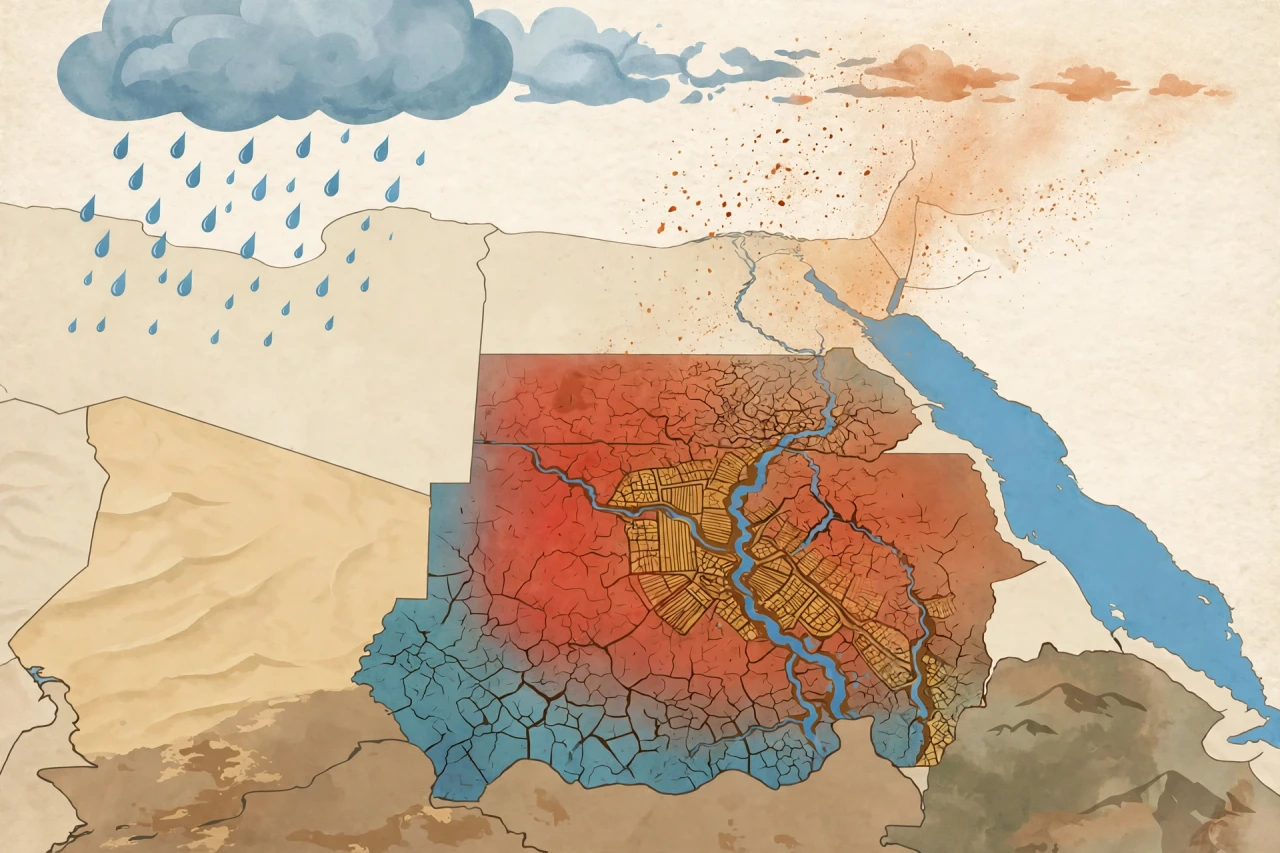
Illustration: rainfall deficit across Sudan's southern agricultural belt during the July-to-September rainy season, the lowest in more than three decades
Why It Matters
The convergence of war and weather is a uniquely dangerous combination. Conflict destroys the coping mechanisms — trade, savings, mobility, aid corridors — that farming communities normally use to survive a bad season. A drought alone can be managed; a drought on top of a war can become a famine.
For the region and the wider world, Sudan's crisis is also a test of whether early warning translates into early action. The IPC's alert, the USGS rainfall data, and the farmers' own testimony arrived weeks before the harvest should begin, giving donors and humanitarian agencies a narrow window to scale up food assistance, water support, and nutritional care. Whether that window is used will determine how many lives the drought ultimately costs.
The crisis also underscores a broader climate reality: El Niño events are arriving more intense and erratic, and their impacts fall hardest on countries least able to absorb them. Sudan contributes almost nothing to global emissions but is absorbing the combined force of a changing climate and a man-made war. Humanitarian groups have repeatedly called for climate adaptation funding to reach frontline communities — a demand that grows more urgent as the rainy season numbers come in.
What Happens Next
The IPC is expected to release updated hunger figures in the coming weeks, and analysts say the numbers are likely to show a sharp deterioration from the June estimate of 5.1 million people in severe hunger. Humanitarian agencies are pre-positioning food and nutritional supplies, though access remains constrained by fighting and by roads made impassable in some areas.
The harvest season in November and December will be the decisive moment. If rains return in the coming weeks — weather agencies have not yet forecast a decisive break in the dry pattern — farmers may salvage late planting. If not, the region will head into 2027 with depleted grain stocks, weakened livestock herds, and millions dependent on aid through the lean season.
Aid officials say the most urgent need is funding. Humanitarian appeals for Sudan have been chronically underfunded relative to the scale of the crisis, and the drought has now widened the gap between needs and resources. Whether donors respond at the scale required will become clear as the updated IPC numbers land.
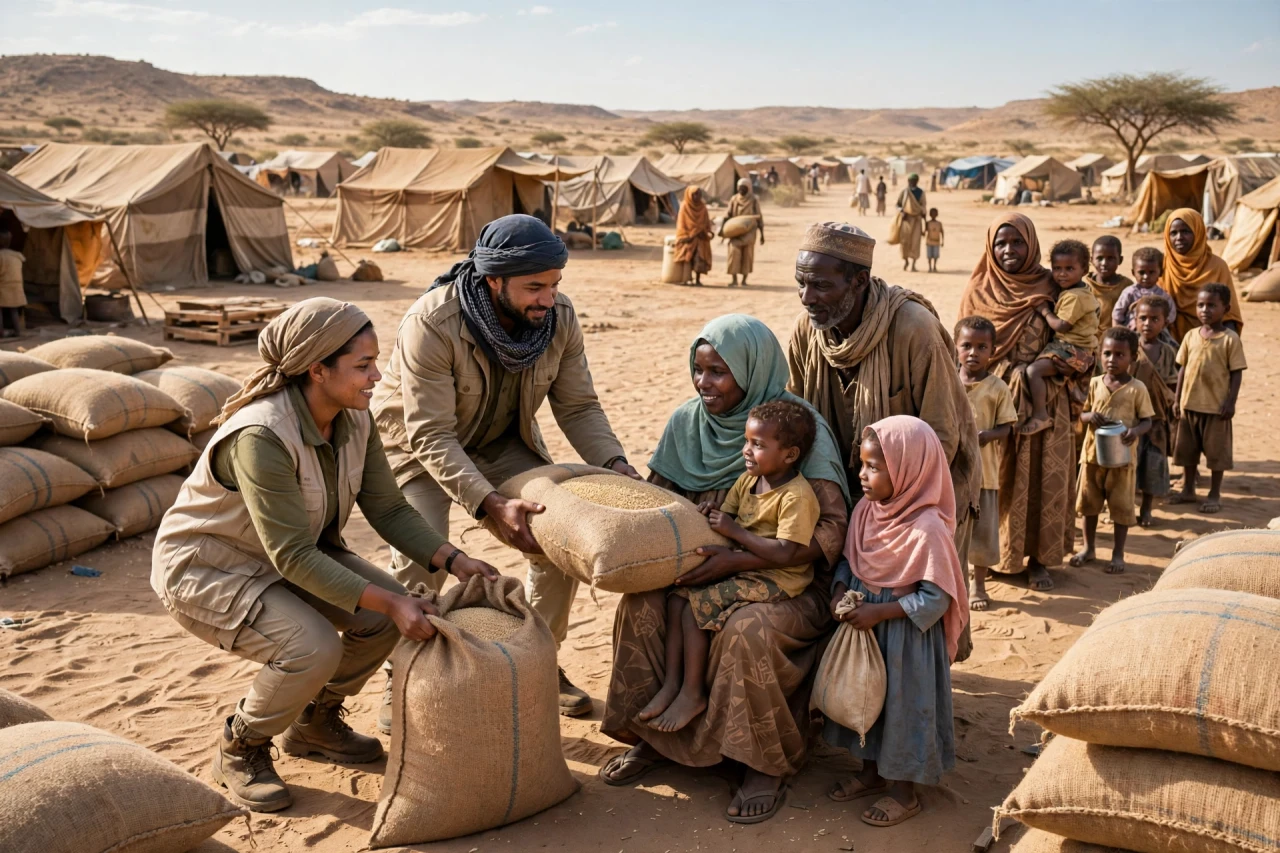
Illustration: humanitarian workers distributing food aid sacks to displaced families at a relief camp in Sudan
Sponsored: explore today's featured sponsored offers
Frequently Asked Questions
What is El Niño and why is it causing drought in Sudan?
El Niño is a natural climate pattern caused by warmer-than-average waters in the eastern Pacific Ocean. It reshapes weather around the world: in East Africa and parts of the Horn, it typically suppresses rainfall and raises temperatures, while other regions get floods. This year's event has brought parched conditions to Sudan during its peak July-to-September rainy season.
How bad was the rainfall shortfall?
According to United States Geological Survey data cited by Reuters, July-to-September rainfall was the lowest in more than three decades nationwide. North Darfur recorded its lowest rainfall since 1984, North Kordofan its lowest since 1990, and Gedaref its lowest since 1991.
Why does the drought raise the risk of famine?
The drought is compounding more than three years of civil war that has destroyed markets, displaced millions, and cut off food supplies. The UN-backed IPC hunger monitor says the risk of famine is growing in conflict-affected areas. The war has stripped away the coping mechanisms — trade, savings, aid corridors — that communities normally use to survive a bad harvest.
How many people are already facing severe hunger in Sudan?
In June 2026, the IPC estimated that 5.1 million people in Sudan faced severe hunger. The agency is currently updating its figures, and analysts expect the El Niño-driven drought to push the numbers higher rather than lower, as had been hoped once harvesting began.
What has happened historically the last time rains were this low?
The last time North Darfur's rainfall was this low, in 1984, Sudan suffered one of the worst famines of the 20th century, killing hundreds of thousands across Sudan and Ethiopia. Aid experts caution the situations are not identical — today's early-warning systems are far stronger — but the war has stripped away many safeguards.
Sources
- Reuters, "New famine risk haunts war-torn Sudan with El Niño-driven drought," October 23, 2026
- Integrated Food Security Phase Classification (IPC), October 12 alert on Sudan famine risk, cited via Reuters
- United States Geological Survey (USGS) rainfall data for Sudan, July–September 2026, cited via Reuters
Comments
Post a Comment