
Texas Sues OpenAI and Sam Altman, Asking a Court to Vet Every New ChatGPT Model Before Texans Can Use It
AUSTIN, Texas — Texas has sued OpenAI and its chief executive, Sam Altman, accusing the company of marketing its ChatGPT chatbot as safe and reliable while failing to protect users, including children. The lawsuit, filed on Friday, 23 October 2026, in the district court of Collin County, north of Dallas, is one of the most aggressive legal challenges yet to an artificial intelligence company — and it asks a court to do something no American court has done before: approve every new AI model before Texans can use it.

Illustration: A Texas courthouse with a gavel and a smartphone showing a chatbot conversation, symbolizing a state lawsuit over AI chatbot safety.
What Happened
Texas Attorney General Ken Paxton filed a 67-page petition naming six OpenAI entities — including OpenAI Global, LLC, OpenAI Foundation, OpenAI OpCo, LLC, OpenAI Group PBC, OpenAI Holdings, LLC and OpenAI, LLC — and Altman personally as defendants. The state brings claims under two Texas laws: the Deceptive Trade Practices–Consumer Protection Act, the state's general consumer-protection statute, and the Securing Children Online through Parental Empowerment Act, known as the SCOPE Act, which governs how digital services handle minors and parental controls.
The petition alleges that OpenAI misled Texans about the safety, accuracy and reliability of ChatGPT, failed to warn users about its dangers, and provided inadequate safeguards for minors. According to the attorney general's office, the alleged harms catalogued in the petition include mass shooters who were aided by the chatbot, vulnerable people who were encouraged toward suicide, professionals humiliated by inaccurate outputs, and minors who became addicted to what the petition describes as a tool that, in the state's words, "fakes human compassion to collect their data with no parental oversight." These are allegations in a lawsuit, not findings by a court, and no court has ruled on them.
What Texas asks the court to order is what sets this case apart. The state wants ChatGPT barred for minors in Texas, and it wants every new OpenAI model reviewed and approved by an independent evaluator appointed by the court before Texans can use it. It also seeks civil penalties of $10,000 per violation, disgorgement — an order to give up profits — and a jury trial. If a judge granted the model-approval request, a single state court would effectively hold a veto over frontier AI releases in America's second-largest state.
"With the rapid advancement of AI technology, OpenAI has the responsibility to protect users and warn them of the many dangers of its platform," Paxton said in a statement accompanying the filing. "I will fight to protect Texans from the harms of AI and ensure that powerful technology companies are not above the law."
Background
The Texas case did not arrive out of nowhere. It follows a wave of state litigation against OpenAI: Florida sued in June 2026, and eight states filed separate lawsuits on 14 October 2026, making Texas the tenth state to sue the company, according to reporting on the filing. Texas and Florida are the only states whose suits name Altman personally as a defendant.
The petition's account of OpenAI's history is central to its argument. OpenAI was founded in 2015 as a non-profit dedicated to advancing digital intelligence for the public good; the complaint argues that the organisation abandoned that mission in pursuit of rapid commercial expansion and market leadership, rushing ChatGPT to market without adequately training the platform or disclosing its risks. Paxton contends that because large language models generate responses from patterns in user input, unmonitored deployments can produce inaccurate or harmful statements without sufficient warning to users.
On children specifically, the petition alleges that ChatGPT has tens of thousands of Texas users under the age of 13, and that parental controls introduced in September 2025 are optional in practice because children's accounts do not have to be linked to a parent and OpenAI does not verify a parent's identity as the SCOPE Act requires, according to reporting on the petition. The state is represented by the attorney general's Consumer Protection Division and two outside firms, Keller Postman and The Buzbee Law Firm.
Paxton has form in this area. In the last year he has sued or settled with Meta, TikTok, Snapchat and Roblox under Texas consumer-protection laws, and his office's release on the OpenAI case uses language that closely tracks Florida's June complaint — a sign, analysts say, that states are increasingly coordinating their AI litigation playbooks.

Illustration: A parent and teenager looking at a smartphone with a shield above it, symbolizing online safety protections for minors.
Why It Matters
The case matters for three reasons. First, it tests whether consumer-protection law — written long before chatbots existed — can reach how AI companies describe their products. If Texas persuades a court that marketing a chatbot as safe and trustworthy while knowing its failure modes is deceptive, every AI lab's marketing language becomes a legal exposure.
Second, the remedies sought go far beyond fines. A court-approved evaluator for new models would be a form of prior restraint on AI deployment, decided not by a regulator or legislature but by a single district judge. AI companies would have to weigh whether to build Texas-specific release gates, delay launches nationally, or fight the order all the way up — and other states watching the case could file copycat suits seeking the same power.
Third, the case sharpens a tension that runs through all AI regulation: the line between protecting children and restricting adults' access to a general-purpose tool. Texas argues the restriction is narrow — minors barred, models vetted — while critics of such suits argue that pre-approval regimes risk slowing innovation and concentrating gatekeeping power in whoever the court appoints. Neither side's argument has yet been tested in court, and the filing itself does not change ChatGPT's availability in Texas.
What Happens Next
The next steps are procedural but consequential. OpenAI will have the opportunity to respond to the petition, and the company may seek to have the case dismissed, moved, or narrowed before any evidence is heard. Early skirmishes are likely to focus on whether the DTPA and SCOPE Act claims survive at all, and whether the requested injunctions — a minors ban and court-approved model vetting — are within a district court's power to grant.
Beyond Texas, the case will be watched alongside the nine other state suits, which together may force a national conversation about AI safety standards that Congress has so far not legislated. If several courts reach different conclusions, pressure will grow for a federal framework — or for the companies themselves to adopt uniform safeguards to head off a patchwork of state orders. For now, the Texas petition stands as the sharpest statement yet of one state's answer: that the companies that build the most powerful consumer AI tools should answer in court for the gap between what they promise and what their products do.
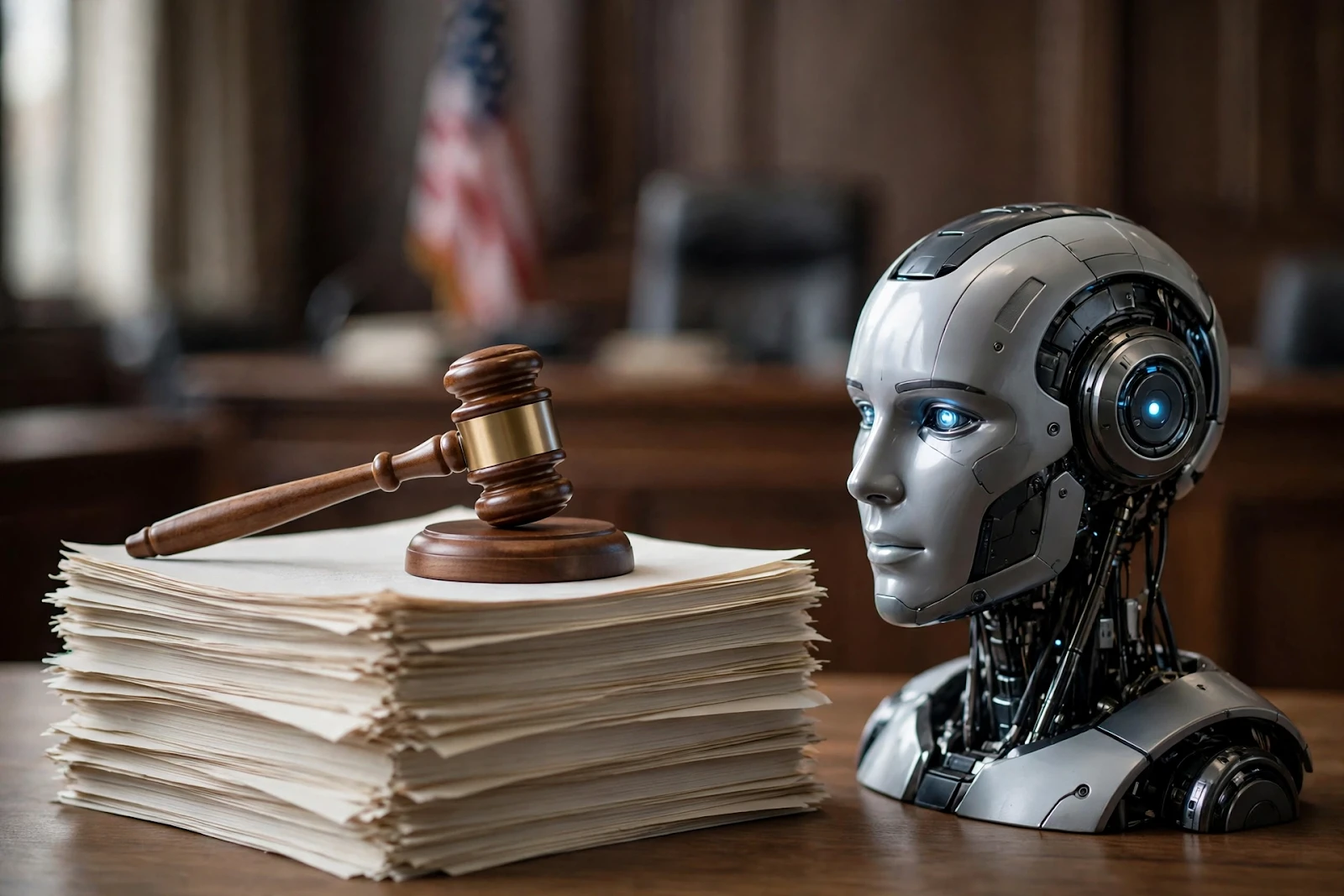
Illustration: A courtroom gavel on legal documents beside a robot head, symbolizing courts deciding AI regulation.
Sponsored: explore today's featured sponsored offers
FAQ
Who sued OpenAI in Texas, and when?
Texas Attorney General Ken Paxton filed the lawsuit on 23 October 2026 in Collin County district court, naming six OpenAI entities and CEO Sam Altman as defendants.
What laws does the lawsuit invoke?
The Texas Deceptive Trade Practices–Consumer Protection Act, a general consumer-protection law, and the SCOPE Act, which governs digital services' handling of minors and parental controls.
What does Texas want the court to order?
A ban on ChatGPT for minors in Texas, court-appointed independent evaluation of every new OpenAI model before Texans can use it, civil penalties of $10,000 per violation, disgorgement and a jury trial.
Has a court found OpenAI liable?
No. The claims are allegations in a petition; no court has ruled on them, and the filing itself does not change ChatGPT's availability in Texas.
How does this case fit with other states' lawsuits?
Texas is reported to be the tenth state to sue OpenAI, after Florida in June 2026 and eight states on 14 October 2026. Texas and Florida are the only suits naming Sam Altman personally.
Sources
- Texas Attorney General's office, press release on the OpenAI lawsuit, 23 October 2026, as reported by Stocktwits, 23 October 2026.
- NeoTeo, "Texas sues OpenAI over ChatGPT safety allegations," October 2026 (petition details: Collin County filing, six entities, DTPA and SCOPE Act claims).
- Derrington Collaborative AI, briefing on the Texas petition, October 2026.
- AIStockWire, "Texas Paxton sues OpenAI, Sam Altman over ChatGPT, minors," October 2026 (penalties, prior Paxton suits, tenth-state context).
- Particle News, "Texas Sues OpenAI and Sam Altman Over ChatGPT Safety Claims," 23 October 2026.
Comments
Post a Comment