
Toyota to Build Waymo's Next Robotaxi: Factory-Made bZ4X Fleet Heads for Japan in 2027, UK to Follow
TOKYO, Japan — Toyota will build Waymo's next robotaxi on its own factory floor, with a fleet of autonomous bZ4X electric SUVs set to begin testing in Japan in 2027 before deployment to the United Kingdom and other markets where Waymo operates, the two companies announced on 30 October 2026.
The deal turns an 18-month-old exploratory partnership into a concrete manufacturing programme: Toyota will assemble the 2027 bZ4X at its Takaoka plant in Toyota City, Aichi Prefecture, and integrate Waymo's self-driving hardware on the same production line, rather than retrofitting finished cars after they leave the factory. The companies describe the project as a step toward Japan's first fully autonomous ride-hailing service using high-volume, domestically manufactured vehicles.

Illustration: An autonomous electric SUV robotaxi with roof sensors on a Tokyo street, where Toyota and Waymo plan to begin testing in 2027.
What Happened
Under the next phase of their collaboration, announced in Tokyo on 30 October, Toyota and Waymo will begin initial operations to test and validate an autonomous Toyota bZ4X fleet in Japan in 2027, with deployment to the United Kingdom and other Waymo-serviced markets planned for the following years, according to a joint statement from the companies.
Toyota will build the vehicles at its Takaoka plant, and "the entire process will take place under one roof, from assembling the base vehicle to integrating Waymo's AV hardware," the statement said. That factory integration matters because it replaces the usual robotaxi production route, in which a carmaker ships a finished vehicle to a separate facility where sensors, computers and other self-driving equipment are bolted on afterwards.
The custom-outfitted bZ4X is designed for ride-hailing comfort and accessibility, Toyota said, with generous rear legroom and features such as automatic doors, a power liftgate and ambient lighting to make entry and exit easier for riders. The vehicles will run Waymo's Level 4 autonomous driving system, meaning they are designed to drive themselves without a human driver in defined areas and conditions, once testing and validation are complete.
What the announcement does not do is set a commercial launch date. Neither company disclosed how many vehicles will be in the first fleet, or which Japanese cities they will run in. Toyota executive vice president Hiroki Nakajima said initial operations would involve a small number of vehicles, according to Reuters reporting of the announcement. Waymo co-chief executive Dmitri Dolgov said the companies would start with the right-hand-drive markets of Japan and the UK, and that there were no other countries or timelines to share yet.
The bZ4X is sold as the bZ in the North American market, TechCrunch noted, but the Japan programme uses the bZ4X name and a right-hand-drive configuration shared by Japan and the UK, both of which drive on the left.
Background
The October announcement builds on a preliminary agreement Toyota and Waymo signed in April 2025 to explore developing and deploying a new autonomous vehicle platform. For 18 months that agreement remained largely a statement of intent, with no named vehicle, factory or timetable attached. The 2026 announcement supplies all three: the bZ4X, the Takaoka plant, and a 2027 start for testing in Japan.
Waymo, the self-driving business owned by Google parent Alphabet, has been expanding its robotaxi operations city by city, and the Toyota deal fills a specific regional need. Waymo has been testing its autonomous Jaguar I-Pace vehicles in London for months and plans to launch a robotaxi service there once it receives the necessary permits, TechCrunch reported. A factory-built, right-hand-drive Toyota gives Waymo a second vehicle type suited to both Japan and the UK, rather than relying only on vehicles converted after manufacture.
The partnership also sits inside a wider Toyota strategy. Alongside Woven by Toyota, the companies said they will explore additional initiatives that use insights from Waymo's real-world operations and data-driven intelligence to improve safety for other road users. Separately, they will continue to explore bringing autonomous driving technology to personally owned Toyota vehicles, although that part of the announcement carries no timetable and is not tied to the 2027 fleet testing schedule.
Safety is the central claim both companies made for the deal. Dolgov said that in areas where Waymo operates, the company has demonstrated it is up to 20 times safer than human drivers when it comes to serious crash injuries, and that Toyota was chosen because of respect for "the legendary safety, reliability, and quality" of its vehicles. Nakajima said safety technology makes the biggest difference when it reaches as many people as possible, and that the collaboration would help scale that technology to customers in Japan and beyond through Waymo's ride-hailing service.

Illustration: A factory assembly line installing a roof sensor unit on an electric SUV, as Toyota plans to integrate Waymo hardware at Takaoka.
Why It Matters
For Waymo, the Toyota deal is a manufacturing answer to a scaling problem. Robotaxi services need large numbers of vehicles built to a consistent specification, and factory integration should make production faster, cheaper and more repeatable than one-off conversions. A dedicated supply of right-hand-drive vehicles also unlocks two major markets — Japan and the UK — that cannot simply be served with the left-hand-drive fleets built for the United States.
For Toyota, the deal puts the world's largest carmaker at the centre of a commercial autonomous service rather than on its sidelines. Toyota has long talked about a goal of zero traffic accidents, and Nakajima framed the Waymo partnership as a way to spread safety technology widely, while also exploring how integrating vehicles with traffic infrastructure could make roads safer still. If the bZ4X fleet works, Toyota gains a proven autonomous platform it can point to in other markets; if it stalls, the company has still kept its exposure to a small, staged test fleet rather than a mass-market bet.
For Japan, the programme is symbolically significant. Toyota described it as paving the way for the country's first fully autonomous ride-hailing service using high-volume, domestically manufactured vehicles — a domestic production story, not an imported fleet. Japan's ageing population and driver shortages in some areas have made autonomous transport a policy interest as well as a commercial one, and a home-built robotaxi fleet fits that debate, even though the companies have not promised a public service date.
For the wider industry, the deal is a sign of how robotaxi partnerships are maturing. The first wave of autonomous deals often paired a technology company with a carmaker for a handful of converted test cars. This one names a production plant, a model year and a two-market rollout order, which suggests both sides now expect the technology to move from demonstration to deployment — cautiously, with testing first, but with manufacturing already in the plan.
What Happens Next
The next milestone is the start of testing and validation in Japan in 2027. That phase will determine whether the factory-built bZ4X, with its integrated Waymo hardware, performs as expected on Japanese roads, and it will precede any commercial ride-hailing service. Regulators, local authorities and the companies themselves will all have a say in how quickly testing turns into paying passenger trips, and no city or date has been announced.
The UK comes next in the stated order, in the following years, building on Waymo's existing Jaguar I-Pace testing in London. A UK launch will depend on permits, and the companies have not said whether the bZ4X will debut in London or elsewhere, or how large the first UK fleet will be.
Beyond the fleet itself, watch for two follow-on questions. The first is whether the exploration of Waymo technology for personally owned Toyota vehicles produces anything concrete, or remains a research topic. The second is whether the safety-data initiatives with Woven by Toyota lead to visible changes for other road users, such as infrastructure or traffic-management measures informed by autonomous driving data. Both were presented as explorations, not commitments, so neither should be read as a product announcement.
For now, the concrete fact is narrower and still notable: a Toyota factory will build a Waymo robotaxi, on its own line, for testing in Japan next year — and the UK is explicitly next in line.
Sponsored: explore today's featured sponsored offers
FAQ
What did Toyota and Waymo announce on 30 October 2026?
They announced the next phase of their autonomous driving collaboration: Toyota will build autonomous bZ4X vehicles at its Takaoka plant in Japan, integrating Waymo's self-driving hardware on the factory line, with testing in Japan starting in 2027 and deployment to the UK and other Waymo markets to follow.
When will the Toyota-Waymo robotaxis carry passengers?
No commercial launch date has been announced. The 2027 programme is for initial operations to test and validate the fleet in Japan, and a commercial service would follow only after that testing phase.
Why is factory integration important?
Building the vehicle and integrating the self-driving hardware under one roof avoids retrofitting finished cars at a separate facility, which should make production more consistent and scalable as the fleet grows.
Which markets are first?
Japan first, for testing in 2027, followed by the United Kingdom and other markets where Waymo operates in later years. Both Japan and the UK are right-hand-drive markets.
How many vehicles will be in the first fleet, and where will they run?
Neither company has disclosed a fleet size or Japanese cities. Toyota's Hiroki Nakajima said initial operations would involve a small number of vehicles, according to Reuters.
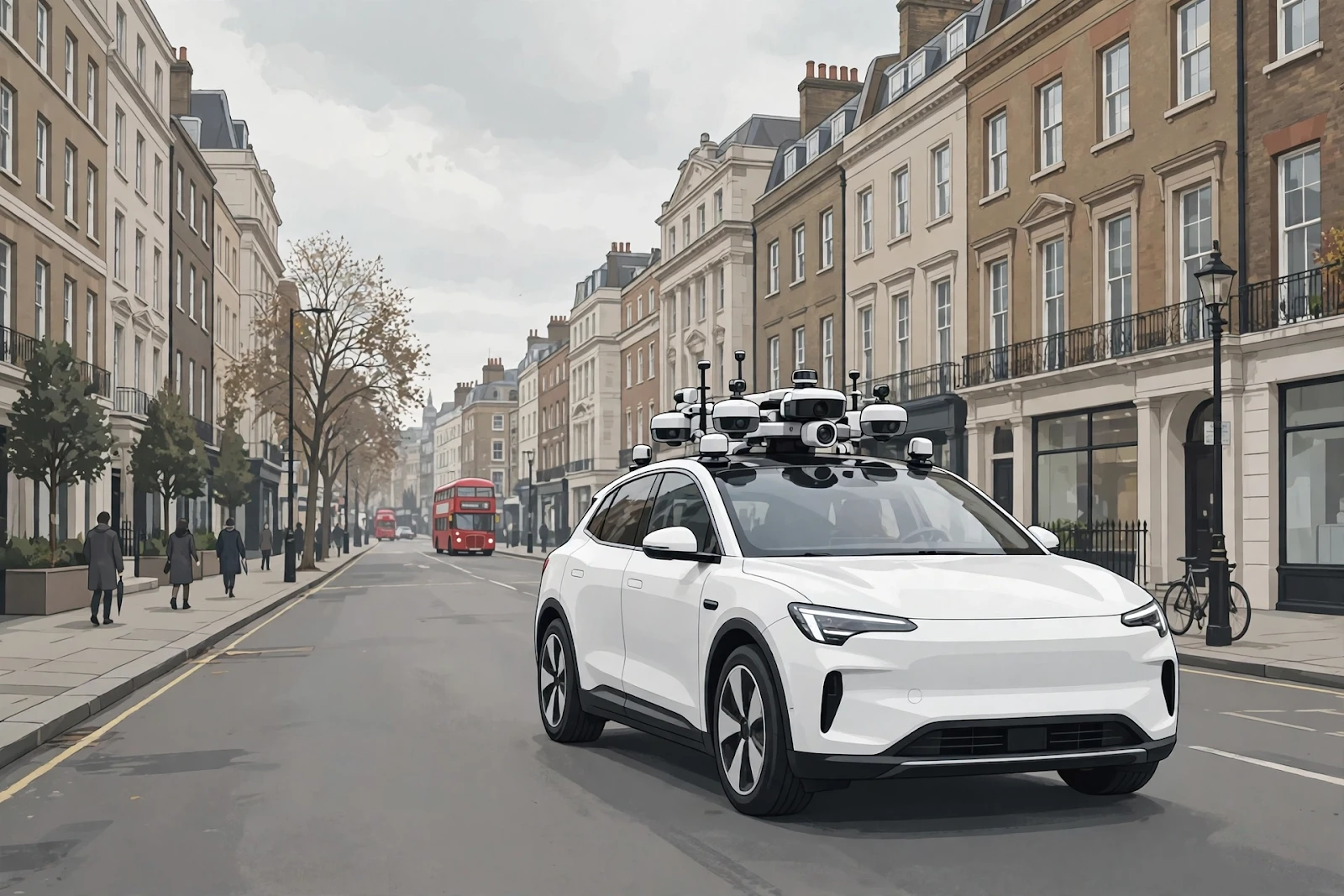
Illustration: An autonomous electric SUV robotaxi on a London street, the market planned to follow Japan in the Toyota-Waymo rollout.
Sources
- Toyota Motor Corporation and Waymo, "Toyota and Waymo Advance Autonomous Driving Collaboration for Safer Streets and Freedom of Movement for All," 30 October 2026.
- TechCrunch, "Waymo taps Toyota to supply robotaxis for Japan and the UK," 30 October 2026.
- Reuters, reporting of the Toyota-Waymo announcement, 30 October 2026, via TechCrunch and Skimwire summaries.
- Fleet News, "Autonomous car test fleet plan announced by Toyota and Waymo," 30 October 2026.
Comments
Post a Comment