
WASHINGTON, 28 October 2026 — The Trump administration has issued more than 100 subpoenas demanding voter records covering tens of thousands of voters in at least a dozen states, according to a Reuters investigation published on Wednesday, in a sweeping federal effort ahead of next week's midterm elections to uncover evidence of unlawful voting by people who are not United States citizens.

Illustration: A local election office with stacked voter record files and a ballot box on a desk, with an official reviewing documents.
What Happened
Reuters reported on 28 October 2026 that the Trump administration has issued more than 100 subpoenas seeking records on tens of thousands of voters in at least a dozen states, as part of an escalating effort ahead of the midterm elections on 3 November to identify evidence of unlawful voting by noncitizens. Most of the subpoenas documented by Reuters were issued to state and local election officials in the past three months, although some date to the start of the year, and many were previously unreported, revealing a federal effort broader than had been publicly known.
Reuters identified the subpoenas through public-records requests and interviews with local and state officials. Many were issued in Democratic strongholds, including Minneapolis, Philadelphia, Los Angeles and other California cities, according to Reuters. But they also reach into Republican-leaning states with competitive races, including Texas, Kansas and Georgia.
At least 44 of the subpoenas were issued under the authority of grand juries, Reuters reported, indicating that they are tied to criminal investigations and making them generally harder to challenge in court than administrative subpoenas issued directly by federal agencies. It is illegal for noncitizens to vote in US federal elections, and the administration has presented the effort as a crackdown on unlawful voting.
The White House defended the campaign in a statement to Reuters. "The Trump administration is sending a clear message that anyone who illegally votes in our elections will be held accountable," White House spokesperson Lauren Bis said. "Only Americans should be electing America's leaders." Reuters also reported that the administration has deployed hundreds of federal law enforcement agents as part of the effort, and has vowed to keep it a top priority.
Background
The subpoena campaign arrives days before midterm elections that will determine whether President Donald Trump's Republican Party retains its majorities in the House of Representatives and the Senate. Voters heading to the polls have consistently cited affordability concerns — including ongoing inflation and high borrowing costs — as top issues, but the administration's focus on voter eligibility has added a second, fiercely contested question to the final days of the campaign: who is entitled to vote, and who gets to check.
Noncitizen voting in federal elections is already illegal, and legal experts cited by Reuters said there is scant evidence that voting by noncitizens is widespread. That gap between the scale of the federal effort and the documented scale of the problem is central to the controversy. Supporters of the campaign argue that even a small number of unlawful votes matters, and that only a thorough review of voter records can establish the facts. Critics argue that a dragnet covering tens of thousands of voters, backed in many cases by grand-jury authority, risks intimidating lawful voters and election officials, and could be used to challenge results after the fact.
Legal experts told Reuters that the records obtained through the subpoenas could be used to contest results in close midterm races, even though the evidence of widespread noncitizen voting remains thin. That warning matters because several of the states targeted — including Texas, Kansas and Georgia — contain competitive races where a small margin could decide the outcome, and where a post-election legal challenge could prolong uncertainty for days or weeks.
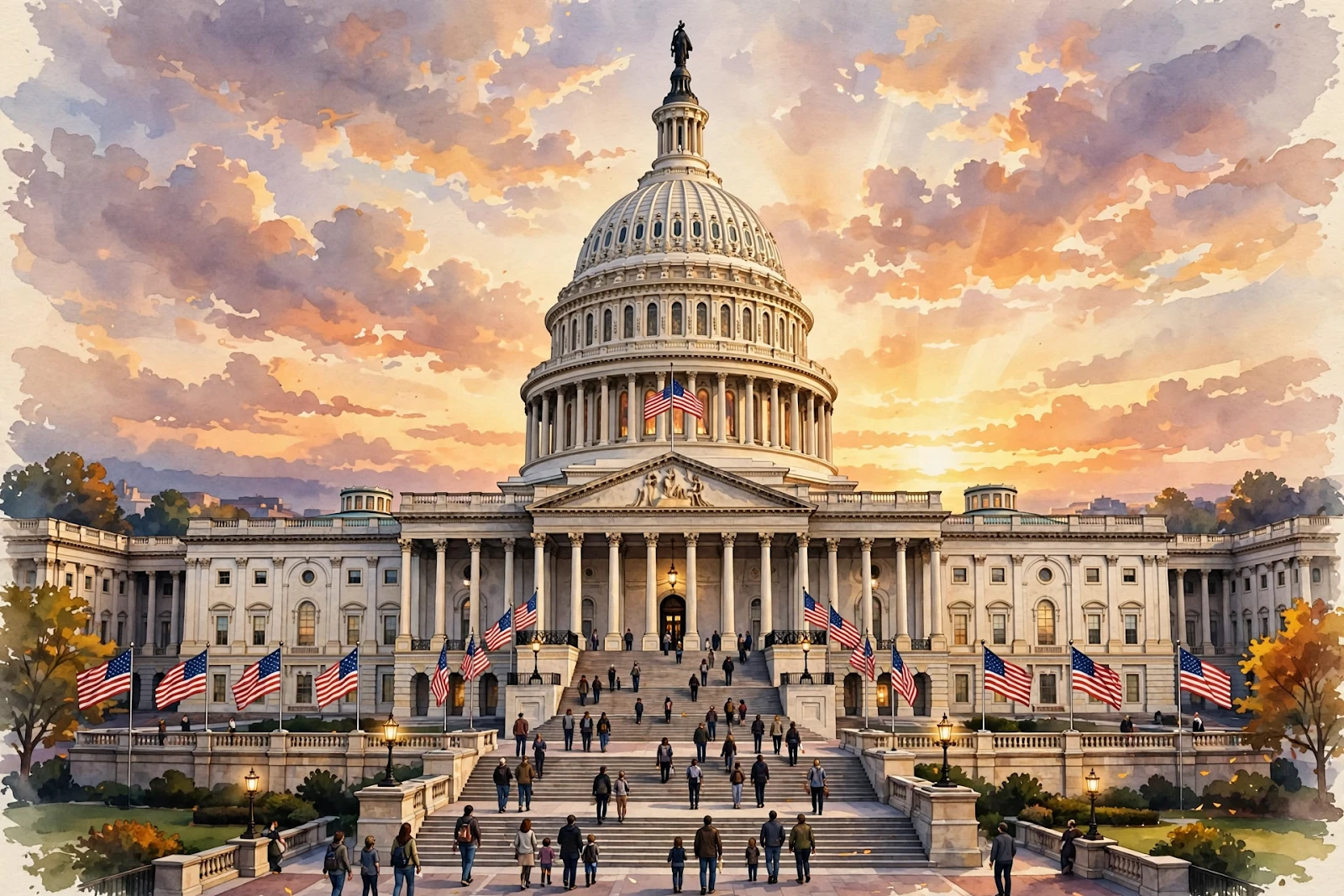
Illustration: The United States Capitol building in Washington at sunset with American flags and people walking on the steps.
Why It Matters
The subpoena campaign matters first because of its sheer scale. More than 100 subpoenas, covering tens of thousands of voters across at least a dozen states, is not a routine audit: it is, as Reuters described it, a sweeping federal effort, and its breadth — reaching Democratic strongholds and Republican-leaning competitive states alike — means its effects will be felt in election offices across the political map, not just in one region or one party's territory.
It matters second because of its timing. The subpoenas were issued largely in the three months before the midterms, and their existence became widely known only days before voters cast ballots on 3 November. In that context, even the process of complying with a subpoena — gathering records, consulting lawyers, responding to a grand jury — can strain local election offices at the moment they are busiest, and can shape public confidence in the vote before a single ballot is counted.
It matters third because of what the records could be used for after election day. Legal experts warned Reuters that the material could be deployed to contest results in close races. In a midterm cycle where control of the House and Senate is at stake, a contested result in even one or two states could affect the balance of power in Washington — and could deepen the partisan dispute over election integrity that has already polarised American politics.
What Happens Next
The immediate next step is the election itself. Voters go to the polls on Tuesday, 3 November 2026, in midterm elections that will decide control of the House and Senate. In the days before the vote, state and local election officials in the targeted states will continue responding to subpoenas while also running the election — a dual burden that Reuters' reporting suggests is already straining some offices.
After the polls close, attention will turn to counting, certification and any legal challenges. If any races are close, the voter records obtained through the subpoena campaign could become evidence in court, as legal experts warned, and the administration's stated commitment to keeping the effort a top priority suggests further demands may follow rather than stop on election day.
Courts are also likely to be drawn in sooner rather than later. Election officials or voters affected by the subpoenas may challenge their scope, particularly the grand-jury subpoenas, and judges will have to weigh the government's interest in investigating unlawful voting against the burden on election administration and the privacy of voters whose records were requested. Those rulings, if they come, could set precedents for future federal investigations of state elections.
For voters, the practical message is unchanged: eligibility rules for federal elections remain as they were — only US citizens may vote — and the controversy is about enforcement, scale and timing, not about a change in who is entitled to cast a ballot. What changes next depends on the results on 3 November, the courts, and whether the administration presses on with a campaign it has already described as a top priority. The records are being gathered; what they show, and what is done with them, is the next chapter of this story.

Illustration: Voters standing in line outside a polling station in an American city, holding documents, on election day.
Sponsored: explore today's featured sponsored offers
FAQ
What did Reuters report on 28 October 2026?
Reuters reported that the Trump administration has issued more than 100 subpoenas demanding voter records covering tens of thousands of voters in at least a dozen states, mostly in the past three months, in an effort to uncover evidence of unlawful voting by noncitizens ahead of the 3 November midterm elections.
Which states and cities are involved?
According to Reuters, many subpoenas were issued in Democratic strongholds including Minneapolis, Philadelphia, Los Angeles and other California cities, but they also reach Republican-leaning states with competitive races, including Texas, Kansas and Georgia.
Why are grand-jury subpoenas significant?
At least 44 of the subpoenas were issued under grand-jury authority, Reuters reported, indicating they are tied to criminal investigations and making them generally harder to challenge in court than administrative subpoenas issued directly by federal agencies.
Is it illegal for noncitizens to vote in US federal elections?
Yes. It is illegal for noncitizens to vote in US federal elections. Legal experts cited by Reuters said there is scant evidence that such voting is widespread, and warned the records obtained could be used to contest results in close midterm races.
What does the White House say about the campaign?
White House spokesperson Lauren Bis told Reuters: "The Trump administration is sending a clear message that anyone who illegally votes in our elections will be held accountable. Only Americans should be electing America's leaders." The administration has vowed to keep the effort a top priority.
Sources
- Reuters, "Trump expands hunt for noncitizen voters with broad subpoena campaign before midterms", 28 October 2026
Comments
Post a Comment