
Trump Waives Sweeping Russia Sanctions and Oil Tariffs, Jolting Energy Markets
WASHINGTON, October 20, 2026 — President Donald Trump has waived nearly all of the sanctions and tariffs contained in a sweeping Russia sanctions law just days before they were due to take effect, a move that sent crude oil prices lower as markets weighed the prospect of more Russian energy reaching global markets. An executive order issued Friday night implemented the Lindsey O. Graham Sanctioning Russia and Iran Act of 2026 while simultaneously waiving almost every penalty it contained — including a 500 percent tariff on Russian goods and 100 percent secondary tariffs on major buyers of Russian oil and gas — with Trump certifying to Congress that the waivers are in the national interest of the United States, according to Reuters and a legal analysis by Steptoe published October 19.
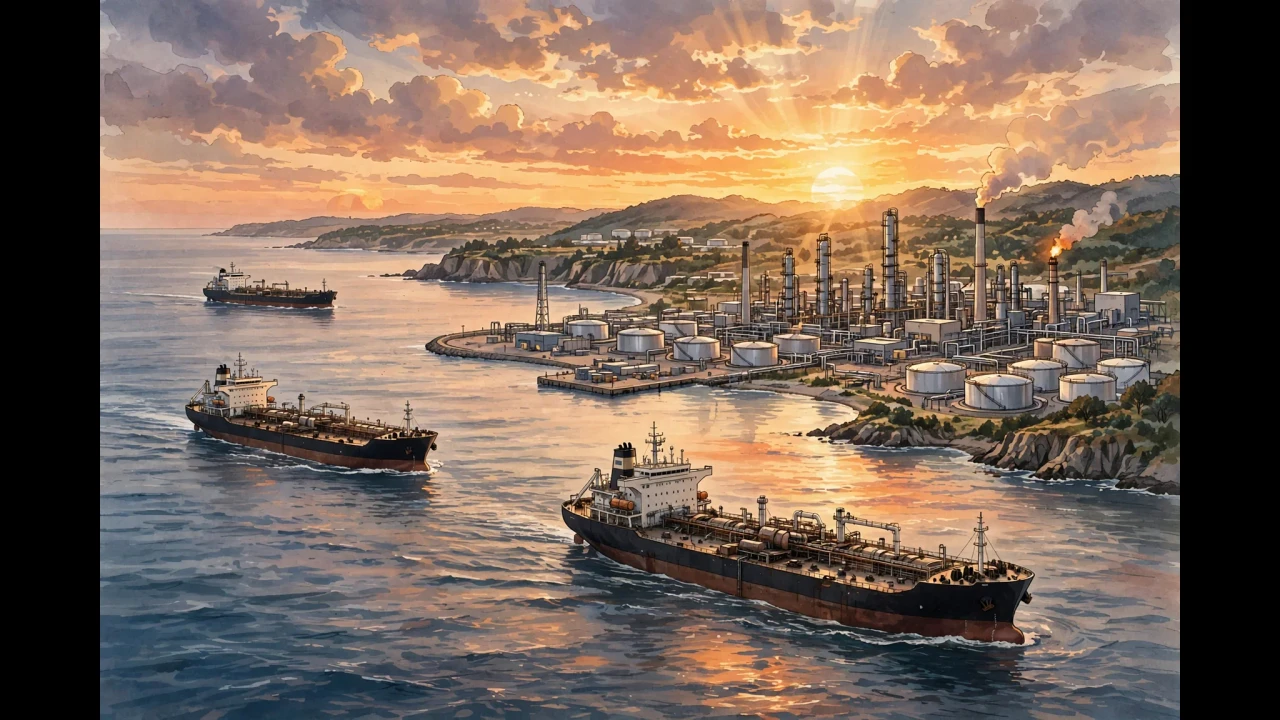
Illustration: Oil tankers near a coastal refinery at sunset — the waiver raised expectations of improved Russian energy supplies reaching global markets.
What Happened
The executive order, dated October 16, nominally imposes a 500 percent tariff on goods from Russia and 100 percent tariffs on goods from certain major purchasers of Russian oil and natural gas — and on countries that facilitate Russian oil sanctions evasion. But the order simultaneously waives those tariffs, along with the law's sanctions on Russian officials and supporters, financial institutions, state-owned entities, restrictions on fund transfers, securities trading, investment in and exports by Russia's energy sector, the purchase of sovereign debt, financial messaging services, and the importation of uranium, Steptoe's October 19 sanctions update reported. The waivers will remain in effect until the President or designated agency officials determine that further action is appropriate, according to the analysis. The order does not affect Russia-related sanctions imposed under pre-existing executive orders.
Markets moved quickly. Brent crude futures fell 49 cents, or 0.45 percent, to $109.06 a barrel in early Tuesday trading, while the U.S. West Texas Intermediate contract for November delivery, set to expire on Tuesday, eased 0.33 percent to $103.32 and the more-active December contract fell 0.47 percent to $98.08, Reuters reported on October 20. The slide followed a Monday session in which Brent dropped 1.4 percent to $108.35 — after having risen as high as $110.70, its highest since May 20 — as the waiver news landed. The move raised expectations of improved supplies, although continuing disruptions in the Middle East kept concerns over global energy availability firmly in focus.
The decision drew bipartisan criticism in Washington. Republican Senators Lindsey Graham of South Carolina — the law's namesake — along with Thom Tillis of North Carolina and John Cornyn of Texas expressed opposition to the waivers, while Democratic Representative Don Beyer of Virginia argued the decision was inconsistent with the law's purpose and called on Congress to limit the President's waiver authority, Steptoe reported. The White House had opposed earlier versions of the legislation that lacked the broad waiver authority ultimately enacted.
Trump defended the decision on Saturday, saying in a post on Truth Social that he is in the process of negotiating peace in the war between Russia and Ukraine and did not want to do anything that would drive Moscow away from the bargaining table, according to the Bulletin. Reuters reported that Trump said on Saturday he had yet to announce a final decision on the matter, while Secretary of State Marco Rubio said officials want more time to evaluate the situation.
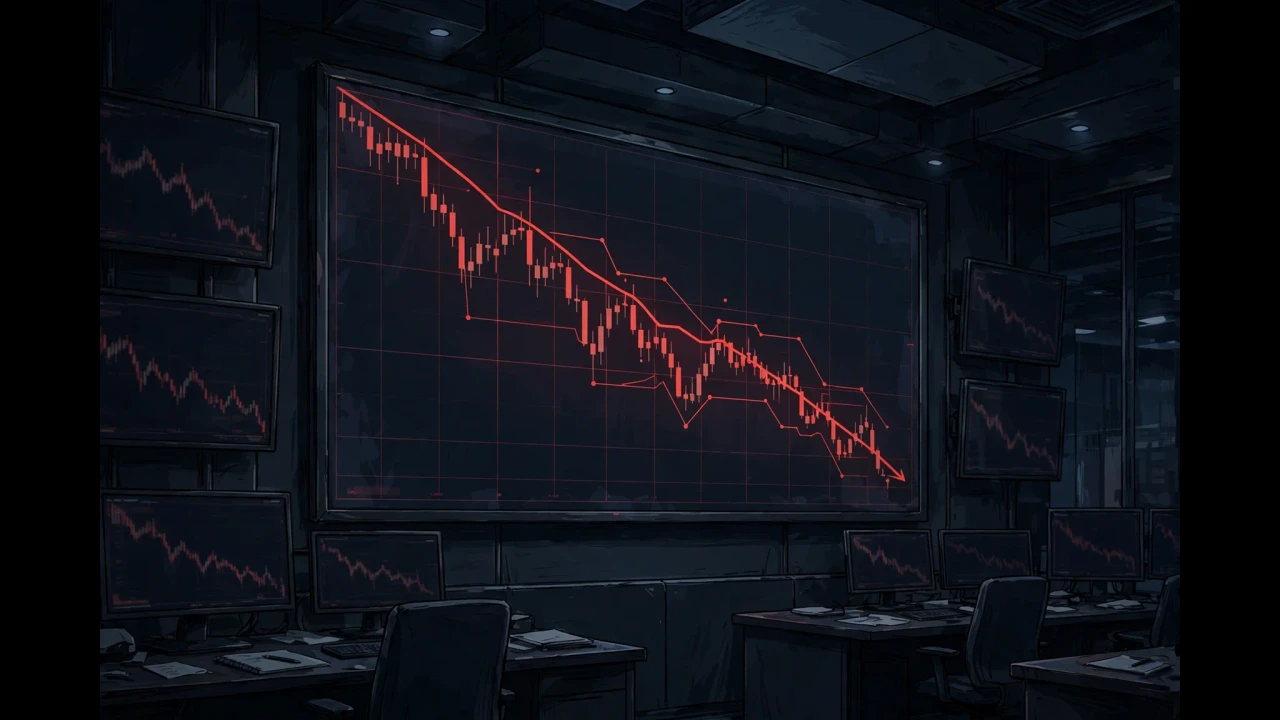
Illustration: A trading screen showing falling crude oil prices — Brent slid as traders weighed the waiver against Middle East supply risks.
Background
The waived law — formally the Sanctioning Russia Act, co-sponsored by Senator Graham — was signed by Trump in September after months of congressional pressure for tougher measures against Moscow. Its headline penalties were designed to be crushing: a 500 percent tariff on Russian imports and 100 percent secondary tariffs on the top purchasers of Russian oil and gas, a category that includes India and China. But the version that became law contained the broad presidential waiver authority the White House had insisted on — and Trump has now used it to the fullest extent.
The waiver followed a clear sequence of easing toward Moscow on energy. On October 9, the administration authorized the sale and import of Russian diesel fuel, Steptoe noted in its update. The previous week, Trump signed a diesel import agreement with Russia, and he had publicly blamed Ukraine's attacks on Russian energy facilities for contributing to higher global fuel prices. The Friday-night executive order extends that trajectory from fuel imports to the entire architecture of the new sanctions law.
India sits at the centre of the waiver's practical effects. The legislation would have exposed Indian goods to tariffs of up to 100 percent, since India is one of the five largest importers of Russian oil — a direct challenge to the Asian nation's energy policy. Prime Minister Narendra Modi's administration warned last month that the new tariff measures could hurt bilateral ties, Reuters reported on October 19. Rubio, who was in Uzbekistan on Monday ahead of arriving in India on Tuesday, said trade talks with New Delhi were a consideration in Trump's decision: "We are trying to finalise a trade deal with India right now and we are very close to doing that. So, that's one of the things we take into consideration when the President makes a decision about national security waivers."
India is the world's third-largest oil importer and consumer. Earlier this year, Russia accounted for nearly half of the country's oil imports, though purchases fell in August and continue to decline, Reuters reported. Persistently cutting Russian oil imports to avoid new U.S. tariffs risks pushing up fuel prices ahead of regional elections in India — or straining government finances. "For some countries it is very difficult to acquire energy from alternative sources," Rubio said.
The oil-market backdrop complicates the picture. The International Energy Agency said last week that Russia's crude oil production increased by 65,000 barrels per day in September to 8.43 million barrels per day, but remained some 870,000 barrels per day below a year ago. And the Middle East keeps intruding: Yemen's Iran-aligned Houthis said on Monday they carried out several attacks against Saudi energy, airport and military targets, including an Aramco site in Yanbu, the Shaybah oilfield, King Khalid International Airport in Riyadh and Abha airport — claims Saudi authorities did not immediately confirm and Reuters could not independently verify. "While the prospect of additional Russian diesel supply offers some theoretical relief, traders appear far more focused on the ongoing risk of further damage to energy infrastructure across the Gulf region," Tim Waterer, chief analyst at KCM Trade, told Reuters.
Why It Matters
The waiver is one of the most consequential uses of presidential sanctions authority in recent memory: a law designed to economically strangle Russia's war machine has been left standing but emptied of content. For supporters of maximum pressure on Moscow, it is a betrayal of the legislation's purpose — hence the remarkable sight of the law's own namesake, Senator Graham, opposing its implementation. For the administration, it is a bet that keeping Moscow at the negotiating table, and keeping energy prices down, matters more than the leverage the sanctions would have provided.
The energy-market logic is straightforward but fragile. More Russian crude and diesel flowing legally means more supply and lower prices — welcome relief for importers like India and for American drivers facing elevated fuel costs. But the relief is theoretical as long as it competes with Middle East disruption: Gulf crude flows fell to about 8.5 million barrels per day last week amid shipping-security incidents, freight rates and insurance premiums are rising, and Brent's retreat has been modest precisely because traders are pricing Gulf risk, not just Russian supply. OilVoice's analysis put it bluntly: elevated freight costs are complicating the potential benefits of additional Russian supplies.
The India dimension may be the waiver's most immediate real-world consequence. By removing the threat of 100 percent tariffs on Indian goods, Trump has cleared the biggest obstacle to the U.S.-India trade deal Rubio says is "very close" — while handing New Delhi breathing room on an energy dilemma that was forcing an impossible choice between cheap Russian crude and access to the American market. Whether that goodwill converts into a signed deal, and on what terms, is now the question to watch.
And then there is the precedent. A future president — or a future Congress — will have to reckon with what this episode demonstrates: that even the most draconian sanctions legislation Congress can pass is only as strong as the waiver authority written into it. Representative Beyer's call to limit that authority is unlikely to be the last word on the subject.

Illustration: An oil pipeline crossing a landscape at dawn — the waiver covers sanctions on Russia's energy sector, from pipelines to uranium imports.
What Happens Next
The waivers are open-ended, and the next moves belong to Washington, markets and New Delhi:
- The 60-day frame: Some reports describe the pause as lasting 60 days, with the administration evaluating economic effects; Steptoe's reading is that the waivers stand until the President or designated officials decide otherwise. Watch for any formal review or extension announcement.
- Trump's "final decision": Trump said Saturday he had yet to announce a final decision, while Rubio said officials want more time — leaving open whether the waiver hardens into policy or is revisited.
- Oil prices: Brent's next test is whether Middle East supply risks or Russian supply relief wins out. Gulf shipping security, Houthi claims and freight rates will drive the tape.
- The India trade deal: With Rubio in India this week and talks described as "very close," a deal announcement would be the waiver's first concrete diplomatic payoff.
- Congress: Expect Beyer's push to curtail presidential waiver authority to gain co-sponsors — and expect Graham, Tillis and Cornyn to keep the pressure on from the Republican side.
Sponsored: explore today's featured sponsored offers
FAQ
What did Trump's executive order actually do?
Issued October 16, the order implements the Lindsey O. Graham Sanctioning Russia and Iran Act of 2026 while waiving nearly all of its penalties — including a 500 percent tariff on Russian goods, 100 percent secondary tariffs on major buyers of Russian oil and gas, and sanctions on Russian officials, banks, state firms and energy-sector investment, according to Steptoe's October 19 analysis. Trump certified the waivers as in the U.S. national interest.
Why did oil prices fall?
The waiver raised expectations of improved Russian energy supplies reaching global markets. Brent fell to about $109 a barrel on Tuesday, October 20, after dropping 1.4 percent on Monday — though Middle East supply disruptions kept the decline modest, Reuters reported.
Why is India central to this story?
India is one of the five largest importers of Russian oil and the world's third-largest oil importer. The law would have exposed Indian goods to tariffs of up to 100 percent; the waiver removes that threat and, Reuters reported, may improve the chances of a U.S.-India trade deal Rubio says is "very close."
Who opposed the waiver?
Republican Senators Lindsey Graham — the law's namesake — Thom Tillis and John Cornyn expressed opposition, while Democratic Representative Don Beyer called the decision inconsistent with the law's purpose and urged Congress to limit the President's waiver authority, Steptoe reported.
How long do the waivers last?
Some reports describe a 60-day pause for evaluating economic effects; Steptoe's legal reading is that the waivers remain until the President or designated officials decide otherwise. Trump said Saturday he had yet to announce a final decision, Reuters reported.
Sources
- Reuters, "Oil eases as markets assess potential waiver on Russian energy, Middle East supply risks," October 20, 2026
- Reuters, "Trump's Russia sanctions waiver eases India's energy woes, lifts trade deal chances," October 19, 2026
- Steptoe, "Weekly Sanctions Update: October 19, 2026 — President Waives Sanctions and Tariffs Under the Sanctioning Russia Act," October 19, 2026
- MLex (Bradley Dress, Samuel Rubenfeld), "US hits the brakes on Russia sanctions law, waiving tariffs, enforcement," October 19, 2026
- AngelOne, "Crude Oil Prices Slide as Trump Waives Russia Sanctions," October 19, 2026
- Bulletin, "Trump says his decision to suspend Russian sanctions is to keep Moscow at the negotiating table," October 19, 2026
- OilVoice, "US Waives Key Sanctions on Russian Oil and Gas," October 19, 2026
Comments
Post a Comment