
WASHINGTON — With the November 3 midterm elections approaching, President Donald Trump has sharply shifted course on Ukraine: after weeks of criticizing Vladimir Putin, he is now pressing President Volodymyr Zelenskiy to strike a peace deal with Moscow — a pivot that has alarmed Kyiv and European allies, triggered a backlash in Congress, and dragged the four-year war into the center of America's election endgame.
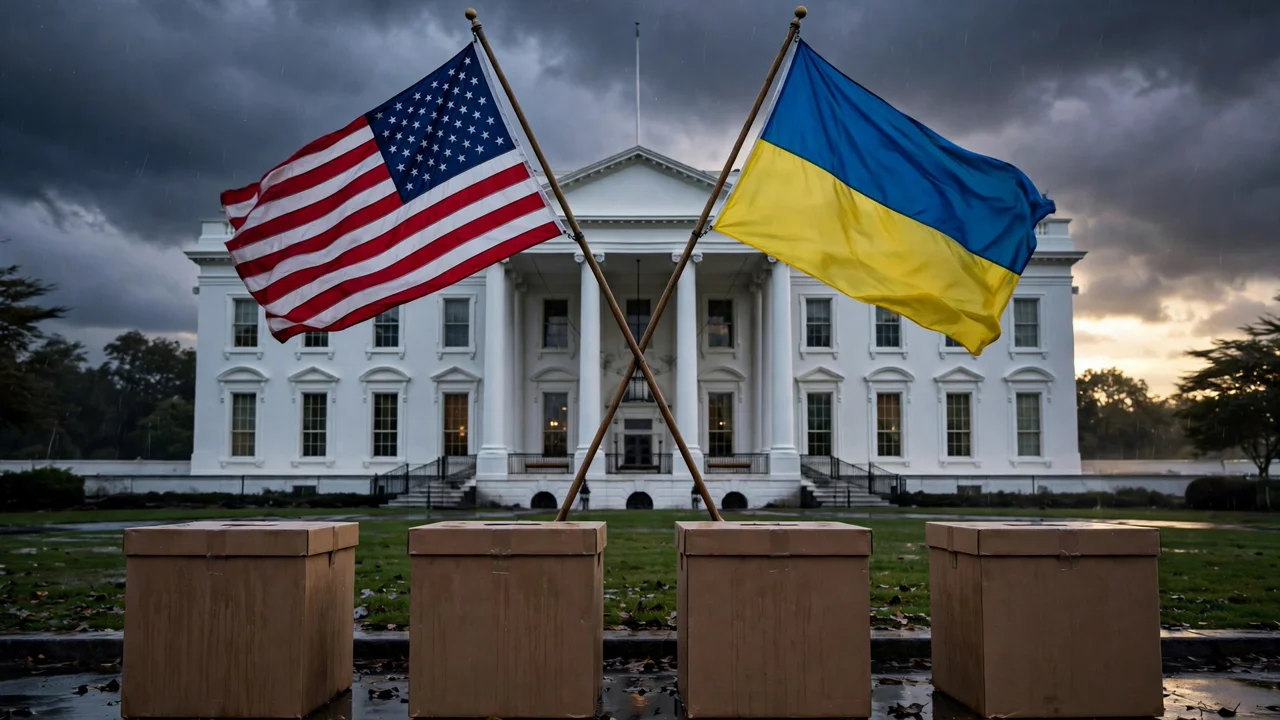
Illustration: The White House faces a storm of midterm politics as Ukraine's fate gets pulled into America's election calendar (AI-generated illustration).
What Happened
Trump has not so quietly shifted course on a major policy issue in the past month, Reuters reported on October 22. After criticizing Russian President Vladimir Putin, the president has started to make nice — and Zelenskiy, once Washington's most celebrated wartime ally, is finding himself caught in the crossfire of US midterm politics, under mounting pressure from Trump to reach a settlement.
The turnabout appears driven by the domestic calendar. With voters frustrated by high energy prices and the cost of living, Trump has argued a negotiated settlement could ease economic pressures at home — even though consumers would be unlikely to feel any effects ahead of the November 3 vote. A Reuters/Ipsos poll found that 78 percent of Americans say his policies bear at least some blame for rising prices, with most Republicans and Democrats alike citing the cost of living as their top concern.
The practical moves are striking. In recent weeks, Trump cut a deal with Putin temporarily easing US sanctions on Russian diesel in exchange for Moscow providing more diesel to global markets. He has blamed Ukrainian attacks on Russian refineries for driving up global diesel prices — though analysts attribute most of the increase to disruptions in fuel shipments through the Strait of Hormuz, a consequence of the US-led war with Iran. And Trump is reportedly considering a meeting with Putin and Xi Jinping next month, without Zelenskiy, while Kyiv has complained that a SpaceX satellite system has stopped working on fast-moving drones, limiting its ability to strike Russian targets.
The diplomacy has gone further behind the scenes. Trump's envoy Steve Witkoff traveled to Saint Petersburg to meet Putin, delivering a proposal for renewed three-way peace talks involving the United States, Russia and Ukraine; the Kremlin accepted in principle, at least at a technical level, according to wire reporting on October 22. The overture coincided with Moscow's release of detained American citizen Stephen Hubbard, held in Russian custody since 2022 — prompting Witkoff to call Putin a "humanitarian," Reuters reported.
Background
The rhetoric marks a return to more prickly relations between the US and Ukrainian leaders. "Russia, frankly, has been fine on Ukraine," Trump told reporters at the White House on Monday. "Zelenskiy is not helping matters much." He has even suggested that Ukraine needs a new leader. Zelenskiy, for his part, told visiting US lawmakers on Monday that recent "decisions on the American side … are hard to explain" — a remark that captured Kyiv's bewilderment.
Ukraine and several European allies have expressed alarm at the apparent pivot, Reuters reported. The shift also cuts against the grain of Trump's earlier posture: just weeks ago he was criticizing Putin, and his move echoes the Democratic playbook of his predecessor — Joe Biden pointed at Putin for gasoline-price surges ahead of the 2022 congressional elections, too.
The backlash inside Washington is bipartisan. Republican Senator Ted Budd of North Carolina told Reuters he supported the pivot, calling the diesel agreement "a very minimal dollar amount actually to Russia, but enough of a fig leaf to get them to the table." But five senior Senate Republicans and six Democrats signed an October 13 letter criticizing the diesel deal, and House Speaker Mike Johnson hinted at his discomfort on Fox News: "Congress voted on this decisively," he said, adding, "We understand that Putin cannot be trusted."
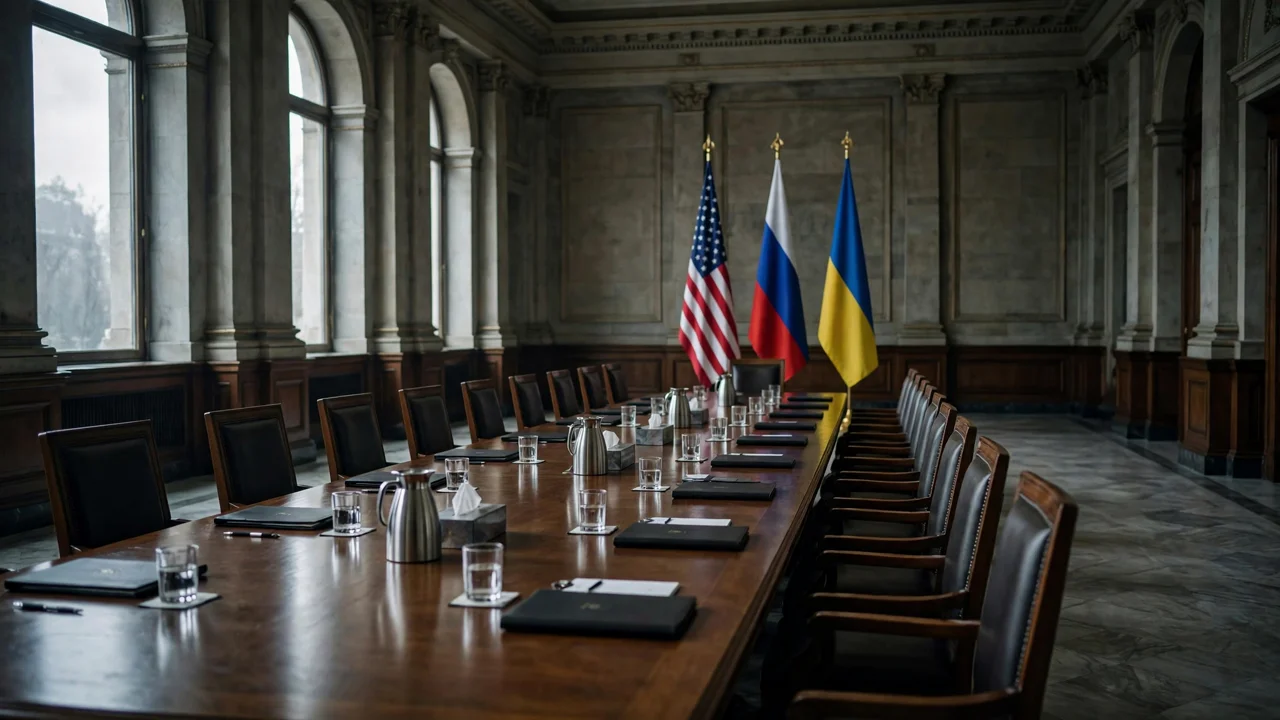
Illustration: An empty negotiating table — Trump's envoy has proposed renewed three-way peace talks with Russia and Ukraine (AI-generated illustration).
Why It Matters
The midterms are widely seen as a referendum on Trump's presidency, and the outcome will determine whether Republicans hold their narrow House and Senate majorities — and how legislative battles with Trump play out over the next two years. Tying Ukraine's fate to that calendar puts the four-year war on the election's critical path: Kyiv's leverage, European unity and the sanctions regime all now hinge partly on American voters' verdict.
It also matters as a window into how economic anxiety is steering foreign policy. Cost of living is voters' top concern across party lines, and the White House is betting that the appearance of progress toward peace — even a deal struck after the vote — can move the political needle. "For the answer, he may need to look no further than the US political calendar," Reuters concluded of Zelenskiy's search for an explanation.
And it matters for the credibility of American commitments. European allies are watching whether Washington trades sanctions relief and diplomatic engagement for vague Russian promises — and whether Congress, where unease crosses party lines, will use defense and spending bills to counter the White House's Russia policy.
What Happens Next
The immediate calendar is pure campaign politics. Trump holds rallies on October 22 in Sioux City, Iowa; October 23 in Fort Myers, Florida; October 24 in Perry, Georgia; October 25 in Port Huron, Michigan; and October 26 in Corinth, Mississippi, according to Reuters — a final blitz before the November 3 vote.
After that, the diplomacy could accelerate. Trump is weighing a meeting with Putin and Xi next month; Moscow's acceptance of the three-way talks proposal at a technical level keeps a channel open; and Trump told reporters on October 22 that developments on the Iran front were expected "fairly soon" — "most people seemed to think it would be after the election," he added, "and we're going to see what happens."
Whether voters reward the pivot is another question. Voters are not buying Trump's economic blame-shifting, Reuters noted: most say his own policies bear at least some blame for rising prices. The answer arrives November 3.
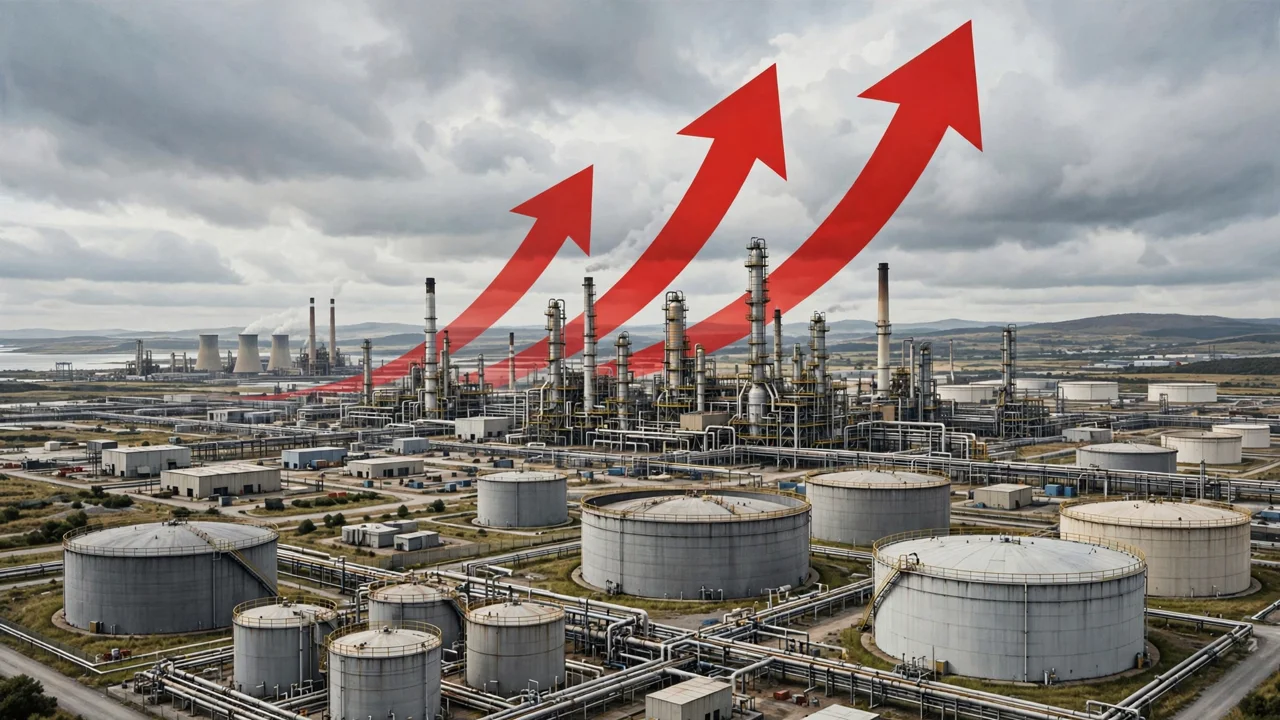
Illustration: Rising energy and diesel prices are the political engine behind Trump's renewed push for a settlement (AI-generated illustration).
Sponsored: explore today's featured sponsored offers
FAQ
Why is Trump pressuring Zelenskiy for a peace deal now?
Reuters reports the shift is tied to the November 3 midterms: with the cost of living voters' top concern, Trump is betting that progress toward ending the four-year war could help his political fortunes, even if consumers feel no effects before the vote.
What is the diesel deal with Russia?
Trump temporarily eased US sanctions on Russian diesel in exchange for Moscow supplying more diesel to global markets. He blames Ukrainian refinery strikes for diesel prices, but analysts attribute most of the rise to Strait of Hormuz disruptions from the Iran war.
What has Congress said about Trump's Russia pivot?
Five senior Senate Republicans and six Democrats signed an October 13 letter criticizing the diesel agreement, and House Speaker Mike Johnson said "Congress voted on this decisively," adding, "We understand that Putin cannot be trusted." Congress may use defense and spending bills to counter the White House.
Did Trump's envoy meet Putin?
Yes — Steve Witkoff traveled to Saint Petersburg with a proposal for renewed three-way peace talks among the US, Russia and Ukraine; the Kremlin accepted in principle at a technical level, per October 22 wire reporting. Moscow also released detained American Stephen Hubbard during the diplomatic flurry.
When are the midterms and why do they matter for Ukraine?
November 3. They will decide whether Republicans keep their narrow House and Senate majorities, shaping Trump's final two years — and Ukraine's wartime support now partly depends on the outcome.
Sources
- Reuters — "The midterms reach Kyiv" (Oct 22, 2026): https://www.reuters.com/world/us/midterms-reach-kyiv-2026-10-22/
- Reuters (via Sowetan) — "Republican backlash over Russia policy poses challenge for Trump in Congress" (Oct 22, 2026): https://www.sowetan.co.za/news/world/2026-10-22-republican-backlash-over-russia-policy-poses-challenge-for-trump-in-congress/
- wire.misryoum.com — "As Midterms Loom and Putin Courts Trump, U.S. Shifts Toward Big Power Diplomacy" (Oct 22, 2026): https://wire.misryoum.com/as-midterms-loom-and-putin-courts-trump-u-s-shifts-toward-big-power-diplomacy
Comments
Post a Comment