
Turkey Cuts Rates to 36% While the Philippines Hikes to 5.5%: Central Banks Split as Inflation Divides the World
ANKARA AND MANILA — Turkey's central bank cut its benchmark interest rate by a full percentage point to 36% on Thursday, October 22, 2026, while on the same day the Philippine central bank raised its key rate by a bigger-than-expected 50 basis points to 5.50% — two central banks moving in opposite directions as the world divides between falling and resurgent inflation.
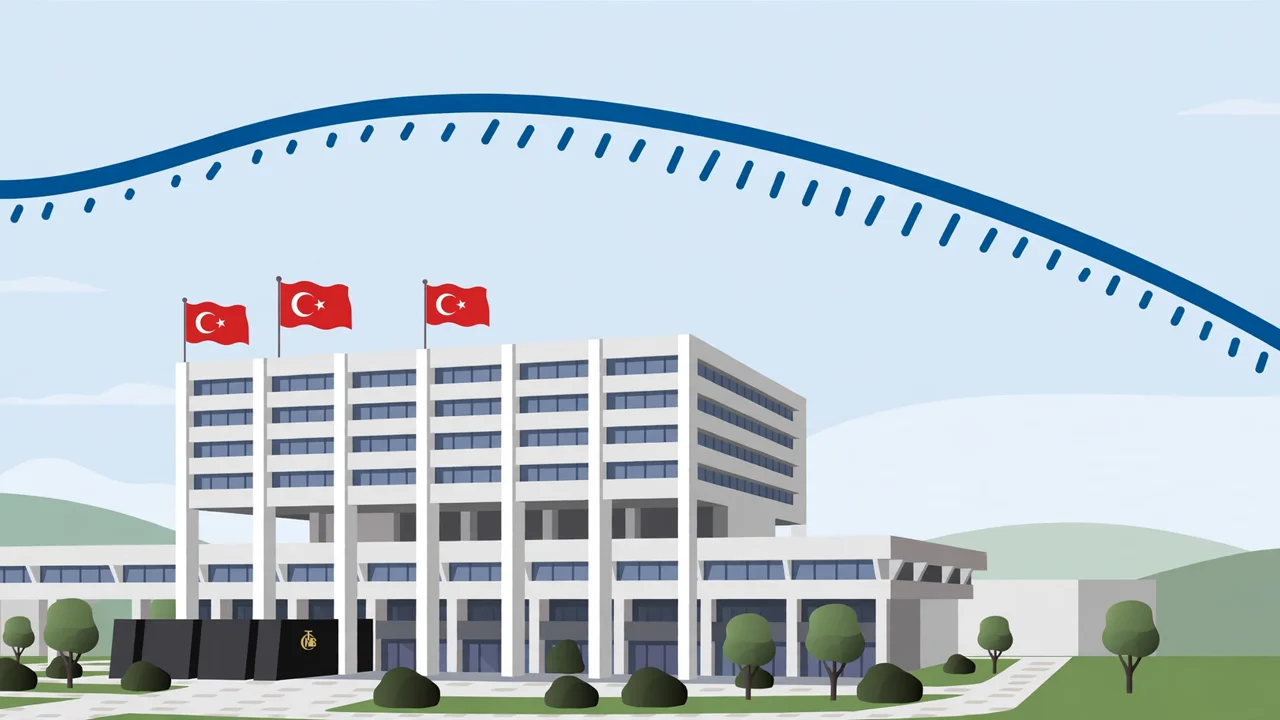
Illustration: The Central Bank of the Republic of Turkey's headquarters beneath a falling interest-rate chart, as policymakers resumed their easing cycle on October 22, 2026. (AI-generated illustration)
What Happened
Turkey's Monetary Policy Committee, led by Governor Fatih Karahan, lowered the one-week repo rate from 37% to 36% — its first policy change since a similarly sized cut in January, ending a five-meeting hold. The committee also trimmed the overnight lending rate from 40% to 39% and the overnight borrowing rate from 35.5% to 34.5%, according to reporting published on October 22.
The cut was enabled by September inflation data: consumer prices were up just 29.73% year on year — the first reading below 30% since November 2021, and softer than the 30.3% economists had expected. In its statement, the bank said recent figures confirmed a slowdown in underlying inflation despite monthly fluctuations, while persistently weak domestic demand showed the economy was cooling. But it warned that "elevated energy prices due to ongoing geopolitical tensions continue to pose an upside risk to the inflation outlook," and kept the door open to tightening again if the inflation outlook deteriorates significantly.
Hours later in Manila, the Bangko Sentral ng Pilipinas (BSP) went the other way. The Monetary Board raised the target reverse repurchase rate by 50 basis points to 5.50%, with the overnight deposit and lending facilities moving to 5.0% and 6.0%. It was the BSP's first half-point hike since February 2023, its fourth consecutive tightening meeting, and it took total increases since April to 125 basis points. The move surprised markets: only 2 of 22 analysts polled by BusinessWorld had predicted a 50-basis-point step, with the rest expecting a quarter point.
The Philippine decision was driven by September inflation of 7.2% — up from 6.1% in August, the highest level in 42 months, and the seventh straight month above the BSP's 2%-to-4% target. Core inflation, which strips out volatile food and fuel prices, accelerated to a nearly three-year high of 4.7%. "The Monetary Board recognized the need for a strong monetary policy response to broadening price pressures and further upside risks to inflation," the BSP said in a statement, adding that the move would "contain second-round effects and firmly anchor inflation expectations."
Background
Turkey's return to easing completes a remarkable policy arc. After the unorthodox low-rate years of 2021–2023, when inflation topped 80%, the central bank under its post-2023 leadership rebuilt credibility with aggressive tightening, then cut rates by 900 basis points across the second half of 2025 before lowering the benchmark from 38% to 37% in January 2026. When the Iran war broke out in February, the bank held rates through five straight meetings — effectively tightening further by suspending weekly repo auctions and leaning on costlier overnight funding. JPMorgan had called the turn for October 22 in advance, predicting a 100-basis-point cut if September inflation came in near 2.2% month on month.
In the Philippines, the tightening cycle that began in April reflects a different set of pressures: renewed surges in oil, food, housing and transport prices, a peso that slid to a record low of 63.361 per dollar on October 21, and the threat that a strengthening El Niño will hit agricultural output and push food prices higher. Second-quarter GDP grew just 2.3% — the weakest pace since 2021 — leaving the BSP to fight inflation even as the economy cools.

Illustration: The Bangko Sentral ng Pilipinas headquarters beside a rising rate gauge, after the central bank's surprise 50-basis-point hike on October 22, 2026. (AI-generated illustration)
Why It Matters
The October 22 split is the clearest picture yet of how uneven the global inflation fight has become. Turkey, with real rates now deeply positive and headline inflation finally under 30%, is confident enough to restart easing — a signal that disinflation has taken hold and that the carry trade that lured foreign investors back to Istanbul may keep flowing. The Philippines, facing broadening price pressures and a sliding currency, judged that the risk of letting inflation expectations slip was worse than the risk of squeezing borrowers.
Both banks cited the same wild card: energy. Turkey flagged elevated energy prices from geopolitical tensions as the chief upside risk to its outlook; the Philippines' inflation surge is being driven partly by renewed oil price pressure, as Middle East conflict keeps crude above $110 a barrel. How long energy stays expensive will shape both policy paths — and it is largely outside either bank's control.
What Happens Next
Turkey's committee promised a cautious, meeting-by-meeting approach, saying future decisions would follow realized and expected inflation. Markets will now test how fast the easing cycle runs: with the medium-term inflation target still 5%, every cut must be earned by the data — and the bank has warned it could tighten again if the outlook deteriorates significantly and persistently.
In Manila, the tightening may not be over. The BSP's next scheduled meeting is December 17, and BPI lead economist Emilio Neri Jr. told Rappler he expects another 25-basis-point increase then, which would take the policy rate to 5.75% by year-end. The peso, which strengthened to 63.311 per dollar after the hike, remains hostage to the dollar, oil prices and the pace of overseas rate moves.
Attention now turns to a packed central-bank week: the Federal Reserve, the Reserve Bank of New Zealand and the Bank of Canada all meet on October 28, followed by the European Central Bank on October 29 and the Bank of Japan on October 30. How those decisions land — especially the Fed's, with markets weighing a hold against a possible December hike — will set the tone for emerging-market policy into year-end.

Illustration: Diverging arrows over a world map, symbolizing central banks moving interest rates in opposite directions on October 22, 2026. (AI-generated illustration)
Sponsored: explore today's featured sponsored offers
FAQ
Why did Turkey cut interest rates?
Annual inflation fell to 29.73% in September — the first reading below 30% since November 2021 — while domestic demand stayed weak. The central bank said underlying inflation was slowing, making a cautious return to easing possible after five meetings on hold.
Why did the Philippines raise rates on the same day?
Philippine inflation accelerated to 7.2% in September, its highest in 42 months and the seventh straight month above target. Core inflation hit a near three-year high of 4.7%, and the peso had just fallen to a record low — so the central bank delivered a bigger-than-expected 50-basis-point hike to anchor expectations.
How will this affect borrowers in each country?
In Turkey, cheaper policy rates should gradually lower borrowing costs for businesses and households if the easing cycle continues. In the Philippines, higher rates mean more expensive mortgages, auto loans and business credit in the short term — the trade-off for fighting inflation and supporting the peso.
What comes next for both central banks?
Turkey says future decisions will be made meeting by meeting, based on inflation data. The Philippines meets again on December 17, and analysts such as BPI's Emilio Neri Jr. expect another 25-basis-point increase, taking the rate to 5.75%.
What does this split mean for global markets?
It shows inflation is no longer a single global story: disinflation is advancing in Turkey while price pressures are broadening in the Philippines. Energy prices — and how long Middle East tensions keep crude elevated — are now the key variable for central banks everywhere, with the Fed, ECB and Bank of Japan all deciding next week.
Sources
- TradingView / dpa-AFX — "Turkey Slashes Key Rates By 100 Bps" (October 22, 2026)
- TradingView / TE News — "Turkey Cuts Policy Rate to 36% as Expected" (October 22, 2026)
- BusinessWorld (Katherine K. Chan) — "Philippine central bank hikes key rate by 50 bps amid inflation woes" (October 22, 2026)
- BusinessToday / Reuters — "Philippine Central Bank Raises Key Interest Rates By 50 Points, Larger Than Expected" (October 22, 2026)
- Currency Thoughts — "Central Bank Rate Changes Today in Turkey (-100 Basis Points) and the Philippines (+50 bps)" (October 22, 2026)
Comments
Post a Comment