
DUBAI — The United Arab Emirates said on Friday, October 23, that crews were working to contain oil leaking from a tanker offshore after the slick reached beaches in Umm Al Quwain, forcing authorities to close the coast while independent analysts linked the spill to a vessel struck earlier this month in increasingly dangerous Gulf shipping lanes, Reuters reported.
The UAE's Ministry of Climate Change and Environment said its monitoring system had detected the tanker oil spill affecting beaches in Umm Al Quwain. All beaches and coastal areas in the emirate were temporarily closed until technical teams complete their assessments and determine the necessary safety and marine protection measures. The ministry also urged fishermen and other sea users to avoid the affected areas and follow official instructions.
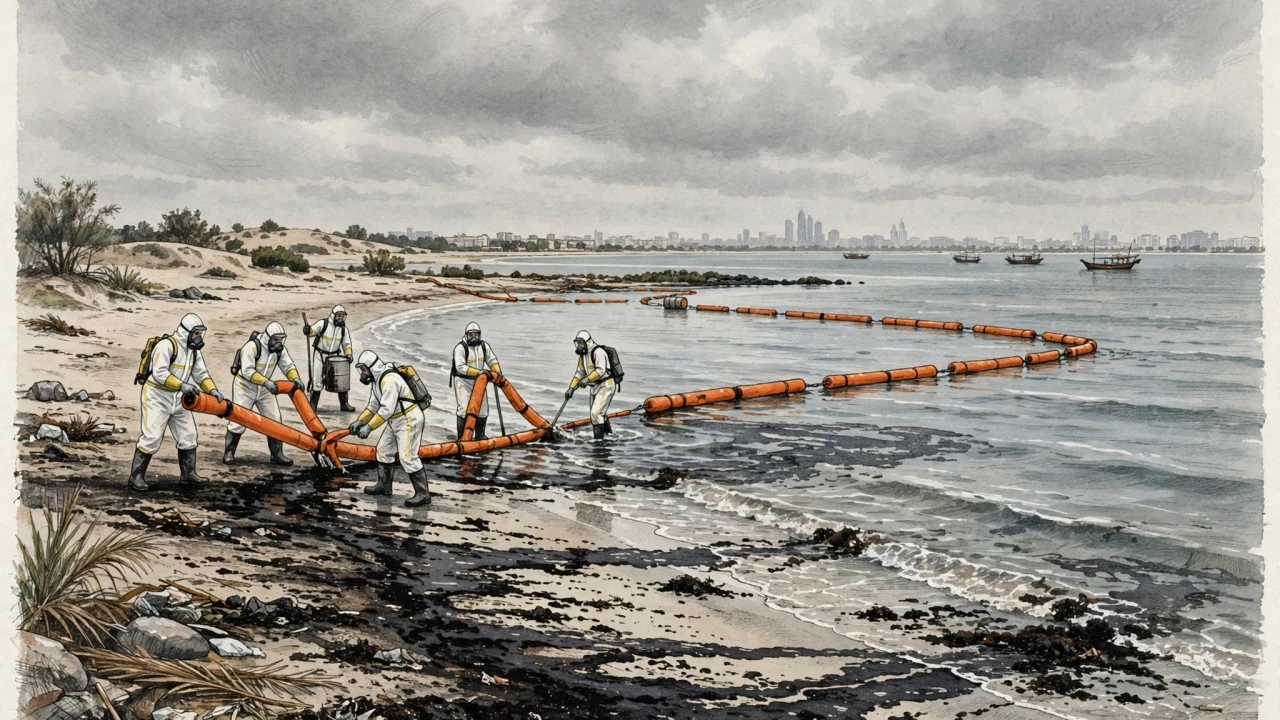
Illustration: Cleanup crews in protective suits deploy orange containment booms on an oil-stained Arabian Gulf beach.
What Happened
The ministry announced the spill on Friday after residents in several emirates reported a strange odor on social media. Odors reported by residents in Sharjah, Ajman and Umm Al Quwain posed no health risks to them, the ministry said. As a precaution, authorities in Sharjah temporarily closed Al Hamriyah Beach, on the UAE's northern coast near the border with Umm Al Quwain, the Sharjah Government Media Bureau said.
The ministry did not say what caused the spill, and UAE authorities have not identified the tanker involved. But analysts tracking the slick moved quickly to name a suspect vessel. Martin Kelly, CEO of Orbital Risk Intelligence, told Reuters the spill was coming from a tanker called the Gem No.2. Analysts said satellite imagery from October 19 and 21 appeared to show a significant oil slick from the tanker — "considerably larger, covering approximately 160 km2, and looks to be coming from the ship," said Leon Moreland, a researcher at the Conflict and Environment Observatory.
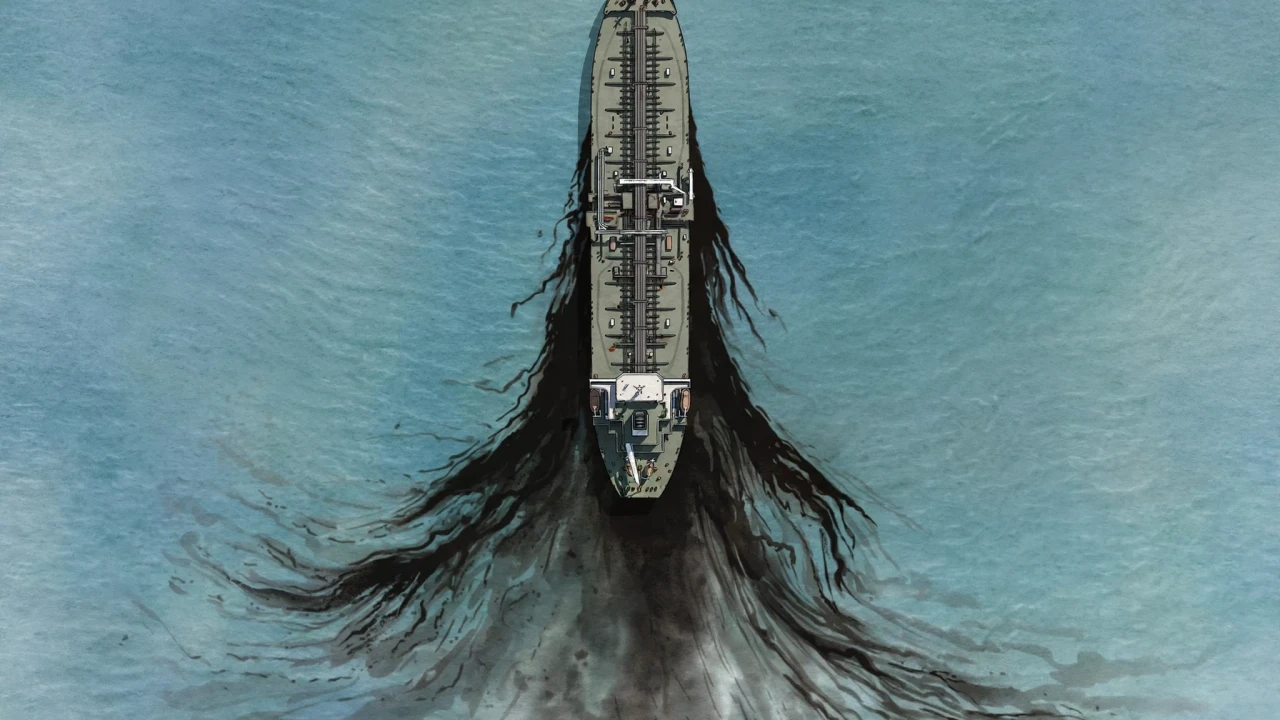
Illustration: An oil tanker on Gulf waters trailing a dark spreading oil slick, as seen in a satellite-style view.
Background
The Gem No.2 has been in the headlines before this month. On October 9, shipping sources told Reuters the vessel was struck by an unidentified projectile 13 nautical miles west of Al Jazeera in the UAE, causing a fire that was later extinguished. While no group claimed responsibility, maritime security sources told Reuters at the time that the incident occurred outside the Strait of Hormuz and pointed to a widening of risks for commercial shipping. Earlier that week, a tanker was also struck off the coast of Qatar inside the Gulf.
The spill lands in a tense regional context. Since the start of the US-Israeli war with Iran, attacks on commercial vessels in Gulf shipping lanes have driven up security risks for maritime traffic and heightened fears over the conflict's environmental fallout. The Strait of Hormuz and its surrounding waters carry a huge share of the world's seaborne oil, so any disruption — or contamination — in the Gulf has global implications.
This is not the region's first tanker-related environmental incident this year. In August, oil from a tanker that ran aground off Oman began reaching the mainland coast, prompting concerns about environmental damage and cleanup efforts there.
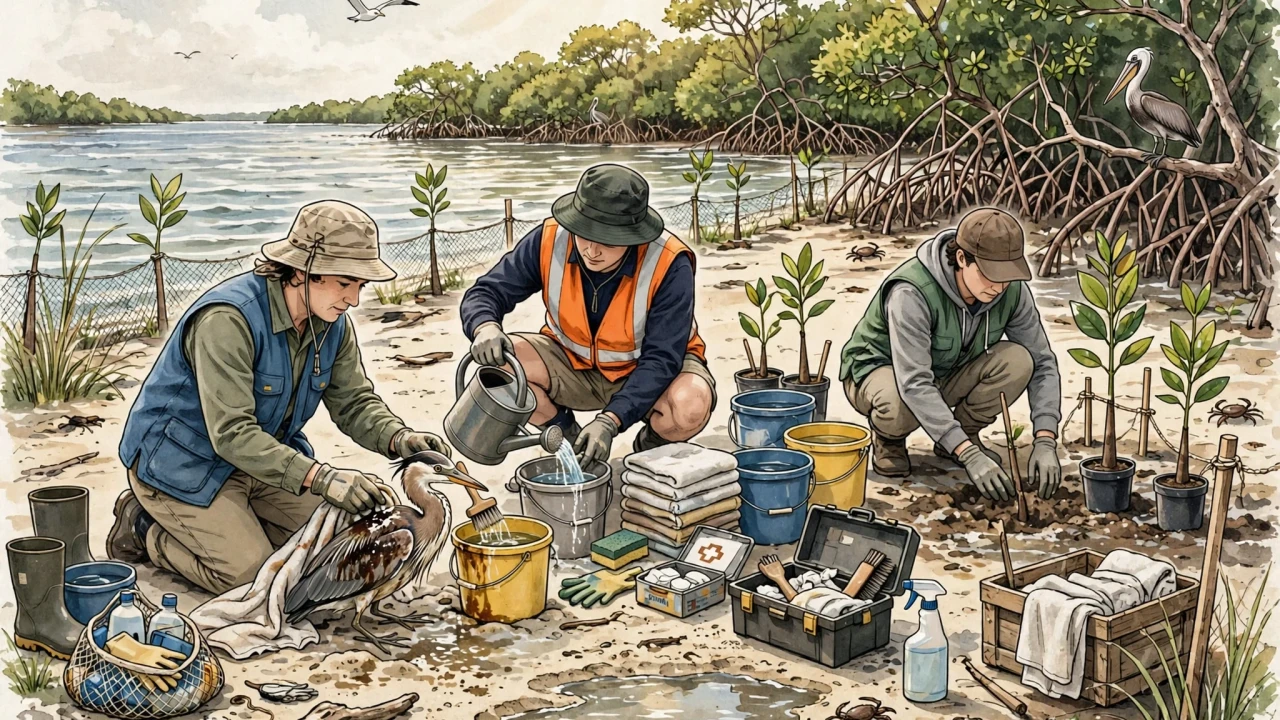
Illustration: Volunteers rescue oil-stained seabirds and protect a mangrove coastline after an oil spill.
Why It Matters
The spill shows how quickly the Gulf's maritime security crisis is becoming an environmental one. A vessel damaged in an unexplained attack can drift and leak for weeks before the oil reaches shore — and satellite data suggests this slick grew to about 160 square kilometers before containment began in earnest. For coastal communities in Umm Al Quwain, that means closed beaches, disrupted fishing and a cleanup bill with no clear party to pay it, since authorities have not named the tanker or the cause.
Marine ecosystems in the northern Gulf are particularly vulnerable. The region's mangroves, tidal flats and shallow reefs support fisheries and migratory birds, and oil that reaches these habitats can persist for years. Environmental groups have warned that repeated tanker incidents compound the damage, with each new slick layering onto coastlines still recovering from the last.
The episode also sharpens questions about accountability at sea. With attacks on commercial vessels going unclaimed and spills of uncertain origin, coastal states face the cleanup costs of a conflict they did not start — a dynamic that could reshape how Gulf nations police, insure and regulate traffic in their waters.
What Happens Next
Containment operations were underway on Friday, with the environment ministry carrying out an environmental assessment alongside the cleanup. The beaches of Umm Al Quwain — and Al Hamriyah Beach in Sharjah — will stay closed until technical teams complete their assessments and determine the necessary safety and marine protection measures, the ministry said.
Two open questions will shape the story in the coming days: whether UAE authorities publicly identify the tanker and the cause of the spill, and whether the leak from the Gem No.2 is fully stopped or continues to feed the slick. Maritime security analysts will also be watching Gulf shipping lanes for further incidents, as the pattern of unclaimed attacks on commercial vessels shows no sign of abating.
Longer term, the incident is likely to add urgency to regional discussions about protecting Gulf waters from the environmental fallout of conflict — discussions that, so far, have produced more warnings than action.
Sponsored: explore today's featured sponsored offers
FAQ
Where did the oil spill happen?
The spill was detected off the coast of Umm Al Quwain, one of the UAE's northern emirates. Residents in Sharjah and Ajman also reported odors, and Sharjah temporarily closed Al Hamriyah Beach near the Umm Al Quwain border as a precaution.
Which tanker is leaking?
UAE authorities have not named the tanker involved or said what caused the spill. Independent analysts, however, have identified the leaking vessel as the Gem No.2 — Martin Kelly, CEO of Orbital Risk Intelligence, told Reuters the slick was coming from that tanker, and satellite imagery appears to support the identification.
Was the Gem No.2 attacked?
Shipping sources told Reuters the Gem No.2 was struck by an unidentified projectile on October 9, about 13 nautical miles west of Al Jazeera in the UAE, causing a fire that was later extinguished. No group claimed responsibility, and authorities have not confirmed any link between that attack and the current spill.
Is there a health risk for residents?
The environment ministry said the odors reported in Sharjah, Ajman and Umm Al Quwain posed no health risks to residents. Beaches were closed as a precaution, and fishermen and other sea users were urged to avoid the affected areas and follow official instructions.
How big is the oil slick?
Analysts citing satellite imagery from October 19 and 21 estimated the slick at approximately 160 square kilometers. Leon Moreland, a researcher at the Conflict and Environment Observatory, described it as "considerably larger" and said it appeared to be coming from the ship.
Sources
- Reuters, "UAE says tanker oil spill affects beaches in Umm Al Quwain," October 23, 2026 — ministry statement; beach closures; odor reports; fishermen warning.
- Reuters, "Oil spill off UAE coast prompts beach closures, cleanup effort" (Maha El Dahan, Sarah El Safty, Catherine Cartier and Arthur Wei), October 23, 2026 — containment operations; Sharjah's Al Hamriyah Beach closure; Martin Kelly's identification of the Gem No.2; satellite imagery and ~160 km2 slick estimate; October 9 attack on the vessel; Qatar tanker incident; Oman grounding in August; US-Israeli war with Iran context.
Comments
Post a Comment