
UK Inflation Hits 3.5%, Highest in Nearly a Year, as November Bank of England Hike Becomes Near-Certain
British inflation jumped to 3.5% in September — its highest level in nearly a year and above both the Bank of England's forecast and economists' expectations — as surging fuel costs driven by the Iran war's energy shock piled pressure on households a week before finance minister John Healey's first budget and all but locked in a Bank of England interest rate hike in November, official data released on Wednesday, October 21, 2026, showed.
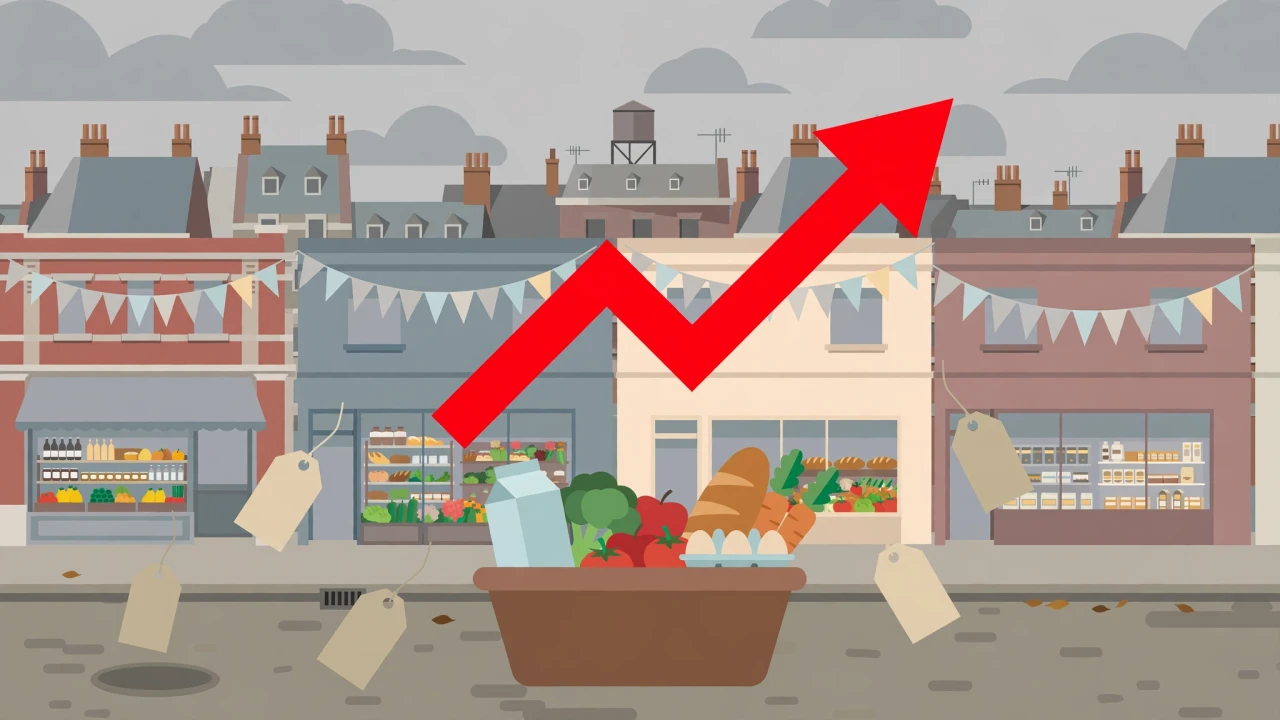
Illustration: a grocery basket with rising price tags and percentage arrows over a British high street under a grey sky
What Happened
The Office for National Statistics (ONS) said annual consumer price inflation rose to 3.5% in the 12 months to September, up from 3.1% in August. A Reuters poll of economists had forecast a rise of 3.4%, while the Bank of England had predicted only 3.0% in forecasts published in July — meaning the overshoot caught both markets and the central bank off guard.
The ONS said September's increase was driven by higher petrol and diesel costs, as the surge in energy prices caused by the Iran war gathered steam. Britain has been more exposed than most Western countries because of its heavy reliance on imported natural gas.
Underlying price pressures sped up too. Services inflation — which the Bank of England watches as its best guide to domestic price pressures — jumped to 3.7% from 3.4% in August, above economists' forecasts of 3.6%. Core inflation, which strips out food, energy, alcohol and tobacco, picked up to 2.8% from 2.6%, also above expectations.
Separate official figures added to the gloom: the government borrowed more than forecast in September, and public debt surpassed £3 trillion (about $4.01 trillion), fuelled by higher debt costs linked to inflation — underscoring the fiscal constraints facing the chancellor.
The September inflation rate carries special significance in Britain: it is traditionally the figure the government uses to set the following year's increases for welfare benefits, making a higher reading an automatic increase in the state's obligations.
Background
Britain's inflation story in 2026 has been shaped almost entirely by the energy shock that followed the Iran war's disruption of global energy markets. The euro area has, according to European Central Bank economists writing this week, weathered the shock better than expected thanks to lower fossil-fuel dependence, stronger fiscal support and an AI investment boom. Britain, by contrast, imports most of its natural gas and has seen energy costs feed directly into pump prices and household bills.
The Bank of England has been wrestling with this for months. Inflation has been running above the bank's 2% target for a long stretch, and Wednesday's data comes amid expectations the bank will raise rates in November. Money-market data shows traders are nearly fully pricing in a 25-basis-point hike next month, with LSEG-compiled data indicating expectations for four rate hikes by the middle of next year.
"Strong growth, stable or falling labour market slack and surging inflation mean the MPC will hike in November. We expect another hike in February and are very close to adding a third in May, or earlier," Pantheon Macroeconomics economists said in a note reported by Reuters.
The data also landed the day after figures showed British workers had seen another modest rise in the pace of pay growth, with hints of a small recovery in the jobs market — evidence that underlying domestic price pressures are not just an energy story.
Meanwhile the political calendar is crowded. Healey delivers his first budget on October 28 — just a week after the inflation print — and is expected to offer some support for households hit hardest by rising energy prices. But his room for maneuver is limited by the government's fiscal rules and record debt levels.
Illustration: the neoclassical Bank of England building beneath a rising interest-rate chart, with pound sterling motifs at dawn
Why It Matters
Wednesday's print matters for three audiences at once — and puts them in tension with each other.
For households, inflation at 3.5% means real wages are under renewed pressure just as winter energy bills bite. "Rising inflation and record levels of debt illustrate the double dilemma facing the chancellor — how to ease cost-of-living pressures for families while keeping a lid on government borrowing," Greg Thwaites, interim chief economist at the Resolution Foundation, said in a Reuters report on the data.
For the chancellor, the double hit of hot inflation and overshooting borrowing narrows his options. Ruth Gregory, deputy chief economist at Capital Economics, said the higher-than-expected borrowing in recent months "reinforces our view that the chancellor will deliver a cautious budget on October 28 that has little net impact on the economy and leaves the toughest fiscal choices for next year."
For the Bank of England, the overshoot — particularly in services and core inflation — makes a November hike close to unavoidable. The central bank's credibility is on the line: it forecast 3.0%, and it got 3.5%.
Markets have already responded. Sterling rose on Wednesday to $1.339, holding near its highest in about a month, and climbed against the euro for a fifth straight session to its strongest in 17 months at 83.80 pence. The pound is on pace for its best monthly showing against the euro since May 2023, as traders price BoE tightening while the euro suffers from France's street unrest and deteriorating fiscal outlook.
What Happens Next
- October 28 — the budget: Healey's first budget is expected to include targeted support for households facing higher energy bills, but analysts widely expect a cautious package that stays within the government's fiscal rules.
- November — the Bank of England decision: Money markets are nearly fully pricing a 25-basis-point hike. Anything less would now be a major surprise — and could hammer sterling.
- Winter energy costs: With Britain heavily dependent on imported gas and the Iran war's energy shock still reverberating, the winter will test whether September's 3.5% was a peak or a waypoint.
- February and beyond: Pantheon Macroeconomics expects a second hike in February and is close to calling a third in May. LSEG data suggests markets anticipate four hikes by the middle of next year.
- Welfare benefit increases: Because September's CPI traditionally sets next year's benefit uprating, the 3.5% reading locks in a larger automatic rise in the welfare bill — adding to the chancellor's fiscal headache.
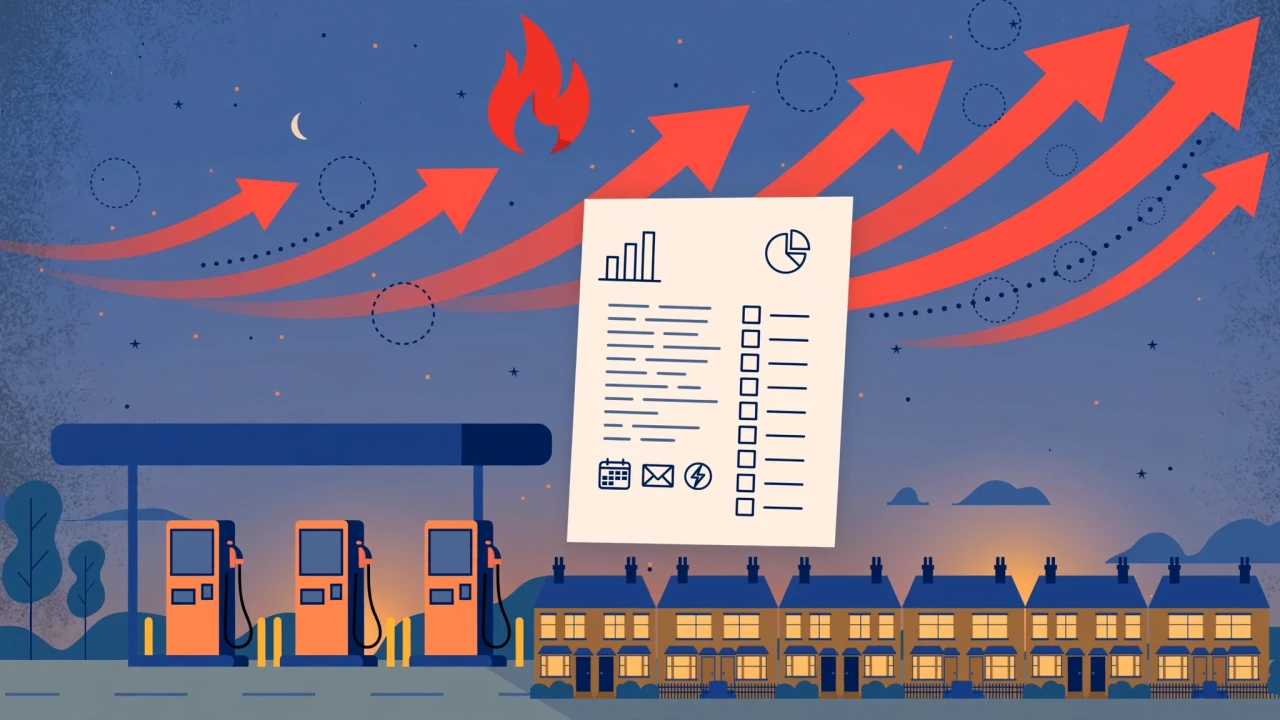
Illustration: a British petrol station with fuel pumps and a household energy bill beside terraced houses at dusk
Sponsored: explore today's featured sponsored offers
FAQ
What is the UK inflation rate now?
Annual consumer price inflation reached 3.5% in September 2026, up from 3.1% in August — its highest since October 2025. Services inflation hit 3.7% and core inflation 2.8%, both above forecasts.
What caused inflation to rise?
According to the ONS, higher petrol and diesel costs drove the increase, as energy price shocks from the Iran war gathered steam. Britain's heavy reliance on imported natural gas has left it more exposed than most Western economies.
Will the Bank of England raise interest rates?
Markets are now nearly fully pricing in a 25-basis-point hike in November, according to LSEG data. Pantheon Macroeconomics expects further hikes in February and possibly May, with four increases priced by mid-2027.
When is the UK budget?
Finance minister John Healey delivers his first budget on October 28, 2026 — one week after the inflation data. He is expected to offer some support for households hit by energy costs, but analysts expect a cautious package constrained by fiscal rules.
Why does the September inflation figure matter so much?
September's CPI is traditionally used by the government to set the following year's welfare benefit increases, so the 3.5% reading automatically raises the state's obligations. It also came in above the Bank of England's own 3.0% forecast, tightening the case for a rate hike.
Sources
- Reuters — "UK inflation jumps to highest in nearly a year at 3.5%" (via LSE.co.uk syndication) — October 21, 2026 — https://www.lse.co.uk/news/uk-inflation-jumps-to-highest-in-nearly-a-year-at-35-55e6ijpv8ubsmv5.html
- Reuters — "Pound gains against dollar, euro as inflation data cements future rate hike bets" — October 21, 2026 — https://www.reuters.com/world/uk/pound-gains-against-dollar-euro-inflation-data-cements-future-rate-hike-bets-2026-10-21/
- Reuters — "ECB says AI, greener economy help euro zone weather energy shock" — October 21, 2026 — https://www.reuters.com/business/finance/ecb-says-ai-greener-economy-help-euro-zone-weather-energy-shock-2026-10-21/
- Business Today — "UK Inflation Hits 3.5%, Highest In Nearly A Year" — October 21, 2026 — https://www.businesstoday.com.my/2026/10/21/uk-inflation-hits-3-5-highest-in-nearly-a-year/
Comments
Post a Comment