
The World Health Organization has completed its biggest-ever investigation into how inequality shapes the world's deadliest diseases — and the finding, presented on Tuesday, October 20, 2026, is stark: where you live, how much you earn and how far you got in school determine whether you develop cancer, heart disease, chronic lung disease or diabetes, and whether you get diagnosed and treated in time. Noncommunicable diseases account for three-quarters of all deaths worldwide, and the WHO says the burden falls hardest on the populations least equipped to bear it.
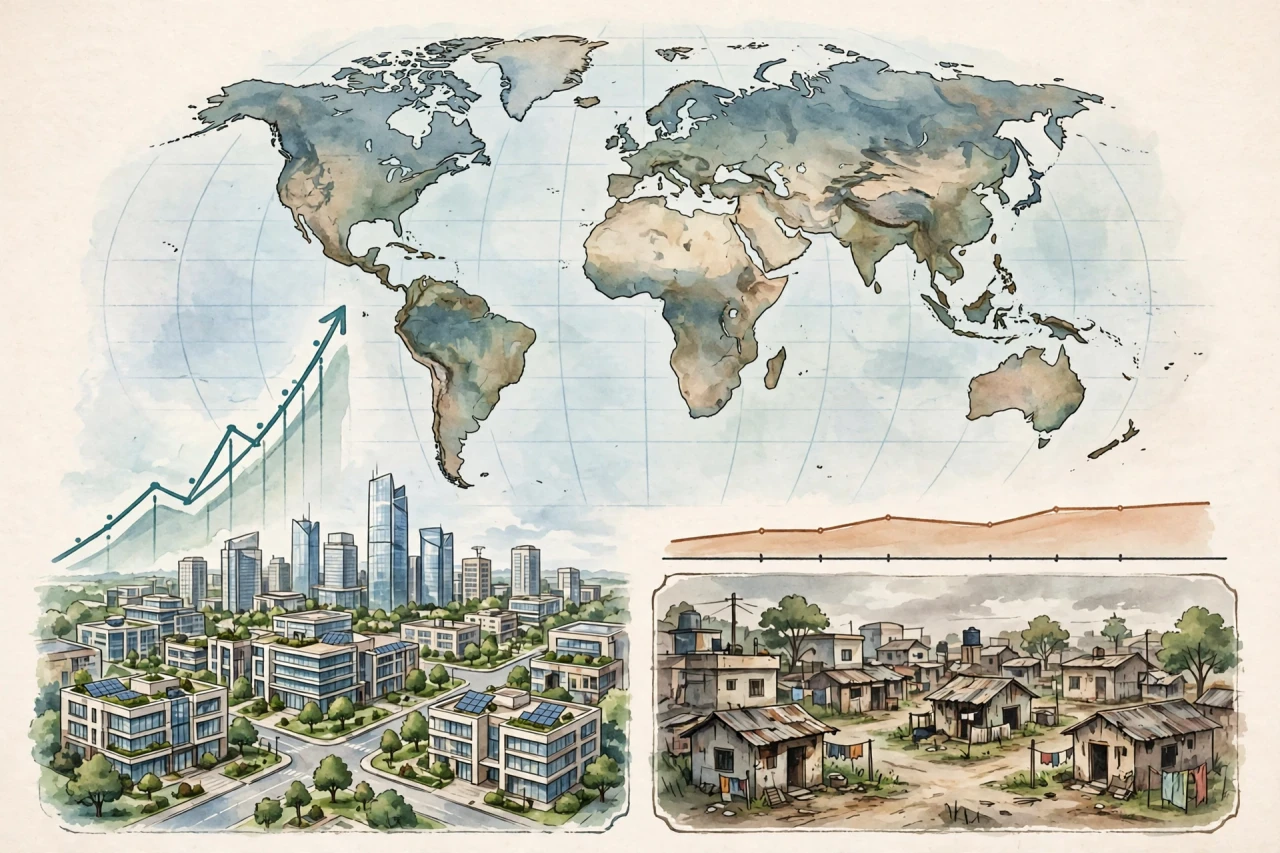
Illustration: a world map with contrasting health charts, symbolizing how wealth and education shape disease risk. This is an AI-generated illustration, not a real scene.
What Happened
The WHO released the findings of what it describes as the first systematic effort to measure inequalities in noncommunicable diseases — or NCDs — and their risk factors on a global scale, according to MedicalXpress's coverage of the report on October 20, 2026. The study examined the four biggest killers in this category — cancer, cardiovascular diseases, chronic respiratory diseases and diabetes — and scanned how their burden, prevention and care vary across age, gender, economic status, education, place of residence, disability status, employment and migration status.
The analysis drew on ten years of national data collected between 2013 and 2022, and it found that socioeconomic status influences health at every stage: from initial exposure to risk factors, through diagnosis, treatment and long-term disease management. "This is the first effort to systematically measure inequalities in NCDs and their risk factors on a global scale," said Ahmad Reza Hosseinpoor, who leads the WHO's health inequality monitoring team. "The findings show which populations are being left behind."
The report also mapped the risk factors driving the four diseases — including tobacco use, alcohol consumption, obesity, unhealthy diets, physical inactivity and air pollution — and found the same pattern repeated: the poorest and least educated carry the heaviest exposure and get the least protection.
Background
Noncommunicable diseases are the dominant health crisis of the modern world, even if they rarely get the urgency of an outbreak. They account for eight of the top ten causes of death globally, according to the WHO. Cardiovascular diseases are the biggest killer by far, causing almost 20 million deaths a year. Cancer, chronic respiratory disease and diabetes fill out a toll that reaches into the tens of millions annually — roughly three out of every four deaths on the planet.
What the new WHO analysis adds is the distribution of that toll. In low- and middle-income countries, the report found, less educated populations suffer higher rates of hypertension and diabetes. Cervical cancer screening rates are very low among the poorest and least-educated women — a critical gap because cervical cancer is one of the most preventable cancers when screening catches it early. Tobacco use, meanwhile, remains higher among less-educated men than among more educated men, compounding the risk for heart disease and lung cancer in exactly the group with the least access to care.
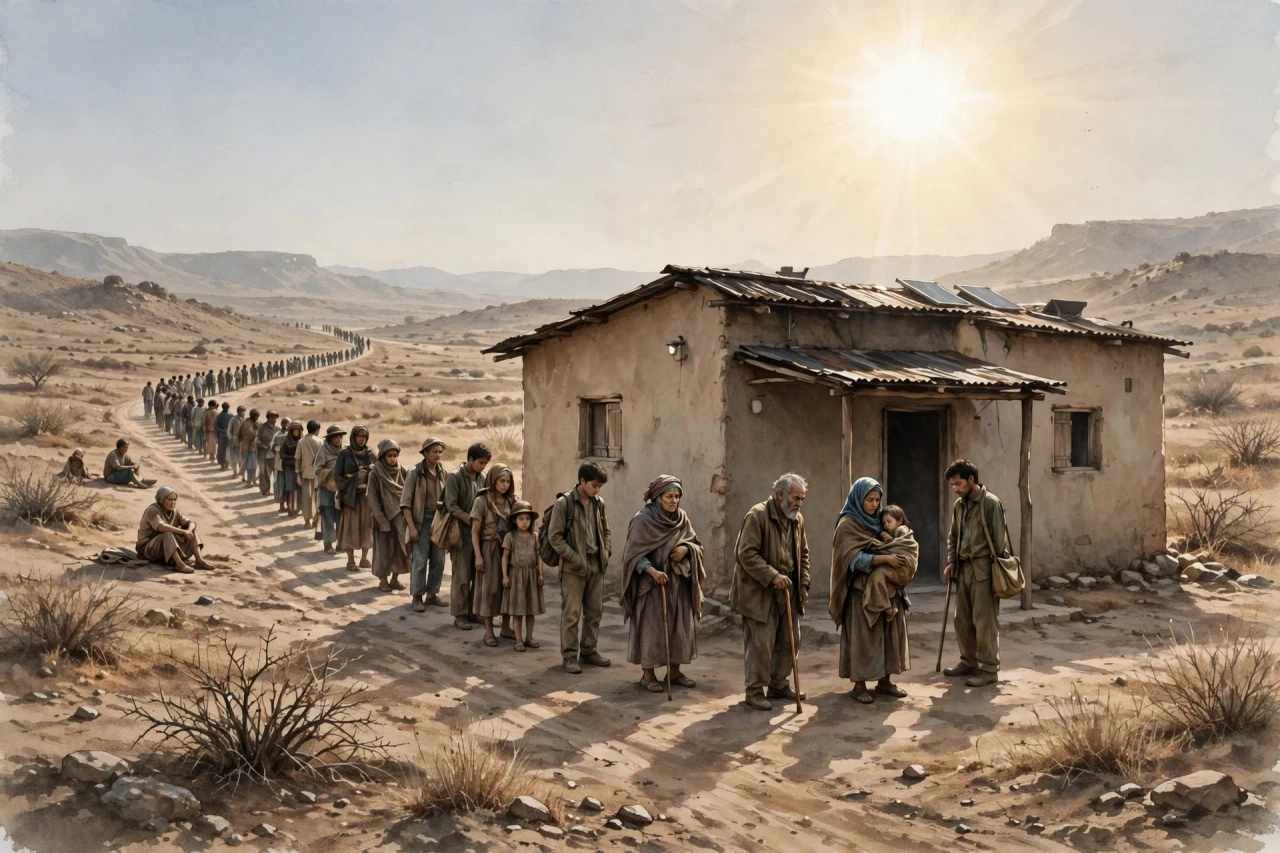
Illustration: a small rural clinic with patients waiting outside, symbolizing limited access to diagnosis and care. This is an AI-generated illustration, not a real scene.
Geography tells the same story. The study found that people in rural areas have significantly more limited access to hypertension diagnosis and cancer screening than people in cities. A missed diagnosis of high blood pressure can mean a decade of silent damage ending in a stroke or heart attack; a missed cancer screening can mean the difference between a curable lesion and a terminal illness. The inequality, in other words, is not abstract — it is measured in years of life.
The report lands in a year when global health data has repeatedly highlighted the same divide. A separate WHO-linked analysis published in September 2026 estimated that infections caused about one in eight new cancer cases worldwide in 2024 — with more than three-quarters of those cases in low- and middle-income countries, where access to preventive care and treatment is often limited. Different disease, same fault line.
Why It Matters
The WHO study matters because it converts a widely suspected truth into measured, comparable evidence — and because of what that evidence implies for policy. If NCDs were distributed randomly, the answer would be more of everything for everyone. But the data show they are not random: the burden tracks wealth, education, geography and gender in predictable ways. That means prevention programs that ignore inequality — flat national campaigns, one-size-fits-all screening rollouts — will systematically miss the people who need them most.
It also matters because NCDs are where global health spending is most unequal. Vaccines and outbreak response attract emergency funding and headlines; chronic disease care is slow, expensive and unglamorous. Yet three-quarters of deaths are NCD deaths. The WHO's message, implicit in the report's design, is that the global health architecture is fighting yesterday's war with yesterday's tools while the actual burden of death concentrates in poor, rural and under-educated populations.
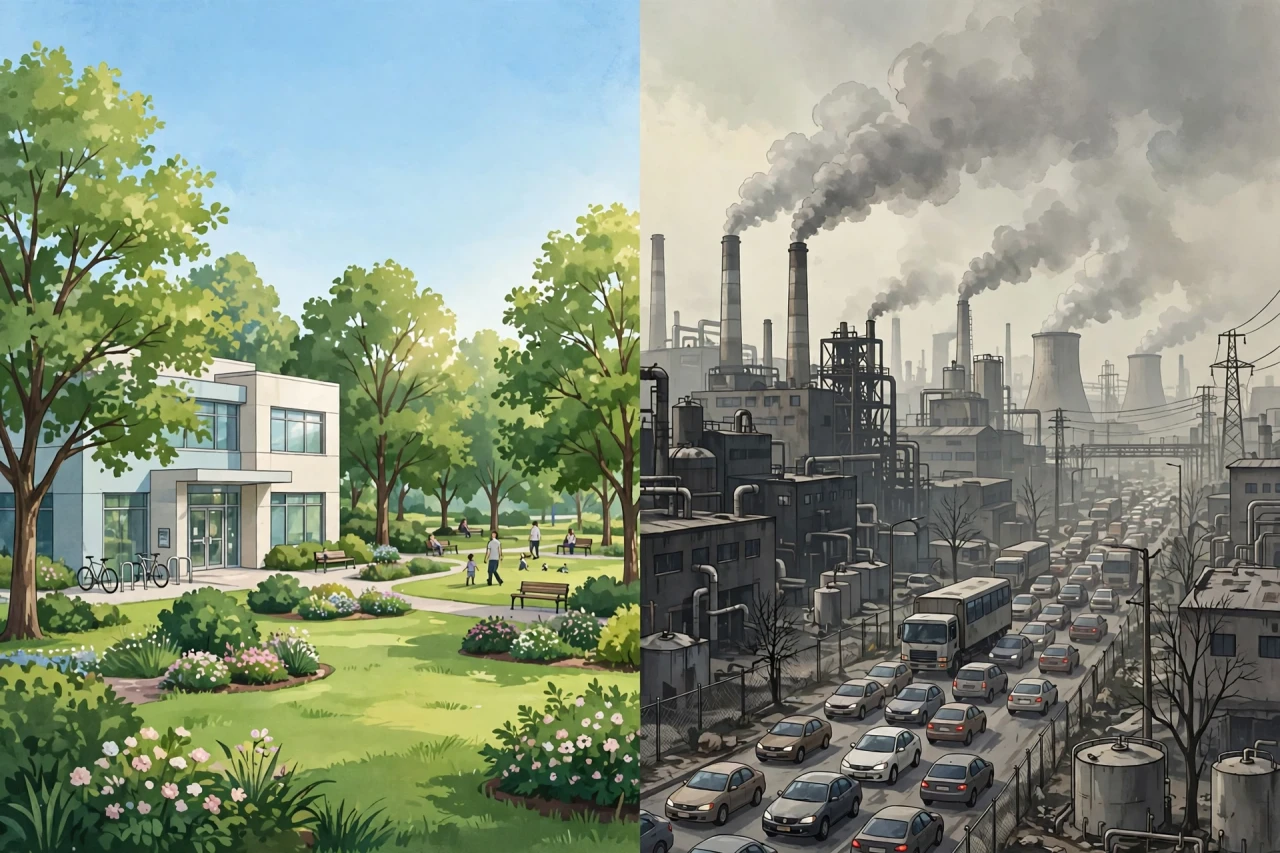
Illustration: two contrasting neighborhoods, one green and well-served, one polluted and underserved. This is an AI-generated illustration, not a real scene.
For governments, the findings are a diagnostic tool. A country that knows cervical screening fails its poorest women, or that hypertension goes undiagnosed in rural areas, can target mobile clinics, subsidized screening and community health workers at exactly those gaps. The WHO has spent years building the health-inequality monitoring toolkit that produced this report; the study's implicit challenge is for countries to actually use it.
What Happens Next
The report's release is expected to feed into a busy season for global health policy. The WHO and its partners are in the middle of a string of major publications this autumn — from childhood obesity guidelines earlier in October to ongoing work on universal health coverage — and inequality data like this tends to surface in ministerial briefings, donor pledges and national health-plan revisions over the following months.
Researchers will now dig into the country-level data behind the global averages. The headline patterns — education gradients in hypertension, rural gaps in screening — will vary sharply between regions, and the next phase of analysis is likely to name which countries' gaps are widest and which interventions have actually closed them. That evidence, if it arrives, could become the basis for the next generation of targeted NCD programs.
For the public, the takeaway is less about any single statistic than about the shape of risk. The same diseases that fill hospital wards in every country do not strike at random. Understanding who is being left behind — as the WHO put it — is the first step toward reaching them.
Sponsored: explore today's featured sponsored offers
FAQ
What did the WHO study actually measure?
It measured inequalities in the four biggest noncommunicable-disease killers — cancer, cardiovascular diseases, chronic respiratory diseases and diabetes — and their risk factors, across dimensions including age, gender, economic status, education, residence, disability, employment and migration status, using ten years of national data from 2013 to 2022.
How many people die from noncommunicable diseases?
According to the WHO, NCDs account for about three-quarters of all deaths worldwide. Cardiovascular diseases alone cause almost 20 million deaths a year, and NCDs cover eight of the top ten causes of death globally.
What were the most striking inequality findings?
In low- and middle-income countries, less educated people had higher rates of hypertension and diabetes; cervical cancer screening was very low among the poorest and least-educated women; tobacco use was higher among less-educated men; and rural residents had significantly less access to hypertension diagnosis and cancer screening.
Why is this report described as the first of its kind?
The WHO's health inequality monitoring team said it is "the first effort to systematically measure inequalities in NCDs and their risk factors on a global scale" — previous work had documented fragments of the picture, but never the full global distribution in one comparable analysis.
What should governments do with these findings?
The report's implicit prescription is targeted action: aim screening, diagnosis and treatment programs at the populations the data show are being left behind — the poorest, least educated and most rural — rather than relying on blanket national campaigns that miss them.
Sources
- MedicalXpress — "Inequality is major factor in impact of noncommunicable diseases: WHO" (October 20, 2026)
- World Health Organization — health inequality monitoring team (Ahmad Reza Hosseinpoor), as reported October 20, 2026
- WHO — background data on noncommunicable diseases as leading causes of death worldwide
- The Lancet Oncology / IARC — infection-attributable cancer estimates for 2024 (published September 2026), background context
Comments
Post a Comment