
Tokyo to Host World Cities Culture Summit 2026: Culture Leaders From 45+ Cities Gather October 28–30
TOKYO — Culture leaders from more than 45 cities around the world will converge on Tokyo from October 28 to 30, 2026, for the World Cities Culture Summit 2026, the annual gathering where the world's major metropolises compare notes on how culture shapes urban life. Hosted by the Tokyo Metropolitan Government together with the World Cities Culture Forum, the three-day summit will bring deputy mayors, heads of culture and other cultural policymakers to venues including the newly renovated Edo-Tokyo Museum, according to the official announcement from the Tokyo Metropolitan Government.

Illustration: A concept illustration of Tokyo hosting a global culture summit.
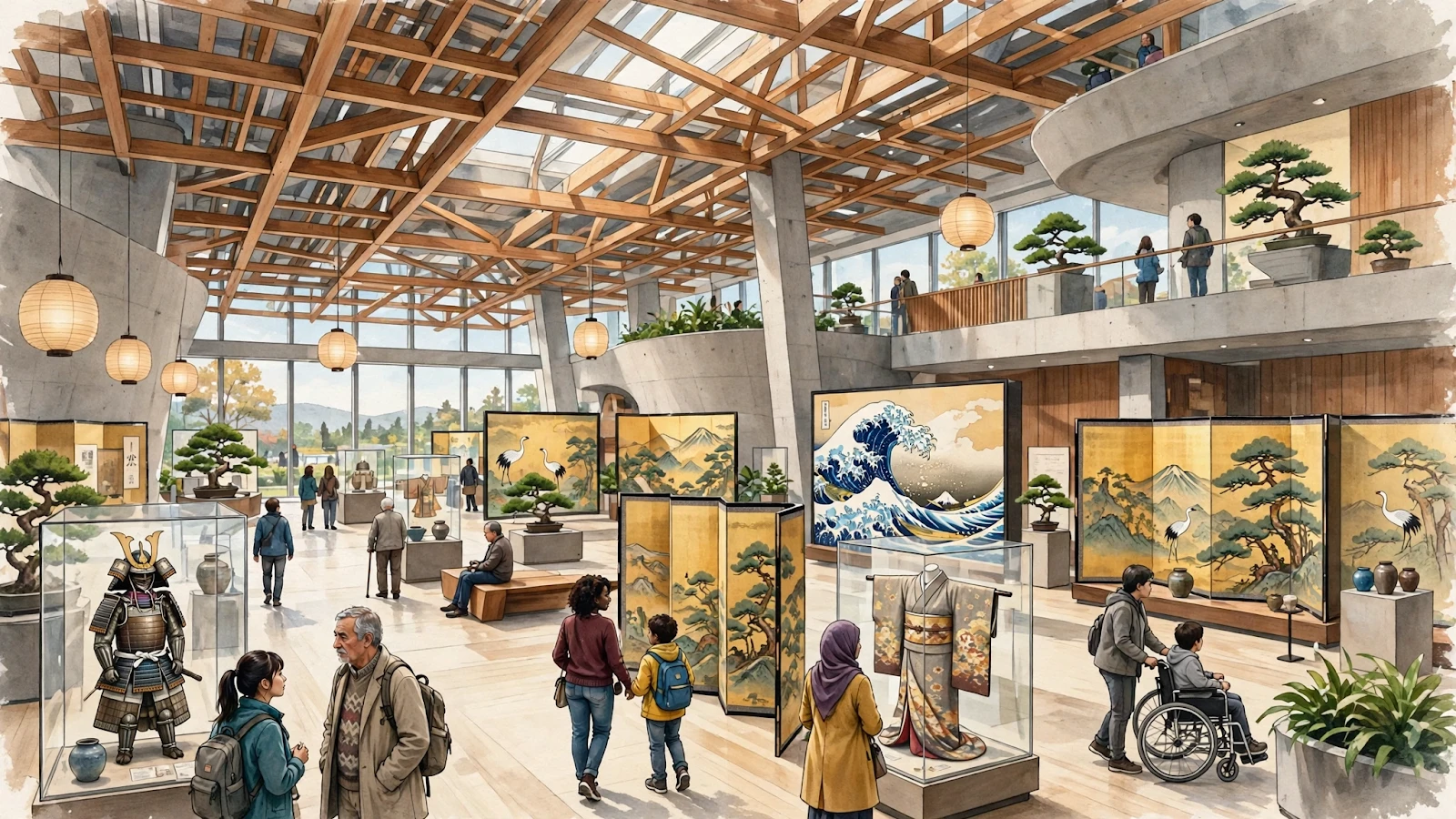
Illustration: A concept illustration of a cultural museum venue for the summit.

Illustration: A concept illustration of an international art exhibition.
What Happened
The Tokyo Metropolitan Government confirmed that the World Cities Culture Summit 2026 will take place from Wednesday, October 28 to Friday, October 30, 2026. The summit is organized jointly by the metropolitan government and the World Cities Culture Forum (WCCF), the international network of global cities that has been convening the event since it was established on the occasion of the London 2012 Olympic Games.
Participants will include deputy mayors, heads of culture and other cultural city leaders from the Forum's member cities — a network that has grown to more than 45 cities and has held 14 summits in cities around the world. According to the official program, the summit aims to address urban challenges, promote sustainable development and build intercity networks through culture.
One of the main venues will be the Edo-Tokyo Museum in Sumida, one of the summit's host sites, where delegates will be able to experience Edo-period culture through immersive exhibits in the museum's newly renovated galleries. The program also coincides with the launch of a new international arts and culture festival in Tokyo this year, whose main program is the international art exhibition TOKYO ATLAS — giving visiting culture leaders a firsthand look at the city's latest cultural flagship, according to the metropolitan government's announcement.
In a message accompanying the announcement, Tokyo Governor Koike Yuriko said the summit would provide "a golden opportunity" for leaders from across the globe to experience the new festival and exhibition, and expressed hope that the gathering would strengthen cooperation between cities in advancing their respective cultural initiatives and enhance Tokyo's presence on the global stage.
The summit arrives during a particularly busy cultural season in the Japanese capital. Separately, Tokyo will also host the International Conference on Culture for Everyone 2026 from October 28 to November 1 at the Tokyo International Forum, a five-day program of talks, performances, workshops and exhibitions organized by the Tokyo Metropolitan Government and Arts Council Tokyo. Held under the theme "Moving Together: A Culture of Mutuality," the conference is free to attend and has been designed with English-speaking and disabled visitors in mind, with simultaneous interpretation, live captions, Japanese and international sign language, and a livestream via Zoom, according to the organizers' announcement.
Background
The World Cities Culture Forum was founded around the London 2012 Olympics on a simple premise: that culture is not a luxury for cities but infrastructure — as essential to a metropolis as transport or housing. Since then, the Forum has grown into a network of more than 45 member cities that share cultural data, benchmark their creative sectors and meet annually to discuss how culture can answer the pressures of modern urban life.
Fourteen summits have now been held in cities around the world, each one hosted by a different member city and each one feeding into a shared body of comparative research on cultural policy. Topics that have recurred at past gatherings include how cities fund the arts, how they protect creative space against rising rents, how culture can drive post-crisis recovery, and how to make cultural life genuinely accessible to all residents rather than a privileged few.
Tokyo is a fitting host for the 2026 edition. The Japanese capital has spent recent years investing heavily in its cultural infrastructure, from the renovation of the Edo-Tokyo Museum — which reopened its doors with upgraded immersive exhibits — to the launch of new large-scale festivals designed to position the city as a global arts destination. The metropolitan government's Creative Well-being Tokyo initiative, under which the Culture for Everyone conference is organized, reflects an explicit policy of treating culture as a pillar of residents' quality of life.
The timing also matters. Cities worldwide are still recalibrating their cultural strategies after the pandemic years, which devastated live performance, shuttered venues and forced a rapid shift to digital programming. At the same time, urban centers face intensifying competition for creative talent, rising costs that squeeze artists and independent venues, and growing demands that public money for culture deliver measurable social returns. Summits like this one are where the people who write cities' cultural budgets compare what has actually worked.
Why It Matters
Culture rarely makes the front pages of economic policy debates, yet for the world's major cities it is a serious economic and social asset. Creative industries employ millions, cultural tourism drives a large share of visitor spending, and access to arts and heritage is increasingly treated by urban researchers as a determinant of wellbeing — on par with green space and public health.
The summit's stated focus — addressing urban challenges, promoting sustainable development and building intercity networks through culture — signals that the conversation has moved beyond festivals and flagship buildings. Today's questions are harder: how do cities keep artists housed when rents soar, how do they protect grassroots venues, and how can cultural policy help knit together increasingly diverse urban populations?
Tokyo's decision to pair the summit with the launch of TOKYO ATLAS, a new international art exhibition, is itself a statement of intent. Rather than simply hosting a talking shop, the city is using the gathering to unveil a cultural flagship — betting that the visiting deputy mayors and culture chiefs will carry the impression home and that the exhibition will anchor Tokyo's calendar for years to come.
There is also a soft-power dimension. Hosting more than 45 cities' culture leaders is an opportunity for Tokyo to project itself not just as an economic powerhouse but as a cultural capital — and for the visiting cities, a chance to benchmark their own ambitions against one of the world's most ambitious municipal cultural programs.
What Happens Next
The summit's sessions run from October 28 to 30, with delegates expected to tour the Edo-Tokyo Museum and other venues across the city. As with previous editions, the discussions are expected to feed into the Forum's ongoing comparative research, with findings and case studies shared across the member-city network in the months that follow.
For the public, the most visible legacy of the week may be TOKYO ATLAS itself. As the main program of Tokyo's newly launched international arts and culture festival, the exhibition will be open beyond the summit dates, giving residents and visitors a chance to see the show that the world's culture leaders saw first.
The parallel International Conference on Culture for Everyone, running October 28 to November 1 at the Tokyo International Forum, extends the cultural week further. With free admission, multilingual programming and accessibility built into its design, it offers a public-facing complement to the policymakers' summit — a reminder that the ultimate audience for all these strategies is the city's residents.
The next summit host city has yet to be announced, but the Forum's rotation means the baton will pass to another member city for 2027, carrying forward the conversations begun in Tokyo.
Sponsored: explore today's featured sponsored offers
FAQ
What is the World Cities Culture Summit?
It is the annual gathering of the World Cities Culture Forum, a network of more than 45 global cities that share cultural data and policy ideas. Established around the London 2012 Olympic Games, the Forum has held 14 summits in cities worldwide, bringing together the officials responsible for culture in the world's major metropolises.
When and where is the 2026 summit?
The World Cities Culture Summit 2026 runs from October 28 to 30, 2026, in Tokyo, Japan. Venues include the Edo-Tokyo Museum in Sumida and other locations around the city. It is hosted by the Tokyo Metropolitan Government together with the World Cities Culture Forum.
Who attends the summit?
Delegates include deputy mayors, heads of culture and other cultural city leaders from the Forum's member cities — the people who shape cultural policy and budgets in more than 45 cities worldwide.
What is TOKYO ATLAS?
TOKYO ATLAS is an international art exhibition serving as the main program of a new international arts and culture festival that Tokyo is launching in 2026. Summit delegates will experience it as part of the program, and it will remain open to the public beyond the summit dates.
Is there a public event alongside the summit?
Yes. The International Conference on Culture for Everyone 2026 runs October 28 to November 1 at the Tokyo International Forum, with free admission, talks, performances, workshops and exhibitions under the theme "Moving Together: A Culture of Mutuality." It is organized by the Tokyo Metropolitan Government and Arts Council Tokyo.
Sources
- Tokyo Metropolitan Government — "World Cities Culture Summit 2026 to be held in Tokyo" — official announcement
- Arts Council Tokyo / Tokyo Metropolitan Government — International Conference on Culture for Everyone 2026 program announcement — October 2026
- World Cities Culture Forum — background on the Forum's history and membership
Comments
Post a Comment