
YEREVAN — Governments at the United Nations biodiversity conference in Armenia have agreed to speed up action to protect nature after two weeks of talks that ran through the night, adopting a decision known as the Yerevan Pathway. The deal, reached on Saturday, 31 October 2026, is the first major course correction since countries reviewed their progress under the global biodiversity framework — and it comes with a blunt admission: what has been done so far is not enough.
The conference, COP17, was the first global review of the Global Biodiversity Framework agreed in Montreal four years ago. Delegates in Yerevan found the world off track on almost all of its targets, according to Reuters reporting on the outcome. Rather than reopening the framework itself, governments agreed a set of priorities to accelerate efforts through to 2030, covering harmful subsidies, finance for developing countries and the alignment of national spending with biodiversity goals.

Illustration: Delegates gather at a United Nations biodiversity conference in Yerevan, with mountains and wildlife in the backdrop. This is an AI-generated illustration, not a photograph of the conference.
What Happened
After intense talks, governments adopted the Yerevan Pathway, a decision intended to move implementation faster in the four years that remain before the framework's 2030 deadlines. Reuters reported that the talks ended on Saturday after running through the night, against what it described as a fractious political backdrop.
The pathway commits governments to faster action in three broad areas: reducing subsidies that harm biodiversity, increasing finance for developing countries, and aligning national spending with biodiversity goals. Delegates also agreed to review existing funding arrangements, to set criteria for a future permanent financing mechanism, and to voluntarily broaden the contributor base — steps that, in the language of the talks, are meant to put the money system behind the targets rather than leaving them as aspirations.
On subsidies, governments agreed to accelerate efforts towards the existing target of reducing harmful incentives by at least $500 billion a year by 2030. That figure is not new money for nature; it is money currently flowing in the wrong direction, through incentives that encourage activities damaging to ecosystems. Cutting it, negotiators argue, is one of the fastest ways to free up fiscal space and reduce pressure on land, water and wildlife at the same time.
Organisers said more than $1.8 billion in finance from governments, philanthropies and investors had been announced during the conference. That sum is real, but it is small against the scale of the framework's ambition, and the gap between announcements and delivery was the central tension of the final hours. Some participants said progress overall remained too slow, even as they welcomed the agreement.
Delegates also settled the next step in the calendar: COP18 will be held in Quito, the capital of Ecuador, in 2028. That gives governments a fixed date by which the Yerevan Pathway will itself be judged — not on the promises made in Yerevan, but on what has actually changed on the ground by then.
Background
The framework under review was agreed in Montreal in 2022 and set some of the most ambitious nature targets ever adopted internationally. Its headline goals include conserving 30 percent of land, inland waters, and marine and coastal areas by 2030, restoring 30 percent of degraded ecosystems, reforming harmful subsidies, and mobilising $200 billion a year to help pay for preserving biodiversity.
Four years on, the picture reported from Yerevan is mixed. Nearly 90 percent of parties to the biodiversity convention had set national targets, the United Nations said, according to Reuters — a sign that the framework has been widely adopted on paper. But fewer than half of those assessed were on track, which is why the review concluded that progress, while real, had not been enough.
That gap between targets and trajectory is familiar from climate talks, and it is part of why the Yerevan review mattered. A framework that sets goals without a credible delivery plan risks becoming a list of intentions. The pathway is an attempt to close that gap by focusing on the levers governments actually control: what they subsidise, what they spend, and how they channel finance to the countries where much of the world's remaining biodiversity is found.
The timing also matters. The biodiversity talks in Yerevan came just before fresh climate talks in Turkey starting on 9 November, Reuters noted. Nature and climate are increasingly treated as linked problems — forests, wetlands and oceans store carbon, while a warming climate makes ecosystems harder to protect — but the two negotiation tracks still run separately, with separate finance debates and separate deadlines.

Illustration: A restored wetland and forest landscape, with birds and wildflowers returning to a healthy ecosystem. This is an AI-generated illustration, not a photograph of a restoration site.
Why It Matters
Biodiversity is often described as a distant environmental concern, but the targets at stake touch food, water, health and economic stability. Pollinators support crops, wetlands buffer floods, forests regulate rainfall, and coastal ecosystems protect shorelines. When those systems degrade, the costs arrive as harvest losses, flood damage, water shortages and disease risk — costs that fall first on the poorest communities and on developing countries that did least to cause the damage.
The finance question is therefore not a side issue; it is the issue. The framework's $200 billion a year mobilisation goal has always depended on a mix of domestic spending, private finance and international support. The Yerevan Pathway's emphasis on aligning national spending with biodiversity goals reflects a recognition that most of the money will have to come from budgets governments already control, not only from new pledges announced at conferences.
The reaction from conservation groups captured both halves of the outcome. Anita de Horde, executive director of the Finance for Biodiversity Foundation, said: "At a time when multilateralism is under pressure, COP17 has shown that international cooperation can still deliver." She added, in the same assessment reported by Reuters, that "the real success of COP17 will be measured by what governments implement before COP18."
Daudi Sumba, chief conservation officer at WWF International, said the review of progress had sent a "strong signal", but it needed to be backed up with finance. Catherine Weller, global policy director at the non-profit Fauna & Flora, put the warning more bluntly: "We cannot just plod on to 2030 without a course correction." Together, those three assessments describe a deal that is welcome, but not yet sufficient — a signal, not a solution.
The subsidies target illustrates why implementation will be hard. Reducing harmful incentives by $500 billion a year by 2030 means confronting entrenched interests in agriculture, fisheries, energy and land use, where subsidies often support jobs and food prices in the short term even as they damage ecosystems in the long term. Governments agreed to accelerate that work in Yerevan, but the pathway does not, by itself, rewrite any single country's budget.
What Happens Next
The first test will be national. Governments that have set targets but are not on track will need to show, in their updated plans and budgets, how the Yerevan priorities change actual spending and subsidy policy. Conservation groups and researchers will be watching for revised national targets, clearer timelines for subsidy reform, and evidence that finance announced in Yerevan reaches projects on the ground.
The second test will be financial. Delegates agreed to review existing funding arrangements and to set criteria for a future permanent financing mechanism, but the details — who pays, on what terms, and through which channels — remain to be negotiated. The voluntary broadening of the contributor base is a step in that direction, yet voluntary contributions have historically fallen short of framework goals, which is why some participants described progress as too slow.
The third test will be the link to the climate talks beginning in Turkey on 9 November. If climate finance and biodiversity finance continue to be debated in separate rooms, there is a risk of double-counting, competing claims and missed opportunities — for example, restoration projects that store carbon and protect species at the same time. A joined-up approach is frequently promised; Yerevan and the Turkey talks will show whether it is actually happening.
Finally, the road to Quito in 2028 is now the deadline that matters. By COP18, governments will have to report not only on new targets, but on whether the Yerevan Pathway accelerated anything measurable: hectares conserved and restored, subsidies reformed, and finance delivered. As de Horde put it, that implementation record — not the applause in Yerevan — will decide whether COP17 is remembered as a turning point or as another strong signal that faded.
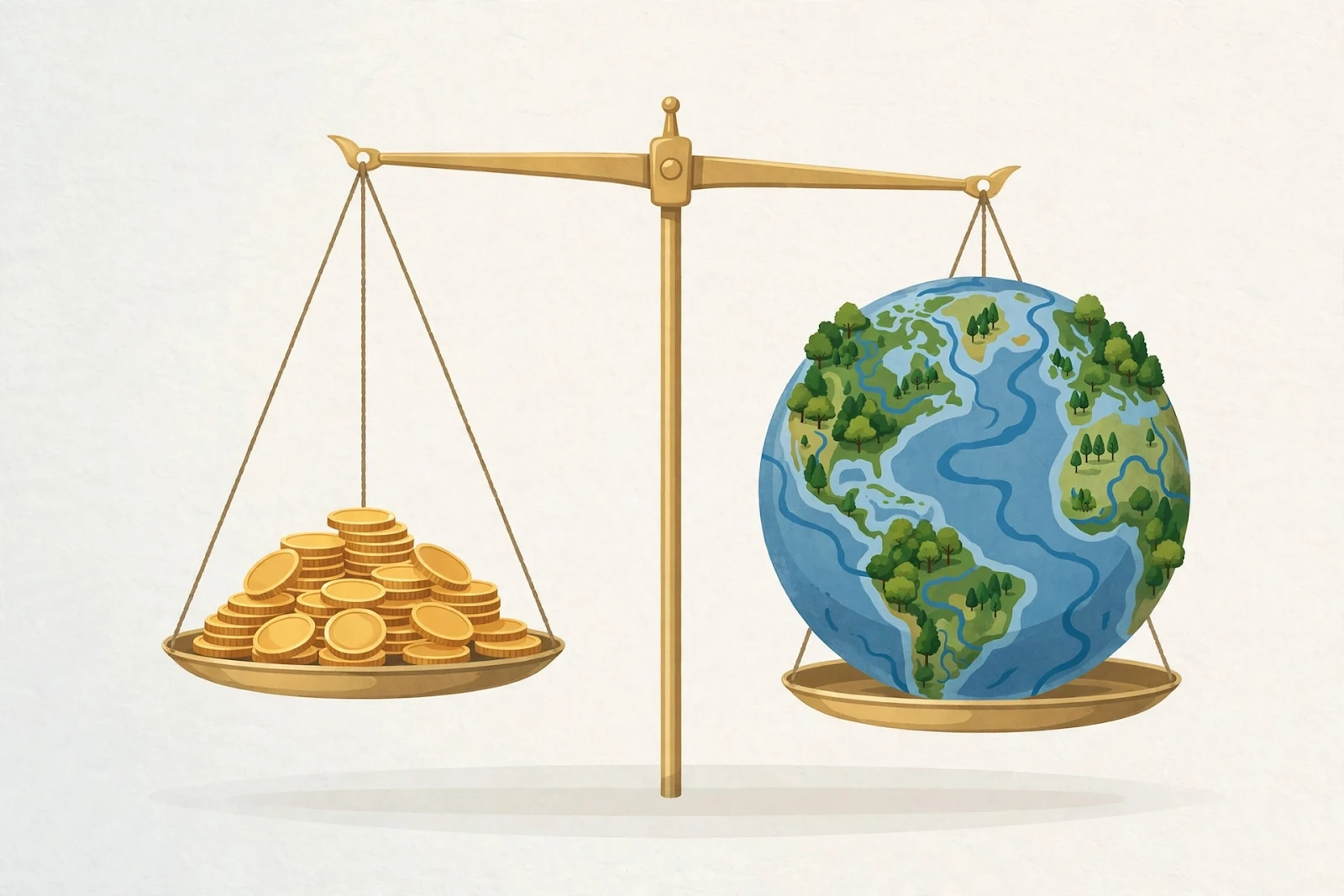
Illustration: A balance scale weighs coins against a globe covered in forests and rivers, symbolising the biodiversity funding gap. This is an AI-generated illustration, not a photograph of a finance negotiation.
Sponsored: explore today's featured sponsored offers
FAQ
What is COP17?
COP17 is the 17th meeting of the Conference of the Parties to the United Nations Convention on Biological Diversity. The 2026 meeting was held over two weeks in Yerevan, Armenia, and carried out the first global review of the Global Biodiversity Framework agreed in Montreal four years earlier.
What is the Yerevan Pathway?
The Yerevan Pathway is the decision adopted at COP17 to accelerate biodiversity action through to 2030. It focuses on reducing harmful subsidies, increasing finance for developing countries, aligning national spending with biodiversity goals, reviewing funding arrangements and setting criteria for a future permanent financing mechanism.
What are the main targets of the Global Biodiversity Framework?
According to Reuters, the framework aims to conserve 30 percent of land, inland waters, and marine and coastal areas by 2030, restore 30 percent of degraded ecosystems, reform harmful subsidies, and mobilise $200 billion a year for biodiversity. It also includes a target to reduce harmful incentives by at least $500 billion a year by 2030.
Why do critics say the COP17 deal is not enough?
Because the finance to deliver it remains elusive, in Reuters' summary. More than $1.8 billion was announced during the conference, according to organisers, but that is far short of the framework's annual mobilisation goal, and some participants said progress on funding arrangements remained too slow. Conservation leaders said the review sent a strong signal but needed to be backed by finance and implementation.
When and where is the next biodiversity conference?
Delegates agreed that COP18 will be held in Quito, Ecuador, in 2028. Before then, climate talks in Turkey starting on 9 November 2026 will test whether nature and climate finance are handled in a joined-up way.
Sources
- Reuters, 31 October 2026: "Countries reach COP17 deal to speed up biodiversity action, but money still short" (Simon Jessop and Virginia Furness)
- United Nations Convention on Biological Diversity framework targets and national-target assessment, as reported by Reuters, 31 October 2026
- Statements by Anita de Horde (Finance for Biodiversity Foundation), Daudi Sumba (WWF International) and Catherine Weller (Fauna & Flora), as reported by Reuters, 31 October 2026
Comments
Post a Comment