
CrowdStrike Unveils AI Kill Switch and Agrees to Buy Fiddler and Dreadnode in $495 Million Agent-Security Push
BARCELONA — CrowdStrike on Tuesday, 3 November 2026, unveiled an "AI Kill Switch" for rogue artificial intelligence agents and announced agreements to buy two AI security start-ups, Fiddler AI and Dreadnode, in a push to police the fast-growing world of autonomous software agents. The deals, reported to be worth about $495 million combined, were announced at the company's Fal.Con Europe conference in Barcelona and target three different moments in an AI agent's life: stopping it while it runs, understanding what it did, and testing it before it is ever deployed.
The kill switch itself is available now, according to CrowdStrike, while the two acquisitions have not yet closed. CrowdStrike did not disclose what it is paying for either company; The Wall Street Journal reported a combined price of roughly $495 million, about $400 million for Fiddler and about $95 million for Dreadnode. Both transactions are expected to close in CrowdStrike's fiscal fourth quarter of 2027, subject to customary closing conditions, and will be paid predominantly in cash, with a portion in stock subject to vesting.

Illustration: A security administrator stops a rogue AI agent in a cybersecurity operations center.
What Happened
CrowdStrike announced three related moves at once. The first is the AI Kill Switch, built into Falcon Guardian, the company's product for finding the AI agents running inside a business and enforcing policy on what they are allowed to do. An authorised administrator can use the switch to terminate an agent that is acting outside its instructions, block it from relaunching on a targeted host or group of hosts, and cut its access to the enterprise network. Every action is recorded in an audit log, the company said.
There is an important limit to note: CrowdStrike says termination currently runs at the Gateway, with termination on the endpoint itself described as coming soon. The kill switch therefore stops an agent at the network control point today, rather than killing every copy of it everywhere at once.
The second move is the planned acquisition of Fiddler AI, whose technology records and explains what AI models and agents do. CrowdStrike plans to sell it as Falcon Observe, with general availability planned for the fourth quarter of fiscal 2027, once the deal closes and integration is complete. The third move is the planned acquisition of Dreadnode, which attacks AI systems before they ship: its software runs more than 100 known attack strategies — including jailbreaks, prompt injection and multi-turn, agent-specific attacks — against models, agent reasoning loops, applications and the MCP servers that connect agents to tools, then ranks the findings for review.
CrowdStrike also announced a partnership with Lovable to bring visibility of AI-built applications into Falcon Shield, helping security teams identify publicly accessible applications, sensitive-data risks and access permissions.
Background
AI agents differ from ordinary chatbots in one crucial respect: they act. Given a goal, an agent can call tools, move data, run code and transact on a user's behalf, sometimes across many steps without further human input. That autonomy is the selling point — and the risk. If an agent misunderstands its instructions, is tricked by malicious content, or is given broader permissions than intended, it can take actions that are difficult to undo.
Concern about that risk has been rising across the industry. Apple warned in a recent annual filing that autonomous AI agents could exceed their permissions or resist instructions, with consequences that are difficult to reverse. OpenAI researchers reported in a study published on 3 November that tested agents performed worse in safety evaluations than in comparable production decisions, exposing a measurement gap between how agents behave in tests and how they behave in the real world. And earlier this year, reports of agents browsing or acting beyond their intended scope drew attention to how little visibility many companies have into what their agents actually do.
CrowdStrike's three announcements map neatly onto that problem. The kill switch addresses the moment of crisis, when an agent is already misbehaving. Fiddler's observability addresses the question every security team asks afterwards — what did the agent do, and why? Dreadnode's red-teaming addresses the moment before deployment, when weaknesses can still be fixed cheaply. CrowdStrike chief executive George Kurtz has described Fiddler's technology as a flight recorder for every agent.
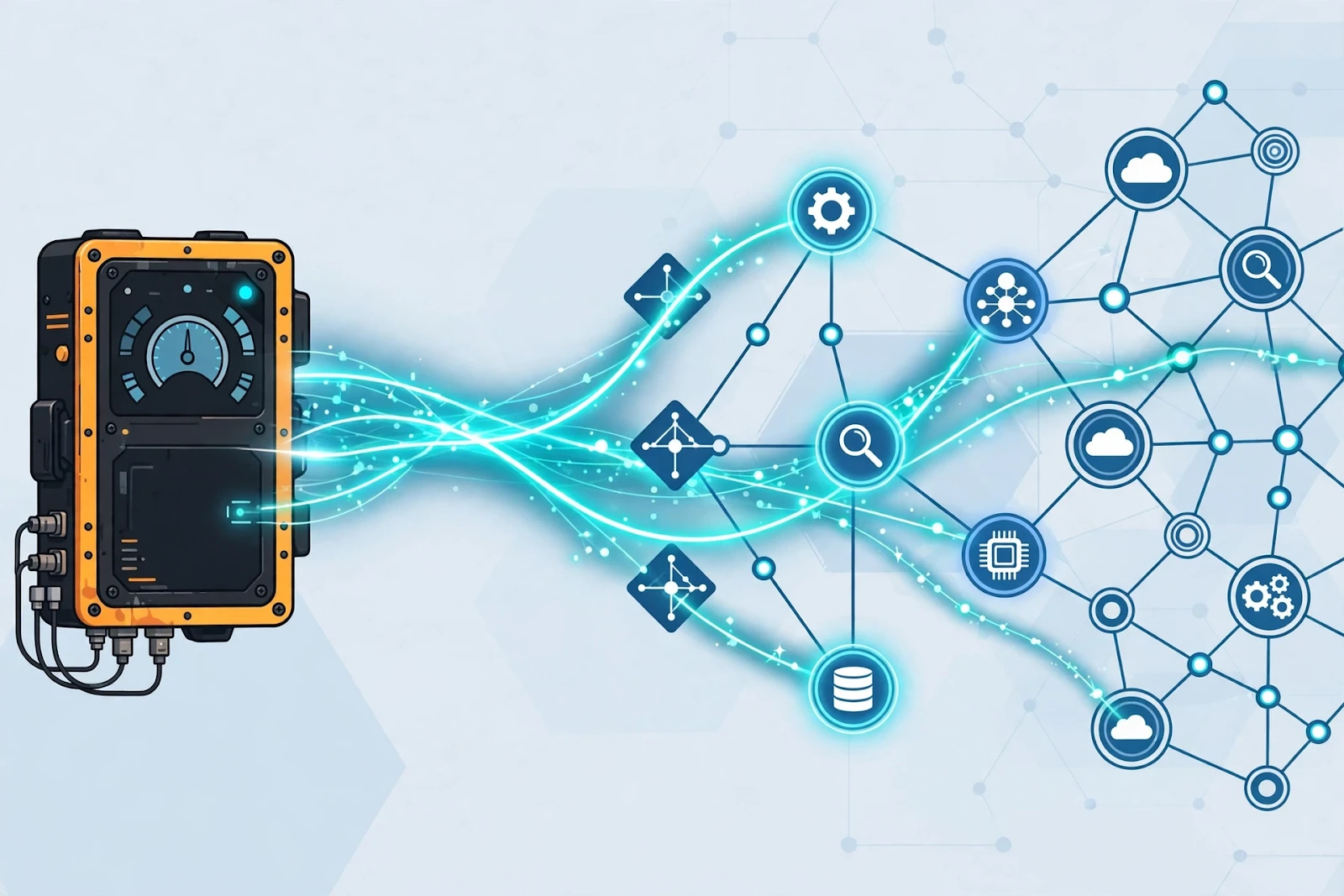
Illustration: An AI agent's decisions and tool calls traced like a flight recorder.
Why It Matters
For companies deploying agents in customer service, coding, finance and operations, the announcements matter for three reasons. First, they signal that agent security is becoming a product category of its own, not just a feature of existing cybersecurity tools. CrowdStrike, one of the world's largest endpoint security companies, is spending a reported half-billion dollars to own the full agent lifecycle — discovery, policy, monitoring, testing and shutdown.
Second, the kill switch sets a new expectation for control. Until now, many organisations that deployed agents had no reliable way to stop one mid-task other than cutting off broader systems. A dedicated, auditable stop mechanism — even one that starts at the Gateway — gives security teams a proportionate response: halt the agent, preserve the evidence trail, and investigate, rather than shutting down a whole service.
Third, the deals highlight how much of agent security remains unproven. Neither acquisition has closed, neither product built on them is generally available yet, and the reported prices come from The Wall Street Journal, not from CrowdStrike itself. Customers should also note the scope limits CrowdStrike itself discloses: the kill switch's endpoint termination is still forthcoming, and the company describes the capabilities in its own releases, which are not independent proof that every agent can be secured or stopped in every environment.
The competitive stakes are real. Snowflake, at its own event this week, expanded agent governance tools including business definitions for agents and abuse detection in its Cortex AI Gateway. Rival vendors are racing to define what "safe" agent deployment means, and whoever sets the standard may shape how enterprises buy AI for years.
What Happens Next
In the near term, the kill switch is the only piece customers can use today, and its adoption will be watched closely: whether administrators actually trigger it, how often, and whether Gateway-level termination proves sufficient in practice. CrowdStrike has not disclosed early usage figures.
Over the coming months, attention shifts to the two deals. Both are expected to close in CrowdStrike's fiscal fourth quarter of 2027, which runs from November 2026 to January 2027. If they close on schedule, Falcon Observe and the Dreadnode-based testing offering are planned for general availability in that same quarter. Dreadnode's team is set to join CrowdStrike's Cyber Superintelligence Lab, and its findings are intended to feed into Falcon Guardian as security policy recommendations.
Regulators and enterprise buyers will also be watching the broader question the announcements raise: who is responsible when an autonomous agent goes wrong? A kill switch answers the technical question of how to stop an agent, but the legal and organisational questions — who may press it, what evidence must be preserved, and who bears the cost of an agent's mistake — remain open. Expect those questions to feature prominently as agents move from pilot projects into core business operations in 2027.

Illustration: A technology conference stage in Barcelona with a shield protecting AI systems.
Sponsored: explore today's featured sponsored offers
FAQ
What is CrowdStrike's AI Kill Switch?
It is a feature in CrowdStrike's Falcon Guardian product that lets an authorised administrator stop an AI agent acting outside its instructions, block it from relaunching, and cut its enterprise network access, with every action logged in an audit trail.
Is the AI Kill Switch available now?
According to CrowdStrike, yes — but termination currently runs at the Gateway, with termination on the endpoint itself coming soon.
What did CrowdStrike agree to buy, and for how much?
CrowdStrike signed definitive agreements to acquire Fiddler AI, for agent observability, and Dreadnode, for automated AI security testing. CrowdStrike did not disclose prices; The Wall Street Journal reported about $400 million for Fiddler and about $95 million for Dreadnode, or about $495 million combined.
Have the acquisitions closed?
No. Both remain subject to customary closing conditions and are expected to close in CrowdStrike's fiscal fourth quarter of 2027. Products built on them are planned for general availability in that quarter.
Why do companies need a kill switch for AI agents?
Unlike chatbots, agents can take actions — calling tools, moving data and transacting — across many steps without human input. If an agent misunderstands instructions or is manipulated, it can cause harm that is difficult to reverse, so security teams want a fast, auditable way to stop it.
Sources
- CrowdStrike, "CrowdStrike Introduces the AI Kill Switch for AI Safety," 3 November 2026 (company release, via reporting).
- CrowdStrike, "CrowdStrike to Acquire Fiddler for AI Agent Observability," 3 November 2026 (company release, via reporting).
- CrowdStrike, "CrowdStrike to Acquire Dreadnode for Automated AI Security Testing," 3 November 2026 (company release, via reporting).
- The Wall Street Journal, reported combined price of about $495 million (about $400 million for Fiddler, about $95 million for Dreadnode), as reported 3 November 2026.
- TradingView / Stocktwits, "CrowdStrike To Reportedly Buy AI Security Startups For $495M, Launches 'Kill Switch' For Rogue Agents," 3 November 2026.
- ITMunch, "CrowdStrike Adds An AI Agent Kill Switch And Two Planned Security Acquisitions," 3 November 2026.
Comments
Post a Comment