
Beyfortus Cut RSV Hospitalisations by 70% — Now Research Says Babies With Heart Defects Need a Second Season Dose
AKRON, Ohio — New research from Akron Children's hospital suggests that a single preventive shot against respiratory syncytial virus (RSV) cut the risk of hospitalisation by about 70% in healthy babies and by about 60% in babies born with heart defects — and that children with congenital heart disease (CHD) remain at elevated risk in their second RSV season, when current United States federal guidance does not recommend the shot for them.
The findings, presented by Dr. Jenna Smarzinski at the American Academy of Pediatrics (AAP) National Conference in San Diego in early October 2026, make a case for changing national policy so children with CHD receive Beyfortus in their second RSV season as well as their first, the hospital said on 9 November 2026.

Illustration: A newborn infant resting in a hospital crib as a nurse checks on the baby in a paediatric ward.
What Happened
Dr. Smarzinski, a second-year pediatrics resident at Akron Children's, presented the research at the AAP National Conference & Exhibition in San Diego in early October. Her podium presentation won first place for the 2026 Young Investigator Award from the AAP Section on Cardiology and Cardiac Surgery, in a competition that drew more than 200 submitted abstracts, according to Akron Children's.
"This study has the potential to change national policy on RSV prevention in children with CHD," said Dr. Michael Forbes, chief scientific advisor at Akron Children's, in the hospital's report on the research.
The study drew on Epic Cosmos, an electronic health record database covering more than 300 million patients. The researchers analysed the outcomes of more than one million infants born between April 2023 and March 2026 who either received Beyfortus within 30 days of the start of RSV season or received no RSV prevention at all, comparing children with no risk factors against children with congenital heart disease.
During their first RSV season, children with CHD faced approximately triple the risk of hospitalisation with RSV compared with children without CHD. Beyfortus substantially lowered that risk in both groups: children with no risk factors who received the shot had about a 70% lower risk of RSV hospitalisation than those who did not, while children with CHD had about a 60% lower risk.
The benefit was even larger for the heart-disease group. The researchers calculated that about 94 Beyfortus shots would need to be given to prevent one hospital admission among children with no risk factors, compared with only 37 shots to prevent one admission among children with CHD — a reflection of how much higher the underlying risk is for babies born with heart defects.
The second-season data told a similar story. Without Beyfortus, children with no risk factors had about a half-percent chance of being hospitalised with RSV during their second season, down from a 1.6% chance during their first season. For children with CHD, the risk of RSV hospitalisation during their second season was 1.8% — much lower than their 4.8% first-season risk, but still higher than the first-season risk of children with no risk factors, who are already covered by current federal recommendations.
"The data show we should be supporting these kids with CHD during their second RSV season," said Dr. Smarzinski, who plans to become a pediatric cardiologist. Her mentor was Dr. Jonathan Pelletier, a pediatric intensivist at Akron Children's.
Background
RSV, respiratory syncytial virus, is the most common cause of bronchiolitis — inflammation of the small airways in the lungs — and the leading cause of hospitalisation among infants in the United States, according to Akron Children's. Most children catch RSV before the age of two; for most it is a bad cold, but it can cause severe breathing difficulty in very young babies and in children with underlying conditions. Infants and toddlers with congenital heart disease are at even higher risk.
Prevention has changed rapidly in recent years. Synagis (palivizumab), which required a monthly injection through the RSV season, was the first monoclonal antibody for RSV approved by the U.S. Food and Drug Administration (FDA). Beginning in 2023 it was replaced by Beyfortus (nirsevimab), a one-time injection that protects for a whole season; Synagis was discontinued in the United States at the end of 2025.
When the long-acting shot became available, neither the AAP nor the CDC recommended a second-season dose for children with CHD. That changed in September 2026. The AAP now recommends the shot for all babies in their first RSV season, and for children at higher risk — including many with serious heart defects — in their second season too. The AAP's updated policy statement, issued on 2 September 2026, expanded the definition of high risk for children aged 8 to 19 months entering their second season, adding four new criteria including hemodynamically significant congenital heart disease — a defect that can cause symptoms or enlargement of the heart's chambers.
But the CDC, whose recommendations influence insurance coverage, currently differs. The CDC recommends Beyfortus for all infants in their first RSV season and for high-risk children in their second season. However, CHD is not one of the CDC's high-risk criteria for a second-season dose. The researchers believe their findings make a strong case for the CDC to add CHD to its second-season criteria.
"What is the right thing to do for these children?" Dr. Pelletier said, describing the question that motivated the study. "It really is important for us to use this opportunity to talk to policymakers and consider whether we might be able to get the CDC recommendations changed to align with the AAP," he added.
This is a different study from the RSV research this blog reported on 31 October (article #599), which examined RSV in Qatar. The Akron study is a separate, United States-based analysis with a different dataset, different researchers and different findings.
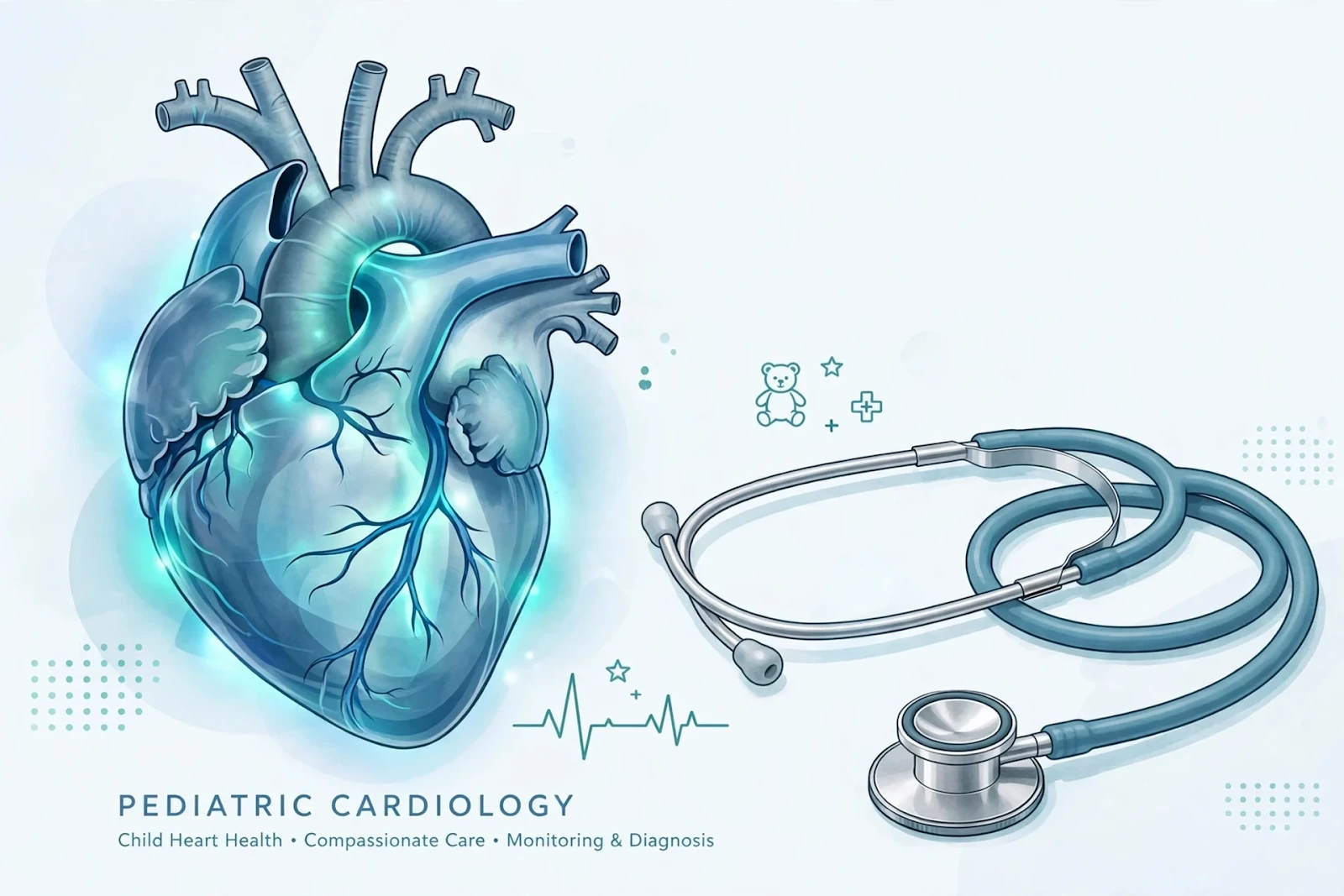
Illustration: A stylised heart with a stethoscope, representing paediatric cardiology and the heart conditions studied in the research.
Why It Matters
The study matters first because of the children it concerns. Congenital heart disease is the most common type of birth defect, and babies born with heart defects already face surgery, hospital stays and a childhood shaped by medical appointments. An RSV infection that might mean a few days of coughing for a healthy baby can mean intensive care for a baby with a heart defect. The Akron data put numbers on that vulnerability: triple the hospitalisation risk in the first season, and a second-season risk still higher than the first-season risk of healthy babies who already qualify for protection.
It matters second because of the economics. The list price of Beyfortus is about $550 a dose, according to Akron Children's. A 2023 study of Medicaid claims found that an RSV hospitalisation costs an average of about $14,000 for infants overall and about $23,000 for infants with CHD. "So for kids with CHD in their first season, Beyfortus roughly pays for itself on hospital costs alone," said Dr. Pelletier. "The 37 doses it takes to prevent one admission cost about $20,000, and that one admission costs about $23,000. That's only the direct healthcare costs. You also need to include all the downstream costs that these families accrue. There's the parents' time off from work, the separation from siblings, and all the stress and worry they endure during a young child's hospitalisation."
It matters third because of the policy split it exposes. The AAP and the CDC are the two most influential voices in American childhood immunisation policy, and they now disagree on whether children with heart defects should receive Beyfortus in their second RSV season. Because CDC recommendations influence insurance coverage, the disagreement is not academic: a family whose child qualifies under the AAP's guidance but not the CDC's may find the shot harder to obtain or to have covered. The Akron study was designed to provide the data that could answer that question — and its authors are now taking the findings to policymakers.
It matters fourth because of the scale of the evidence. Studies of more than a million infants are rare in pediatrics, and the researchers themselves call for further study of how well a second-season dose protects children with CHD. But the scale of the data makes the results difficult to dismiss as a quirk of a small sample.
What Happens Next
The most immediate next step is the policy conversation the researchers have already begun. Dr. Pelletier said the team wants to use the opportunity to talk to policymakers about changing the CDC recommendations to align with the AAP. The researchers believe their findings make a strong case for the CDC to add congenital heart disease to its second-season criteria — a change that would bring federal guidance into line with the AAP and, the researchers argue, with the evidence.
Whether the CDC acts, and how quickly, remains to be seen. Federal immunisation recommendations are made through the Advisory Committee on Immunization Practices (ACIP), which weighs evidence on safety, effectiveness and cost, and changes typically follow a formal review process rather than a single study. The Akron findings would be one piece of evidence in that process. Whether the team has formally submitted its data to the CDC or to ACIP is unconfirmed at the time of writing.
Further research is also needed on how well a second-season dose itself protects children with CHD, which would strengthen the case for a policy change and give clinicians clearer guidance on timing and dosing.
For families, the practical picture is mixed. The AAP's September 2026 guidance already recommends a second-season dose for many children with serious heart defects, so parents of children with CHD can discuss the shot with their child's doctor now. But coverage may vary while the CDC's criteria remain narrower, so families should check with their clinician and insurer rather than assuming the dose is covered.

Illustration: A parent holding a baby while discussing RSV prevention with a doctor in a paediatric clinic.
Sponsored: explore today's featured sponsored offers
FAQ
What is RSV, and why is it dangerous for babies?
RSV, or respiratory syncytial virus, is a common virus that infects the lungs and airways. It is the most common cause of bronchiolitis and the leading cause of hospitalisation among infants in the United States, according to Akron Children's. Most children catch it before the age of two; for healthy babies it is often a bad cold, but for very young infants and children with underlying conditions — including congenital heart disease — it can cause severe breathing difficulty requiring hospital care.
What is Beyfortus, and how does it work?
Beyfortus (nirsevimab) is a long-acting monoclonal antibody that provides protection against RSV for a whole season from a single injection. It works much like a vaccine, although it is an antibody given directly. It replaced the older monthly injection Synagis beginning in 2023. The AAP recommends it for all babies in their first RSV season, and for higher-risk children in their second season.
What did the Akron Children's study find?
Using data from more than one million infants born between April 2023 and March 2026, the researchers found that Beyfortus cut the risk of RSV hospitalisation by about 70% in children with no risk factors and by about 60% in children with congenital heart disease during their first RSV season. Children with CHD faced about triple the hospitalisation risk of children without CHD. Without Beyfortus, the second-season hospitalisation risk was 1.8% for children with CHD, compared with about 0.5% for children with no risk factors. About 37 shots were needed to prevent one admission among children with CHD, versus about 94 among children with no risk factors.
Why do the AAP and the CDC disagree on second-season doses for children with heart defects?
In September 2026, the AAP expanded its recommendations so that higher-risk children — including many with serious heart defects — qualify for a second-season dose of Beyfortus at ages 8 to 19 months. The CDC's criteria for a second-season dose, which date to 2023, do not include congenital heart disease. Because CDC recommendations influence insurance coverage, the gap can affect whether families can obtain the shot. The Akron researchers argue the CDC should add CHD to its second-season criteria.
Is this the same as the blog's earlier RSV story from Qatar?
No. This blog's earlier RSV article, published on 31 October 2026 (article #599), reported on a different study conducted in Qatar, with different researchers and findings. The Akron Children's study is a separate, United States-based analysis of Beyfortus and congenital heart disease, presented at the AAP National Conference in San Diego in early October 2026.
Sources
- Akron Children's, Inside Children's Blog — "Akron Children's RSV research has potential to change national RSV prevention policy", 9 November 2026. https://www.akronchildrens.org/inside/2026/11/09/akron-childrens-rsv-research-has-potential-to-change-national-rsv-prevention-policy/
- Infectious Disease Advisor — "AAP Broadens High-Risk Criteria for RSV Immunization", September 2026. https://www.infectiousdiseaseadvisor.com/news/aap-expands-high-risk-rsv-immunization-criteria/
- Immunize.org — "Ask The Experts About Vaccines: RSV (Respiratory Syncytial Virus) | RSV Preventive Antibody Recommendations for Infants", reviewed 23 September 2026. https://www.immunize.org/ask-experts/topic/rsv/rsv-preventive-antibody-infants/
- Immunize.org — "Standing Orders for Administering Nirsevimab RSV Preventive Antibody to Infants and High-Risk Young Children" (Item #P3097, 14 September 2026). https://www.immunize.org/wp-content/uploads/catg.d/p3097.pdf
- American Academy of Pediatrics — "American Academy of Pediatrics issues recommendations for RSV immunizations 2026-2027", 2 September 2026. https://www.aap.org/en/news-room/news-releases/aap/2026/american-academy-of-pediatrics-issues-recommendations-for-rsv-immunizations-2026-2027/
- Pediatric Parent Guide — "RSV Shot for Babies 2026–2027: Does Yours Need It?", updated 15 October 2026. https://pediatricparentguide.com/blogs/parent-resources/rsv-shot-for-babies-20262027-new-aap-recommendations-explained
Health disclaimer: This article is for general information only and is not medical advice. RSV prevention decisions for a child — including whether a second-season dose of Beyfortus is appropriate — should be made with the child's own pediatrician or cardiologist. Always consult a qualified healthcare professional about your child's health.
Comments
Post a Comment