
LONDON — Britain and the European Union have agreed a draft deal that would remove most border checks imposed on food and farm goods since Brexit, the centrepiece of a wider reset in relations between London and Brussels. The agreement, reported by the BBC on 3 November 2026, is now circulating among EU governments ahead of a summit later this month.
The draft text, running to about two hundred pages, covers sanitary and phytosanitary rules, the health and safety standards governing trade in animals, plants and food products. It was sent to member states for consideration at a meeting of EU ambassadors, known as Coreper, on Wednesday, alongside drafts on emissions trading, a youth scheme and a joint statement.
For exporters, the practical change would be sweeping. Certificates, inspection fees and sampling charges that have added cost and delay to every consignment since Britain left the single market would largely fall away, and product lines blocked for years could return. The government estimates the economy will eventually gain about 5.1 billion pounds a year from the deal.

Illustration: British and EU flags above a border crossing with a food delivery truck. This is an illustration, not a photograph of a real event.
What Happened
According to the BBC, Britain and the EU have reached a draft sanitary and phytosanitary agreement, commonly called an SPS deal, aimed at removing much of the paperwork, border checks and costs affecting food and agricultural trade since Brexit. The BBC understands the 200-page draft has been circulated to EU nations for consideration at the Coreper meeting on Wednesday 4 November 2026.
The food deal is described as the most significant part of the so-called Brexit reset agreed so far. It would remove export health certificates costing around 200 pounds, phytosanitary certificates priced at about 25 pounds, and related charges including inspector fees, organic certification costs, some port fees and sampling fees. Other checks that have slowed shipments since Britain left the single market would also fall away in both directions.
Among the goods that would be able to move again are fresh sausages and burgers, shellfish caught in domestic waters, and seed potatoes. All three were hit hard by the post-Brexit paperwork regime, with some producers giving up on European customers rather than absorbing certification costs for every consignment. The deal would also bring back pet passports for animals travelling from Britain into the EU, ending the need for fresh veterinary documentation for each trip.
In return, Britain would commit to following and adapting to existing EU rules on plant, animal and food trade standards, a process known as dynamic alignment. British rules remain broadly in line with the European rulebook, but England has moved in a different direction in areas including the precision breeding of plants, previously described as gene editing. Negotiators have settled transition arrangements for those areas while the EU own new regulations come into force.
The government has already announced a European Partnerships Bill which would provide the legal mechanism for applying new EU rules in Britain, and allow the linking of the British and EU emissions trading schemes, sparing British exporters from paying the EU new carbon border tax. Separate drafts on emissions trading and a youth travel and work scheme have been circulated alongside the food deal, with the draft joint statement for the summit.

Illustration: A summit conference table with UK and EU flags and documents. This is an illustration, not a photograph of a real event.
Background
When Britain left the EU single market, food and farm goods became subject to a full third-country border regime for the first time in decades. Every consignment could require health certificates, plant-health paperwork, inspections and fees, even where British and EU standards had barely diverged. For perishable products, the delays were often as damaging as the charges.
The post-Brexit trade deal signed by Boris Johnson government prioritised regulatory freedom for the UK over avoiding new red tape, checks and delays. That preserved the right to diverge from EU rules, but meant British exporters faced the EU external border in full. Small producers were hit hardest: a 200-pound certificate on a modest shipment could erase the margin entirely, and many simply stopped selling into Europe.
The current reset trades some of that regulatory freedom for smoother borders. Under dynamic alignment, Britain would track EU food, plant and animal standards as they evolve, rather than setting a separate course. Supporters call alignment a modest price for removing friction on thousands of shipments a week; critics argue it hands rule-making power back to Brussels without a seat at the table.
The wider reset package goes beyond food. The BBC understands the drafts also include references to UK involvement in defence cooperation schemes, access to law enforcement databases and reassurances over EU plans to favour European manufacturing. A discount on full tuition fees for EU students is likely to be pushed to next year, alongside a plan to reconnect electricity markets.
Business groups have been pushing for a closer relationship for months. The British Chambers of Commerce published fresh analysis on Monday 2 November 2026, describing firms as struggling with a thicket of red tape nearly six years after Britain exit from the bloc. In its survey, 56 percent of exporting businesses said they wanted customs paperwork and delays removed so they could grow, rising to 58 percent among manufacturers. The lobby group urged the government to examine and publish options for the future, including a customs union, a Swiss-style single market arrangement, and a Canada-style associate membership.
Why It Matters
The food deal matters first because it touches everyday prices and choices. Removing certificates and inspection fees lowers the cost of moving food across the Channel, and faster crossings mean fresher produce and less waste. For supermarkets and farming representatives, who have backed the plans, that is the most tangible benefit of the reset so far.
It matters second because of what it signals about sovereignty and alignment. Dynamic alignment makes the deal work, but it also draws the sharpest criticism. Some Brexit campaigners have criticised the reapplication of EU rules, arguing that the original post-Brexit deal deliberately prioritised regulatory freedom. How the government sells that trade-off, through the European Partnerships Bill and in Parliament, will shape whether the deal survives scrutiny.
It matters third because of the money attached to it. An estimated 5.1 billion pounds a year in eventual benefits is a large claim, to be tested against implementation. If those gains materialise, the deal becomes the economic anchor of the reset; if they do not, critics will ask what alignment bought.
Finally, the deal matters as a diplomatic staging post. The drafts are circulating ahead of a summit later in November 2026. The prime minister has said he wants to use that summit to open a longer-term conversation about the future, including the possibility of going all the way and rejoining the bloc, a decisive break with the post-referendum settlement.
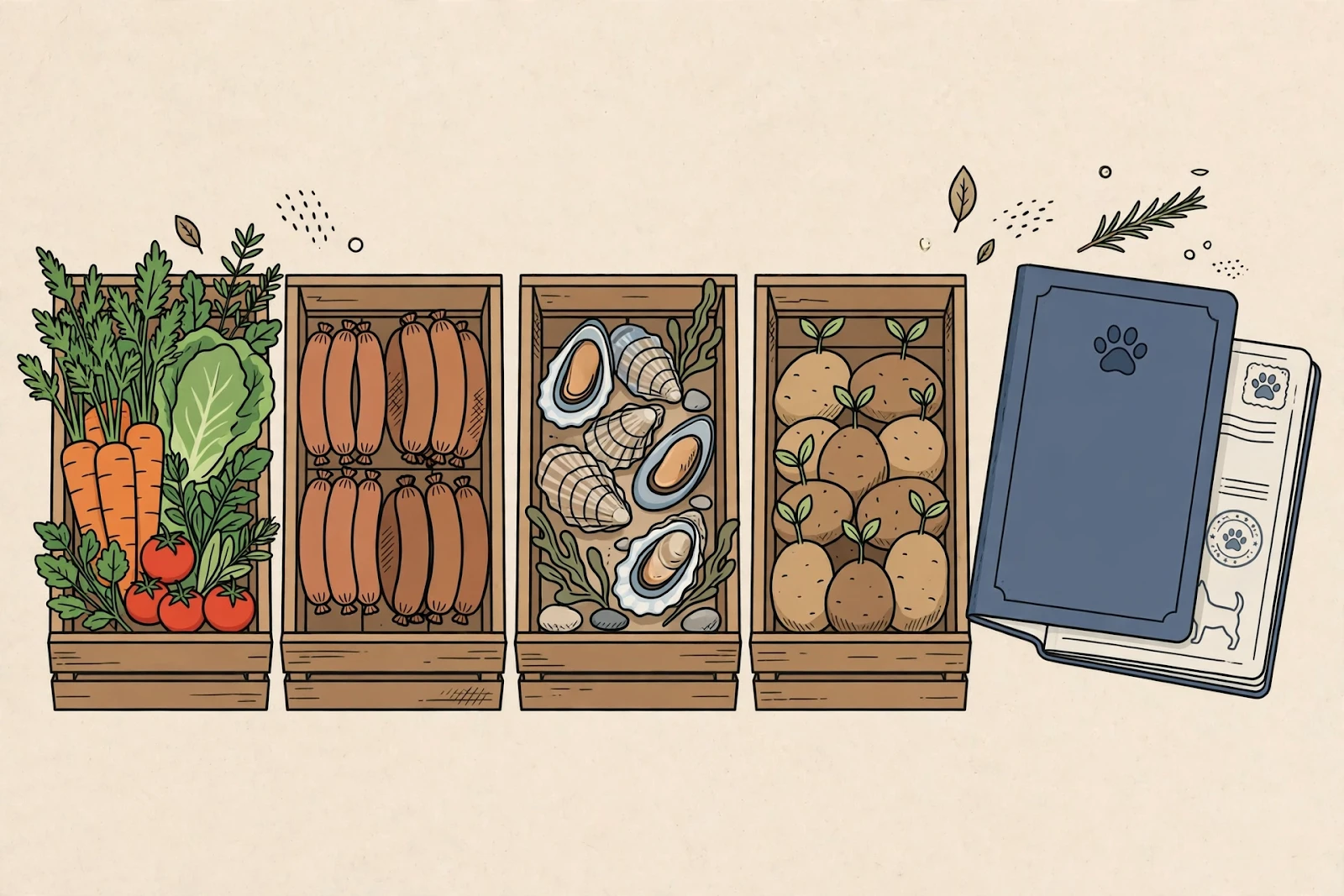
Illustration: Fresh farm produce in crates beside a pet travel document. This is an illustration, not a photograph of a real event.
What Happens Next
The immediate next step is the Coreper meeting of EU ambassadors on Wednesday 4 November 2026, where member states will consider the draft texts. Any objections at that stage will determine how much of the package can be presented as settled before the summit. Youth experience scheme numbers are also expected to be finalised at a political level in the coming days.
Attention then turns to the UK-EU summit later in November 2026. Leaders are expected to discuss the fifteen-page draft joint statement and set the direction for the next stage of the relationship. The prime minister longer-term conversation, including the possibility of rejoining the bloc, will be tested against the views of EU leaders and his own Parliament.
In London, the European Partnerships Bill will be the legislative vehicle for the deal, providing a workable mechanism for applying new EU rules in Britain. It will face debate over the scope of dynamic alignment and its safeguards, and transition arrangements for precision breeding, where England has diverged, will need spelling out.
For businesses, the watch points are practical: when the new arrangements take effect, which certificates disappear first, and whether savings reach small exporters as well as large ones. The British Chambers of Commerce has called on the government to involve business from the start and stay clear-headed about the trade-offs of each option.
One caution applies throughout. The agreement reported on 3 November 2026 is a draft, not a signed treaty. Drafts can change at Coreper, at the summit and in legislation, and the 5.1 billion pound benefit estimate is a government projection, not a measured outcome.
Sponsored: explore today's featured sponsored offers
FAQ
What is the UK-EU draft food deal?
It is a draft sanitary and phytosanitary agreement, reported by the BBC on 3 November 2026, that would remove most border checks on food and farm goods traded between Britain and the EU since Brexit. The draft runs to about 200 pages and would scrap fees such as 200-pound export health certificates and 25-pound phytosanitary certificates.
Which products would be able to move again?
Fresh sausages and burgers, shellfish caught in domestic waters, and seed potatoes are among the goods that would resume moving across the Channel, according to the BBC. Pet passports for animals travelling from Britain into the EU would also return, replacing fresh veterinary documentation for each trip.
What is dynamic alignment?
Dynamic alignment means Britain would commit to observing and adapting to existing EU regulations on plant, animal and food trade standards as they evolve. British rules remain mostly aligned with EU ones, but England has diverged in areas such as precision breeding, with transition arrangements agreed while EU new regulations come into force.
How much is the deal worth, according to the government?
The government estimates the economy will eventually gain about 5.1 billion pounds a year from the deal, reflecting lower business costs, faster crossings for perishables and reopened product lines. It is a projection, not a measured result.
What happens next for the deal?
EU ambassadors will consider the drafts at Coreper on Wednesday 4 November 2026, and leaders are expected to discuss the package at a UK-EU summit later in November 2026. In London, a European Partnerships Bill would provide the legal mechanism for applying new EU rules.
Sources
- BBC News, "UK and EU agree draft deal to scrap Brexit red tape over food exports," 3 November 2026, via World Right Now and Bytes Europe republications.
- British Chambers of Commerce member analysis, published Monday 2 November 2026, as reported by the BBC on 3 November 2026.
- UK government estimates and European Partnerships Bill announcement, as reported by the BBC on 3 November 2026.
Comments
Post a Comment