
STOCKHOLM, Sweden — The Swedish Academy on Thursday, October 8, 2026, awarded the Nobel Prize in Literature to Canadian author Anne Carson, honouring the poet, essayist and translator of the Greek classics for a body of work that has blurred the lines between poetry, scholarship and prose for four decades.

Illustration: ancient Greek marble columns and fragments at sunset, with a poet's quill and parchment scrolls in the foreground.
What Happened
The Academy announced that the 2026 prize goes to Carson "for her bold and inventive oeuvre that, in playful dialogue with the classical tradition, has created new forms for contemporary literature." She is the sole laureate, receiving the full prize share, and the prize amount for 2026 is SEK 12 million per category, following a decision by the Nobel Foundation on September 18, according to the Academy's press release.
Permanent secretary Ingrid Carlberg reached the 76-year-old Carson by telephone shortly before the public announcement — and found her in Iceland, where she was, in her own later words, "listening to the wind." Carson reacted with characteristic disbelief, telling the Icelandic broadcaster RÚV: "I think they're all crazy… Well, you know, it's crazy." The Academy said she was taken by surprise but very happy.
Carson becomes only the second Canadian to win the literature prize, thirteen years after Alice Munro in 2013, and — according to reporting by Brussels Signal — the 19th woman to receive the distinction since 1901.
Background
Born in Toronto on June 21, 1950, Carson was first and foremost a Hellenist and classical philologist before she became a writer. She earned three degrees from the University of Toronto's Faculty of Arts & Science, studied under the classicist Kenneth Dover at the University of St Andrews, and taught classics for more than 30 years at institutions including Princeton, Emory, McGill — where she became the John MacNaughton Professor of Classics — the University of Michigan, and Berkeley.
Her 1986 debut, Eros the Bittersweet, grew out of her doctoral work on Sappho and explored love and longing through ancient Greek thought. She is best known to many readers for Autobiography of Red (1998), a verse novel that transforms the Greek myth of Herakles and the red-winged monster Geryon into a contemporary coming-of-age love story, and for If Not, Winter, a translation of Sappho's surviving fragments that treats the poems' missing portions as part of the text itself. Other celebrated works include Men in the Off Hours, which won Canada's Griffin Prize for poetry in 2001, Antigonick (2012), her radical reworking of Sophocles, Nox (2010), an elegy for her brother published as a single folded concertina of text and photographs, and Norma Jeane Baker of Troy, which sets Marilyn Monroe alongside Helen of Troy.
Her honours were already extensive before October 8: a MacArthur "genius" grant in 2000, two Griffin Poetry Prizes, a Governor General's Literary Award, the T. S. Eliot Prize for Poetry, and Spain's Princess of Asturias Award for Literature in 2020. For more than a decade she had been a fixture on bookmakers' lists of Nobel favourites, usually alongside the Chinese novelist Can Xue, with Margaret Atwood also among the most cited names this year, according to Le Monde.
Anders Olsson, chair of the Academy's Nobel committee, said Carson's work shows a rare feel for the ties between body and soul, and between "the living and the dead," describing her as an innovator in contemporary prose. "Almost all her literary production has centered upon the intersection between the philologist's obsession with words and the poet's desire for new meaning," he said.

Illustration: a gold Nobel medal resting beside an open book of poetry on a wooden desk in soft library light.
Why It Matters
The choice of Carson is a quiet rebuke to the idea that literature's highest honours must go to traditional novelists. Her oeuvre — spanning poetry, essay, translation, scholarship and collaborations with dancers, musicians and visual artists — is perhaps the most genre-defying in the prize's recent history, and the Academy's citation explicitly celebrates that inventiveness.
For Canada, the award caps a remarkable few years of literary recognition, giving the country its second literature laureate and putting the spotlight on a writer who, while hugely influential among poets and scholars, remains less known to general foreign audiences than Atwood or Munro. University of Toronto president Melanie Woodin called it "a very proud moment" for the university's global alumni community.
And there is the expected Nobel effect: publishers around the world are rushing to reprint and retranslate her more than 20 books, which already circulate widely in Spanish, Catalan, German and Italian. For a writer whose work is famously demanding — playful typography, classical allusions, untranslated fragments — the prize is likely to bring the largest general readership she has ever had.
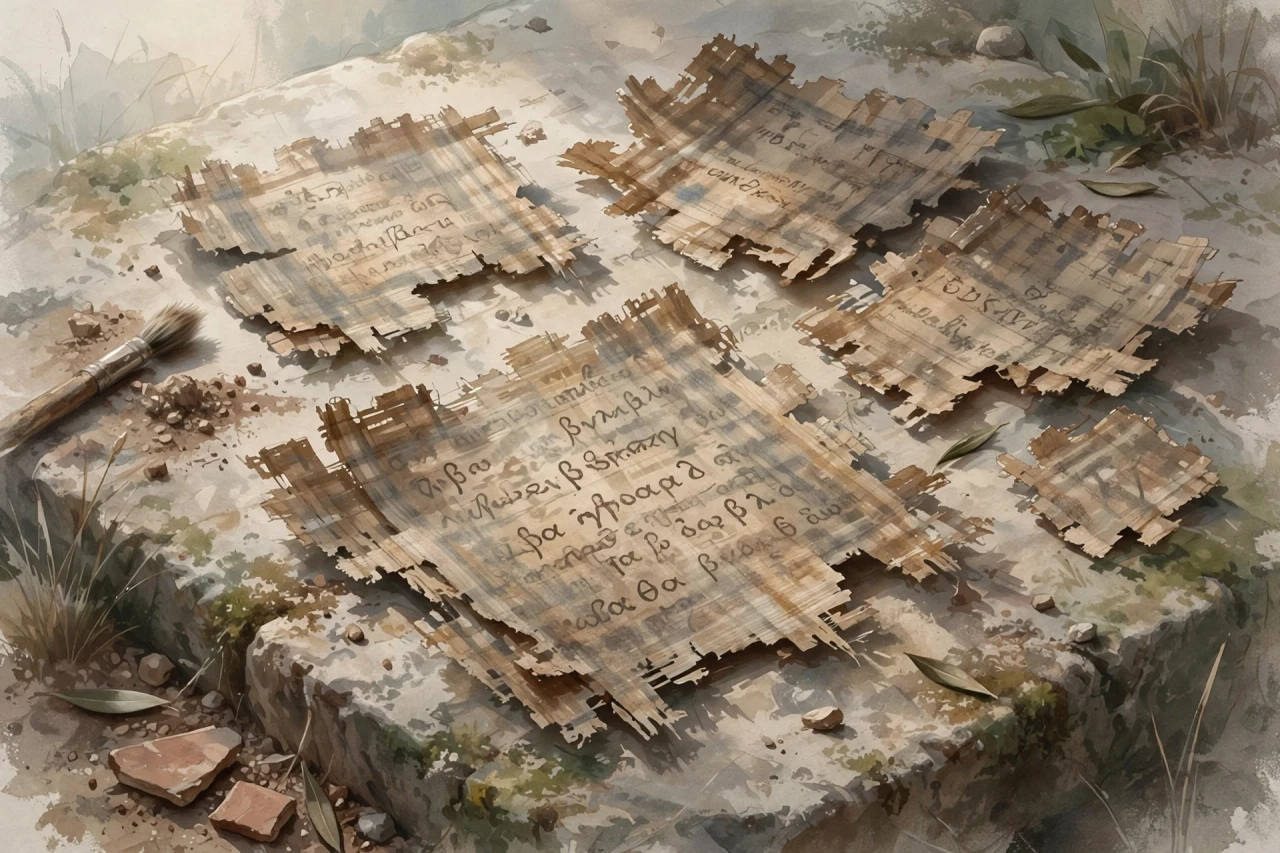
Illustration: ancient papyrus fragments with faded Greek letters scattered on a stone table in archaeological light.
What Happens Next
The prize will be presented on December 10 in Stockholm, the anniversary of Alfred Nobel's death. Before then, Carson is expected to deliver her Nobel lecture — always a closely watched event — and to attend the traditional Nobel banquet, where laureates from physics, chemistry, medicine, literature, peace and economic sciences gather.
Publishers are already preparing expanded print runs and new editions; booksellers typically report that Nobel laureates' back catalogues sell out within days of the announcement. The Nobel committee's chair also offered a practical entry point for new readers, with chair Anders Olsson publishing his own recommendations on which Carson book to pick up first via the Nobel Prize website.
Sponsored: explore today's featured sponsored offers
FAQ
Who is Anne Carson?
Anne Carson is a Canadian poet, essayist, classicist and translator of ancient Greek literature, born in Toronto in 1950. Before becoming a writer she was a professor of classics for over 30 years, teaching at Princeton, McGill, the University of Michigan and Berkeley, and she is known for genre-blending works such as Autobiography of Red and Eros the Bittersweet.
Why did she win the Nobel Prize in Literature?
The Swedish Academy cited her "bold and inventive oeuvre that, in playful dialogue with the classical tradition, has created new forms for contemporary literature." The committee praised her fusing of scholarship, poetry and prose and her translations of Greek tragedies, which it said may be regarded as independent works in their own right.
When will she receive the prize?
The Nobel prizes are presented on December 10 in Stockholm. Carson will deliver a Nobel lecture and attend the traditional banquet alongside the laureates in the other categories.
Which of her books should a new reader start with?
Eros the Bittersweet (1986) is the classic entry point, exploring desire through ancient Greek thought; Autobiography of Red (1998) is her most celebrated work, a verse novel based on the myth of Geryon; and If Not, Winter offers her celebrated translation of Sappho's fragments. Nobel committee chair Anders Olsson has also published his own reading recommendations on nobelprize.org.
How much is the prize worth in 2026?
The prize amount for 2026 is SEK 12 million per prize category, following a decision by the Nobel Foundation on September 18, 2026. As the sole literature laureate, Carson receives the full share.
Sources
- Associated Press (via The Sen Times), October 8, 2026 — Canadian poet and essayist Anne Carson wins Nobel Prize in literature; announcement in Stockholm.
- Le Monde, October 8, 2026 — Canadian writer Anne Carson awarded 2026 Nobel Prize in literature; profile of her classical scholarship.
- nobelprize.org, press release, October 8, 2026 — The Nobel Prize in Literature for 2026 awarded to Anne Carson, sole laureate; prize amount SEK 12 million.
- University of Toronto, October 8, 2026 — Anne Carson wins 2026 Nobel Prize in Literature; three U of T degrees; president's statement.
- Brussels Signal, October 8, 2026 — Anne Carson wins Nobel literature prize; 19th woman laureate; MacArthur grant and bookmaker-favourite history.
Comments
Post a Comment