
Canadian Prime Minister Mark Carney will host European Council President António Costa and European Commission President Ursula von der Leyen in Montreal on October 29–30, 2026, for an EU–Canada summit that both sides present as the launch of a far deeper strategic partnership — an "alliance for the future" spanning digital trade, defense, critical minerals, energy and support for Ukraine. The summit arrives as Canada seeks to diversify away from a trade war with the United States, and as Europe searches for reliable partners beyond an increasingly unpredictable Washington.
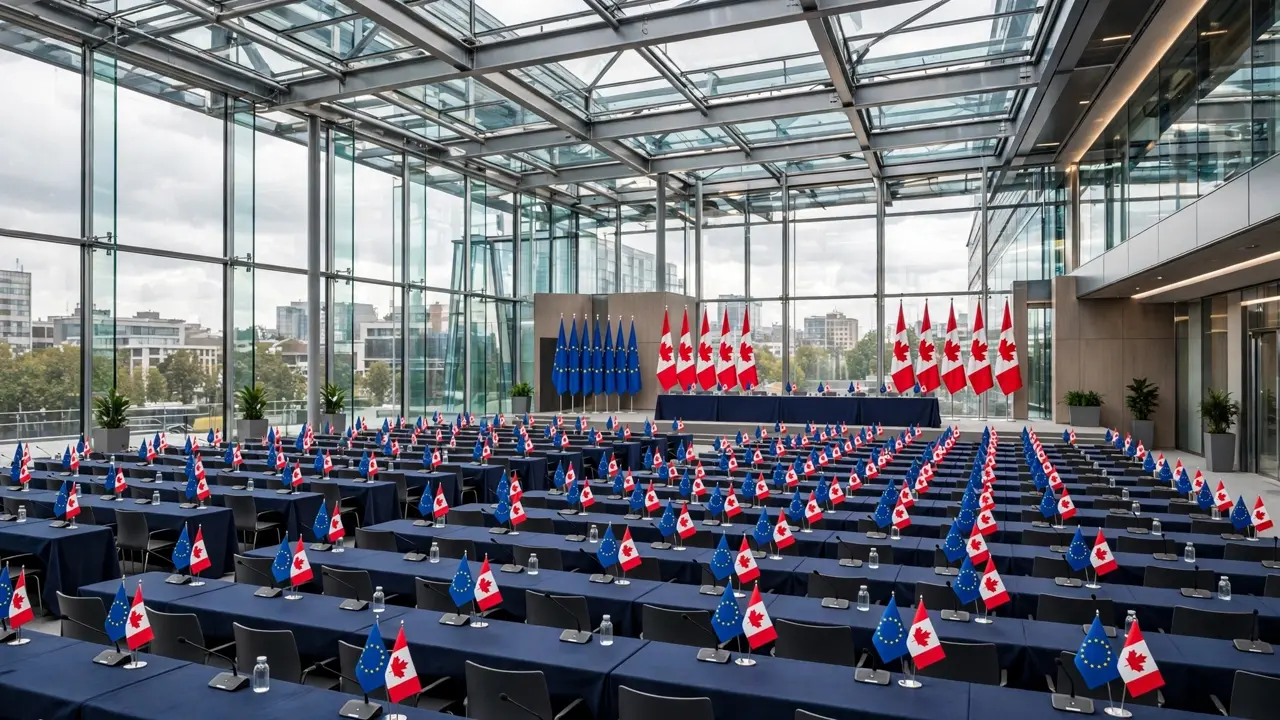
Illustration: an international summit hall with EU and Canadian flags. This is an AI-generated illustration, not a real photograph of the event.
What Happened
Ottawa announced that Carney will receive Costa and von der Leyen in Montreal for the summit at the end of October — the first such meeting since the full trade war broke out between the United States and Canada this summer and since von der Leyen used her State of the Union address on September 15 to float the idea of Canada becoming the EU's first "associate member." According to a draft joint statement published by Politico on September 30, the two sides plan to launch a "Canada-EU Alliance for the Future" at the summit, with discussions focused on digital trade, artificial intelligence and other strategic issues.
The draft statement, reported by multiple outlets, claims the EU and Canada have completed negotiations for a Digital Trade Agreement intended to enable "faster, lower cost secure digital trade and transactions, and better protect citizens' digital security." The proposed alliance would also deepen cooperation on cyber security, information sharing and supply-chain resilience to protect critical infrastructure.
The agenda, as described in the draft and in analysis by the Peterson Institute for International Economics (PIIE) on October 19, is remarkably broad: critical minerals, energy, artificial intelligence, carbon pricing, the Arctic, military cooperation, support for Ukraine, student exchange, public health and cybersecurity. One concrete project reported by Informat.ro concerns the joint acquisition of 50 De Havilland water bombers to fight wildfires, expected to be available in Canada and Europe starting in 2030.
Background
The summit is the culmination of a year of rapid rapprochement. In September, Carney visited Brussels, attended von der Leyen's State of the Union address and delivered a speech to the European Parliament calling for the relationship to be deepened into an "alliance for the future." Von der Leyen, for her part, publicly invited Canada to become the EU's first "associate member" — a status that does not exist in the EU treaties, and which Carney has handled carefully, saying Canada is neither seeking nor positioned for full membership while welcoming deeper ties.
The foundations were laid earlier. In 2025, Canada and the EU announced a strategic partnership and a security and defence partnership. In February 2026, Canada became the first non-European country to join SAFE, the EU's financing instrument for joint defence production, and entered a memorandum of understanding to acquire submarines from ThyssenKrupp Marine Systems. Canada has also been invited to the biannual meetings of the European Political Community, the 44-country forum created after Russia's full-scale invasion of Ukraine in 2022.
The economic logic is straightforward. According to the Canadian government, trade in goods and services with the EU amounted to approximately C$178 billion in 2025, and goods trade with the EU has been nearly 80 percent higher than before the CETA trade agreement entered into force. Yet roughly 70 percent of Canadian goods exports still go to the United States — which imposed 25 to 50 percent tariffs on selected Canadian goods this summer, collapsing formal talks in August 2026. Ottawa's push toward Europe is, at bottom, an attempt to diversify around that friction.
Why It Matters
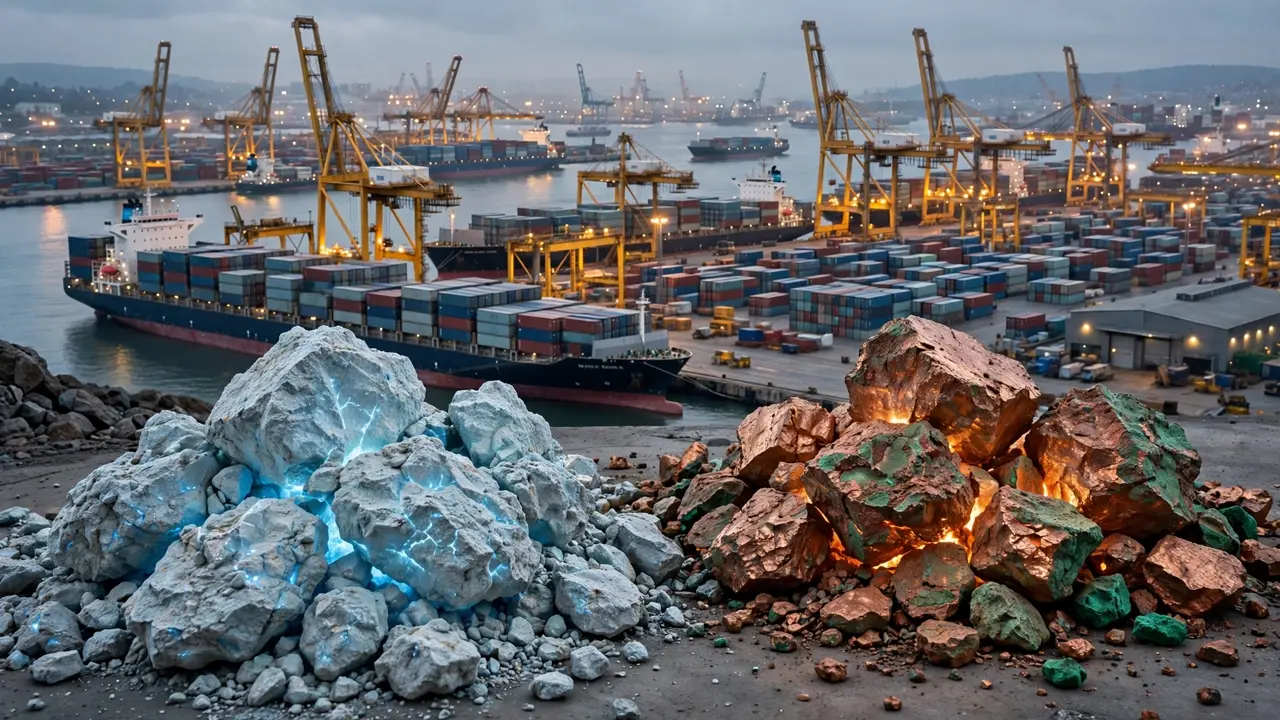
Illustration: a container port symbolizing critical minerals and trade cooperation. This is an AI-generated illustration, not a real photograph.
The Montreal summit matters for three reasons. First, it is the most concrete test yet of whether the transatlantic West can build new structures around the United States rather than through it. A completed Digital Trade Agreement, joint critical-minerals reserves and a formal alliance framework would give both Brussels and Ottawa a hedge against further tariff shocks — and a template other middle powers could copy.
Second, the critical-minerals dimension has hard economic teeth. The two sides want to accelerate investment in lithium, nickel and cobalt projects, align strategies and standards, and explore joint reserves to cushion price swings and geopolitical risk, according to the draft statement. Canada's resources paired with European processing capacity could, over time, build a Western supply chain less exposed to dominant suppliers — though as PIIE notes, that will require long-term actions such as joint risk assessments and real financial investment, not just communiqués.
Third, the security implications extend to the Arctic and Ukraine. Both sides intend to expand military cooperation, with the Arctic — where both have territory and interests — explicitly on the agenda. Continued joint support for Ukraine is also expected to feature, at a moment when European governments worry about the durability of transatlantic commitments.
There are reasons for caution. PIIE points out that the draft statement does not contain the term "associate member" that von der Leyen floated, and that around ten EU member states still have not ratified CETA itself — the trade agreement the new alliance is supposed to build upon. The summit's ambitions may outrun what either side can deliver.
What Happens Next
The summit opens in Montreal on October 29, with the joint statement and any signed agreements — the Digital Trade Agreement, the critical-minerals framework, the water-bomber programme — expected on October 30. Watch for whether the final language includes any reference to the "associate member" concept or backs away from it, and for specifics on funding commitments for the minerals and defence programmes.
Beyond Montreal, the relationship faces a busy calendar: the APEC leaders' summit in Shenzhen on November 18–19, where both Carney and EU leaders will be present alongside Donald Trump and Xi Jinping, and the G20-related foreign ministers' meetings where Quad foreign ministers will also finalize preparations for their own Manila summit. The Montreal deliverables will be tested against how Canada and the EU behave in those wider forums.
For Canada, the longer question is ratification and legislation: any alliance "equal to the scale of today's challenges," as the draft statement puts it, will eventually require parliamentary backing and money. Critics in Canada have already noted that no parliamentary vote or election mandate has addressed the associate-membership question. For the EU, the test is whether the bloc's member states — particularly the ten that have not ratified CETA — will treat the Montreal outcome as a mandate or as an aspiration.
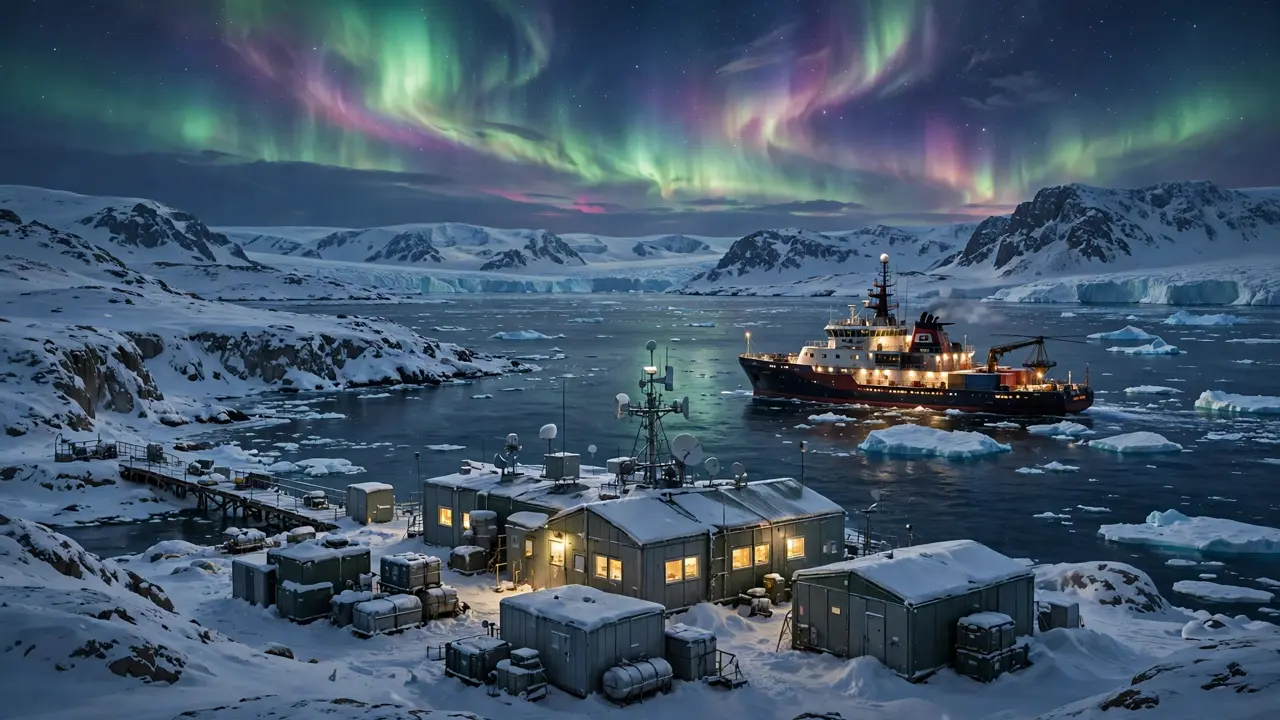
Illustration: an Arctic research station under the northern lights. This is an AI-generated illustration, not a real photograph.
Sponsored: explore today's featured sponsored offers
FAQ
When and where is the EU–Canada summit?
The summit takes place in Montreal, Canada, on October 29–30, 2026. Prime Minister Mark Carney hosts European Council President António Costa and European Commission President Ursula von der Leyen.
What is the "alliance for the future"?
It is the name both sides use — in Carney's European Parliament speech and in a draft joint statement reported by Politico — for a deeper EU–Canada partnership covering digital trade, artificial intelligence, critical minerals, energy, defense, the Arctic, cybersecurity and support for Ukraine.
What is the Digital Trade Agreement?
According to the draft summit statement, the EU and Canada have completed negotiations on a Digital Trade Agreement meant to enable faster, lower-cost and more secure digital trade and transactions, improve citizens' digital security, and strengthen cooperation on cyber security, information sharing and supply-chain resilience.
Why is Canada turning toward the EU now?
Roughly 70 percent of Canadian goods exports go to the United States, which imposed 25–50 percent tariffs on selected Canadian goods this summer while formal talks collapsed in August 2026. Ottawa is seeking to diversify its trade and security relationships; trade with the EU has grown strongly since the CETA agreement, reaching about C$178 billion in goods and services in 2025.
Will Canada become an EU "associate member"?
Probably not in any formal sense: the status does not exist in EU treaties, and Carney has said Canada is neither seeking nor positioned for full membership. The October 19 PIIE analysis notes the draft summit statement avoids the term entirely, focusing instead on concrete cooperation steps.
Sources
- Peterson Institute for International Economics (PIIE) — "Can the EU and Canada forge a new partnership?", October 19, 2026
- Informat.ro — "EU and Canada are preparing a broad partnership," September 30, 2026 (citing Politico's draft joint statement)
- Digital Watch Observatory — "EU and Canada to advance 'Digital Trade Agreement', seek cooperation on AI," October 2, 2026
- The Irish Channel / European Parliament — "Trade, technology, threats: MEPs and the Commission prepare for EU-Canada talks," October 19, 2026
- De Vector — "Canada deepens ties with European Union," October 3, 2026
- The Practical World — "Canada EU Closer Ties Without Joining: What It Means?"
Comments
Post a Comment